



Picture a Saturday morning. The smell of batter hitting a hot griddle fills the kitchen, and a stack of golden, fluffy discs awaits a generous pour of maple syrup. It’s the quintessential comfort breakfast. But as we become more conscious of what fuels our bodies, a nagging question often interrupts the nostalgia: Are pancakes bad for you?
It’s a valid concern. In an era where low-carb, keto, and whole-food diets reign supreme, a plate of white flour and sugar seems like a nutritional relic. Are we starting our day with a treat that belongs on a dessert menu, or is there a place for pancakes in a healthy diet?
The answer, like most things in nutrition, isn’t a simple yes or no. It depends heavily on the “Three Ps”: Preparation, Portion, and Pairings.
This comprehensive guide will dissect the humble pancake from every angle. We will explore why pancakes are so unhealthy in their traditional form, analyze their impact on blood sugar and weight loss, and investigate whether they are safe for specific conditions like diabetes and high cholesterol.
Whether you are a bodybuilder looking for a carb load, a parent feeding a fussy toddler, or someone just wondering if are pancakes good for breakfast, this article has the answers.
Why Are Pancakes Considered Unhealthy?

To understand the health impact of pancakes, we first have to look at what they are made of. The traditional American diner pancake is a nutritional triple-threat—and not in a good way.
The primary reason why are pancakes bad for you lies in their foundation: refined white flour. When wheat is processed into white flour, the bran and germ are stripped away, removing the vast majority of fiber, vitamins, and minerals. What’s left is the endosperm, which is essentially pure starch.
When you eat this refined starch, your body converts it into glucose rapidly. This causes a swift spike in blood sugar, followed by a sharp crash that leaves you feeling tired and hungry again within an hour or two. This cycle is the hallmark of why pancakes are so unhealthy for metabolic health.
The “Empty Calorie” Problem
Most commercial pancake mixes are laden with:
- Added Sugars: Even before the syrup, the batter often contains sugar to aid browning and taste.
- Trans Fats (Hydrogenated Oils): Many shelf-stable mixes use unhealthy fats to preserve shelf life.
- Sodium: Baking powder and salt are essential for the rise, but they drive up sodium levels significantly.
Furthermore, how unhealthy is a pancake often depends on what you put on top of it. A stack of pancakes is rarely eaten dry. It acts as a sponge for butter and syrup.
When you drench a refined carb (pancake) in liquid sugar (syrup) and saturated fat (butter), you create a “hyper-palatable” food, a combination of fat and sugar that overrides your brain’s fullness signals, making it incredibly easy to overeat.
Pancake Nutrition Breakdown (With Real Numbers)
Let’s move away from generalizations and look at the cold, hard data. Understanding the macronutrients is key to deciding if pancakes fit your goals.
1 Medium Pancake Nutrition Facts
Below is the nutritional profile for 1 medium pancake nutrition facts (approx. 6 inches in diameter), prepared from a standard commercial “complete” mix without syrup or butter.
| Nutrient | Amount per Medium Pancake (approx. 40g-50g) |
| Calories | 90 – 100 kcal |
| Total Fat | 2g – 3g |
| Saturated Fat | 0.5g – 1g |
| Cholesterol | 15mg – 20mg |
| Sodium | 250mg – 300mg |
| Total Carbohydrates | 15g – 20g |
| Dietary Fiber | < 1g |
| Sugars | 3g – 5g |
| Protein | 2g – 3g |
Key Takeaway:
At first glance, 100 calories doesn’t seem bad. But nobody eats just one. A typical “short stack” is three pancakes, bringing the base calories to 300. Add two tablespoons of butter (200 calories) and a quarter-cup of syrup (200 calories), and your “light” breakfast suddenly hits 700 calories with almost no protein or fiber to sustain you.
Notice the sodium content? Are pancakes high in sodium? Yes. Just three pancakes can provide nearly 900mg of sodium—over a third of the recommended daily limit—before you’ve even eaten lunch.
Are Pancakes Fattening or Bad for Weight Loss?
One of the most common search queries we see is: Are pancakes fattening?
Technically, no single food is “fattening” in isolation. Weight gain occurs when you consume more calories than you burn over time. However, pancakes are what nutritionists call “calorie-dense” but “nutrient-poor.” They take up very little room in your stomach compared to the amount of energy they provide.
Can I Eat Pancakes on a Diet?
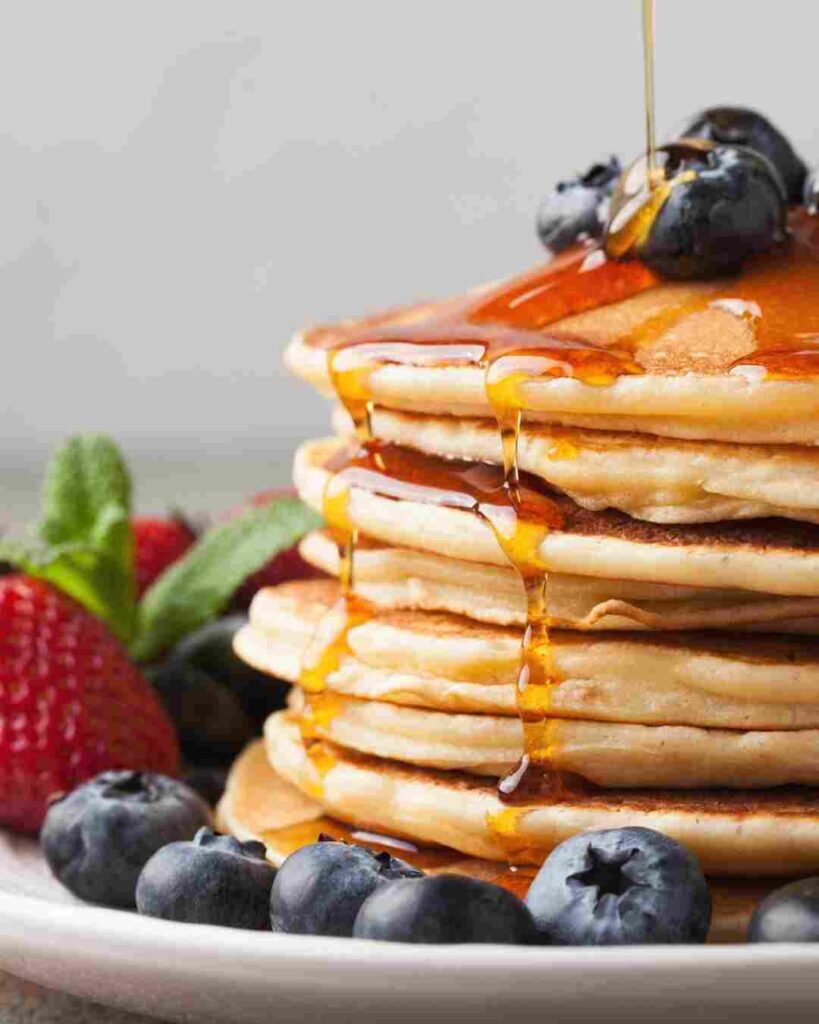
You can, but it requires strategy. The danger of pancakes for weight loss is the satiety index.
Because traditional pancakes lack fiber and protein (the two nutrients that make you feel full), they are digested rapidly.
If you are on a calorie-restricted diet, spending 600 calories on a meal that leaves you hungry 90 minutes later is a recipe for failure. You are likely to snack later in the day to compensate for the energy crash, leading to a caloric surplus.
How to make them work:
- Portion Control: Stick to one or two small pancakes, not a stack.
- Ingredient Swaps: Use cottage cheese or protein powder in the batter to increase density.
Is Pancake Healthy for Weight Loss?
If we are being strictly objective, no, traditional pancakes are not “healthy” for weight loss. They do not support a metabolism conducive to burning fat. They spike insulin (the fat-storage hormone), which temporarily inhibits your body’s ability to burn stored fat for fuel.
However, if you modify the recipe to include oats, bananas, and egg whites, you change the question. Is pancake healthy for weight loss in that context? Yes, because you’ve turned a dessert into a complex carbohydrate meal.
Are Pancakes Healthy Without Syrup?
Many people try to compromise. They ask, are pancakes bad for you without syrup? or are pancakes healthy without syrup?
Removing the syrup is a massive step in the right direction. A standard serving of maple syrup adds about 50 grams of pure sugar to your meal. By cutting that out, you eliminate the biggest driver of the insulin spike.
However, a pancake without syrup is still fundamentally a disc of white flour.
- Without syrup: It is a low-fat (usually), high-refined-carb food.
- The Verdict: It is “less bad,” but it isn’t necessarily “healthy.”
Without the syrup, you are still consuming a food with a high Glycemic Index (GI). You are essentially eating white bread. If you eat dry pancakes, you are saving calories, but you aren’t gaining any vitamins, minerals, or fiber.
To make them truly healthy, you need to replace the syrup with nutritious toppings like fresh berries (fiber), Greek yogurt (protein), or nut butter (healthy fats) to slow down the absorption of the carbohydrates.
Are Pancakes Good or Bad for Breakfast?
Breakfast is the most critical meal for setting your blood sugar curve for the day. So, are pancakes good for breakfast?
Compared to sugary cereals or pastries, pancakes are arguably on par—neither better nor worse. But compared to a balanced breakfast of eggs, avocado, and whole-grain toast, pancakes fall short significantly.
The “Comparison Trap”
- Pancakes vs. Eggs: Eggs provide high-quality protein and choline for brain health. Pancakes provide quick energy but little repair material for the body.
- Pancakes vs. Oatmeal: Oatmeal (especially steel-cut) is rich in beta-glucan fiber, which lowers cholesterol. Pancakes made from white flour have had this fiber removed.
- Pancakes vs. Yogurt: Greek yogurt is a probiotic protein powerhouse. Pancakes are sterile carbs.
When asking what is the most unhealthy breakfast, pancakes often make the list not because they are toxic, but because they displace healthier options. If you fill your stomach with flour, you miss the opportunity to nourish your body with the protein and fiber it needs after a night of fasting.
Are Pancakes Bad for Specific Health Conditions?
This section is crucial. If you have a pre-existing health condition, the ingredients in pancakes can move from “unhealthy” to potentially dangerous.
Are Pancakes Bad for Diabetics & A1C?
For individuals with Type 2 diabetes or insulin resistance, the question are pancakes bad for diabetics usually gets a hard “yes” for traditional recipes.
- The Glycemic Load: White flour pancakes have a very high glycemic index. Eating them causes a rapid influx of glucose into the bloodstream. For a diabetic, whose pancreas struggles to produce enough insulin (or whose cells are resistant to it), this leads to prolonged high blood sugar.
- Impact on A1C: Regularly consuming high-glycemic breakfasts contributes to a higher Hemoglobin A1C over time. Are pancakes bad for A1C? Consistently eating them can make it very difficult to keep your A1C within a healthy range.
The Fix: Diabetics should opt for almond flour or coconut flour pancakes, which have a minimal impact on blood sugar.
Are Pancakes Bad for Cholesterol & Heart Health?
Heart health is about inflammation and lipid profiles.
- Cholesterol: Are pancakes bad for cholesterol? The pancakes themselves are low in cholesterol (unless made with many egg yolks). However, the toppings are the issue. Butter and whipped cream are high in saturated fats, which can raise LDL (bad) cholesterol.
- Heart Health: Are pancakes bad for your heart? The hidden danger is actually the refined carbs. Studies show that high-sugar diets are more closely linked to heart disease than dietary cholesterol.
High insulin levels can inflame arteries. Are pancakes bad for high cholesterol? Indirectly, yes, because excessive carb intake is converted into triglycerides (blood fats).
Are Pancakes Bad for High Blood Pressure & Sodium Intake?
As mentioned in the nutrition breakdown, pancake mixes are sodium bombs. Baking soda (sodium bicarbonate) and baking powder are essential leavening agents.
- Are pancakes bad for high blood pressure? Yes. If you are salt-sensitive, a diner breakfast with pancakes and bacon can easily exceed your daily sodium allowance in one sitting.
- Are pancakes high in sodium? Surprisingly so. Even sweet pancakes can taste salty if you pay attention, masking the 300mg+ of sodium per cake.
Are Pancakes Bad for Kidneys, Gout & Acid Reflux?
- Kidneys: Are pancakes bad for kidneys? For those with Chronic Kidney Disease (CKD), pancakes can be tricky. While white flour is lower in phosphorus and potassium than whole grains (which is sometimes good for CKD patients), the sodium content is a major stressor for the kidneys.
- Gout: Are pancakes bad for gout? Gout is triggered by purines and, increasingly, fructose (sugar). High-fructose corn syrup (often fake maple syrup) is a known trigger for gout flare-ups. The refined carbs also increase insulin, which inhibits uric acid excretion.
- Acid Reflux: Are pancakes bad for acid reflux? High-fat, high-carb meals are notorious triggers for GERD. The heaviness of the dough combined with butter can slow stomach emptying, increasing the pressure that pushes acid up.
Are Pancakes Hard or Easy to Digest?

Digestive health varies from person to person, leading to confusion: Are pancakes hard to digest or easy?
For the average person, processed white flour is actually easy to digest in the sense that it breaks down quickly. This is why it spikes blood sugar—it hits the bloodstream fast. However, “easy to digest” isn’t always good.
- Constipation: Because they lack fiber, pancakes can contribute to constipation. Fiber adds bulk to stool; refined flour creates a glue-like consistency in the gut.
- Bloating: The combination of sugar and flour can ferment in the gut, causing gas.
- Side Effects of Eating Pancakes: Many people report a “heavy” feeling or “food coma” (postprandial somnolence). This isn’t indigestion; it’s the blood sugar crash depleting your energy levels.
So, are pancakes easy to digest? Yes, rapidly. But the aftermath can feel heavy and sluggish.
Are Pancakes Healthy for Kids?
Parents often rely on pancakes because they are cheap, easy, and kids love them. But are pancakes healthy for kids?
Growing children need nutrient density to support brain and bone development. Pancakes provide energy (calories), but they lack the building blocks (protein, calcium, healthy fats) kids need.
- The Sugar Rush: Feeding a child a high-sugar breakfast can lead to a mid-morning energy crash, affecting their ability to focus in school. It creates a cycle of craving more sugar.
- Hyperactivity: While the “sugar causes hyperactivity” link is debated in science, the irritability caused by a blood sugar crash is very real.
Verdict: They are fine as an occasional “Sunday funday” treat, but they should not be a daily staple before school unless fortified with protein (eggs/milk) and fruit.
Are Pancakes Bad for Bodybuilding & Fitness Goals?
In the fitness community, the pancake has a different reputation. You will often see massive bodybuilders eating stacks of them. Are pancakes bad for you bodybuilding?
- Bulking: If you are in a “bulking” phase (trying to gain weight), pancakes are an efficient way to consume a lot of calories and carbs easily. They provide the glycogen needed to fuel intense workouts.
- Carb Timing: Bodybuilders often use pancakes as a “pre-workout” or “post-workout” meal where an insulin spike is actually desired to shuttle nutrients into muscle cells.
- The Cheat Meal: Pancakes are a classic “cheat meal” for fitness enthusiasts.
However, for a bodybuilder on a “cut” (losing fat), pancakes are generally avoided due to their poor satiety-to-calorie ratio.
Are Pancakes Sweet by Nature?
A common misconception is about the flavor of the cake itself. Are pancakes sweet?
Traditionally, no. The batter contains a small amount of sugar, but pancakes are actually savory-leaning breads, similar to a biscuit or scone.
- Cultural Differences: In many European and Asian cultures, pancakes are savory (e.g., French Galettes, Chinese Scallion Pancakes).
- The Sweetness Source: The sweetness comes almost entirely from the toppings. This is important because it means you control the sweetness. You can easily eat savory pancakes topped with eggs, spinach, and cheese for a much healthier meal.
Are Pancakes Bad for You? (Reddit Opinions vs Science)
If you scour the internet for are pancakes bad for you Reddit threads, you will find a polarized debate.
Common Reddit Argument:
“Pancakes are just cake in a pan. You’re eating dessert for breakfast.”
Scientific Response:
This is largely true for the standard American version. Nutritionists agree that the macronutrient profile of a pancake stack with syrup is nearly identical to a slice of sponge cake.
Common Reddit Argument:
“If you make them from scratch, they are fine.”
Scientific Response:
This is valid. Homemade pancakes eliminate the preservatives and trans fats found in boxed mixes. However, unless you swap the flour, the glycemic impact remains the same.
Common Reddit Argument:
“IIFYM (If It Fits Your Macros), you can eat them.”
Scientific Response:
True for body composition, but not necessarily for internal health. You can lose weight by eating pancakes if you stay in a calorie deficit, but your insulin sensitivity and inflammation markers might suffer.
Is It Okay to Eat Pancakes Once a Week?
Moderation is the golden rule of nutrition. Is it okay to eat pancakes once a week?
Absolutely. The human body is resilient. One meal out of 21 meals in a week (assuming 3 meals a day) will not derail your health, cause diabetes, or make you obese.
- The 80/20 Rule: If 80% of your diet consists of whole foods, lean proteins, and vegetables, the 20% can include fun foods like pancakes.
- Mental Health: Enjoying a relaxed breakfast with family has mental health benefits that shouldn’t be ignored. If pancakes bring you joy, that has value.
Advice: Make Sunday your pancake day. Enjoy them fully, don’t feel guilty, and then return to your oatmeal or eggs on Monday.
Healthier Pancake Alternatives & Ingredient Swaps
You don’t have to give up pancakes; you just need to evolve them. Here is how to transform the answer to are pancakes bad for you from “yes” to “no.”
- Swap the Flour:
- Oat Flour: Simply blend rolled oats. High in fiber and slow-digesting carbs.
- Almond Flour: High in healthy fats and protein, low carb.
- Whole Wheat Flour: Adds fiber and nuttiness.
- Boost the Protein:
- Cottage Cheese Pancakes: Blend cottage cheese, oats, and eggs. They taste like cheesecake and are packed with protein.
- Protein Powder: Add a scoop of vanilla whey to your batter.
- Ditch the Fake Syrup:
- Use pure maple syrup (contains minerals, though still sugar).
- Top with warmed berries (creates a natural syrup-like juice).
- Use Greek yogurt mixed with a little honey.
Cultural & Media Mentions of Pancakes
Pancakes are deeply ingrained in our culture, appearing in everything from cooking shows to cautionary tales.
- Good Chef Bad Chef Ricotta Pancakes: This popular TV segment highlighted a healthier twist on the classic. By using ricotta cheese, the recipe increases the fat and protein content, lowering the glycemic index compared to standard flour pancakes. It’s a perfect example of how ingredients matter.
- “When Pancakes Go Bad”: While this might refer to the playful children’s book or various humorous blog posts, the phrase encapsulates the reality of leaving batter too long or using spoiled ingredients.
Note: Pancake mix can expire. Using old mix can sometimes lead to mold growth or lackluster rising agents, so always check the date.
FAQ Section
How unhealthy is a pancake?
A standard pancake made from white flour and topped with syrup is quite unhealthy due to high sugar, refined carbs, and low nutrient density. It can spike blood sugar and offers little satiety. However, the “healthiness” depends entirely on the ingredients used.
Are pancakes bad for you without syrup?
They are better than with syrup, but still not “healthy” if made with refined white flour. They remain a high-carb, low-fiber food. To make them healthy, you need to add protein and fiber to the batter.
Are pancakes good for weight loss?
Generally, no. They are calorie-dense and not very filling, which can lead to overeating. However, protein pancakes or oat-based pancakes can be part of a weight-loss diet.
Are pancakes bad for cholesterol?
Pancakes themselves are usually fine, but toppings like butter, whipped cream, and bacon are high in saturated fats that can raise cholesterol.
Are pancakes okay once a week?
Yes, eating pancakes once a week is perfectly fine for most people. It fits well into a balanced lifestyle as a treat meal, provided the rest of your week’s diet is nutritious.
Are pancakes easy to digest?
Yes, refined flour pancakes digest very quickly. However, this rapid digestion can lead to blood sugar spikes and crashes, sometimes causing bloating or a feeling of heaviness.
References
1. Nutritional Data & General Health Analysis
- USDA FoodData Central: Comprehensive breakdown of nutrients in standard pancakes, including sodium, cholesterol, and carbohydrate content.
- Verywell Fit: Detailed analysis of pancake calories, fat content, and the difference between white flour and whole wheat options.
- MedicineNet: Medical review of why traditional pancakes are considered “empty calories” and their link to blood sugar spikes.
2. Diabetes & Blood Sugar Impact
- Apollo 247 (Medical Review): Explanation of why refined flour pancakes are risky for diabetics and suggested ingredient swaps like almond flour.
- Diabetes UK: Official guidance on how to make pancakes safer for blood sugar management (e.g., omitting sugar from batter, using lower GI toppings).
3. Digestive Health & Side Effects
- Times of India (Health News): Discussion on the “energy crash” and mood swings associated with high-refined-carb breakfasts like pancakes.
4. Cultural Context & Recipes
- Good Chef Bad Chef: The source for the “Ricotta Pancakes” mention, highlighting a high-protein alternative using cheese and almond meal.
- Penguin Random House: Reference for the children’s graphic novel “Max Meow: When Pancakes Go Bad,“ which populates search results for that specific phrase.