You are standing at the counter of your favorite Asian restaurant, scanning the appetizer menu. Your eyes dart back and forth between two classic options: the Egg Roll and the Spring Roll. To the untrained eye, they might look like similar cylinders of fried deliciousness.
But order the wrong one, and you might end up with a thick, bubbly crust when you were craving a shatteringly crisp, thin wrapper—or vice versa.
This culinary confusion is incredibly common. While both are iconic stuffed rolls synonymous with Asian cuisine, the egg roll vs spring roll debate involves distinct differences in history, ingredients, texture, and origin.
Are egg rolls actually made with eggs? Are spring rolls always healthy? Why do some shatter when you bite them, while others have a chewy crunch?
In this definitive guide, we will unwrap the mystery of the difference between egg roll vs spring roll. We will explore their unique wrappers, dissect their fillings, and compare their nutritional profiles.
And even dive into regional variations like Vietnamese rolls and Filipino Lumpia. By the end of this article, you will be an expert on everything rolled, fried, and fresh.
What Is an Egg Roll vs Spring Roll?
To understand the difference between egg roll vs spring roll, we must first define what they are. While they share the same concept—a savory filling wrapped in a dough skin—their execution is worlds apart.
What Is an Egg Roll?
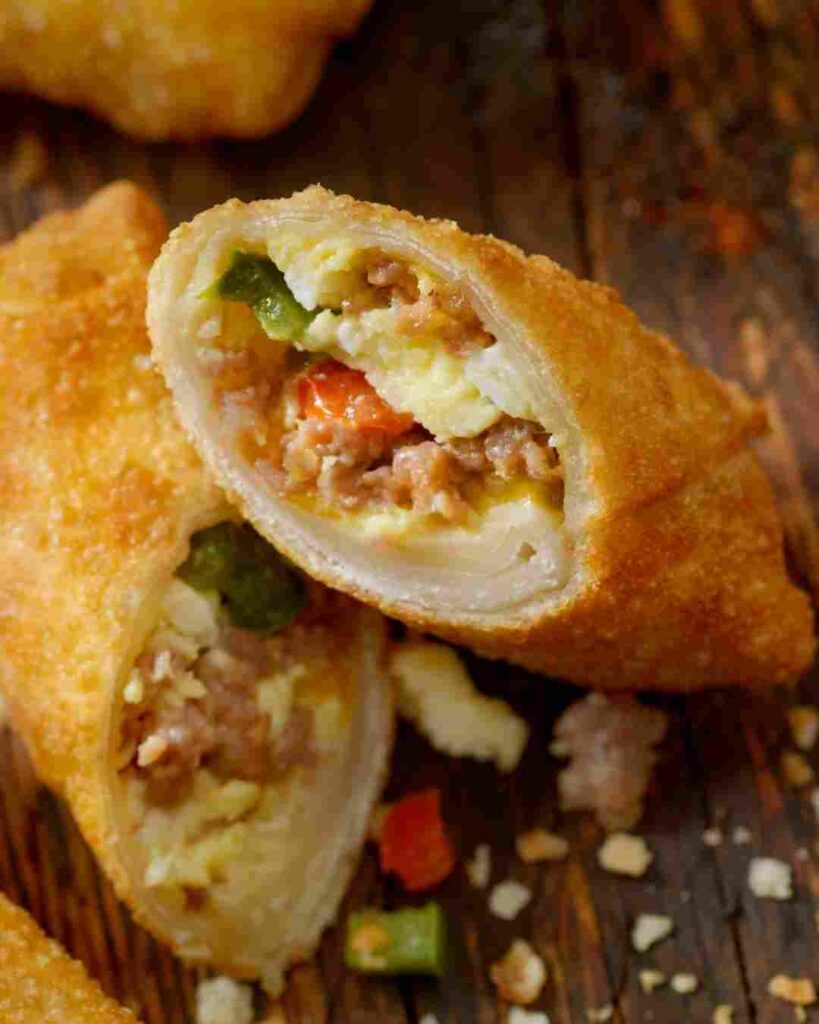
The Egg Roll is the heavyweight champion of American-Chinese takeout. It is characterized by its distinctively thick, chewy, and bubbly wrapper.
- Origin: The egg roll is largely considered an American invention, likely created in New York City in the early 20th century (specifically the 1930s) to appeal to Western palates.
- The Look: It is robust, bumpy, and golden-brown.
- The Key Trait: As the name suggests, the dough for the wrapper typically contains egg, which gives it a thicker, pasta-like texture that bubbles up when deep-fried.
What Is a Spring Roll?
The Spring Roll (Chun Juan) is the traditional ancestor. It has a history in China stretching back nearly 2,000 years to the Jin Dynasty.
- Origin: Originally eaten during the Spring Festival (Chinese New Year) to welcome the new season.
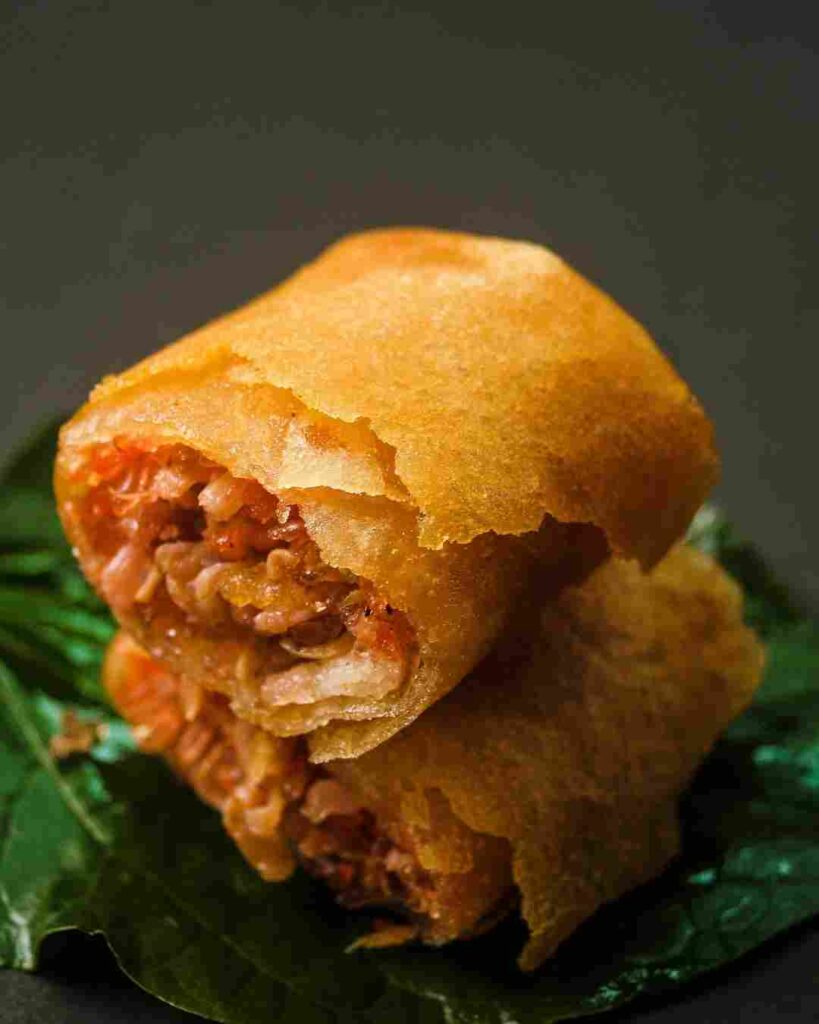
- The Look: Sleek, smooth, and much smaller/thinner than an egg roll.
- The Key Trait: What is in a spring roll vs egg roll wrapper? Usually just flour and water (or rice flour). This results in a wrapper that is paper-thin. When fried, it shatters and flakes rather than crunching heavily. When served fresh (non-fried), it is translucent and chewy.
What Is Egg Roll Filling Made Of?
The filling inside an egg roll is usually substantial and savory. It almost always consists of:
- Shredded cabbage (the dominant ingredient).
- Chopped pork (usually roast pork or ground pork).
- Carrots and onions.
- Seasoned heavily with soy sauce and sesame oil.
Because the wrapper is thick, it can hold a heavier, wetter filling without breaking apart, unlike the delicate spring roll.
Difference Between Egg Roll and Spring Roll (Quick Comparison)
If you are in a rush and just need to know which one to order, here is the quick breakdown of the egg roll vs spring roll difference.
1. The Wrapper
- Egg Roll: Thick, doughy, opaque, and bubbly. Contains egg.
- Spring Roll: Thin, translucent, smooth, and flaky. Usually egg-free.
2. The Texture
- Egg Roll: Crunchy and chewy. You have to bite through it.
- Spring Roll: Crispy and shattering (if fried) or chewy and soft (if fresh).
3. The Filling
- Egg Roll: Mostly cooked cabbage and meat. Dense.
- Spring Roll: Lighter vegetables, sometimes glass noodles, mushrooms, or bamboo shoots.
Comparison Table: Egg Roll vs. Spring Roll
| Feature | Egg Roll | Spring Roll (Cantonese Style) |
| Origin | American-Chinese (USA) | Traditional Chinese (China) |
| Wrapper Base | Wheat flour + Egg | Wheat flour + Water (or Rice) |
| Skin Texture | Bumpy, bubbly, thick | Smooth, flaky, paper-thin |
| Size | Large, wide diameter | Small, slender, cigar-shaped |
| Cooking Method | Deep Fried | Deep Fried or Fresh |
| Dominant Flavor | Savory, oily, meaty | Light, crisp, vegetable-forward |
Egg Roll vs Spring Roll Wrappers (Deep Dive)
The wrapper is the DNA of the roll. When searching for egg roll vs spring roll wrappers, you are essentially looking at the difference between pasta dough and pastry skin.
Egg Roll Wrappers: The “Pasta” Skin
Egg roll wrappers are made from wheat flour, water, salt, and eggs.
The addition of egg is crucial.
- Structure: The protein in the egg allows the gluten network to become strong and elastic. This is why you can stuff an egg roll packed with cabbage, and it won’t burst.
- Bubbles: When deep-fried, the moisture in the thick dough tries to escape, creating those signature small bubbles on the surface.
- Taste: It has a richer, more savory flavor, similar to a fried wonton skin.
Spring Roll Wrappers: The “Crepe” Skin
Spring roll wrappers (specifically for the fried variety) are made from wheat flour, water, and oil. No eggs.
- Thinness: The dough is rolled or stretched until it is translucent.
- Texture: Because there is no egg to make it chewy, the fried result is brittle. It flakes off in layers, similar to puff pastry but much thinner.
- Rice Paper: It is important to note that spring roll wrapper vs egg roll wrapper discussions often confuse wheat-based spring rolls with Vietnamese rice paper. Rice paper is dried, brittle, and translucent, made from rice batter. These are used for fresh spring rolls (Summer rolls) or Vietnamese fried rolls (Cha Gio).
Summary: If it looks like a blistered pie crust, it’s an egg roll wrapper. If it looks like a smooth golden cigar, it’s a spring roll wrapper.
Egg Roll vs Spring Roll Filling & Inside Ingredients
What’s on the inside counts just as much. The egg roll vs spring roll filling reflects the culinary philosophy of their origins.
Egg Roll Filling: The “Stir-Fry” Pocket
The egg roll is essentially an entire stir-fry dish wrapped in dough.
- Meat: Usually contains diced roast pork (Char Siu) or ground pork.
- Vegetables: Cabbage is king here. It provides bulk and crunch. You will also find celery and carrots.
- Seasoning: The filling is often pre-cooked or at least heavily seasoned with five-spice powder, soy sauce, and sesame oil before frying. This results in a dark, savory interior.
Spring Roll Filling: The Delicate Balance
Spring roll filling vs egg roll filling is generally lighter and paler in color.
- Vegetables: Napa cabbage, bean sprouts, bamboo shoots, Shiitake mushrooms, and carrots.
- Meat: Often minced pork or shrimp, but used sparingly compared to egg rolls.
- Vegetarian: Many spring rolls are purely vegetarian (Veggie egg roll vs spring roll is a common query; spring rolls are more likely to be naturally meat-free in traditional contexts).
- Texture: You might find glass noodles (cellophane noodles) inside spring rolls to soak up moisture, which is rare in American egg rolls.
Chinese, Vietnamese & Regional Variations
The terms “Egg Roll” and “Spring Roll” are broad categories. When we look at Chinese egg roll vs spring roll or Vietnamese egg roll vs spring roll, the definitions shift.
Chinese vs. American-Chinese
- China: In mainland China, the “Egg Roll” (Dan Juan) actually refers to a sweet, biscuit-like cookie roll eaten for dessert, not the savory fried appetizer. The savory roll is almost always a Spring Roll (Chun Juan).
- USA: The “Egg Roll” is the savory, cabbage-filled fried appetizer described above.
Vietnamese Variations (Cha Gio & Goi Cuon)
Vietnamese cuisine complicates the egg roll vs spring roll debate because they use rice paper.
- Cha Gio (Fried Spring Roll / Egg Roll):
- In many Vietnamese restaurants in the US, these are labeled as “Egg Rolls” to avoid confusion, even though they contain no egg in the wrapper.
- Wrapper: Made from rice paper, which bubbles up into a blistered, incredibly crunchy, mosaic-like texture when fried.
- Filling: Ground pork, wood ear mushrooms, glass noodles, carrots, and taro.
- Goi Cuon (Fresh Spring Roll):
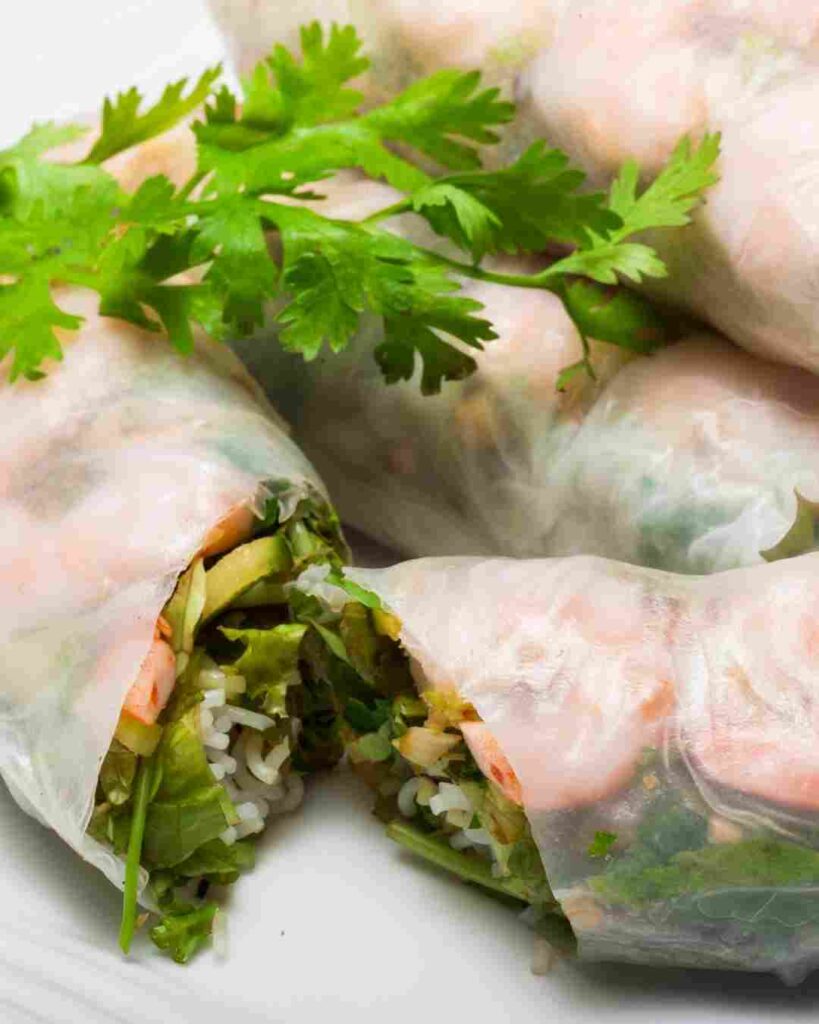
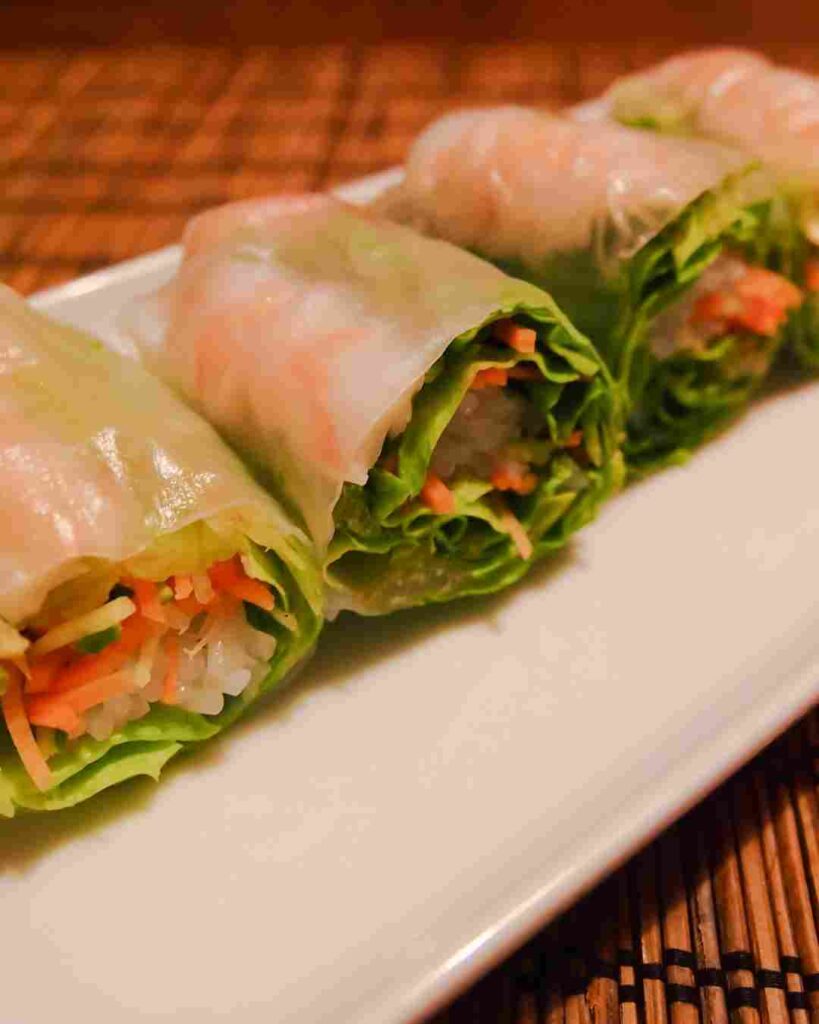
- Often called “Spring Rolls” or “Summer Rolls.”
- Wrapper: Rehydrated rice paper (not fried).
- Filling: Vermicelli noodles, pork slices, shrimp, fresh mint, basil, and lettuce.
- Dip: Peanut sauce or Hoisin.
Shanghai Spring Roll vs Egg Roll:
Shanghai-style spring rolls are unique. They use a wheat wrapper that is slightly thicker than Cantonese spring rolls but smoother than egg rolls. The filling is often savory pork and bok choy.
Egg Roll vs Spring Roll vs Lumpia
You cannot discuss Asian fried rolls without mentioning the Filipino powerhouse: Lumpia.
The comparison of egg roll vs spring roll vs lumpia is common in areas with high Filipino populations.
What is Lumpia?
Lumpia is the Filipino version of a spring roll, derived from the Chinese Hokkien word lunpia.
How Lumpia Differs from Egg Rolls
- Wrapper: Lumpia wrappers are crepe-like, made of flour and water. They are thinner than egg roll wrappers but slightly more elastic than traditional Chinese spring roll skins.
- Shape: Lumpia are often very long and thin (pencil-thin), specifically the Lumpia Shanghai variety.
- Filling: Lumpia Shanghai is almost entirely meat (ground pork or beef) with very few vegetables (maybe minced carrots/onions). This contrasts with the cabbage-heavy egg roll.
- Flavor: Lumpia is often served with a sweet chili sauce or banana ketchup, whereas egg rolls are served with duck sauce or hot mustard.
Summary: Lumpia is closer to a Spring Roll in texture, but is meatier like an Egg Roll.
Egg Roll vs Spring Roll vs Summer Roll vs Rice Roll
Let’s clear up the terminology for the health-conscious diner, comparing egg roll vs spring roll vs summer roll.
Summer Rolls (Goi Cuon)
- Also known as: Fresh Spring Rolls, Salad Rolls, Crystal Rolls.
- Wrapper: Rice paper (dipped in warm water to soften).
- Cooking: Raw/Fresh. Never fried.
- Profile: Cold, chewy, herby, refreshing.
- Comparison: A Summer roll is the antithesis of an Egg roll. One is deep-fried dough; the other is a fresh salad wrapped in rice skin.
Rice Rolls (Cheung Fun)
- Also known as: Steamed Rice Noodle Rolls.
- Comparison: These are distinct from egg/spring rolls. They are slippery, steamed sheets of rice noodles filled with shrimp or beef and doused in soy sauce, commonly served at Dim Sum.
Shrimp Rolls
- Comparison: Usually refers to a spring roll wrapper filled with whole shrimp or shrimp paste. These are closer to spring rolls in texture—crispy and shattering.
Egg Roll vs Spring Roll Taste & Texture
When you bite down, the egg roll vs spring roll taste experience is distinct.
The Egg Roll Experience
- The Bite: Hard crunch. It requires jaw pressure.
- The Flavor: The wrapper itself tastes like fried dough (think fried wonton chips). It absorbs more grease because it is thicker and porous. The filling is salty, savory, and usually dominated by the texture of cooked cabbage.
- Oily Factor: High. The bubbles on the skin trap oil pockets.
The Spring Roll Experience
- The Bite: Light, airy crispness. It makes a mess, flaking onto the plate.
- The Flavor: The wrapper is neutral, acting merely as a vessel for the filling. Because the shell is thinner, you taste more of the vegetables and aromatics (ginger, garlic, mushrooms) inside.
- Oily Factor: Moderate. While still fried, the smooth surface drains oil better than the bubbly egg roll.
Egg Roll vs Spring Roll Calories & Nutrition
For those tracking macros, the egg roll vs spring roll nutrition breakdown is vital. Which one ruins the diet?
Calories per Roll
- Egg Roll (1 Restaurant Size): Approx. 200–250 calories.
- Due to the larger size and thicker dough, it holds more oil and carbs.
- Fried Spring Roll (1 Restaurant Size): Approx. 100–150 calories.
- Smaller size and thinner wrapper mean fewer refined carbs.
- Fresh Spring Roll (Summer Roll): Approx. 80–120 calories.
- The healthiest option.
Fat & Sodium
- Egg Rolls: High sodium (soy sauce seasoning) and high fat (deep-fried porous dough).
- Spring Rolls: Lower sodium (usually lighter seasoning), but still high fat if deep-fried.
Which Is Healthier, Egg Roll or Spring Roll?
If we are comparing the fried versions, the Spring Roll is generally healthier.
Why?
- Size: They are smaller, offering portion control.
- Dough: You are consuming less refined flour per bite.
However, if we compare spring rolls vs egg rolls which is healthier, including fresh versions. The Fresh Summer Roll wins by a landslide. It contains zero oil from frying and is packed with fresh raw veggies.
Egg Roll vs Spring Roll: Which Is Healthier?
Let’s look closer at which is healthier, egg roll or spring roll? for specific diets.
For Low Carb / Keto
- Avoid Both. Both wrappers are made of wheat or rice flour.
- Alternative: “Egg Roll in a Bowl” (crack slaw) is a popular Keto dish that uses the filling (cabbage/pork) without the wrapper.
For Weight Loss
- Choose: Fresh Spring Rolls (Summer Rolls).
- Avoid: Egg Rolls. Eating two egg rolls can easily equal 500 calories—the same as a small meal—without providing the same satiety.
For Vegetarians
- Choose: Vegetable Spring Rolls.
- Caution: Vegetable Egg Rolls often still contain pork for flavoring unless specified “Vegetarian.” Also, the egg roll wrapper contains egg (not vegan), whereas the spring roll wrapper is usually just flour/water (vegan-friendly).
Why Do Americans Call Spring Rolls Egg Rolls?
This is a top curiosity query: Why do Americans call spring rolls egg rolls?
The history is murky, but the prevailing theory dates back to the 1930s in New York.
- The “Dan Gun” Theory: A 1917 Chinese-American cookbook recipe for “Dan Gun” (Egg Roll) described wrapping vegetables in an egg omelet. Over time, chefs may have added flour to the omelet to make it sturdier for frying, eventually evolving into the wheat-and-egg dough we know today.
- The Ingredient Shift: When Chinese chefs adapted recipes for American ingredients, the delicate spring roll skin (which requires skill to make by hand) was replaced by a thicker, sturdier noodle dough that was easier to mass-produce and survived the deep fryer better.
- Marketing: The name “Egg Roll” sounded rich and appealing to American diners, distinguishing it from the “Spring Roll,” which sounded overly light or foreign.
Today, the confusion persists because many menus use the terms interchangeably or use “Egg Roll” as a catch-all term for any fried cylindrical appetizer.
Popular Restaurant Comparisons
Let’s look at real-world examples, specifically Panda Express egg roll vs spring roll.
Panda Express Chicken Egg Roll
- Wrapper: Bubbly, thick, traditional American-Chinese style.
- Filling: Cabbage, carrots, green onions, and chicken.
- Texture: Chewy and crunchy.
- Calories: 200 calories.
Panda Express Vegetable Spring Roll
- Wrapper: Smooth, thin, flaky.
- Filling: Cabbage, celery, carrots, green onions, and Chinese noodles.
- Texture: Crispy and light.
- Calories: 190 calories.
- Verdict: The Spring Roll at Panda Express is the lighter, crispier option and is vegetarian, whereas the Egg Roll contains chicken.
Egg Roll vs Spring Roll Reddit & Online Opinions
What does the internet say? Searching egg roll vs spring roll on Reddit reveals heated debates.
The “Grease” Factor
Many Redditors prefer Spring Rolls because they hold less grease. Users often complain that Egg Rolls can act like “oil sponges” if not fried at the correct temperature.
The “Nostalgia” Factor
Conversely, many American users defend the Egg Roll as the ultimate comfort food. The chewy texture reminds them of childhood takeout nights.
The Vietnamese Consensus
A common thread on Reddit is the superiority of the Vietnamese Fried Spring Roll (Cha Gio). Users generally agree that the blistered rice paper wrapper is superior to both the wheat egg roll and the wheat spring roll in terms of crunch.
Common Misconception
Redditors frequently have to correct people who think “Spring Rolls” are always raw/fresh. They clarify: “Those are Summer Rolls. Spring Rolls are fried.”
Egg Roll vs Spring Roll Recipes & Cooking Tips
If you want to make them at home, knowing the egg roll vs spring roll recipe difference is key.
Homemade Egg Rolls
- Wrapper: Buy “Egg Roll Wrappers” from the refrigerated section (brands like Nasoya). They look like thick pasta sheets.
- Tip: Pre-cook your cabbage and meat filling to remove excess moisture. If the filling is too wet, the thick wrapper will get soggy from the inside out.
- Sealing: Use an egg wash (beaten egg) to seal the edges.
Homemade Spring Rolls (Cantonese Style)
- Wrapper: Buy “Spring Roll Pastry” (often frozen, brands like TYJ). They are paper-thin sheets.
- Tip: Keep the wrappers covered with a damp towel while working; they dry out instantly.
- Sealing: Use a cornstarch slurry (cornstarch + water) to seal. Egg wash can make the thin wrapper too heavy or burn.
Cooking Temperature
- Egg Rolls: Fry at 350°F (175°C). They need a longer fry time (4-5 mins) to cook the thick dough through.
- Spring Rolls: Fry at 375°F (190°C). They cook very fast (2-3 mins) because the skin is so thin.
Frequently Asked Questions
What is the difference between spring rolls and egg rolls?
The main difference is the wrapper. Egg rolls have a thick, bubbly, chewy wrapper made with egg and wheat. Spring rolls have a thin, smooth, flaky wrapper made with flour and water (or rice flour).
What is egg roll filling made of?
Egg rolls are typically filled with cooked cabbage, chopped roast pork, carrots, and onions. The filling is savory and dense.
Which is healthier, egg roll or spring roll?
Generally, spring rolls are healthier because they are smaller and have a thinner wrapper, meaning less oil absorption and fewer carbohydrates. Fresh (non-fried) spring rolls are the healthiest option.
Why are egg rolls thicker than spring rolls?
Egg roll dough contains eggs and is rolled out like pasta. This thickness was developed to be sturdy and hold hearty fillings, catering to American tastes for a substantial appetizer.
What wrapper is used for spring rolls vs egg rolls?
Egg rolls use a wheat-and-egg dough wrapper. Spring rolls use a thin wheat-and-water wrapper (Cantonese style) or a rice paper wrapper (Vietnamese style).
Are egg rolls vegan?
Usually no. The wrapper contains egg, and the filling usually contains pork. Vegetable egg rolls may be meat-free, but strict vegans should check if the wrapper contains egg. Spring rolls are more likely to be vegan (flour/water wrapper + veggie filling).
Final Verdict: Egg Roll vs Spring Roll – Which Should You Choose?
The battle of egg roll vs spring roll ultimately comes down to the texture you crave.
Choose the Egg Roll If:
- You want a hearty, savory appetizer that feels like a meal.
- You love a thick, chewy, crunchy crust.
- You are craving nostalgic American-Chinese comfort food.
- Recommendation: Pair it with spicy mustard or duck sauce to cut through the richness.
Choose the Spring Roll If:
- You want a light, crispy, shatter-in-your-mouth texture.
- You prefer tasting the fresh vegetables inside rather than just the dough.
- You are watching your calories but still want a fried treat.
- Recommendation: Look for Vietnamese fried spring rolls for the ultimate crunch, or Cantonese spring rolls for a flaky delight.
Next time you are holding that menu, you won’t have to guess. Whether you go for the bubbly crunch of the egg roll or the flaky crisp of the spring roll, you now know exactly what you are biting into.
References & Further Reading
- Healthline: “Chinese Food Nutrition: Calories, Carbs, and Benefits” – https://www.healthline.com/nutrition/chinese-food-nutrition
- The Woks of Life: “Chinese Egg Rolls vs Spring Rolls” – https://thewoksoflife.com/egg-rolls-vs-spring-rolls/
- USDA FoodData Central: “Nutritional value of Egg Rolls vs Spring Rolls” – https://fdc.nal.usda.gov/
- TasteAtlas: “Spring Rolls vs Egg Rolls History” –https://www.tasteatlas.com/spring-rolls