Every fall, people haul home a big, glossy jack-o’-lantern pumpkin and try to turn it into pie. What they get is pale, watery, stringy puree that tastes like wet cardboard. The pumpkin isn’t bad; it’s just the wrong kind.
Knowing how to pick a pumpkin for cooking comes down to two things: choosing the right type and then choosing a good one of that type at the store or farm stand. This guide covers both. You’ll learn which varieties cook best, the hands-on checks that separate a great cooking pumpkin from a dud, and how much to buy. It also covers how to store your pumpkin until cooking day and which pumpkins you should never eat.
Key Takeaways
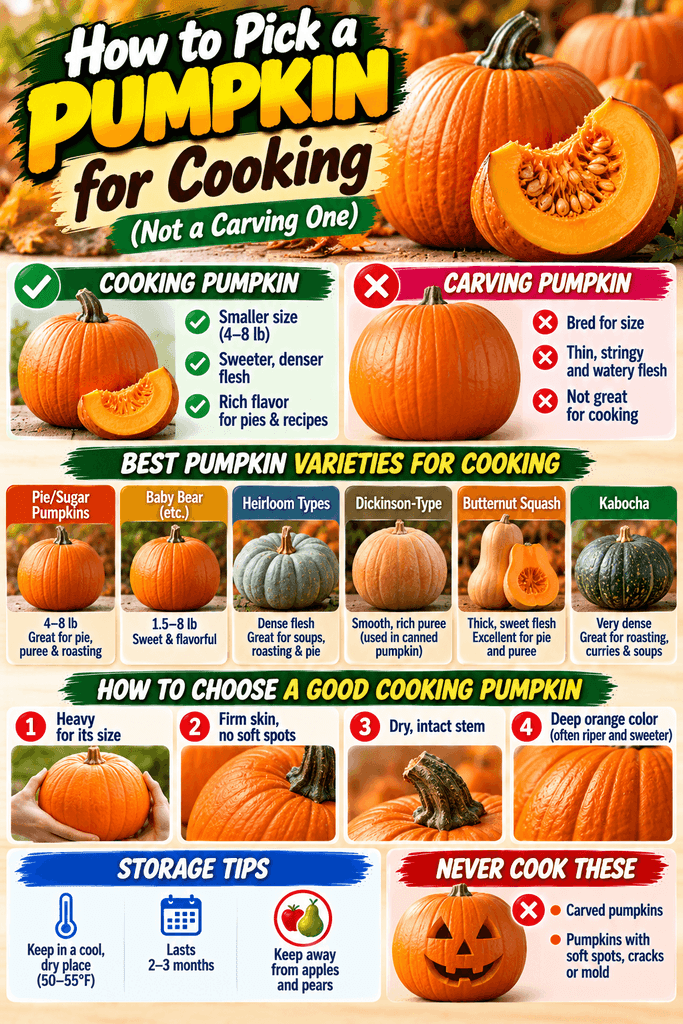
- Carving pumpkins are bred for size and thin walls, not flavor. Their flesh is typically thin, stringy, and watery.
- Look for “pie” or “sugar” pumpkins of about 4–8 lb, or cooking squash like butternut, kabocha, and heirloom types.
- A good cooking pumpkin is firm, heavy for its size, and free of soft spots and cracks, with a dry, intact stem.
- Plan on roughly 1 cup of cooked pumpkin per pound of whole pumpkin.
- Whole pumpkins keep for about 2–3 months in a cool (50–55°F), dry spot away from apples and pears.
- Never cook a pumpkin that’s been carved and displayed. And don’t home-can pumpkin puree; freeze it instead.
Why Cooking Pumpkins and Carving Pumpkins Are Different
All pumpkins are squash. Like apples, though, different varieties are bred for different jobs.
Jack-o’-lantern pumpkins are bred to be big, round, bright orange, and easy to hollow out. As NDSU Extension horticulturist Tom Kalb puts it, the flesh of a typical Halloween pumpkin is “thin, stringy in texture and watery.” UC Master Food Preservers give the same warning: large jack-o’-lantern varieties tend to be watery and stringy, while sugar or pie pumpkins are the best for cooking and baking.
Cooking pumpkins are bred for what’s inside. According to Nebraska Extension, pie pumpkins are usually smaller, with “sweeter, denser, less watery flesh.” That denser flesh roasts into a smooth, deeply colored puree with real flavor.
Can you eat a carving pumpkin? Yes, an uncarved one is safe. You just won’t love the results in a pie. Carving pumpkin works better in soups, stews, or chili, where its flavor gets help from other ingredients.
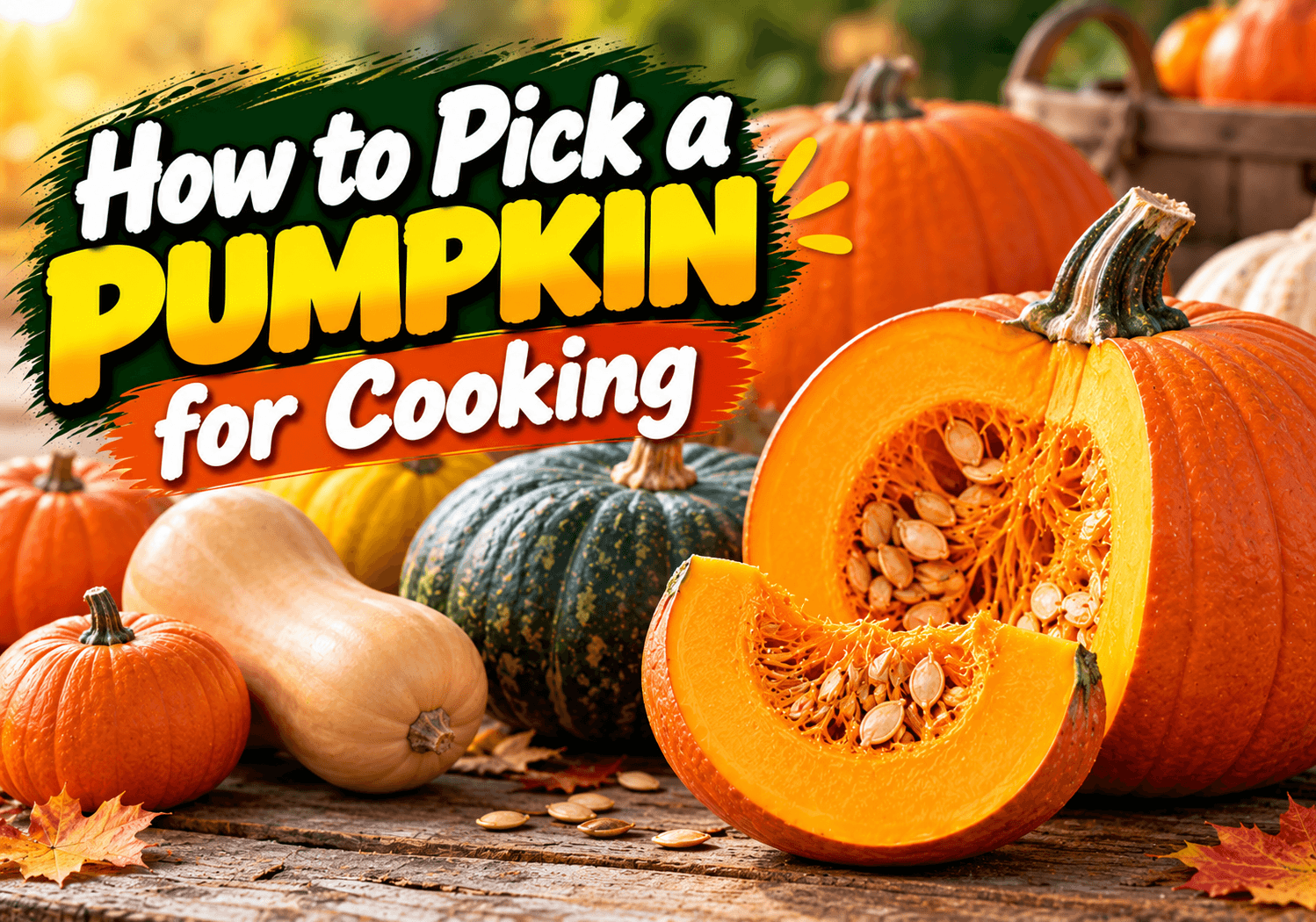
The Best Pumpkin Varieties for Cooking
You don’t need a seed catalog to shop well. The labels at most grocery stores and farm stands fall into a few groups:
| Type | What to look for | Best uses |
| Pie or sugar pumpkins (C. pepo) | Small, round, deep orange, about 4–8 lb | Pie, puree, roasting, muffins |
| Small cooking cultivars (e.g., Baby Bear, Orange Smoothie) | 1.5–8 lb, sweet orange flesh | Pie, single-serving roasting |
| Blue and heirloom types (e.g., Blue Prince, French heirlooms) | Blue-gray, tan, or ribbed skin; dense flesh | Soups, roasting, pie |
| Dickinson-type pumpkins (C. moschata) | Tan, oblong, butternut-like | Smooth, canned-style puree |
| Butternut and buttercup squash | Tan or dark green, heavy, thick neck | Exceptional pie and puree |
| Kabocha | Squat, dark green, very dense | Roasting, curries, soups |
A few notes on this table:
- Small cooking cultivars: Nebraska Extension recommends All-America Selections varieties such as Baby Bear and Orange Smoothie for pie filling. It also points out that blue, white, and French heirloom pumpkins are good for cooking, and that misshapen pumpkins are just as safe to eat as smooth ones.
- Canned pumpkin: It’s made mainly from the Dickinson variety, according to Iowa State University Extension. Dickinson belongs to Cucurbita moschata, the same species as butternut squash. That’s why canned pumpkin looks smoother and more golden than homemade puree from a sugar pumpkin.
- Butternut and buttercup: The NDSU article argues that these squashes, with their thick, smooth, sugar-rich flesh, often make a better “pumpkin” pie than pumpkins do. If your store’s pie pumpkins look tired, a heavy butternut squash is a smart substitute.
- Kabocha: This Japanese squash is drier and sweeter than most pumpkins. Our guide on whether kabocha squash is healthy covers its nutrition.
For a side-by-side look at every variety, see our winter squash guide.
How to Pick a Pumpkin for Cooking: 8 Checks at the Store
Once you’ve found the right type, use these checks to choose the best one in the bin. They’re based on guidance from Illinois Extension, Ohio State University Extension, and Oregon State University Extension.
1. Pick the right size
For pie pumpkins, aim for about 4 to 8 pounds, the range Illinois Extension recommends. Bigger isn’t better. Large pumpkins of the same variety tend to be more fibrous and harder to cut.
2. Lift it: heavy for its size
Pick up two pumpkins of similar size. The heavier one has denser, moister flesh and thicker walls. Ohio State advises choosing pumpkins that are “fairly heavy” in weight.
3. Press the rind
A ripe cooking pumpkin has a hard rind. Press firmly with your thumb all over, especially around the bottom. Oregon State notes that winter squash is mature when the rind resists scratching with a fingernail. If your nail sinks in easily, the pumpkin was picked too early.
4. Check for soft spots, cuts, and cracks
Illinois Extension advises choosing pumpkins that are firm and free of soft spots, nicks, cuts, or cracks. Any break in the rind lets in mold and bacteria. Pay attention to the bottom, where moisture collects and rot often starts.
5. Inspect the stem
Look for a dry, firm, intact stem, ideally an inch or more long. A stem that’s missing, mushy, or moldy is an entry point for rot and shortens storage life. Never carry a pumpkin by its stem, because it can snap off.
6. Look at the color
Ohio State recommends cooking pumpkins that are fully ripe, with firm rinds and deep color. For orange varieties, look for even, rich orange with little green. For blue, tan, or green types, look for color typical of the variety. A dull, matte finish is fine and often signals maturity.
7. Tap it
A ripe pumpkin usually sounds somewhat hollow when you knock on it. Treat this as a tiebreaker, not a rule. Weight and rind hardness tell you more.
8. Ask the grower
At farm stands, ask which pumpkins they would bake with. Growers know which varieties they planted for eating and which ones they grew for decoration.
What a Good Cooking Pumpkin Gives You Nutritionally
Choosing the right pumpkin changes the flavor, and it can also change the nutrition. Deeply colored, dense flesh is a sign of more carotenoids per bite.
Values from USDA FoodData Central:
| Pumpkin (1 cup) | Calories | Fiber | Vitamin A (RAE) | % DV vitamin A |
| Raw, cubed (116 g) | 30 | 0.6 g | 494 µg | 55% |
| Cooked, mashed (245 g) | 49 | 2.7 g | 706 µg | 78% |
| Canned, plain (245 g) | 83 | 7.1 g | 1,906 µg | 212% |
Daily Values are based on the FDA’s reference amounts.
Canned pumpkin comes out far ahead because it’s made from dense, low-moisture Dickinson-type pumpkin and cooked down. That’s the main reason cooking squash and pie pumpkins beat watery carving pumpkins. Less water means more nutrients and more flavor in every cup.
For a complete nutrient breakdown, see our pumpkin nutrition facts. To compare homemade with canned, read whether canned pumpkin is healthy.
Health Benefits of Choosing Real Cooking Pumpkin
Vitamin A from beta-carotene
Pumpkin’s orange color comes from beta-carotene and related carotenoids. Your body converts these to vitamin A as needed. The NIH Office of Dietary Supplements explains that vitamin A supports vision, immune function, and cell growth. A deep-orange cooking pumpkin delivers more of these pigments than a pale carving pumpkin. Learn more in our article on whether pumpkin is high in vitamin A.
Better carotenoid absorption with a little fat
Carotenoids are fat-soluble. A study in the American Journal of Clinical Nutrition found that people absorbed far more carotenoids from salad vegetables eaten with a fat-containing dressing than with a fat-free one. Roasting pumpkin with a drizzle of olive oil, or pairing it with nuts or yogurt, may help you absorb more of what’s there.
Fiber and potassium in a low-calorie package
Cooked pumpkin is low in calories and provides fiber and potassium, nutrients many diets lack. If fiber is your goal, see whether pumpkin has fiber. In short, plain canned pumpkin and dense cooking squash give you more per cup than fresh, watery pumpkin.
Less sugar needed in recipes
A sweet, dense pie pumpkin tastes good on its own. You can often cut the added sugar in pies, muffins, and oats without the result tasting bland. Warm spices help even more. Our guide on how to make pumpkin pie spice shows you how to mix your own.
Who Benefits Most From Choosing Well
- Home bakers: dense pumpkin means thicker pie filling that sets without extra cornstarch or eggs.
- Families cooking for kids: sweeter flesh means less added sugar is needed.
- People eating more vegetables: pumpkin is an easy, low-calorie way to add color and fiber to meals.
- Budget-minded cooks: one good pie pumpkin yields several cups of puree, plus seeds to roast.
- Anyone watching sodium: homemade puree has no added salt.
Safety: Pumpkins You Shouldn’t Cook
Carved and displayed pumpkins
Nebraska Extension is clear: don’t cook a pumpkin after it’s been carved and displayed. Throw it away instead. Cut flesh left at room temperature gives bacteria and mold time to grow. If you want to decorate a pumpkin and eat it later, UGA and the National Center for Home Food Preservation suggest using nontoxic paint or markers instead of carving.
Painted, waxed, or treated decorative pumpkins
Pumpkins sold purely as decorations may be coated with paint, glitter, glue, or wax. Don’t cook any pumpkin with a surface treatment you can’t identify.
Soft, moldy, or leaking pumpkins
If you find soft spots, mold, or an off smell when you cut into a pumpkin, throw the whole pumpkin out. Small dry blemishes on an otherwise firm pumpkin can be trimmed. The FDA recommends cutting away damaged or bruised areas before preparing produce.
Wash before you cut
Your knife can drag soil from the rind into the flesh. The FDA advises rinsing produce before you peel or cut it, scrubbing firm produce with a clean vegetable brush, and using plain water without soap.
Don’t leave cut pumpkin out, and don’t home-can puree
UC Master Food Preservers advise against leaving cut pumpkin at room temperature for more than 2 hours. Pumpkin is a low-acid vegetable. Only cubed pumpkin can be safely pressure-canned at home. Mashed or pureed pumpkin and pumpkin butter have no tested safe canning method. Freezing is the easiest and best way to preserve puree.
Can you eat too much?
Eating large amounts of beta-carotene-rich foods over weeks can cause carotenemia, a harmless yellow-orange tint to the skin. StatPearls notes that it fades when intake drops. It’s a cosmetic issue, not a toxic one. Beta-carotene from food doesn’t cause vitamin A toxicity.
How Much Pumpkin to Buy
Ohio State Extension estimates that 1 pound of winter squash yields about 1 cup cooked. Use that rule to plan:
| You need | Buy about |
| 1 pie (about 1¾ cups puree, the amount in a 15-oz can) | 2 lb whole pumpkin |
| 2 pies or a batch of muffins and a pie | 4 lb pumpkin, one small pie pumpkin |
| Soup for 6 (about 4 cups cooked pumpkin) | 4–5 lb pumpkin |
| Puree to freeze for the season | Two 6–8 lb pumpkins |
Yields vary with moisture and seed cavity size, so buy a little extra. Leftover puree freezes well.
How to Store a Whole Pumpkin Until You Cook It
A good cooking pumpkin doesn’t need to be cooked right away. Store it well and it will keep for weeks or months:
- Temperature: Oregon State Extension recommends 50–55°F with moderate humidity and good air circulation. A cool basement, garage, or pantry often works. Ohio State suggests about 50°F in a dry area.
- How long: Oregon State gives pumpkins and butternut squash 2–3 months. Illinois Extension says pumpkins can last 3 to 6 months under ideal cool, dark conditions.
- Keep away from apples and pears: they release ethylene gas, which speeds spoilage.
- Check weekly: use or discard any pumpkin that starts to soften.
- Don’t refrigerate whole pumpkins unless you have to. They’re bulky, and cold, damp conditions can encourage decay. Once cut, refrigerate pieces at 40°F or below.
Illinois Extension also notes that color may dull during storage. That doesn’t mean the quality has dropped.
Myths vs. Facts
| Myth | Fact |
| Any pumpkin is fine for pie. | Carving pumpkins are watery and stringy. Pie pumpkins and cooking squash make far better pies. |
| Bigger pumpkins give better value. | Large pumpkins are often more fibrous. A 4–8 lb pie pumpkin is the sweet spot. |
| Canned pumpkin is “fake.” | It’s mostly Dickinson pumpkin, a C. moschata type related to butternut. That’s why it’s smooth and dense. |
| Lumpy or odd-colored pumpkins aren’t edible. | Blue, white, tan, and misshapen pumpkins are just as edible. Many heirlooms are excellent cooks. |
| You can eat a jack-o’-lantern after Halloween. | Throw out carved, displayed pumpkins. Paint, don’t carve, if you plan to cook it later. |
| Pumpkin puree can be canned like tomatoes. | Puree has no tested home-canning method. Freeze it instead. |
From Patch to Plate: Using Your Pumpkin in a Healthy Diet
Once you’ve brought home a good pumpkin, make the most of it:
- Roast it. Halve, seed, and roast cut-side down until tender. Our step-by-step guide on how to roast a pumpkin covers time and temperature.
- Puree it. Blend the roasted flesh until smooth. If it’s watery, drain it in a strainer. See our homemade pumpkin puree method.
- Save the seeds. Rinse, dry, and roast them for a crunchy snack rich in magnesium and zinc. Here’s how to roast pumpkin seeds.
- Cook savory, not just sweet. Stir puree into chili, soups, pasta sauce, or oatmeal for color and fiber.
- Freeze extras in 1¾-cup portions, the amount in one can, so you can drop them straight into recipes.
For the full picture of pumpkin’s benefits, read our guide to whether pumpkin is healthy.
Frequently Asked Questions
What pumpkin is best for pumpkin pie?
Small pie or sugar pumpkins of about 4–8 pounds are the classic choice because their flesh is dense, sweet, and smooth. Butternut squash, buttercup squash, and Dickinson-type pumpkins also make excellent pies. Avoid large jack-o’-lantern pumpkins, whose flesh tends to be thin, stringy, and watery.
Can you cook a carving pumpkin?
Yes, an uncarved carving pumpkin is safe to eat. Its flesh is usually thinner, more watery, and less flavorful, so it works better in soups, stews, and chili than in pie. Never cook a pumpkin that has been carved and left on display. Throw it away.
How do you know if a pumpkin is good for cooking?
Choose a pumpkin that feels heavy for its size, with a hard rind your fingernail can’t easily dent. It should have a dry, intact stem and no soft spots, cuts, or cracks. Look for deep, even color typical of the variety. Labels like “pie” or “sugar” pumpkin are a good sign.
How long does a whole pumpkin last?
Stored at about 50–55°F in a dry, well-ventilated spot, a whole pumpkin usually keeps 2–3 months, and sometimes longer. Keep it away from apples and pears, which release ethylene gas that speeds spoilage. Check it weekly and use or discard any pumpkin that starts to soften.
How much puree do you get from one pumpkin?
Expect roughly 1 cup of cooked pumpkin for every pound of whole pumpkin, though seed cavities and moisture vary. A 4-pound pie pumpkin typically yields enough for about two pies. Buy a little extra and freeze leftover puree in portions for later recipes.
Are white or blue pumpkins edible?
Yes. White, blue-gray, tan, and green pumpkins are edible, and many heirloom varieties have dense, flavorful flesh that’s great for roasting and soups. Choose them using the same checks as orange pumpkins: heavy for their size, a hard rind, a firm stem, and no soft spots.
Conclusion
Learning how to pick a pumpkin for cooking takes just two decisions. First, choose a cooking type: a 4–8 lb pie or sugar pumpkin, a dense heirloom, or a butternut or kabocha squash. Second, choose a good one: heavy for its size, with a hard rind, a dry stem, and no soft spots or cracks. Store it cool and dry, wash it before cutting, and never cook a carved display pumpkin.
Get those right and you’ll have sweeter puree, thicker pies, and more vitamin A in every cup, often with less added sugar.
Medical disclaimer: This article is for general information only and isn’t a substitute for professional medical or nutrition advice. If you have a medical condition or special dietary needs, talk with your doctor or a registered dietitian.
3. References
- University of Illinois Extension. Choosing a Pumpkin. https://extension.illinois.edu/pumpkins/choosing-pumpkin
- Ohio State University Extension. Selecting, Storing, and Serving Ohio Squash and Pumpkin (HYG-5530). Rev. 2021. https://ohioline.osu.edu/factsheet/hyg-5530
- Pokorny K. Plan now to harvest and store pumpkins and winter squash. Oregon State University Extension Service; 2023 (reviewed 2025). https://extension.oregonstate.edu/node/153311
- University of California Agriculture and Natural Resources, Master Food Preservers. Pumpkins: Food Preservation. https://ucanr.edu/sites/MFPOC/Food_Preservation/Pumpkins
- Reese A. Preserve Halloween pumpkin for holiday cooking. University of Georgia CAES / National Center for Home Food Preservation; 2003. https://fieldreport.caes.uga.edu/news/preserve-halloween-pumpkin-for-holiday-cooking/
- University of Nebraska–Lincoln Extension, Lancaster County. Pumpkins: Spooky Good Eating. https://lancaster.unl.edu/pumpkins-spooky-good-eating/
- Iowa State University Extension and Outreach. Is canned pumpkin actually made from a mixture of butternut and other squashes? https://yardandgarden.extension.iastate.edu/faq/canned-pumpkin-actually-made-mixture-butternut-and-other-squashes
- Kalb T. Dakota Gardener: The secret to great pumpkin pie. NDSU Extension; 2022. https://www.ag.ndsu.edu/news/newsreleases/2022/october/dakota-gardener-the-secret-to-great-pumpkin-pie
- U.S. Department of Agriculture. Pumpkin, raw (FDC ID 168448). FoodData Central. https://fdc.nal.usda.gov/fdc-app.html#/food-details/168448/nutrients
- U.S. Department of Agriculture. Pumpkin, cooked, boiled, drained, without salt (FDC ID 168449). FoodData Central. https://fdc.nal.usda.gov/fdc-app.html#/food-details/168449/nutrients
- U.S. Department of Agriculture. Pumpkin, canned, without salt (FDC ID 168450). FoodData Central. https://fdc.nal.usda.gov/fdc-app.html#/food-details/168450/nutrients
- U.S. Food and Drug Administration. Daily Value on the Nutrition and Supplement Facts Labels. https://www.fda.gov/food/nutrition-facts-label/daily-value-nutrition-and-supplement-facts-labels
- U.S. Food and Drug Administration. 7 Tips for Cleaning Fruits, Vegetables. https://www.fda.gov/consumers/consumer-updates/7-tips-cleaning-fruits-vegetables
- NIH Office of Dietary Supplements. Vitamin A and Carotenoids: Fact Sheet for Health Professionals. https://ods.od.nih.gov/factsheets/VitaminA-HealthProfessional/
- Brown MJ, Ferruzzi MG, Nguyen ML, et al. Carotenoid bioavailability is higher from salads ingested with full-fat than with fat-reduced salad dressings as measured with electrochemical detection. American Journal of Clinical Nutrition. 2004;80(2):396–403. https://pubmed.ncbi.nlm.nih.gov/15277161/
- StatPearls. Carotenemia. NCBI Bookshelf. https://www.ncbi.nlm.nih.gov/books/NBK534878/