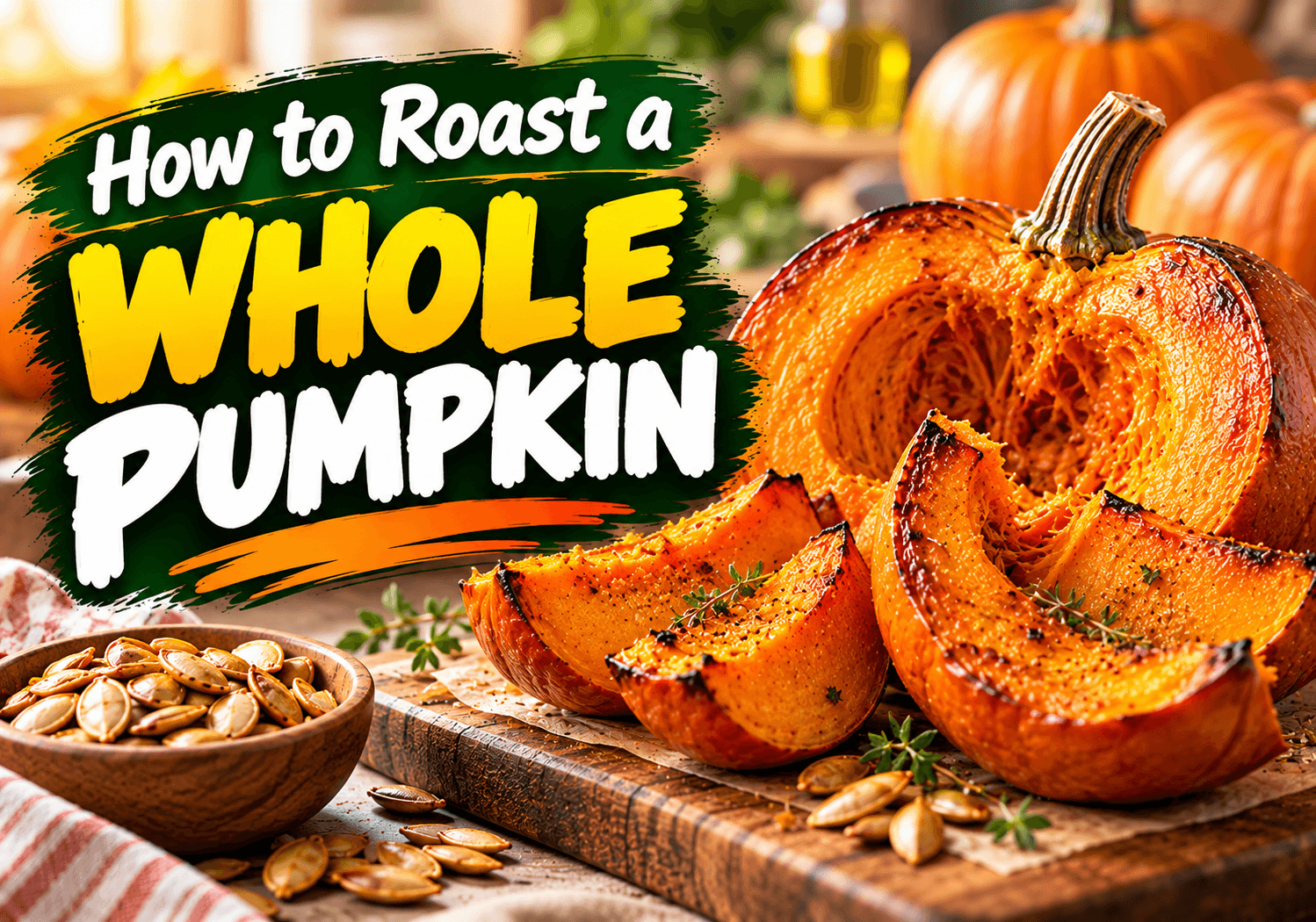
Roasting a pumpkin sounds like a big project, but it’s mostly hands-off oven time. With one small pie pumpkin, you can make a tray of caramelized wedges for dinner, a batch of homemade puree for baking, and a bowl of crunchy roasted seeds, all from the same squash. If you’ve ever wondered how to roast a pumpkin, this guide walks you through every step: choosing the right pumpkin, three roasting methods (whole, halves and wedges), how to tell when it’s done, turning it into smooth puree, and storing it safely.
Key Takeaways
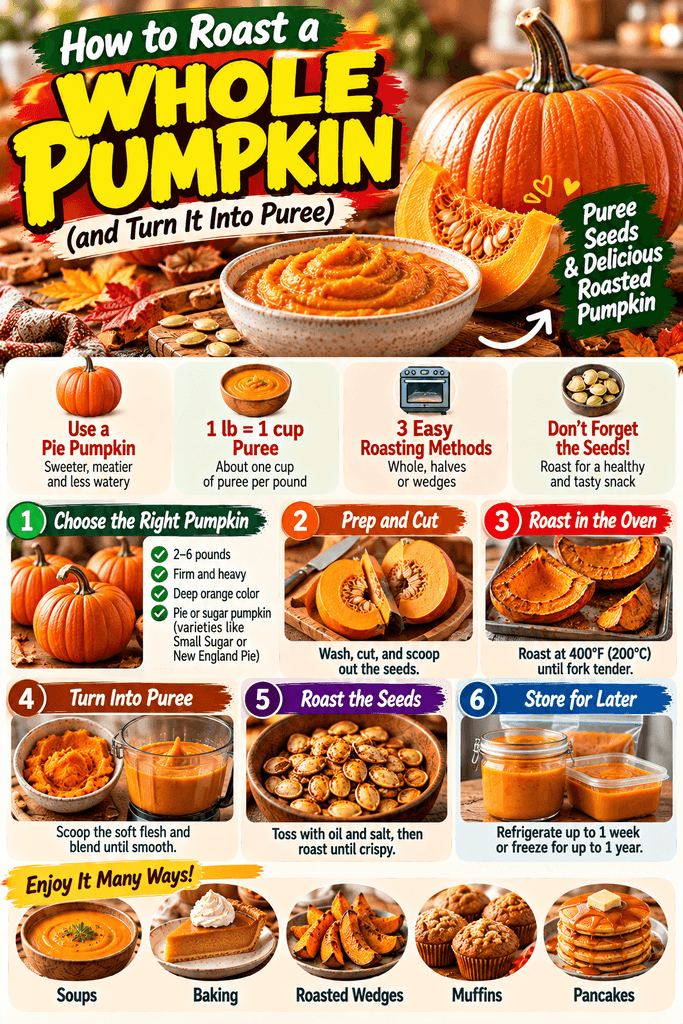
- Use a pie (sugar) pumpkin, not a carving pumpkin. Pie pumpkins are sweeter, meatier and less watery.
- One pound of pumpkin makes about one cup of puree, according to Ohio State University Extension.
- Three ways to roast: whole (easiest, no cutting raw), halves (best for puree), or wedges (best for eating as a side).
- It’s done when a fork slides in easily and the flesh is soft.
- Freeze puree for up to a year, but never home-can mashed pumpkin.
- Save the seeds. Roast them low and slow for a nutritious snack.
Why Roast Your Own Pumpkin?
Canned pumpkin is convenient and nutritious. See is canned pumpkin healthy. But roasting your own has real advantages:
- Flavor: Roasting caramelizes the natural sugars and gives a deeper, nuttier taste than boiling or steaming.
- Versatility: One pumpkin gives you a side dish, puree and seeds.
- Control: You decide the texture, seasoning and how dry or moist the puree is.
- Seasonal cooking: It’s a great way to use local fall produce.
Roasted pumpkin is also nutritious. According to USDA FoodData Central, one cup of cooked pumpkin has about 49 calories, 2.7 g fiber and 706 µg RAE of vitamin A, 78% of the Daily Value. Learn more in is pumpkin high in vitamin A and our full pumpkin nutrition facts.
Choose the Right Pumpkin
Not every pumpkin is good for roasting. According to Ohio State University Extension, “pie pumpkins are smaller, sweeter, meatier and less watery than carving pumpkins.” Nebraska Extension adds that sugar or pie pumpkins are less stringy and work well in recipes.
What to Look For
- Size: Ohio State Extension suggests pie pumpkins weighing 2 to 6 pounds.
- Labels: “Sugar pumpkin,” “pie pumpkin,” or variety names like “Small Sugar” or “New England Pie.”
- Feel: Heavy for its size, with a firm rind, no soft spots and an intact, dry stem.
- Color: Deep, even orange.
Can You Roast a Carving Pumpkin?
You can. It’s safe to eat, but the results are disappointing. Large jack-o’-lantern pumpkins are bred for size and thin walls, and their flesh tends to be stringy, watery and bland. If you do roast one, plan to drain the puree well. Never cook a pumpkin that has been carved and left out as a decoration.
Other Squash Work Too
Butternut, kabocha and other winter squashes roast beautifully and make excellent “pumpkin” puree. Many commercial canned pumpkins use squash varieties closer to butternut. See our winter squash guide for options.
How Much Pumpkin Do You Need?
According to Ohio State University Extension, one pound of pumpkin makes about one cup of puree. So:
| Pie pumpkin weight | Approximate puree |
| 2 lb | ~2 cups |
| 4 lb | ~4 cups |
| 6 lb | ~6 cups |
A standard 15-ounce can of pumpkin holds just under 2 cups, so a 2-pound pie pumpkin replaces about one can in recipes. Yields vary with the pumpkin’s size, seed cavity and water content.
Tools You’ll Need
- A large, sharp chef’s knife
- A sturdy cutting board, with a damp towel underneath to stop slipping
- A large metal spoon or ice cream scoop
- A rimmed baking sheet
- Parchment paper or foil (optional, for easier cleanup)
- Olive oil or another cooking oil
- A food processor, blender or potato masher (for puree)
- Oven mitts
Step 1: Wash and Prep the Pumpkin
Before cutting, wash the outside. The FDA recommends rinsing produce under running water before cutting or peeling, and scrubbing firm produce with a clean produce brush, so that dirt and bacteria on the surface don’t get carried into the flesh by the knife. Don’t use soap or detergent. Dry the pumpkin well so it doesn’t slip.
Preheat your oven while you prep. The temperature depends on the method you choose below.
Method 1: How to Roast a Whole Pumpkin (No Cutting Raw)
This is the easiest method for anyone nervous about cutting a hard, raw pumpkin. The oven softens it first.
- Preheat the oven to 350°F (175°C).
- Pierce the pumpkin in 6–8 places with a sharp knife or skewer so steam can escape. Don’t skip this step.
- Place the whole pumpkin on a parchment-lined baking sheet.
- Roast until a knife slides easily through the side, usually about 60–90 minutes for a 2–4 pound pie pumpkin. Larger pumpkins take longer.
- Cool for 20–30 minutes, until you can handle it safely.
- Cut the soft pumpkin in half, scoop out the seeds and stringy pulp, then scoop the flesh away from the skin.
Safety tip: Steam builds up inside a whole pumpkin. Cut it open slowly, pointing the cut away from your face and hands.
Best for: Puree, and anyone without a heavy knife.
Method 2: Roasting Pumpkin Halves (Best for Puree)
This is the classic method and gives the most flavorful puree.
- Preheat the oven to 350°F (175°C). Ohio State Extension suggests baking at 350°F for about an hour.
- Remove the stem. Cut around it or knock it off.
- Halve the pumpkin. Insert the tip of the knife near the stem and press down firmly through one side, then rotate and cut the other side. If it’s very hard, microwave the whole pumpkin for 2–3 minutes first (pierce it first) to soften the rind.
- Scoop out the seeds and stringy fibers. Save the seeds for roasting.
- Oil lightly. Brush the cut sides with a little oil, if you like. This helps browning.
- Place cut-side down on a lined baking sheet. This traps steam and keeps the flesh moist.
- Roast for 45–60 minutes, until a fork easily pierces the skin and the flesh is very soft.
- Cool, then scoop the flesh from the skin.
Best for: Puree, soups and baking.
Method 3: Roasted Pumpkin Wedges or Cubes (Best for Eating)
For a side dish or salad topping, higher heat gives caramelized edges.
- Preheat the oven to 400–425°F (200–220°C).
- Halve and seed the pumpkin as above.
- Slice each half into 1-inch wedges. For cubes, peel the wedges with a sharp vegetable peeler or knife, then cut into 1-inch pieces.
- Toss with 1–2 tablespoons of olive oil, salt, pepper and your choice of seasoning.
- Spread in a single layer on a baking sheet. Don’t crowd the pan, or the pumpkin will steam instead of roast.
- Roast for 25–35 minutes, flipping halfway, until tender and golden at the edges.
Seasoning Ideas
- Savory: garlic, rosemary, thyme, smoked paprika or cumin
- Sweet-spiced: cinnamon, nutmeg and a light drizzle of maple syrup in the last 5 minutes
- Spicy: chili flakes, chili powder and a squeeze of lime after roasting
- Finish with: toasted pumpkin seeds, crumbled feta or a drizzle of tahini
Why the oil matters: Pumpkin’s beta-carotene is fat-soluble. A study in the American Journal of Clinical Nutrition found that people absorbed significantly more carotenoids from vegetables eaten with full-fat rather than fat-free dressing.
Can You Eat the Skin?
The skin of small pie pumpkins softens when roasted in wedges and is edible, though some find it chewy. Scrub the pumpkin well if you plan to eat it. For puree, remove the skin.
How to Tell When Roasted Pumpkin Is Done
Look for these signs:
- A fork or knife slides in with no resistance, through the skin on halves or through the flesh on wedges.
- The flesh looks darker and slightly translucent, not pale and firm.
- Wedges have golden-brown, caramelized edges.
- Whole pumpkins look slightly collapsed and give when pressed (use an oven mitt).
If it’s still firm, keep roasting in 10–15-minute increments. Oven temperatures and pumpkin sizes vary, so trust tenderness over the timer.
Turning Roasted Pumpkin Into Puree
- Scoop the cooled flesh away from the skin.
- Blend in a food processor or blender until smooth, or mash by hand. Missouri Extension, citing the National Center for Home Food Preservation, suggests a food mill, blender or food processor for a smoother texture.
- Check the texture. If the puree is watery, which is common with larger pumpkins, drain it in a fine-mesh strainer or cheesecloth-lined colander for 30–60 minutes, or simmer it gently in a saucepan, stirring, until it thickens.
- Use or store right away (see below).
Homemade puree is usually lighter in color and looser than canned, which is cooked down and packed densely. If a recipe was written for canned pumpkin, drain your puree to a similar thickness.
For a step-by-step puree recipe with photos, see our guide on how to make pumpkin puree.
How to Store Roasted Pumpkin and Puree Safely
Cool Quickly
Missouri Extension recommends cooling cooked squash quickly by setting the pan in cold water and stirring occasionally. Follow the two-hour rule: NDSU Extension advises not leaving perishable foods in the “danger zone” for more than two hours.
Refrigerate
Store roasted pumpkin or puree in a covered container in the refrigerator at 40°F or below, as FoodSafety.gov recommends, and use it within a few days.
Freeze
According to Nebraska Extension, pumpkin puree freezes very well for up to one year. Store it in measured portions in labeled containers, leaving ½ inch of headspace for expansion. Ohio State Extension also notes that fresh puree can be frozen for up to one year. Keep your freezer at 0°F or below.
Tip: Freeze in 1-cup or 15-ounce portions to match recipe amounts, or in ice cube trays (about 2 tablespoons each) for smoothies and oatmeal.
Never Home-Can Pumpkin Puree
This is critical. Missouri Extension, citing the National Center for Home Food Preservation, warns: “Do not can mashed or pureed pumpkin, because the puree is too dense for heat to adequately penetrate the jar during processing.” Freeze puree instead.
How to Roast Pumpkin Seeds
Don’t throw away the seeds. They’re one of the most nutritious parts of the pumpkin.
- Separate the seeds from the stringy pulp. Swishing them in a bowl of water helps the pulp sink and the seeds float.
- Rinse and dry thoroughly with a towel. Dry seeds roast more evenly.
- Toss with a small amount of oil and salt, plus spices if you like (cinnamon, smoked paprika or garlic powder).
- Spread in a single layer on a baking sheet.
- Roast at a low temperature. Ohio State Extension suggests 250°F for about 15–20 minutes. Many cooks roast at 300–325°F for 20–30 minutes, stirring occasionally, until golden and crisp.
Watch them closely near the end, because seeds go from golden to burnt quickly.
Nutrition: According to USDA data for roasted pumpkin seed kernels, one ounce provides about 8 g protein, 156 mg magnesium and 2 g fiber. Whole seeds in the shell, like the ones you roast at home, have more fiber and a different nutrient profile than hulled kernels. Learn more in are pumpkin seeds healthy.
Ways to Use Roasted Pumpkin
- Side dish: Serve roasted wedges with chicken, pork or grain bowls.
- Soup: Blend roasted pumpkin with broth, onion and spices. Try this pumpkin sweet potato bisque.
- Chili: Stir puree or cubes into this pumpkin sweet potato black bean chili.
- Pasta sauce: Blend puree into a creamy sauce like this light pumpkin Alfredo sauce.
- Breakfast: Stir puree into oatmeal, yogurt or smoothies.
- Baking: Use drained puree in muffins and quick breads. See is pumpkin bread healthy for lighter baking tips.
- Salads: Toss cooled cubes with greens, nuts and a vinaigrette.
Troubleshooting Common Problems
My puree is watery.
Drain it in a fine-mesh strainer for up to an hour, or simmer it in a pan until it thickens. Roasting cut-side up for the last 10 minutes can also help evaporate moisture.
My puree is stringy.
Blend it longer in a food processor, or push it through a food mill or sieve. Next time, choose a pie pumpkin.
The pumpkin is still hard after an hour.
It may be larger or denser than average. Keep roasting in 10–15-minute increments.
My wedges are soggy, not caramelized.
The pan was probably crowded. Use two pans, raise the heat to 425°F, and make sure the pieces are lightly coated in oil.
My seeds are chewy.
They weren’t fully dried or weren’t roasted long enough. Dry them thoroughly and roast until golden.
My pumpkin tastes bitter.
Unusual bitterness can signal high levels of natural compounds called cucurbitacins, which can cause stomach upset. Don’t eat it. Throw it away.
Is Roasted Pumpkin Healthy?
Yes. Roasted pumpkin is low in calories and rich in vitamin A, and it provides fiber and potassium. A University of California, Davis review in the Journal of the Science of Food and Agriculture found that carotenoid levels are generally similar in fresh and processed produce and that cooking causes minimal changes in fiber, so roasting doesn’t strip away pumpkin’s key nutrients.
What you add matters most. A little olive oil helps nutrient absorption, while lots of butter, brown sugar or syrup adds calories and added sugar. For the full health picture, read is pumpkin healthy and does pumpkin have fiber.
Frequently Asked Questions
Can you roast a pumpkin whole?
Yes. Pierce a pie pumpkin several times so steam can escape, then roast it whole at 350°F until a knife slides through easily, usually 60 to 90 minutes for a 2- to 4-pound pumpkin. Let it cool, then cut it open carefully, scoop out the seeds and remove the flesh.
What temperature do you roast a pumpkin at?
For halves or whole pumpkins meant for puree, 350°F works well. Ohio State Extension suggests baking at 350°F for about an hour. For wedges or cubes you’ll eat as a side dish, use 400 to 425°F for better caramelization, usually 25 to 35 minutes.
How much puree does one pumpkin make?
According to Ohio State University Extension, one pound of pumpkin makes about one cup of puree. A 4-pound pie pumpkin yields roughly 4 cups, about the same as two 15-ounce cans. Yields vary with the pumpkin’s size, seed cavity and moisture.
Do you peel a pumpkin before roasting?
Not usually. For puree, roast halves or a whole pumpkin with the skin on, then scoop the soft flesh away. For roasted cubes, you can peel the raw wedges first, or roast wedges skin-on and eat or remove the skin afterward.
Can you roast a carving pumpkin?
You can, but the results are usually stringy, watery and bland. Pie or sugar pumpkins are sweeter and meatier. If you roast a carving pumpkin, drain the puree well. Never eat a pumpkin that was carved and left out as a decoration.
Can you freeze roasted pumpkin puree?
Yes. Nebraska Extension notes that pumpkin puree freezes well for up to one year. Freeze it in measured portions in labeled containers with half an inch of headspace. Don’t home-can pumpkin puree, because it’s too dense to process safely.
Conclusion
Now you know how to roast a pumpkin three ways: whole for the easiest prep, halves for the best puree, and wedges for a caramelized side dish. Start with a 2- to 6-pound pie pumpkin, wash it well, roast until fork-tender, and expect about one cup of puree per pound. Roast the seeds for a crunchy snack, cool leftovers quickly, refrigerate them in a covered container, and freeze extra puree for up to a year. Never home-can pumpkin puree.
Disclaimer: This article is for general educational purposes. Cooking times are guidelines and vary by oven and pumpkin size. If you have a health condition that affects your diet, such as kidney disease (pumpkin contains potassium), talk with your doctor or a registered dietitian.
(3) References
- Meeks S. “Fall Pumpkins.” Ohio State University Extension, Wayne County. 2019. https://wayne.osu.edu/news/fall-pumpkins
- Nebraska Extension. “Fall Pumpkin Fun.” University of Nebraska–Lincoln, Food Program. https://food.unl.edu/free-resources/newsletters/food-fun-young-children/fall-pumpkin-fun/
- University of Missouri Extension (citing the National Center for Home Food Preservation). “Preserving winter squash.” https://extension.missouri.edu/news/preserving-winter-squash
- U.S. Food and Drug Administration. “Selecting and Serving Produce Safely.” https://www.fda.gov/food/buy-store-serve-safe-food/selecting-and-serving-produce-safely
- North Dakota State University Extension. “Storing Canned and Packaged Food” (FN1468). 2025. https://www.ndsu.edu/agriculture/sites/default/files/2025-06/FN1468.pdf
- FoodSafety.gov (U.S. Department of Health and Human Services). “Cold Food Storage Chart.” https://www.foodsafety.gov/food-safety-charts/cold-food-storage-charts
- U.S. Department of Agriculture. “Pumpkin, cooked, boiled, drained, without salt” (FDC ID 168449). FoodData Central. https://fdc.nal.usda.gov/fdc-app.html#/food-details/168449/nutrients
- U.S. Department of Agriculture. “Seeds, pumpkin and squash seed kernels, roasted, without salt” (FDC ID 170557). FoodData Central. https://fdc.nal.usda.gov/fdc-app.html#/food-details/170557/nutrients
- Brown MJ, et al. “Carotenoid bioavailability is higher from salads ingested with full-fat than with fat-reduced salad dressings.” American Journal of Clinical Nutrition. 2004. https://pubmed.ncbi.nlm.nih.gov/15277161/
- Rickman JC, Bruhn CM, Barrett DM. “Nutritional comparison of fresh, frozen, and canned fruits and vegetables II.” Journal of the Science of Food and Agriculture. 2007. https://ucanr.edu/sites/default/files/2010-06/19188.pdf