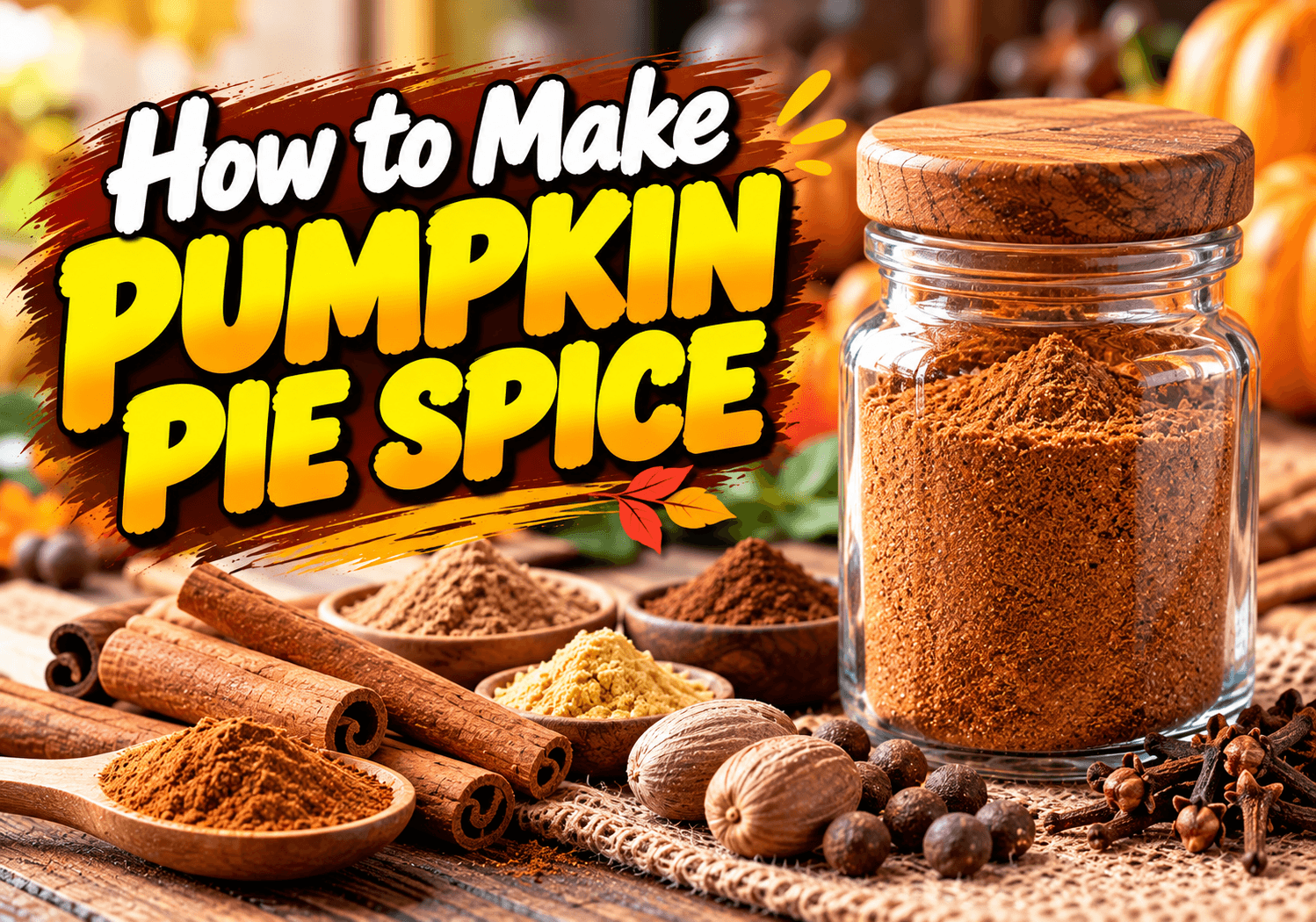
That little jar of pumpkin pie spice holds nothing you can’t mix yourself in two minutes. If you’ve ever wondered how to make pumpkin pie spice, the answer is five pantry spices, a measuring spoon, and a clean jar. Doing it yourself means you control the freshness, the cinnamon type, and the ratio. It also costs nothing extra if the spices are already in your cupboard.
This guide gives you a tested base recipe and ways to adjust it. It also covers what the USDA nutrition data shows and what research says about each spice. You’ll learn who should be careful with certain ingredients, how much to use in pies, oats, and drinks, and how to store the blend so it stays strong.
Key Takeaways
- The classic blend is cinnamon, ginger, nutmeg, allspice, and cloves, with cinnamon making up a little over half.
- One teaspoon has about 6 calories, 0 g sugar, and 12% of the Daily Value for manganese, according to USDA data.
- Individual spices in the blend have been studied for blood sugar (cinnamon), nausea (ginger), and antioxidant content (cloves). Results come mostly from doses larger than a typical recipe uses.
- At normal cooking amounts the blend is considered safe. Large amounts of nutmeg and frequent heavy use of cassia cinnamon carry real risks.
- Store it airtight, away from the stove. Ground spices generally keep good flavor for about 2 to 4 years.
What Is Pumpkin Pie Spice?
Pumpkin pie spice is a warm, sweet-smelling blend of ground spices. It was built to season pumpkin pie, but it works in anything that pairs with squash, apples, or sweet potatoes. Despite the name, it contains no pumpkin.
Most versions use the same five pumpkin pie spice ingredients:
- Cinnamon: the sweet, woody base
- Ginger: gentle heat and brightness
- Nutmeg: rich, slightly nutty depth
- Allspice: a single berry that tastes like a mix of cinnamon, nutmeg, and cloves
- Cloves: intense and slightly bitter, used sparingly
Pumpkin pie spice is not the same as allspice. Allspice is one spice from one plant, while pumpkin pie spice is a blend that usually includes allspice. The blend is also what flavors a pumpkin spice latte. The spice itself isn’t the health concern in that drink; the syrup is.
How to Make Pumpkin Pie Spice: The Basic Recipe
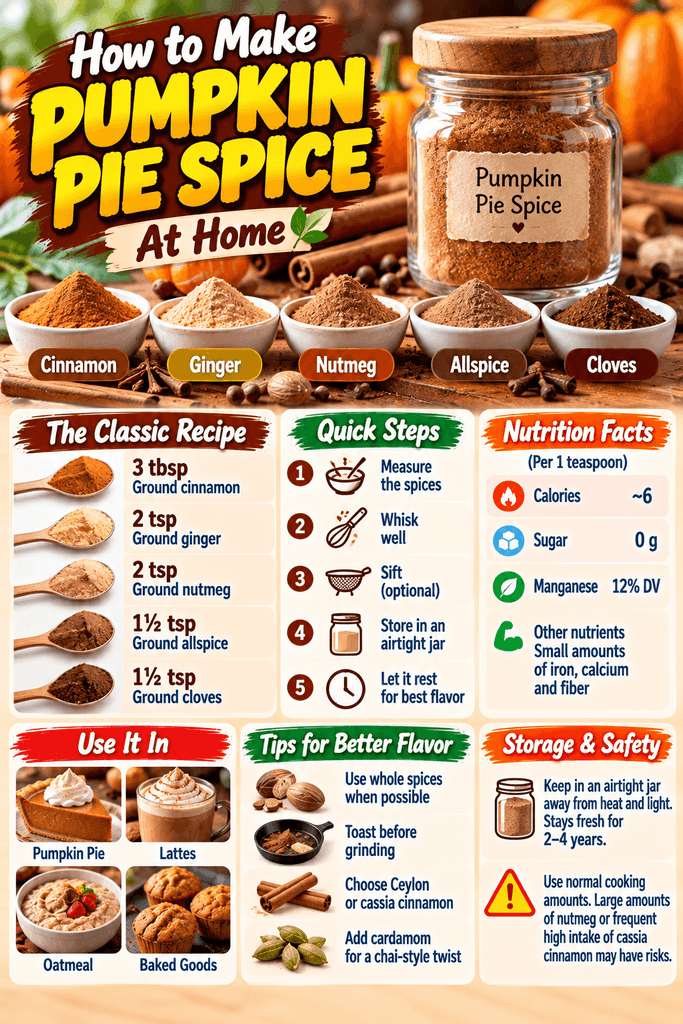
This recipe makes about ⅓ cup (16 teaspoons). That’s enough for several pies and a season of oatmeal.
Ingredients
| Spice | Amount | Share of blend |
| Ground cinnamon | 3 tablespoons (9 tsp) | ~56% |
| Ground ginger | 2 teaspoons | ~12.5% |
| Ground nutmeg | 2 teaspoons | ~12.5% |
| Ground allspice | 1½ teaspoons | ~9.5% |
| Ground cloves | 1½ teaspoons | ~9.5% |
Steps
- Measure each spice into a small bowl. Level the spoons so the ratio stays consistent from batch to batch.
- Whisk with a fork or small whisk for 30 seconds. Break up any clumps, especially in the ginger, which tends to cake.
- Sift (optional). For the smoothest texture in custards and drinks, push the blend through a fine-mesh strainer.
- Funnel into a clean, dry jar with a tight lid. Label it with the date.
- Rest for a day if you can. The aromas mingle and the flavor tastes more unified.
If you only need enough for one recipe, scale it down. For 1 teaspoon of pumpkin pie spice, mix ½ teaspoon cinnamon, ¼ teaspoon ginger, ⅛ teaspoon nutmeg, and ⅛ teaspoon cloves or allspice.
How to Make Pumpkin Pie Spice Taste Fresher and Stronger
A homemade blend is only as good as the jars it comes from. A few small choices make a noticeable difference.
Grind whole spices when you can
Nutmeg is the easiest place to start. A whole nutmeg grated on a microplane smells far stronger than pre-ground. Whole cloves and allspice berries can be ground in a cheap blade grinder used only for spices.
Toast before grinding
Warm whole cloves, allspice, and broken cinnamon sticks in a dry skillet over medium-low heat for 1 to 2 minutes. Stop as soon as they smell fragrant. Cool them completely before grinding, because warm spices clump and can steam inside the jar.
Adjust the ratio to your taste
- Warmer and spicier: raise the ginger to 1 tablespoon.
- Softer, kid-friendly: cut the cloves to ½ teaspoon. Cloves dominate quickly.
- No cloves on hand: replace them with extra allspice, which carries a similar note.
- Chai-style twist: add ½ teaspoon ground cardamom and a pinch of black pepper.
Choose your cinnamon on purpose
Most cinnamon sold in the U.S. is cassia, which tastes bold and spicy. Ceylon cinnamon is milder and more floral. It is also much lower in coumarin, a natural compound covered in the safety section below. If you bake often or use the blend daily, Ceylon is the more cautious choice.
Pumpkin Pie Spice Nutrition Facts
You won’t use pumpkin pie spice for its nutrients, but the numbers are still useful. They show that the blend adds flavor without adding sugar, salt, or meaningful calories.
Values below come from the USDA FoodData Central entry for pumpkin pie spice. Percent Daily Values use the FDA’s Daily Value reference amounts.
| Nutrient | Per 1 tsp (1.7 g) | % Daily Value |
| Calories | 6 | — |
| Carbohydrates | 1.2 g | <1% |
| Fiber | 0.3 g | 1% |
| Sugars | 0.1 g | — |
| Fat | 0.2 g | <1% |
| Sodium | <1 mg | 0% |
| Manganese | 0.27 mg | 12% |
| Iron | 0.34 mg | 2% |
| Calcium | 12 mg | 1% |
Manganese stands out at 12% of the Daily Value per teaspoon. Cinnamon and cloves are naturally rich in this trace mineral. Your body uses manganese for enzyme reactions involved in metabolism and bone formation.
The blend has almost no sugar and essentially no sodium. That makes it a useful tool for adding flavor while cutting back on both.
Possible Health Benefits of the Spices in the Blend
Here’s the honest framing: most research tests individual spices, often as supplements, at doses larger than a slice of pie provides. The findings explain why these spices are interesting. They don’t prove that a teaspoon of the blend treats anything.
Cinnamon and blood sugar
Cinnamon is the most studied spice in the jar. An updated meta-analysis in the Annals of Family Medicine pooled 10 randomized trials with 543 people who had type 2 diabetes. Cinnamon doses ranged from 120 mg to 6 g a day. Cinnamon was linked to lower fasting glucose (about 25 mg/dL on average) and modest improvements in LDL cholesterol and triglycerides.
There’s an important caveat. The same analysis found no significant change in HbA1c, the key long-term blood sugar marker. The authors also noted that the studies varied widely. The National Center for Complementary and Integrative Health (NCCIH) concludes that it’s unclear whether cinnamon is helpful for diabetes.
A teaspoon of homemade blend holds roughly 1 gram of cinnamon, which sits within the range those trials tested. Even so, the spice should be treated as a flavoring, not a treatment. If you’re cooking for blood sugar goals, these pumpkin recipes for diabetics show how to keep the flavor while limiting added sugar.
Ginger and nausea
Ginger owes its bite to compounds called gingerols and shogaols. A systematic review and meta-analysis in Nutrition Journal of 12 randomized trials found that ginger improved pregnancy-related nausea compared with placebo. It did not significantly reduce the number of vomiting episodes. NCCIH notes that ginger may help pregnancy nausea, while evidence for chemotherapy nausea is unclear.
The amount of ginger in a pie slice is tiny compared with the doses studied. For a fuller look at the root, see our guide on whether ginger is healthy.
Cloves and polyphenols
Cloves contain eugenol and other polyphenols, plant compounds with antioxidant activity in lab studies. In an analysis of the 100 richest dietary sources of polyphenols in the European Journal of Clinical Nutrition, cloves ranked first by weight. Because you use only a pinch, cloves add a small amount of antioxidants to your total diet. Our full article covers the benefits of cloves in more depth.
Spice blends, blood pressure, and inflammation
Two Penn State feeding trials tested mixed herbs and spices, including cinnamon and ginger, in culinary amounts:
- In a 2021 crossover trial in the American Journal of Clinical Nutrition, 71 adults at risk of heart disease ate a controlled diet with 6.6 g per day of mixed herbs and spices for four weeks. Their 24-hour blood pressure was modestly lower (about 1.9 mm Hg systolic) than on a moderate-spice diet. LDL cholesterol, the main outcome, did not change.
- In a 2020 trial in the Journal of Nutrition, 12 men with overweight ate a high-fat, high-carbohydrate meal with 6 g of a 13-spice blend. One inflammatory marker, IL-1β, rose about 13–14% less after that meal.
These studies were small, and the effects were modest. Both received spice-industry research funding: funding statement for the 2021 trial]. They suggest that seasoning generously is a reasonable habit, not that any single blend works as medicine.
Flavor that replaces sugar and salt
This may be the most practical benefit. Warm spices create a sense of sweetness and richness, so you can often reduce sugar in muffins, oats, and drinks without the food tasting flat. The FDA sets the Daily Value for added sugars at 50 grams. With nearly zero sugar and sodium per teaspoon, pumpkin pie spice adds flavor without using any of that budget.
Who Benefits Most From a Homemade Blend
A DIY pumpkin spice blend is especially useful for:
- People reducing added sugar. Extra spice makes lower-sugar baking and breakfast taste complete.
- Home bakers. You can match the blend to the recipe, for example more ginger for gingerbread-style loaves and less clove for custards.
- People with allergies or sensitivities. You know exactly what’s in the jar. Read labels on ground spices if cross-contact matters to you.
- Anyone who cooks pumpkin from scratch. If you roast a whole pumpkin for puree, a fresh blend matches that fresh flavor.
- Budget-minded cooks. If you already own cinnamon and ginger, you skip buying another single-purpose jar.
Risks and Who Should Be Cautious
Spices are safe in normal food amounts for most people. Still, a few ingredients in this blend have real limits.
Cassia cinnamon and coumarin
Cassia cinnamon contains coumarin, a compound that can harm the liver in sensitive people at high intakes. A study in the Journal of Agricultural and Food Chemistry: found substantial coumarin in cassia cinnamon species and only traces in Ceylon cinnamon. It also found that U.S. cinnamon-flavored foods and supplements likely contain cassia.
NCCIH states that cinnamon is likely safe in food amounts. It also notes that prolonged use of high-coumarin products may be a concern for people with liver disease. If you have liver disease, or if you eat cinnamon daily in large amounts, choosing Ceylon cinnamon for your blend is a sensible step.
Nutmeg in large doses
Nutmeg contains myristicin, which can cause poisoning in large amounts. A 10-year review from the Illinois Poison Center in the Journal of Medical Toxicology documented 32 nutmeg exposures. About half were intentional misuse by teenagers, and many accidental cases involved young children. The Tennessee Poison Center at Vanderbilt notes that effects have been documented at 15–20 grams, or two to three tablespoons of ground nutmeg. Symptoms include dizziness, a rapid heartbeat, nausea, and hallucinations, and they typically start 3 to 8 hours later.
In this recipe, the entire 16-teaspoon batch contains just 2 teaspoons of nutmeg. Normal cooking use is nowhere near that range. Still, keep spice jars out of children’s reach, and never treat nutmeg as a “natural high.”
Lead in some ground cinnamon
In 2023, cinnamon applesauce pouches were recalled after children were exposed to lead. The FDA then tested ground cinnamon and in March 2024 warned consumers about specific brands with elevated lead. The agency advised people to throw out the listed products and check their pantries, because cinnamon keeps a long time. Buy from established brands and check FDA alerts if you’re unsure about a jar.
Microbial contamination before processing
Spices are dried agricultural products. FDA data showed that about 6.6% of imported spice shipments carried Salmonella and about 12% contained filth such as insects, in 2007–2009. The agency notes that most retail spices are treated to reduce pathogens, and it does not recommend changing how much spice you eat. Measure with clean, dry spoons and keep the jar sealed.
Medications and pregnancy
NCCIH advises talking with your health care provider before using ginger or other herbal products as supplements if you take medication. Cooking amounts are a different matter from concentrated capsules. If you’re pregnant, normal culinary use is generally considered fine. Avoid large amounts of nutmeg, and ask your provider before taking any spice as a supplement.
How Much Pumpkin Pie Spice to Use
Here are typical amounts for common uses:
| Use | Amount of blend |
| One 9-inch pumpkin pie | 1½–2 tsp |
| Quick bread or 12 muffins | 1–2 tsp |
| Bowl of oatmeal or yogurt | ¼–½ tsp |
| Homemade latte (12 oz) | ¼ tsp |
| Roasted squash or sweet potatoes (4 servings) | ½–1 tsp |
| Pancake or waffle batter (4 servings) | 1 tsp |
Using it as a substitute
If a recipe calls for the individual spices and you only have the blend, use the same total amount of blend as the combined spices. For example, if a recipe lists 1 teaspoon cinnamon, ½ teaspoon ginger, and ¼ teaspoon nutmeg, use 1¾ teaspoons of the blend.
The reverse works too. Can you substitute cinnamon for pumpkin pie spice? Yes. Use about ¾ of the called-for amount in cinnamon alone, plus a pinch of ginger if you have it. The result will be flatter but still good.
How to Store Homemade Pumpkin Pie Spice
Heat, light, air, and moisture fade a spice blend fastest. Texas A&M AgriLife Extension recommends tightly sealed containers stored in a dark place. Avoid spots above the stove, dishwasher, microwave, or refrigerator, or near a sink or heating vent.
The same guide lists 2–4 years for ground spices and 3–4 years for whole spices. “Shelf life” here means quality, not safety. Old spices don’t spoil; they just taste weaker.
Practical storage tips:
- Use a small glass jar so there’s little air inside.
- Date the label. Your blend is only as fresh as the oldest spice you mixed in.
- Never shake the jar over a steaming pot. Steam carries moisture inside and causes clumping.
- Do the sniff test. Rub a pinch between your fingers. If the aroma is faint and the color looks dull, mix a new batch.
If your cinnamon is three years old, your “fresh” blend starts out three years old too. Mixing small batches each fall is the easiest way to keep flavor strong.
Myths vs. Facts
| Myth | Fact |
| Pumpkin pie spice contains pumpkin. | It’s only spices, usually five. No pumpkin at all. |
| Pumpkin pie spice and allspice are the same thing. | Allspice is a single berry. Pumpkin pie spice is a blend that often includes it. |
| A sprinkle of cinnamon controls blood sugar. | Trials show modest effects on fasting glucose and no clear effect on HbA1c. NCCIH calls the evidence unclear. |
| Natural spices can’t be harmful. | Large amounts of nutmeg are toxic, and cassia cinnamon contains coumarin. Amount matters. |
| Spices go bad and become unsafe. | Properly stored dried spices mostly lose flavor, not safety. Discard any that are damp or moldy. |
| Pumpkin spice drinks are healthy because of the spices. | The spice adds almost nothing. Syrup sugar drives the nutrition profile. |
How Pumpkin Pie Spice Fits a Healthy Lifestyle
The best reason to keep homemade pumpkin pie spice around is that it makes healthy food more appealing. Here are easy ways to use it:
- Breakfast: stir it into overnight oats, like this overnight pumpkin spice oats parfait, or into Greek yogurt with a spoon of pumpkin puree.
- Pumpkin puree boost: a can of plain pumpkin is rich in vitamin A and fiber, as our look at whether canned pumpkin is healthy explains. Spice makes it taste like dessert without the sugar.
- Homemade granola: toss oats and nuts with the blend, as in this pumpkin spice granola, and use less sweetener than the recipe calls for.
- Baking swaps: bump the spice and cut sugar by a quarter in loaves. Our breakdown of whether pumpkin bread is healthy shows where the sugar comes from.
- Savory dishes: sprinkle it on roasted butternut, acorn, or delicata squash. Our winter squash guide covers every variety.
- Gluten-free baking: pure ground spices contain no gluten. Still, check labels for “may contain” statements, especially if you’re baking for someone with celiac disease. Our guide on whether pumpkin pie is gluten free covers the crust and filling.
If you enjoy mixing blends, the same jar-and-whisk method works for savory mixes like this chipotle seasoning recipe.
Frequently Asked Questions
What is in pumpkin pie spice?
Pumpkin pie spice usually contains ground cinnamon, ginger, nutmeg, allspice, and cloves. Cinnamon makes up just over half the blend, and cloves and allspice are used in the smallest amounts. Some cooks add cardamom or a pinch of black pepper. It contains no pumpkin, sugar, or salt.
How long does homemade pumpkin pie spice last?
Stored in an airtight jar away from heat and light, ground spices keep good quality for about 2 to 4 years. Your blend is only as fresh as its oldest ingredient, so date the jar. If the aroma is faint when you rub a pinch, it’s time for a new batch.
Can I substitute cinnamon for pumpkin pie spice?
Yes. Use about three-quarters of the called-for amount in cinnamon, plus a pinch of ginger and nutmeg if you have them. Cinnamon alone tastes less complex but works well in oatmeal, muffins, and quick breads. For pies, a closer match gives the classic flavor.
Is pumpkin pie spice the same as allspice?
No. Allspice is the dried berry of a single plant, and its flavor resembles cinnamon, nutmeg, and cloves combined. Pumpkin pie spice is a blend of several spices that usually includes allspice. You can use extra allspice to replace cloves in a homemade blend.
Is pumpkin pie spice healthy?
It adds flavor with about 6 calories per teaspoon, no sugar, and almost no sodium. It also provides some manganese. Its individual spices have been studied for blood sugar, nausea, and antioxidants, but mostly at larger doses. Its biggest benefit is helping you use less sugar.
Is pumpkin pie spice safe during pregnancy?
Normal cooking amounts are generally considered safe during pregnancy. Avoid large amounts of nutmeg, which can be toxic, and don’t take spices as concentrated supplements without your provider’s approval. If you have specific concerns, such as medications or liver issues, ask your obstetric provider.
Conclusion
Now you know how to make pumpkin pie spice: whisk cinnamon, ginger, nutmeg, allspice, and cloves in a roughly 9:2:2:1.5:1.5 ratio and store the blend airtight away from the stove. Adjust it to your taste, use Ceylon cinnamon if you bake heavily, and remake it each fall for the best flavor.
The spices bring small, research-backed points of interest. The real win is that they make pumpkin, oats, yogurt, and squash taste rich with far less sugar. Use the blend generously in everyday cooking, not as medicine.
Medical disclaimer: This article is for general information only and isn’t a substitute for professional medical advice. Talk with your doctor or a registered dietitian before using spices or supplements to manage a health condition, especially if you are pregnant, have liver disease, or take medications.
3. References
- U.S. Department of Agriculture, Agricultural Research Service. Spices, pumpkin pie spice (FDC ID 171332, SR Legacy). FoodData Central. https://fdc.nal.usda.gov/fdc-app.html#/food-details/171332/nutrients
- U.S. Food and Drug Administration. Daily Value on the Nutrition and Supplement Facts Labels. https://www.fda.gov/food/nutrition-facts-label/daily-value-nutrition-and-supplement-facts-labels
- National Center for Complementary and Integrative Health. Cinnamon: Usefulness and Safety. Updated November 2024. https://www.nccih.nih.gov/health/cinnamon
- Allen RW, Schwartzman E, Baker WL, Coleman CI, Phung OJ. Cinnamon use in type 2 diabetes: an updated systematic review and meta-analysis. Annals of Family Medicine. 2013;11(5):452–459. https://www.annfammed.org/content/11/5/452
- Wang YH, Avula B, Nanayakkara NPD, Zhao J, Khan IA. Cassia cinnamon as a source of coumarin in cinnamon-flavored food and food supplements in the United States. Journal of Agricultural and Food Chemistry. 2013;61(18):4470–4476. https://doi.org/10.1021/jf4005862
- U.S. Food and Drug Administration. FDA Alert Concerning Certain Cinnamon Products Due to Presence of Elevated Levels of Lead. March 2024 (updated). https://www.fda.gov/food/alerts-advisories-safety-information/fda-alert-concerning-certain-cinnamon-products-due-presence-elevated-levels-lead
- U.S. Food and Drug Administration. Questions & Answers: Improving the Safety of Spices. https://www.fda.gov/food/cfsan-risk-safety-assessments/questions-answers-improving-safety-spices
- National Center for Complementary and Integrative Health. Ginger: Usefulness and Safety. Updated February 2025. https://www.nccih.nih.gov/health/ginger
- Viljoen E, Visser J, Koen N, Musekiwa A. A systematic review and meta-analysis of the effect and safety of ginger in the treatment of pregnancy-associated nausea and vomiting. Nutrition Journal. 2014;13:20. https://pmc.ncbi.nlm.nih.gov/articles/PMC3995184/
- Ehrenpreis JE, DesLauriers C, Lank P, Armstrong PK, Leikin JB. Nutmeg poisonings: a retrospective review of 10 years experience from the Illinois Poison Center, 2001–2011. Journal of Medical Toxicology. 2014;10:148–151. https://pubmed.ncbi.nlm.nih.gov/24452991/
- Bowman N. Nutmeg, a Potentially Uninvited Holiday Guest? Tennessee Poison Center, Vanderbilt University Medical Center. 2020. https://www.vumc.org/poison-control/toxicology-question-week/nov-23-2020-nutmeg-potentially-uninvited-holiday-guest
- Petersen KS, Davis KM, Rogers CJ, Proctor DN, West SG, Kris-Etherton PM. Herbs and spices at a relatively high culinary dosage improves 24-hour ambulatory blood pressure in adults at risk of cardiometabolic diseases. American Journal of Clinical Nutrition. 2021;114(6):1936–1948. https://doi.org/10.1093/ajcn/nqab291
- Oh ES, Petersen KS, Kris-Etherton PM, Rogers CJ. Spices in a high-saturated-fat, high-carbohydrate meal reduce postprandial proinflammatory cytokine secretion in men with overweight or obesity. Journal of Nutrition. 2020;150(6):1600–1609. https://doi.org/10.1093/jn/nxaa063
- Pérez-Jiménez J, Neveu V, Vos F, Scalbert A. Identification of the 100 richest dietary sources of polyphenols: an application of the Phenol-Explorer database. European Journal of Clinical Nutrition. 2010;64(Suppl 3):S112–S120. https://pubmed.ncbi.nlm.nih.gov/21045839/
- Acker F. Storing Dried Herbs & Spices. Texas A&M AgriLife Extension Service. https://agrilifeextension.tamu.edu/wp-content/uploads/2025/04/Storing-Dried-Herbs-Spices.pdf