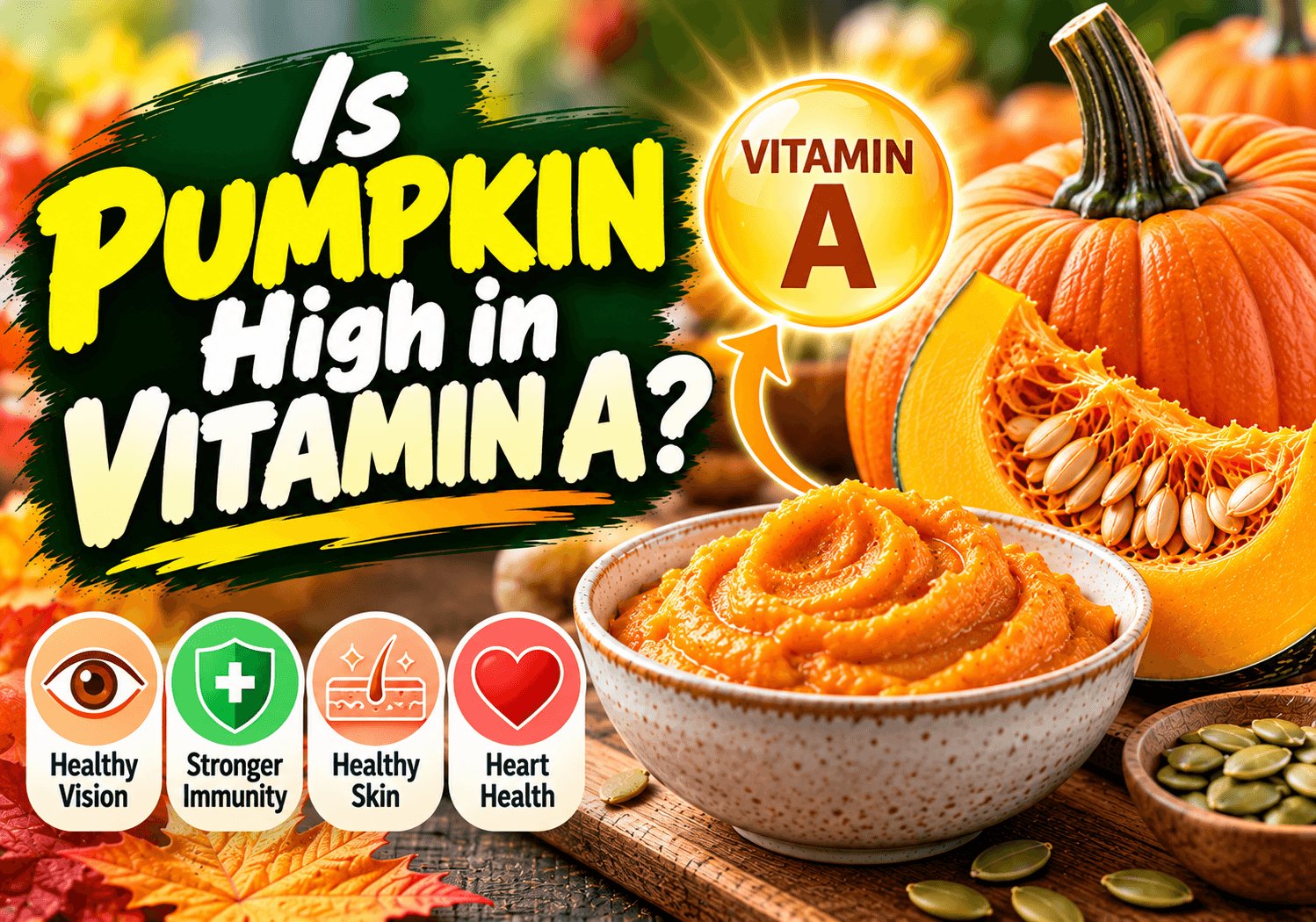
Pumpkin’s bright orange color isn’t just for show. It’s a visible sign of one of the richest nutrients in any vegetable. So, is pumpkin high in vitamin A? Yes, very. Just half a cup of plain canned pumpkin provides more than a full day’s Daily Value for vitamin A. But the vitamin A in pumpkin isn’t quite “vitamin A” yet. It comes as beta-carotene and related compounds that your body converts as needed, which has big implications for safety and absorption.
This guide explains exactly how much vitamin A is in pumpkin, how beta-carotene works, how pumpkin compares to carrots and sweet potatoes, what vitamin A does in your body, and how to get the most from it.
Key Takeaways
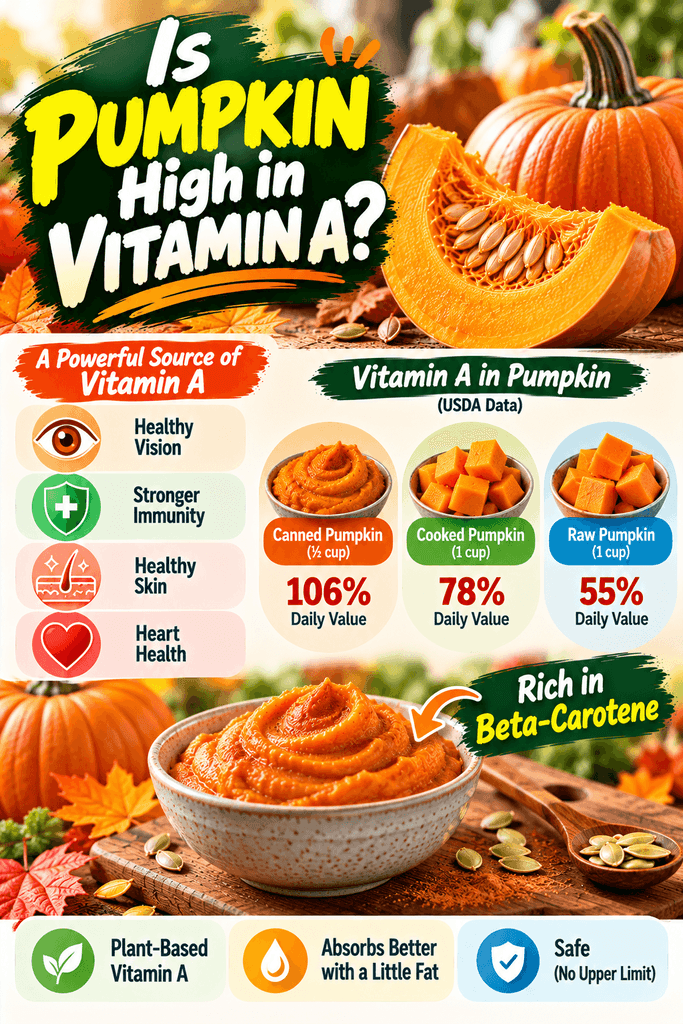
- ½ cup of canned pumpkin provides about 953 µg RAE of vitamin A, 106% of the Daily Value.
- 1 cup of cooked fresh pumpkin provides about 706 µg RAE (78% DV). Canned pumpkin is more concentrated.
- Pumpkin’s vitamin A comes from beta-carotene and alpha-carotene, which your body converts to vitamin A only as needed.
- Unlike preformed vitamin A from supplements and liver, beta-carotene from food has no upper limit and doesn’t cause vitamin A toxicity.
- Eating pumpkin with a little fat helps your body absorb its carotenoids.
- Very high intake can turn skin slightly orange (carotenemia). It’s harmless and reversible.
Is Pumpkin High in Vitamin A? The Numbers
According to USDA FoodData Central records for raw, cooked and canned pumpkin:
| Pumpkin form | Serving | Vitamin A (RAE) | % Daily Value |
| Canned, no salt | 1 cup (245 g) | 1,906 µg | 212% |
| Canned, no salt | ½ cup (122 g) | 953 µg | 106% |
| Canned, no salt | 2 tbsp (31 g) | 238 µg | 26% |
| Cooked, boiled, mashed | 1 cup (245 g) | 706 µg | 78% |
| Raw, cubed | 1 cup (116 g) | 494 µg | 55% |
% DV is based on the FDA Daily Value of 900 µg RAE.
The FDA considers a food providing 20% DV or more per serving a “high” source of a nutrient. Every serving above clears that bar, even just two tablespoons of canned pumpkin. Pumpkin isn’t just high in vitamin A; it’s one of the best sources you can eat.
Why canned is higher than fresh: Canned pumpkin holds less water than boiled fresh pumpkin, so a cup contains more pumpkin, and more carotenoids. For the full nutrient breakdown, see our pumpkin nutrition facts, and to choose the best can, read is canned pumpkin healthy.
Beta-Carotene Explained: How Pumpkin “Makes” Vitamin A
Vitamin A comes in two forms:
- Preformed vitamin A (retinol and retinyl esters), found in animal foods like liver, fish, eggs and dairy, and in many supplements. Your body can use it directly.
- Provitamin A carotenoids, plant pigments your body converts to vitamin A. The main ones are beta-carotene and alpha-carotene.
Pumpkin contains only the second kind. It’s unusually rich in both beta-carotene and alpha-carotene. USDA data lists about 2,100 µg of beta-carotene and 2,700 µg of alpha-carotene in just 100 grams of cooked pumpkin.
What “RAE” Means
Because carotenoids aren’t converted one-to-one, vitamin A is measured in retinol activity equivalents (RAE). According to the NIH Office of Dietary Supplements:
- 12 µg of dietary beta-carotene = 1 µg RAE
- 24 µg of dietary alpha-carotene = 1 µg RAE
So 100 g of cooked pumpkin’s ~2,100 µg beta-carotene and ~2,700 µg alpha-carotene work out to about 288 µg RAE, which matches the USDA figure.
Your Body Converts Only What It Needs
Your body regulates how much beta-carotene it turns into vitamin A. That’s why carotenoids from food are considered very safe. The ODS notes that while there is a tolerable upper intake level (UL) of 3,000 µg for preformed vitamin A in adults, beta-carotene has no established upper limit.
How Much Vitamin A Do You Need?
The Office of Dietary Supplements sets these Recommended Dietary Allowances (RDAs) for adults:
| Group | RDA (µg RAE/day) |
| Men | 900 |
| Women | 700 |
| Pregnancy | 770 |
| Breastfeeding | 1,300 |
How pumpkin fits:
- ½ cup of canned pumpkin (953 µg) exceeds the RDA for both men and women.
- ¼ cup (~476 µg) covers about two-thirds of a woman’s daily need.
- 2 tablespoons stirred into oatmeal or a smoothie (~238 µg) adds about a quarter of the Daily Value.
What Vitamin A Does in Your Body
According to the Office of Dietary Supplements, vitamin A is involved in:
Vision
Vitamin A is a component of rhodopsin, a light-sensitive pigment in the retina. The ODS explains that one of the earliest signs of vitamin A deficiency is night blindness, difficulty seeing in low light. In severe deficiency, this can progress to xerophthalmia, a serious eye condition.
Immune Function
Vitamin A supports the immune system, including the barriers that line the eyes, lungs and gut.
Cell Growth and Organ Health
The ODS notes that vitamin A plays a critical role in cell growth and differentiation and in the normal formation and maintenance of the heart, lungs, eyes and other organs.
Reproduction
Vitamin A is needed for normal reproduction and development, which is why requirements rise during pregnancy and breastfeeding.
Bonus carotenoids: Pumpkin also contains lutein and zeaxanthin, about 1,000 µg per 100 g of cooked pumpkin according to USDA data. These carotenoids aren’t converted to vitamin A, but they collect in the retina, where they’re studied for their role in eye health.
Who Might Need More Vitamin A?
The ODS notes that vitamin A deficiency is uncommon in the United States, but it remains a major problem in low- and middle-income countries, affecting an estimated 29% of young children there in 2013. In the U.S., groups at higher risk include:
- Premature infants
- People with cystic fibrosis, many of whom have trouble absorbing fat-soluble nutrients
- People with certain digestive disorders that impair fat absorption
For most healthy people, a varied diet that includes orange and dark green vegetables easily meets vitamin A needs. Pumpkin is one of the simplest ways to do it.
Pumpkin vs. Other Vitamin A Foods
How does pumpkin compare with other famous vitamin A foods? Per one-cup serving, from USDA FoodData Central:
| Food (1 cup, cooked) | Vitamin A (RAE) | % DV |
| Sweet potato, baked (200 g) | ~1,922 µg | 214% |
| Canned pumpkin (245 g) | 1,906 µg | 212% |
| Carrots, boiled (156 g) | ~1,329 µg | 148% |
| Butternut squash, baked (205 g) | ~1,144 µg | 127% |
| Cooked fresh pumpkin (245 g) | 706 µg | 78% |
| Hubbard squash, baked (205 g) | ~687 µg | 76% |
| Acorn squash, baked (205 g) | ~43 µg | 5% |
Sources: USDA FoodData Central records for sweet potato, carrots, butternut squash, Hubbard squash and acorn squash.
Key Takeaways From the Comparison
- Canned pumpkin ties sweet potato for vitamin A per cup, with far fewer calories (about 83 versus 180).
- Canned pumpkin beats carrots per cup, though carrots are excellent too. See are carrots healthy.
- Not every orange squash is equal. Acorn squash has very little vitamin A despite its golden flesh. See is acorn squash healthy.
- Deep-orange squashes like butternut and kabocha are rich sources. See is butternut squash healthy and is kabocha squash healthy.
For more on sweet potatoes, read are sweet potatoes healthy, and for a full tour of squash varieties, see our winter squash guide.
How to Absorb More Vitamin A From Pumpkin
Add a Little Fat
Carotenoids are fat-soluble, so they need some fat to be absorbed. A study in the American Journal of Clinical Nutrition found that people absorbed significantly more carotenoids from vegetables eaten with full-fat salad dressing than with fat-free or reduced-fat versions. Easy pairings:
- Roast pumpkin with olive oil.
- Top pumpkin soup with a swirl of yogurt or a sprinkle of seeds.
- Stir pumpkin into oatmeal with a spoonful of nut butter.
Cooked and Canned Pumpkin Work Well
A University of California, Davis review in the Journal of the Science of Food and Agriculture found carotenoid levels are generally similar in fresh and processed produce. Canned products often showed higher values, partly due to greater extractability. Cooking and canning don’t wreck pumpkin’s vitamin A; if anything, they may make carotenoids easier to release.
Pair Pumpkin With a Varied Diet
Your body converts carotenoids more efficiently when your overall diet is balanced. Eating a range of orange, yellow and dark green vegetables, along with some healthy fats, is the best strategy.
Can You Get Too Much Vitamin A From Pumpkin?
From pumpkin alone? No, not in a harmful way.
No Toxicity From Beta-Carotene in Food
The Office of Dietary Supplements sets an upper limit of 3,000 µg a day only for preformed vitamin A, the kind in liver, fish liver oils and many supplements. Beta-carotene from foods like pumpkin has no upper limit, because your body converts it only as needed.
Carotenemia: Harmless Orange Skin
If you eat large amounts of carotene-rich foods every day, such as pumpkin, carrots and sweet potatoes, your skin may take on a yellow-orange tint, especially on the palms and soles. An NCBI StatPearls review describes this condition, carotenemia, as benign. It fades when intake goes down. Unlike jaundice, it doesn’t turn the whites of the eyes yellow.
Supplements Are a Different Story
Food-based beta-carotene is safe, but high-dose beta-carotene supplements are not the same. The ODS reports that in the ATBC trial, beta-carotene supplements increased the risk of lung cancer by 18% in smokers. People who smoke, or used to, should avoid high-dose beta-carotene supplements. Getting carotenoids from foods like pumpkin is the safer route. Anyone considering vitamin A supplements, especially during pregnancy, should talk with their healthcare provider first.
Who Should Be Careful
- Smokers and former smokers: Enjoy pumpkin freely, but avoid high-dose beta-carotene supplements.
- People with kidney disease: Pumpkin also contains potassium. The NIDDK advises that people with chronic kidney disease may need to limit high-potassium foods.
- People with fat-malabsorption conditions: They may absorb less beta-carotene and should work with their care team on vitamin A status.
- Anyone taking vitamin A supplements: Count preformed vitamin A from supplements toward the 3,000 µg upper limit. Pumpkin’s beta-carotene doesn’t count toward it.
Easy Ways to Get Pumpkin’s Vitamin A
- Breakfast: Stir ¼–½ cup canned pumpkin into oatmeal or yogurt with cinnamon.
- Smoothies: Blend 2–4 tablespoons of pumpkin with banana, milk and nut butter.
- Soups: Puree roasted pumpkin with broth and a drizzle of olive oil.
- Salads: Add roasted pumpkin or squash cubes to greens. Try this massaged kale salad with roasted butternut squash.
- Baking: Use pumpkin in muffins and quick breads, but watch the sugar. See is pumpkin bread healthy.
- Chili and sauces: Stir pumpkin into chili or pasta sauce for color, body and vitamin A.
Pumpkin also brings fiber, especially canned pumpkin. See does pumpkin have fiber. For its overall benefits, read is pumpkin healthy.
Pumpkin and Vitamin A: Myths vs. Facts
Myth: Pumpkin contains vitamin A.
Fact: Pumpkin contains beta-carotene and alpha-carotene, which your body converts into vitamin A.
Myth: You can overdose on vitamin A from eating too much pumpkin.
Fact: Beta-carotene from food has no upper limit. The worst effect is harmless orange-tinted skin.
Myth: Fresh pumpkin has more vitamin A than canned.
Fact: Per cup, canned pumpkin has about 2.7 times the vitamin A of boiled fresh pumpkin because it’s more concentrated.
Myth: Beta-carotene supplements are as good as eating pumpkin.
Fact: High-dose supplements increased lung cancer risk in smokers. Food sources are the safer choice.
Myth: All orange squash is high in vitamin A.
Fact: Acorn squash provides only about 5% DV per cup. Deep-orange types like pumpkin and butternut are the rich sources.
Frequently Asked Questions
How much vitamin A is in pumpkin?
According to USDA data, half a cup of plain canned pumpkin has about 953 micrograms RAE of vitamin A, 106% of the Daily Value. One cup of cooked fresh pumpkin has about 706 micrograms (78% DV). Canned pumpkin is more concentrated because it contains less water.
Does pumpkin have more vitamin A than carrots?
Per cup, yes. One cup of canned pumpkin provides about 1,906 micrograms RAE of vitamin A, compared with about 1,329 micrograms in a cup of boiled carrots, according to USDA data. Both are excellent sources, and baked sweet potato is roughly equal to canned pumpkin.
Can you get too much vitamin A from pumpkin?
Not in a harmful way. Pumpkin contains beta-carotene, which your body converts to vitamin A only as needed, and beta-carotene from food has no upper limit. Eating very large amounts daily can tint your skin orange, a harmless condition called carotenemia.
Is beta-carotene the same as vitamin A?
No. Beta-carotene is a plant pigment your body converts into vitamin A. It takes about 12 micrograms of dietary beta-carotene to make 1 microgram of vitamin A activity. Unlike preformed vitamin A from supplements or liver, beta-carotene from food doesn’t cause vitamin A toxicity.
How much vitamin A do adults need per day?
The NIH Office of Dietary Supplements recommends 900 micrograms RAE a day for men and 700 for women. Needs rise to 770 micrograms during pregnancy and 1,300 while breastfeeding. Half a cup of canned pumpkin covers the daily needs of most adults.
How can I absorb more vitamin A from pumpkin?
Eat pumpkin with a little fat, such as olive oil, nuts, seeds or yogurt, because carotenoids are fat-soluble. Research shows people absorb more carotenoids from vegetables eaten with full-fat rather than fat-free dressing. Cooked and canned pumpkin are both good choices.
Conclusion
So, is pumpkin high in vitamin A? Absolutely. It’s one of the richest sources you can eat. Half a cup of plain canned pumpkin delivers more than 100% of the Daily Value, mainly as beta-carotene and alpha-carotene that your body converts to vitamin A as needed. That makes pumpkin a safe and effective way to support vision, immune function and overall health, with no risk of vitamin A toxicity from the food itself. Pair it with a little healthy fat, choose plain canned or roasted pumpkin, and skip high-dose beta-carotene supplements, especially if you smoke.
Medical disclaimer: This article is for general educational purposes only and is not a substitute for professional medical advice, diagnosis or treatment. If you are pregnant, smoke, have a digestive or kidney condition, or are considering vitamin A or beta-carotene supplements, talk with your doctor or a registered dietitian.
(3) References
- NIH Office of Dietary Supplements. “Vitamin A and Carotenoids: Fact Sheet for Health Professionals.” https://ods.od.nih.gov/factsheets/VitaminA-HealthProfessional/
- U.S. Department of Agriculture. “Pumpkin, raw” (FDC ID 168448). FoodData Central. https://fdc.nal.usda.gov/fdc-app.html#/food-details/168448/nutrients
- U.S. Department of Agriculture. “Pumpkin, cooked, boiled, drained, without salt” (FDC ID 168449). FoodData Central. https://fdc.nal.usda.gov/fdc-app.html#/food-details/168449/nutrients
- U.S. Department of Agriculture. “Pumpkin, canned, without salt” (FDC ID 168450). FoodData Central. https://fdc.nal.usda.gov/fdc-app.html#/food-details/168450/nutrients
- U.S. Department of Agriculture. “Sweet potato, cooked, baked in skin, flesh, without salt” (FDC ID 168483). FoodData Central. https://fdc.nal.usda.gov/fdc-app.html#/food-details/168483/nutrients
- U.S. Department of Agriculture. “Carrots, cooked, boiled, drained, without salt” (FDC ID 170394). FoodData Central. https://fdc.nal.usda.gov/fdc-app.html#/food-details/170394/nutrients
- U.S. Department of Agriculture. “Squash, winter, butternut, cooked, baked, without salt” (FDC ID 169296). FoodData Central. https://fdc.nal.usda.gov/fdc-app.html#/food-details/169296/nutrients
- U.S. Department of Agriculture. “Squash, winter, hubbard, baked, without salt” (FDC ID 168476). FoodData Central. https://fdc.nal.usda.gov/fdc-app.html#/food-details/168476/nutrients
- U.S. Department of Agriculture. “Squash, winter, acorn, cooked, baked, without salt” (FDC ID 169293). FoodData Central. https://fdc.nal.usda.gov/fdc-app.html#/food-details/169293/nutrients
- U.S. Food and Drug Administration. “Daily Value on the Nutrition and Supplement Facts Labels.” https://www.fda.gov/food/nutrition-facts-label/daily-value-nutrition-and-supplement-facts-labels
- Brown MJ, et al. “Carotenoid bioavailability is higher from salads ingested with full-fat than with fat-reduced salad dressings.” American Journal of Clinical Nutrition. 2004. https://pubmed.ncbi.nlm.nih.gov/15277161/
- Rickman JC, Bruhn CM, Barrett DM. “Nutritional comparison of fresh, frozen, and canned fruits and vegetables II. Vitamin A and carotenoids, vitamin E, minerals and fiber.” Journal of the Science of Food and Agriculture. 2007. https://ucanr.edu/sites/default/files/2010-06/19188.pdf
- Al Nasser Y, Jamal Z, Albugeaey M. “Carotenemia.” StatPearls, NCBI Bookshelf. https://www.ncbi.nlm.nih.gov/books/NBK534878/
- National Institute of Diabetes and Digestive and Kidney Diseases. “Eating Right for Chronic Kidney Disease.” https://www.niddk.nih.gov/health-information/kidney-disease/chronic-kidney-disease-ckd/eating-nutrition