Pumpkin bread smells like fall and feels wholesome. After all, there’s a vegetable in it. But is pumpkin bread healthy, or is it cake in loaf form? The honest answer: most pumpkin bread is closer to a treat than a health food, because sugar, refined flour and oil make up far more of the loaf than the pumpkin does. The good news is that pumpkin bread is one of the easiest baked goods to improve. With a few simple swaps, you can keep the flavor while adding fiber and nutrients and cutting added sugar.
This guide looks at what’s actually in a slice, using a published Extension recipe and USDA ingredient data, compares pumpkin bread to similar baked goods, and shows exactly how to make it better.
Key Takeaways
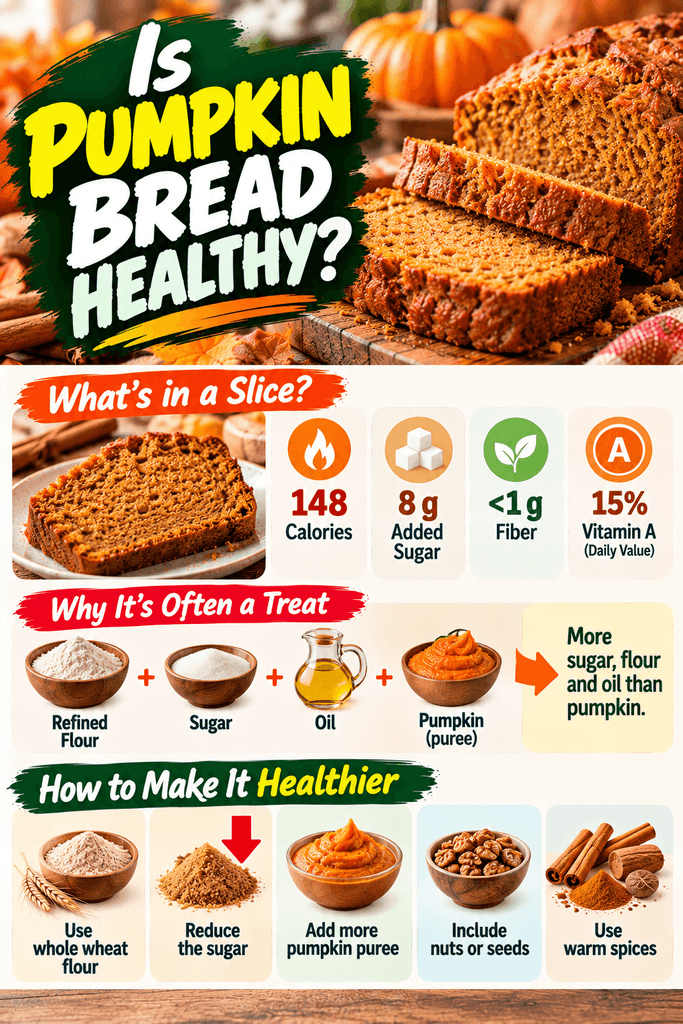
- A slice of a classic Extension pumpkin bread recipe has roughly 148 calories, 8 g added sugar, under 1 g fiber and about 15% of the Daily Value for vitamin A, calculated from USDA ingredient data.
- Much of the loaf is sugar, refined flour and oil. The pumpkin adds vitamin A and moisture but only a little fiber per slice.
- The 2025–2030 Dietary Guidelines suggest keeping added sugar under 10 g per meal. One modest slice fits; two slices or a big bakery slice usually won’t.
- Swapping half the flour for whole wheat, adding more pumpkin and cutting the sugar by a third nearly doubles the fiber and lowers added sugar to about 5.6 g per slice.
- Store-bought and coffee-shop slices are often much larger than a homemade slice. Check the label.
What’s in Pumpkin Bread?
Pumpkin bread is a quick bread, leavened with baking soda and baking powder instead of yeast. A typical recipe combines:
- Pumpkin puree: adds moisture, color, vitamin A and a little fiber
- Flour: usually all-purpose (refined) wheat flour
- Sugar: white and/or brown sugar
- Fat: vegetable oil or butter
- Eggs: bind the batter and add some protein
- Spices: cinnamon, nutmeg, ginger and cloves
- Optional add-ins: nuts, raisins or chocolate chips
To see what the pumpkin itself contributes, see our pumpkin nutrition facts.
Is Pumpkin Bread Healthy? A Slice-by-Slice Look
To give real numbers, we used a published recipe, the Pumpkin or Squash Bread from University of Maine Cooperative Extension. It’s a modest, home-style recipe: ½ cup sugar, ¼ cup oil, ¾ cup pumpkin puree, 2 eggs and 1½ cups all-purpose flour, plus leavening and cinnamon, baked in a 9×5-inch loaf and cut into 12 slices.
We calculated the nutrition per slice (without the optional nuts and raisins) using USDA FoodData Central records for canned pumpkin, all-purpose flour, eggs, granulated sugar and canola oil:
| Per slice (1/12 loaf) | Classic Extension recipe | % Daily Value |
| Calories | ~148 | — |
| Carbohydrate | ~21.5 g | 8% |
| Fiber | ~0.9 g | 3% |
| Added sugar | ~8.3 g | 17% |
| Protein | ~2.8 g | — |
| Fat | ~5.7 g | 7% |
| Vitamin A (RAE) | ~133 µg | 15% |
Calculated from USDA ingredient data. % DV uses FDA Daily Values. Values are estimates; your results depend on your exact ingredients and slice size.
What the Numbers Tell Us
- Calories are moderate for a baked good, if you stick to one 1/12-of-a-loaf slice.
- Added sugar is the main concern. About 8 g per slice is close to the new guideline of under 10 g of added sugar per meal. Recipes that call for more sugar, or bigger slices, go over quickly.
- Fiber is low. Under 1 g per slice, because refined flour has had most of its fiber removed and the pumpkin is spread across 12 slices.
- Vitamin A is a real plus. About 15% of the Daily Value per slice, almost entirely from the pumpkin.
So, is pumpkin bread healthy? A small slice of a modest recipe is a reasonable treat with some vitamin A. It isn’t a high-fiber or nutrient-dense food unless you change the recipe.
Where the Calories Come From
Looking at the whole loaf of the Extension recipe shows why pumpkin bread behaves more like a dessert:
| Ingredient | Approx. calories in the loaf | Share |
| All-purpose flour (1½ cups) | ~683 | 38% |
| Canola oil (¼ cup) | ~495 | 28% |
| Sugar (½ cup) | ~390 | 22% |
| Eggs (2) | ~143 | 8% |
| Pumpkin (¾ cup) | ~63 | 4% |
Pumpkin provides only about 4% of the calories. The other 96% come from flour, oil, sugar and eggs. That’s why “it has pumpkin in it” doesn’t make pumpkin bread a vegetable serving. To learn what pumpkin offers on its own, see is pumpkin healthy.
The Problem With Added Sugar
Added sugar is the biggest nutritional drawback of most pumpkin bread.
According to Harvard’s summary of the 2025–2030 Dietary Guidelines for Americans, the new guidelines state that no amount of added sugar is considered part of a healthy diet, and suggest that no single meal exceed 10 g of added sugar. They also recommend that children avoid added sugars until age 10.
The CDC reports that desserts and sweet snacks are among the leading sources of added sugar in the U.S. diet, and that excess added sugar contributes to obesity, type 2 diabetes and heart disease.
One slice of a modest homemade pumpkin bread (~8 g added sugar) fits under the per-meal guideline. Two slices, a thick bakery slice, a glaze or a cream cheese frosting won’t. If you pair a slice with a sweetened coffee drink, the sugar adds up fast. See is a pumpkin spice latte healthy.
Refined Flour vs. Whole-Grain Flour
Most pumpkin bread uses all-purpose white flour. The Harvard T.H. Chan School of Public Health explains that refining wheat removes the bran and germ, which strips away more than half of the B vitamins, 90% of the vitamin E and virtually all of the fiber. Harvard also notes that higher whole-grain intake is associated with lower risk of heart disease and type 2 diabetes.
The difference shows up clearly in USDA data, per 100 g of flour:
| Flour | Fiber | Protein |
| All-purpose, enriched | 2.7 g | 10.3 g |
| Whole wheat | 10.6 g | 15.1 g |
Whole-wheat flour has about four times the fiber of all-purpose flour. That’s the single most effective swap for making pumpkin bread more nutritious. Other whole-grain options include oat flour (see is oat flour healthy) and almond flour, which adds protein and healthy fats (see is almond flour healthy).
How to Make Pumpkin Bread Healthier
Here’s what happens when you make three simple changes to the same Extension recipe: replace half the flour with whole-wheat flour, increase the pumpkin from ¾ cup to 1 cup, and reduce the sugar from ½ cup to ⅓ cup. Calculated from the same USDA data:
| Per slice (1/12 loaf) | Classic recipe | Improved recipe | Change |
| Calories | ~148 | ~139 | −6% |
| Added sugar | ~8.3 g | ~5.6 g | −33% |
| Fiber | ~0.9 g | ~1.6 g | +78% |
| Protein | ~2.8 g | ~3.3 g | +18% |
| Vitamin A (RAE) | ~133 µg (15% DV) | ~172 µg (19% DV) | +30% |
The bread is still a treat, but a noticeably better one. Here are more ways to improve it.
1. Use Whole-Grain Flour
Start by swapping half the all-purpose flour for whole-wheat or white whole-wheat flour. White whole wheat is milder and lighter in color. Once you like the result, try going higher. Whole-wheat flour absorbs more liquid, so a slightly moister batter works well.
2. Cut the Sugar
Most quick bread recipes tolerate a 25–33% sugar reduction with little change in texture. Pumpkin, cinnamon and vanilla add natural sweetness and flavor. Try replacing some sugar with a little maple syrup or mashed ripe banana, and remember these still count toward sugar.
3. Add More Pumpkin
More pumpkin means more vitamin A and moisture. Use plain canned pumpkin labeled “100% pumpkin,” not pumpkin pie mix, which contains added sugar. See is canned pumpkin healthy.
4. Rethink the Fat
You can replace part of the oil with unsweetened applesauce or plain Greek yogurt to cut calories and add moisture. Don’t remove all of it: some fat keeps the texture tender, and fat helps your body absorb pumpkin’s fat-soluble beta-carotene. Choose an oil higher in unsaturated fat, like canola or olive oil, over butter for heart health.
5. Boost Fiber and Healthy Fats With Add-Ins
Fold in chopped walnuts or pecans, or top the loaf with pumpkin seeds, which add fiber, protein and minerals. See are pumpkin seeds healthy. A tablespoon or two of ground flaxseed or rolled oats also adds fiber.
6. Skip the Glaze and Frosting
Cream cheese frosting, streusel and sugar glazes can easily double the added sugar per slice. A sprinkle of cinnamon or a few pepitas on top gives you crunch and flavor without the extra sugar.
7. Watch the Slice Size
Cut the loaf into 12 slices, or bake it as 12 muffins for built-in portion control. Our article on whether muffins are healthy explains how size can make or break a baked good.
For a ready-made whole-grain quick bread template, see this whole wheat oatmeal quick bread. For comparison, this classic Libby’s pumpkin bread recipe shows a more traditional, sweeter style. Apply the swaps above to lighten it.
Pumpkin Bread vs. Banana Bread and Muffins
Pumpkin bread, banana bread and bakery muffins are nutritional cousins: all are quick breads made with flour, sugar, fat and eggs. The main differences:
- Pumpkin bread gets a vitamin A boost from pumpkin.
- Banana bread gets more natural sugar and some potassium from bananas, which may let you use less added sugar.
- Bakery muffins are often the largest portion of the three, and frequently higher in sugar and fat.
In every case, the recipe and the portion matter more than the flavor. For a closer look at the alternatives, read is banana bread healthy.
Store-Bought and Bakery Pumpkin Bread
Packaged and coffee-shop pumpkin breads vary widely, and slices are often much larger than 1/12 of a home loaf. To compare:
- Check the serving size on the Nutrition Facts label. Is it the whole slice or package, or a fraction of it?
- Look at “Added Sugars.” Under the new guidelines, aim for 10 g or less for the whole snack or meal.
- Look for whole grains. “Whole wheat flour” or “whole grain” should be the first ingredient.
- Compare fiber to carbs. Harvard suggests a carbohydrate-to-fiber ratio under 10:1 as a sign of a healthier grain product.
- Watch for glazes, frostings and crumb toppings, which add sugar.
The FDA considers 20% DV or more of a nutrient “high” and 5% or less “low.” That rule applies to added sugars too.
Who Should Be Careful With Pumpkin Bread
People With Diabetes
Pumpkin bread is mostly refined carbohydrate and sugar, which can raise blood sugar quickly. If you have diabetes, choose a small slice of a whole-grain, reduced-sugar version, pair it with protein (like Greek yogurt or a handful of nuts), and count it in your carbohydrate plan. For more on choosing breads, see is whole wheat bread good for diabetics.
People Watching Their Weight
At about 140–150 calories per small slice, pumpkin bread can fit, but bigger slices and second helpings add up. Fiber from whole grains helps you feel full longer. According to Mayo Clinic, high-fiber foods tend to be more filling and support a healthy weight.
Children
The 2025–2030 Dietary Guidelines recommend avoiding added sugar for children until age 10. For kids, bake lower-sugar pumpkin muffins or pancakes and serve them as an occasional treat.
People With Celiac Disease or Gluten Sensitivity
Traditional pumpkin bread contains wheat. Use a certified gluten-free flour blend and follow strict cross-contact precautions.
The Bright Spot: Pumpkin’s Vitamin A
Pumpkin bread does have one real nutritional advantage over many baked goods: vitamin A. Canned pumpkin is rich in beta-carotene, which your body converts to vitamin A. According to the NIH Office of Dietary Supplements, vitamin A supports normal vision, immune function and healthy skin. A slice of the improved recipe provides about a fifth of the Daily Value, and the oil in the batter helps your body absorb it.
Pumpkin Bread Myths vs. Facts
Myth: Pumpkin bread is healthy because it contains a vegetable.
Fact: Pumpkin contributes only about 4% of the calories in a typical loaf. Flour, oil and sugar make up most of it.
Myth: Pumpkin bread is high in fiber.
Fact: Made with white flour, it has under 1 g of fiber per slice. Whole-grain flour improves that.
Myth: Cutting sugar ruins the texture.
Fact: Most quick breads handle a one-quarter to one-third sugar reduction well.
Myth: “Bread” means it’s a better choice than cake.
Fact: Nutritionally, many quick breads are close to cake. Portion and ingredients decide.
Myth: Store-bought slices are the same as homemade.
Fact: Bakery slices are often much larger. Check the serving size and added sugars.
How Pumpkin Bread Fits a Healthy Lifestyle
Think of pumpkin bread as a treat you can make better, not a health food. Bake it at home so you control the ingredients, use whole-grain flour, more pumpkin and less sugar, cut modest slices, and pair a slice with protein, like Greek yogurt, eggs or a handful of nuts, for a more balanced snack. Enjoy it occasionally, and get most of your pumpkin from roasted pumpkin, soups and plain puree stirred into oatmeal.
Frequently Asked Questions
How many calories are in a slice of pumpkin bread?
It depends on the recipe and slice size. Based on USDA ingredient data, a 1/12-loaf slice of University of Maine Extension’s pumpkin bread recipe has about 148 calories. Bakery and coffee-shop slices are often much larger, so check the Nutrition Facts label for packaged versions.
How much sugar is in pumpkin bread?
A slice of the Extension recipe has about 8 grams of added sugar, calculated from its half cup of sugar spread over 12 slices. Recipes with more sugar, bigger slices, glazes or frostings contain much more. The 2025–2030 Dietary Guidelines suggest keeping added sugar under 10 grams per meal.
Is pumpkin bread healthier than banana bread?
They’re similar quick breads. Pumpkin bread provides more vitamin A, while banana bread gets natural sugar and potassium from bananas. The recipe, flour type, sugar amount and slice size matter far more than the flavor. Choose whichever one you make with whole grains and less sugar.
Can people with diabetes eat pumpkin bread?
In small portions, as part of a meal plan. Choose a whole-grain, reduced-sugar version, keep slices small, and pair it with protein or healthy fat to slow the blood sugar rise. Count it as a carbohydrate serving, and talk with your care team about how treats fit your plan.
Can you use whole wheat flour in pumpkin bread?
Yes. Start by replacing half the all-purpose flour with whole-wheat or white whole-wheat flour. Whole-wheat flour has about four times the fiber of all-purpose flour, according to USDA data. The bread will be slightly denser and nuttier but still moist, thanks to the pumpkin.
Is pumpkin bread good for weight loss?
Pumpkin bread isn’t a weight-loss food, but a small slice can fit a balanced diet. Choose a whole-grain, lower-sugar version for more fiber and fewer empty calories, keep slices modest, skip frosting, and pair it with protein to stay full longer.
Conclusion
So, is pumpkin bread healthy? Mostly, it’s a treat. Even in a modest Extension recipe, flour, oil and sugar supply about 96% of the calories, and a slice has about 8 grams of added sugar and under 1 gram of fiber. It does provide some vitamin A from the pumpkin. Using half whole-wheat flour, an extra ¼ cup of pumpkin and a third less sugar nearly doubles the fiber, raises the vitamin A and cuts added sugar to about 5.6 grams per slice. Bake it at home, keep slices small, skip the frosting, and enjoy it occasionally.
Medical disclaimer: This article is for general educational purposes only and is not a substitute for professional medical advice, diagnosis or treatment. If you have diabetes, celiac disease or another health condition, talk with your doctor or a registered dietitian before making significant changes to your diet.
(3) References
- University of Maine Cooperative Extension. “Pumpkin or Squash Bread.” https://extension.umaine.edu/food-health/recipes/pumpkin-or-squash-bread/
- U.S. Department of Agriculture. “Pumpkin, canned, without salt” (FDC ID 168450). FoodData Central. https://fdc.nal.usda.gov/fdc-app.html#/food-details/168450/nutrients
- U.S. Department of Agriculture. “Wheat flour, white, all-purpose, enriched, bleached” (FDC ID 168894). FoodData Central. https://fdc.nal.usda.gov/fdc-app.html#/food-details/168894/nutrients
- U.S. Department of Agriculture. “Flour, whole wheat, unenriched” (FDC ID 790085). FoodData Central, Foundation Foods. https://fdc.nal.usda.gov/fdc-app.html#/food-details/790085/nutrients
- U.S. Department of Agriculture. “Egg, whole, raw, fresh” (FDC ID 171287). FoodData Central. https://fdc.nal.usda.gov/fdc-app.html#/food-details/171287/nutrients
- U.S. Department of Agriculture. “Sugars, granulated” (FDC ID 169655). FoodData Central. https://fdc.nal.usda.gov/fdc-app.html#/food-details/169655/nutrients
- U.S. Department of Agriculture. “Oil, canola” (FDC ID 172336). FoodData Central. https://fdc.nal.usda.gov/fdc-app.html#/food-details/172336/nutrients
- U.S. Food and Drug Administration. “Daily Value on the Nutrition and Supplement Facts Labels.” https://www.fda.gov/food/nutrition-facts-label/daily-value-nutrition-and-supplement-facts-labels
- Harvard T.H. Chan School of Public Health. “Dietary Guidelines for Americans 2025–2030: Progress on added sugar, protein hype, saturated fat contradictions.” 2026. https://nutritionsource.hsph.harvard.edu/2026/01/09/dietary-guidelines-for-americans-2025-2030-progress-on-added-sugar-protein-hype-saturated-fat-contradictions/
- Centers for Disease Control and Prevention. “Added Sugars.” https://www.cdc.gov/nutrition/php/data-research/added-sugars.html
- Harvard T.H. Chan School of Public Health. “Whole Grains.” The Nutrition Source. https://nutritionsource.hsph.harvard.edu/what-should-you-eat/whole-grains/
- Mayo Clinic Staff. “Dietary fiber: Essential for a healthy diet.” Mayo Clinic. https://www.mayoclinic.org/healthy-lifestyle/nutrition-and-healthy-eating/in-depth/fiber/art-20043983
- NIH Office of Dietary Supplements. “Vitamin A and Carotenoids: Fact Sheet for Health Professionals.” https://ods.od.nih.gov/factsheets/VitaminA-HealthProfessional/