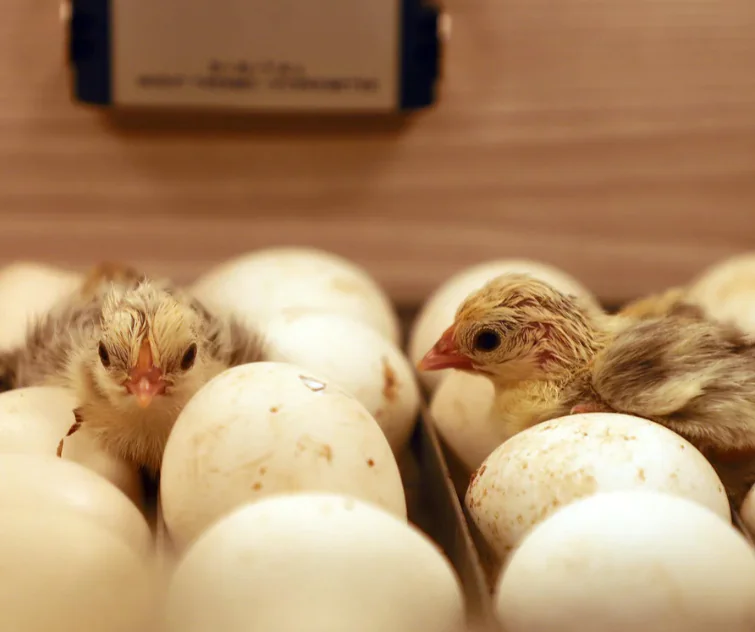
The question of what came first, the chicken or the egg, is perhaps the most famous paradox in human history.
For centuries, it has served as a linguistic shorthand for circular reasoning, a centerpiece for deep philosophical debate, and a favorite topic for late-night scientific deep dives.
Depending on who you ask—an evolutionary biologist, a theologian, a philosopher, or a comedian—the answer changes dramatically.
At its core, the inquiry of what came first chicken or the egg, challenges our understanding of cause and effect. If a chicken must come from an egg, but an egg must be laid by a chicken, where is the starting point?
Today, thanks to advancements in genetics, paleontology, and historical analysis, we finally have the tools to provide a definitive answer.
This guide will explore every angle of this ancient riddle. We will dive into the what came first, the chicken or the egg scientific answer, analyze religious texts like the Bible and the Quran, and even look at the humor and memes that have kept this question alive in pop culture. Whether you are here for a serious scientific explanation or a clever riddle, you are about to find out what came first, the chicken or the egg.
The Short Answer (If You’re in a Hurry)
If you are looking for the absolute what came first, the chicken or the egg answer, the most accurate response is: The egg.
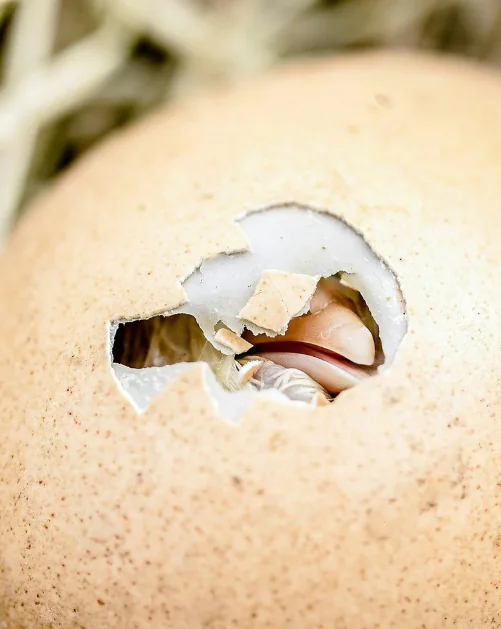
From a biological and evolutionary standpoint, eggs existed hundreds of millions of years before the first bird we would classify as a “chicken” ever walked the Earth. Dinosaurs were laying amniotic eggs long before birds evolved from them.
Even if we narrow the question specifically to “a chicken egg,” the answer remains the egg. This is because a bird that was almost a chicken (a proto-chicken) laid an egg containing a genetic mutation that resulted in the first true chicken.
Therefore, whether you look at the broad history of life or the specific genetics of the Red Jungle Fowl, the egg precedes the bird.
The Scientific Answer – What Came First, the Chicken or the Egg?
When addressing what came first, the chicken or the egg, the scientific answer, we must move away from the abstract and into the realm of biology. Modern science provides a clear resolution to this paradox through the study of evolution and genetics.
Evolution Explains the Egg Came First
To understand what came first, the chicken or the egg, evolution must be the starting point. Life on Earth began in the oceans, and eventually, creatures moved onto land.
To survive and reproduce away from water, animals needed a way to keep their embryos moist and protected. This led to the development of the amniotic egg.
Fossil records indicate that egg-laying land animals existed roughly 340 million years ago. In contrast, the modern chicken (Gallus gallus domesticus) only appeared within the last several thousand years.
This means eggs were an established biological technology for nearly 330 million years before the first chicken existed.
What Came First, the Dinosaur or the Egg?
The question of what came first, the dinosaur or the egg, follows the same logic. Dinosaurs, which are the ancestors of modern birds, were prolific egg-layers.”Millions of years before the emergence of iconic dinosaurs like the T. rex or Brachiosaurus, ancestral reptilian lineages had already mastered the evolutionary feat of laying amniotic eggs.
“Since birds are technically categorized as avian dinosaurs, the transition from reptile to bird happened through a long series of eggs and incremental genetic shifts.
When Did Chickens First Appear?
Determining when chickens first appeared requires looking at the Red Jungle Fowl of Southeast Asia. Research suggests that humans began domesticating these birds approximately 7,000 to 10,000 years ago.
Through the process of natural selection and human intervention, the wild fowl slowly transformed into the domestic chicken we know today. Scientists point to a specific “speciation event” where a non-chicken bird laid an egg containing a chicken.
What Did Chickens Evolve From?
Tracing the lineage of the chicken takes us back to the age of giants. When people ask what chickens evolved from, they are often surprised to find the answer leads directly to the Theropods.
From Dinosaurs to Poultry
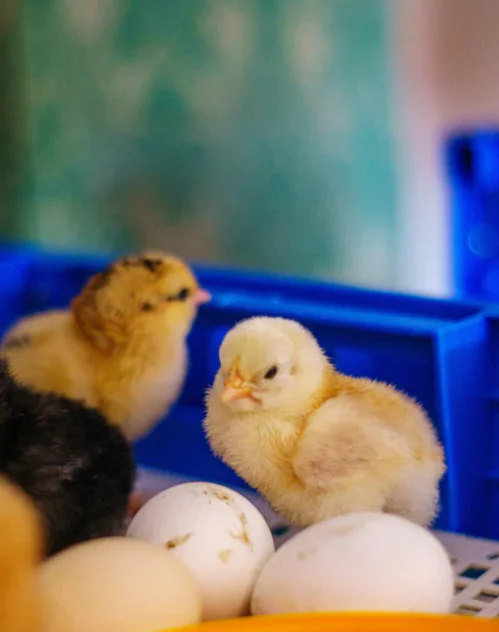
There is a direct evolutionary link between predatory dinosaurs and modern birds. If you look at the skeletal structure of a chicken, it shares a startling number of similarities with the Velociraptor.
Over millions of years, these creatures developed feathers, reduced their size, and adapted for flight (or, in the chicken’s case, semi-flightless terrestrial life).
The transition was not a sudden jump. It was a slow “sliding scale” of changes. Throughout this entire process, reproduction happened via eggs.
Therefore, the egg was a constant throughout the entire evolutionary journey from a three-toed dinosaur to a farmyard chicken.
The Red Jungle Fowl Connection
Specifically, the modern chicken is a descendant of the Gallus gallus, or Red Jungle Fowl. Genetic studies show that while other species of jungle fowl contributed to the modern chicken’s DNA (such as the Grey Jungle Fowl contributing the gene for yellow skin), the primary ancestor is the Red variety.
The specific mutations that define the domestic chicken happened within the embryo inside the egg, further cementing the egg’s chronological priority.
The Philosophical Meaning of “What Came First, the Chicken or the Egg?”
Beyond the feathers and shells, the question of whether the chicken or the egg comes first is deeply rooted in the history of logic and philosophy. Aristotle, one of the most famous thinkers in history, found the question so perplexing that he concluded both the bird and the egg must have always existed, as a “first” of either would be impossible.
Circular Reasoning and Causality
The phrase is often used as a metaphor for a circular dependency. In philosophy, this is a situation where the existence of “A” depends on “B,” but the existence of “B” depends on “A.” When people use this phrase in a what came first quiz or a debate, they are often highlighting a flaw in a “cause and effect” argument.
The Metaphor for Origins
In a broader sense, what came first the chicken or the egg philosophy asks about the nature of the universe. It questions whether the world has a definitive beginning or if it is an infinite loop of existence.
While science has answered the biological side of the riddle, the philosophical side remains a powerful tool for teaching students about the limits of human logic and the complexity of “first causes.”
What Does the Bible Say Came First, the Chicken or the Egg?
For many, the answer to what came first, the chicken or the egg bible is found in the Book of Genesis. Religious perspectives often offer a different timeline than the evolutionary one.
The Order of Creation
According to the Genesis creation narrative, God created the birds of the air on the fifth day. Specifically, the text suggests that God created “every winged bird according to its kind” and commanded them to “be fruitful and multiply.”
The traditional interpretation of what the Bible says came first, the chicken or the egg? is that the chicken came first. In this worldview, animals were created as fully formed, mature adults capable of reproduction.
Therefore, the chicken was created with the biological machinery to lay the first egg, rather than the egg existing as a precursor to the species.
Interpretation Differences
While the literalist view places the bird first, some modern theologians suggest that the “days” of creation could represent long periods of time.
In these interpretations, the divine spark could have guided the evolutionary process, which would bring the religious view closer to the scientific one. However, in the context of a strict Sunday school answer, the chicken is almost always the winner.
What Came First, the Chicken or the Egg in Islam?
In Islamic theology, the inquiry into what came first, the chicken or the egg islam is often approached through the lens of divine creation and the perfection of Allah’s design.
Much like other Abrahamic faiths, the primary text and scholarly interpretations provide a framework that differs from purely materialistic evolution.
Islamic Creation Beliefs
The Quran describes the creation of the heavens and the earth and all living things in a systematic, purposeful manner. While the Quran does not explicitly name the “chicken” in a chronological list of creation, it emphasizes that Allah created all living things from water and created them in “pairs” (male and female).
According to many scholars, the answer to what came first, the chicken or the egg, Islam aligns with the idea that Allah created the animal species in their adult, functional forms.
This is based on the concept of Kun Faya Kun (“Be, and it is”). In this context, the bird was brought into existence with the inherent ability to reproduce, suggesting the bird preceded the egg.
Scholarly Interpretations and Modern Science
Interestingly, many modern Islamic scholars do not see a conflict between the Quran and the scientific reality of evolution.
They argue that if the egg came first through a long process of guided evolution, it was still part of the divine plan. However, the classical philosophical view remains that the “essence” of the bird (the chicken) was the primary creation, and the egg was the secondary means of continuing the lineage.
Why Don’t We Eat Fertilized Eggs?
While discussing the origins of poultry, a common practical question arises: Why don’t we eat fertilized eggs? If the egg came first, why is the version we find on grocery store shelves usually sterile?
Understanding Fertilization
A fertilized egg contains both the female genetic material and the male sperm, meaning it has the potential to develop into a chick if incubated. Most commercial eggs come from hens kept in environments without roosters. Therefore, there is no physical possibility of fertilization.
Grocery Store Standards
The reason we don’t typically find fertilized eggs in a standard supermarket is primarily due to consistency and shelf life. Fertilized eggs can develop tiny blood spots or a “blastoderm” (the beginning of an embryo) if they are not kept at precisely cold temperatures.
To provide a product that is visually uniform and stable for weeks, the industry relies on unfertilized eggs. However, in many cultures and farm-to-table markets, fertilized eggs are consumed regularly and are indistinguishable in taste and nutrition from unfertilized ones.
Google, Yahoo & Voice Search Answers
In the era of AI and virtual assistants, the way we ask this question has changed. People now frequently ask, “Hey Google what came first, the chicken or the egg?”
How Google and Voice Assistants Respond
If you ask Google what came first, the chicken or the egg, the search engine typically pulls a featured snippet from a scientific source.
It will almost always tell you that the egg came first due to evolutionary biology. However, some voice assistants are programmed with “Easter eggs” (pun intended). If you ask Siri, she might respond with a joke or say, “It seems like they have a bit of a ‘shell-abration’ going on.”
Why Answers Vary on Platforms
On older forums like what came first, the chicken or the egg yahoo, answers were more varied because they relied on user-generated content. You would see a mix of religious, philosophical, and “smart-aleck” responses. Modern search engines prioritize the scientific consensus because it provides a verifiable, “factual” answer to a traditionally unanswerable question.
3 Specific Reasons Why the Egg Came First
To consolidate the scientific evidence, we can point to three distinct pillars of research that confirm the egg’s priority.
1. The Genetic Mutation Principle
Evolutionary biology dictates that species change through mutations in their DNA. These mutations occur during the formation of the zygote—the very first cell of a new organism.
For a bird that was not quite a chicken to produce an offspring that was a chicken, the change had to happen at the point of fertilization inside the egg. Therefore, the first chicken existed as an embryo inside an egg before it ever drew breath as a bird.
2. The Ancestral Fossil Record
Paleontology shows a clear timeline of egg-laying. We have found fossilized eggs from the Jurassic and Cretaceous periods that belong to dinosaurs.
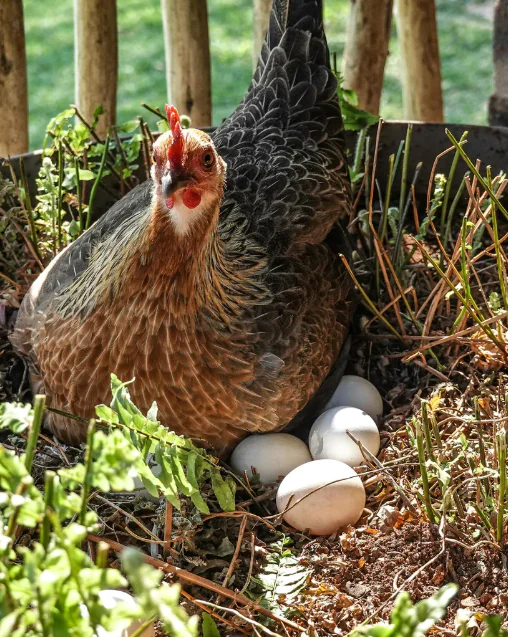
Since chickens did not appear until the Holocene epoch (thousands of years ago, rather than millions), the biological mechanism of the “egg” predates the “chicken” by an astronomical margin.
3. Protein OV-17 and the Counter-Argument
There was a brief period where researchers thought the chicken might have come first because of a protein called Ovocleidin-17 (OV-17).
This protein is essential for forming the chicken eggshell and is only found in the ovaries of hens. However, later studies revealed that while OV-17 is specific to chickens, other birds use similar proteins to form their shells.
This suggests that the mechanism for making eggs evolved long before the specific chicken version of the protein appeared.
The Genetic Blueprint: Ovocleidin-17 and the Chemical Debate
To provide a truly exhaustive answer to what came first, the chicken or the egg, we must address the “Protein Debate” that briefly turned the scientific world upside down in 2010.
Researchers at the Universities of Sheffield and Warwick discovered a protein called Ovocleidin-17 (OV-17). This specific protein acts as a catalyst to speed up the development of the eggshell.
The fascinating part? This protein is produced exclusively within the ovaries of a pregnant hen. Without OV-17, the shell cannot crystallize fast enough to protect the embryo. At first, headlines around the world shouted, “Chicken came first!” because the egg required a chicken-produced protein to exist.
However, further evolutionary analysis debunked this “Chicken-First” victory. It turns out that while OV-17 is unique to the chicken species, other birds have their own versions of shell-forming proteins.
These proteins evolved millions of years ago in ancestral avian species. This confirms that the ability to produce eggs was passed down through a lineage of “pre-chickens,” meaning the genetic shift to create the first chicken still happened inside an egg.
Comparative Embryology: How the Egg “Invented” the Bird
When we ask what came first chicken or the egg, we are essentially asking about the invention of the amniotic sac. Before the egg, life was tethered to the water. Amphibians had to lay jelly-like eggs in ponds to keep them from drying out.
The “Egg” was a revolutionary piece of biological technology. It provided:
- A specialized shell: Allowed for gas exchange while preventing dehydration.
- The Yolk: A built-in food supply for the developing embryo.
- The Amnion: A fluid-filled sac that allowed the creature to “carry its own pond” onto dry land.
Because this technology was perfected by early reptiles (the ancestors of dinosaurs), the egg is the biological foundation upon which all birds, including chickens, were eventually built.
Linguistic and Cultural Variations of the Paradox
The question of what came first, the chicken or the egg, is so pervasive that it exists in almost every language, though the animal sometimes changes.
- In Ancient Sanskrit, the debate often centers on the seed and the tree.
- In modern computing, we refer to this as a “Circular Dependency.” It is a logic error where “Module A” cannot load without “Module B,” but “Module B” is contained within “Module A.”
- In Psychology, the paradox is used to describe the “Anxiety Loop.” For example, do the physical symptoms cause the panic, or does the panic cause the physical symptoms?
Summary of the Multi-Dimensional Answer
To ensure this article serves as the definitive evergreen resource, here is the final breakdown of the “Firsts”:
| Perspective | The Winner | The Reasoning |
| Evolutionary Biology | The Egg | Genetic mutations occur in the zygote (inside the egg). |
| General Zoology | The Egg | Reptiles and dinosaurs laid eggs long before birds evolved. |
| Classic Theology | The Chicken | Religious texts suggest animals were created as mature adults. |
| Logic/Philosophy | Neither | It is a circular paradox used to illustrate the limits of causality. |
| Chemistry (OV-17) | The Chicken | The specific “chicken egg” shell requires a protein from the hen. |
Frequently Asked Questions (SEO FAQ Block)
What came first, the chicken or the egg?
Scientifically, the egg came first. Eggs have been used by animals for reproduction for over 300 million years, while chickens evolved much later from wild jungle fowl.
What did chickens evolve from?
Chickens evolved from the Red Jungle Fowl (Gallus gallus). Their more distant ancestors include small, feathered theropod dinosaurs.
Is there a religious answer to the chicken and egg paradox?
Yes. In Christianity and Islam, the traditional belief is that God created animals as mature, fully formed beings. In this worldview, the chicken came first.
Why is it called a paradox?
It is a paradox because it presents a circular problem where each “first” seems to require the previous existence of the other. It is used to illustrate the difficulty of identifying a starting point in a cycle.
Did chickens evolve from dinosaurs?
Yes. Modern birds, including chickens, are the direct descendants of avian dinosaurs. This is why many scientists refer to birds as “living dinosaurs.”
So What Really Came First?
After examining every facet of this legendary inquiry—from the depths of the fossil record to the verses of sacred texts—we can finally provide a final verdict on what really came first.
The Scientific Conclusion
If you value empirical evidence and the laws of genetics, the egg came first. Evolution is a slow, messy process of incremental changes. There was a moment in time when a bird that was 99.9% a chicken laid an egg. Inside that egg, a tiny mutation occurred, resulting in an organism that was 100% a chicken.
That egg existed before the bird did.
The Theological Conclusion
If you value the narrative of divine creation as described in the Bible or the Quran, the chicken came first. Under this framework, life did not “drift” into existence through mutations; it was placed here by a Creator in its complete and perfect form.
The chicken was created to populate the earth, and the egg followed as the means to fulfill that command.
The Philosophical Conclusion
If you value the metaphor, the question is the answer. The paradox exists not to be solved, but to remind us of the limits of our own logic.
It teaches us that some systems are so intertwined that searching for a “beginning” is less important than understanding how the system functions as a whole.
Summary
So, what actually came first, the chicken or the egg? The world has reached a consensus:
- Biologically: The Egg.
- Theologically: The Chicken.
- Linguistically: Both, depending on the riddle.
Ultimately, the chicken and the egg will continue to “cross the road” of our curiosity for generations to come.
Whether you’re cracking an egg for breakfast or watching a hen in a yard, you are looking at a biological marvel that has puzzled the greatest minds in history—and now, you finally know the truth behind the shell.
Authoritative References
1. Scientific American: What Came First, the Chicken or the Egg?
2. Australian Academy of Science: The Age-Old Question
3. Smithsonian Magazine: How the Chicken Conquered the World
4. Wiley Online Library: Structural Basis of Ovocleidin-17 (OV-17)
5. Pew Research Center: Science and Religion in Global Perspectives