



If there is one vegetable that has undergone a complete PR transformation in the last decade, it is broccoli.
For years, this cruciferous powerhouse was relegated to the “mushy and bland” category, usually served steamed into submission or boiled until it lost its vibrant hue. But then, the culinary world rediscovered the oven.
Learning how to make roasted broccoli is a fundamental skill that turns a humble side dish into the star of the plate. When broccoli meets high heat and a touch of fat, magic happens. The edges caramelize, the florets become crispy and nut-like, and the natural sugars in the stems intensify.
In this comprehensive guide, we will explore every facet of the roasting process. Whether you are wondering how to roast broccoli to get that restaurant-style char or you need to know the specific timing for different oven temperatures, we have you covered.
From air fryer hacks to seasoning secrets, this is the ultimate pillar for perfect, crispy, and healthy roasted broccoli.
Why Roasted Broccoli Is So Popular
The explosion of interest in the best roasted broccoli recipe ever isn’t just a trend; it’s a biological response to better cooking.
When you boil or steam broccoli, you are essentially hydrating it. While healthy, it often results in a sulfurous smell and a soft texture that many—especially children—find unappealing.

The Flavor Transformation
Roasting utilizes the Maillard reaction, a chemical reaction between amino acids and reducing sugars that gives browned food its distinctive flavor.
In the oven, the tiny buds on the broccoli florets act like little sponges for heat, crisping up while the core remains tender. This creates a complex, savory profile that steaming simply cannot replicate.
Restaurant Style Results at Home
Have you ever noticed how restaurant-style roasted broccoli tastes almost buttery, even if there’s no butter involved?
Chefs use high heat (usually 400°F or higher) and a generous amount of oil to ensure the broccoli fries slightly as it bakes. This guide will teach you those exact professional techniques to achieve perfect roasted broccoli in your own kitchen.
Texture and Versatility
Roasted broccoli offers a “crunch factor” that bridges the gap between a vegetable and a snack. It’s versatile enough to be tossed into pasta, topped with a fried egg for breakfast, or eaten straight off the baking sheet. It is the ultimate “gateway vegetable” for picky eaters.
Is Broccoli Healthy When Roasted?
A common question among health-conscious cooks is: Is broccoli healthy when roasted?
The short answer is a resounding yes.
While any heat treatment results in some nutrient loss (particularly heat-sensitive Vitamin C), roasting is one of the best ways to maintain the vegetable’s overall profile while making it palatable.
Nutrient Retention
Compared to boiling—where many nutrients are leached out into the water and then poured down the drain—roasting keeps the nutrients within the vegetable. You are getting the full benefit of the fiber, Vitamin K, and potassium.
Calories and Weight Loss
When looking for a healthy roasted broccoli recipe, the primary variable is the oil. A tablespoon of olive oil adds about 120 calories. Still, it also helps your body absorb fat-soluble vitamins like A, D, E, and K.
Using roasted broccoli for weight loss is an excellent strategy because the high fiber content keeps you full. At the same time, the intense flavor prevents the “diet boredom” that leads to overeating elsewhere.
Portion Control Tips
- One medium head of broccoli typically serves two people as a side.
- Stick to 1–1.5 tablespoons of oil per large head of broccoli to keep it light.
- Use lemon juice or vinegar to brighten the flavor without adding calories.
Do You Need to Boil Broccoli Before Roasting?
This is a point of confusion for many. Do you need to boil broccoli before roasting? The answer is a definitive No.
In fact, putting raw broccoli directly into the oven is the key to success. Can you put raw broccoli in the oven to cook? Absolutely—and you should. Here is why skipping the boil is better:
- Moisture is the Enemy: For broccoli to become crispy, the moisture on the surface must evaporate. If you boil it first, the stalks become waterlogged, leading to “steamed-in-the-oven” broccoli rather than truly roasted broccoli.
- Structural Integrity: Boiling softens the cell walls. By the time the oven browns the outside, the inside will have turned to mush.
- Flavor Preservation: Raw-to-roasted preserves the earthy, nutty flavors that are lost in boiling water.
When Blanching Might Help: The only time you might consider a quick 60-second blanch is if you are roasting exceptionally large, thick stems (like broccoli coins) alongside delicate florets and want to ensure the stems soften before the tops burn. However, for standard florets, raw is the way to go.
How to Make Roasted Broccoli in the Oven (Classic Method)
The oven is the most reliable tool for making a simple roasted broccoli side dish. It allows for even heat distribution and enough space to prevent overcrowding.
Essential Ingredients
To get started with an easy roasted broccoli recipe, you only need four staples:
- Broccoli Florets: Fresh is best. Cut them into uniform sizes so they cook at the same rate.
- Olive Oil: Use a high-quality extra virgin olive oil for the best flavor.
- Kosher Salt: The coarse grains stick better to the florets than table salt.
- Black Pepper: Freshly cracked makes a world of difference.
Step-by-Step Instructions
- Preheat: Set your oven to 400°F (200°C). A hot oven is non-negotiable for crispiness.
- Prep the Broccoli: Wash the broccoli and dry it thoroughly. This is the most important step. Use a salad spinner or a clean kitchen towel.
- Toss with Oil: In a large bowl, drizzle the broccoli with olive oil. Use your hands to massage the oil into the florets, ensuring every nook and cranny is coated.
- Season: Sprinkle with salt and pepper.
- Spread on Sheet Pan: Arrange the broccoli in a single layer. Do not let the pieces touch if possible.
- Roast: Place in the oven for 15–22 minutes.
- Flip: Halfway through, use a spatula to toss the broccoli. This ensures even browning.
- Finish: Remove when the tips are charred, and the stems are fork-tender.
Oven Temperature and Timing Guide
Different temperatures yield different results. Use this table to decide which works best for your schedule:
| Temperature | Time | Result |
| 350°F (175°C) | 25–30 mins | Soft, tender, very little char. |
| 375°F (190°C) | 20–25 mins | Standard roast, light browning. |
| 400°F (200°C) | 15–20 mins | The “Sweet Spot” – Crispy edges, tender centers. |
| 425°F (220°C) | 12–15 mins | High-heat char, very crispy, watch closely. |
| 450°F (230°C) | 10–12 mins | Restaurant style, extreme caramelization. |
How to Make Roasted Broccoli Crispy (Chef Secrets)
If your broccoli always comes out soggy, you are likely missing one of these “Chef Secrets.” Achieving crispy baked broccoli florets is all about moisture management and airflow.
The “Bone Dry” Rule
If your broccoli is even slightly damp from washing, the heat of the oven will turn that water into steam. Steam softens; it doesn’t crisp. After washing, let your broccoli air dry for 30 minutes or use a hair dryer on a cool setting if you’re in a rush (yes, really!).
High Heat is Your Friend
Don’t be afraid of 425°F. How to make roasted broccoli crispy often comes down to bravery. You want the outside to “fry” in the oil before the inside gets too soft.
The Power of Space
No overcrowding. This is the golden rule of roasting any vegetable. If the broccoli pieces are piled on top of each other, they will release moisture into each other, resulting in a soggy mess. Use two baking sheets if you have to.
Use the Bottom Rack
For extra-crispy bottoms, place your baking sheet on the lowest rack of the oven. The direct heat from the bottom heating element will caramelize the flat edges of the broccoli stems beautifully.
How to Roast Broccoli Without Burning It
There is a fine line between “charred” and “burnt.” While a bit of black on the tips of the florets tastes like popcorn, a completely carbonized head of broccoli is bitter and unpleasant.
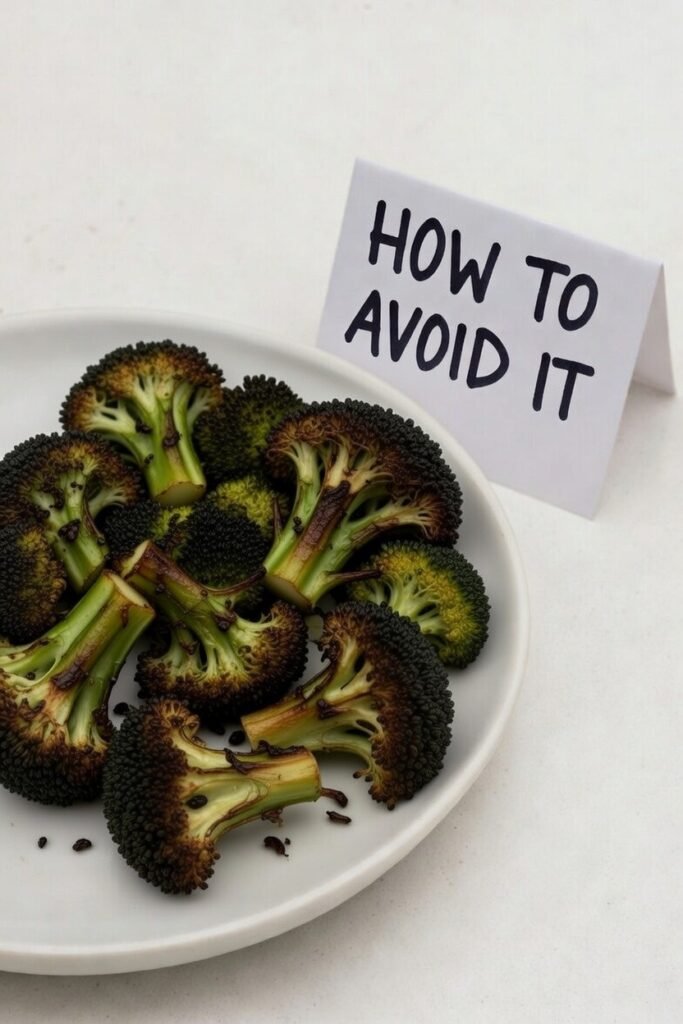
Rack Positioning
While the bottom rack is great for crisping, if your oven runs hot, keep the tray in the middle. This allows for more air circulation and prevents the bottom from burning before the top is cooked.
Oil Quantity
If you don’t use enough oil, the broccoli will dehydrate and burn. The oil acts as a heat conductor and a protective barrier. Ensure the broccoli looks “glistening” but not swimming in a pool of oil.
Foil vs. Parchment Paper
- Parchment Paper: Great for easy cleanup, but it acts as a slight insulator, meaning you’ll get less browning on the contact points.
- Bare Pan: Provides the best sear and caramelization but requires more scrubbing later.
- Aluminum Foil: A middle ground, but ensure it is flat so the broccoli makes direct contact with the metal.
Roasted Broccoli Seasoning Ideas
If you have mastered the basic salt-and-pepper technique, it is time to experiment with how to make roasted broccoli taste good using various flavor profiles.
Broccoli is a culinary chameleon; its earthy base notes pair beautifully with everything from spicy chili to zesty citrus.
Basic Flavor Boosters
You don’t need a pantry full of expensiveingredients to elevate your dish. These simple additions can be tossed with the broccoli before it hits the oven:
- Garlic Powder: Unlike fresh garlic, which can burn at high temperatures, garlic powder provides a consistent, savory crust.
- Smoked Paprika: Adds a deep, “off-the-grill” flavor that complements the natural char of the oven.
- Onion Powder: Provides a subtle sweetness that balances the bitterness of the greens.
- Red Pepper Flakes: For those who like a lingering heat.
Global Seasoning Blends
To turn your roasted broccoli seasoning into a cultural experience, try these combinations:
- Mediterranean: Dried oregano, lemon zest, and a sprinkle of feta cheese (added after roasting).
- Asian-Inspired: Toss with sesame oil, ground ginger, and finish with toasted sesame seeds and a dash of soy sauce.
- Everything Bagel: Use the popular seasoning blend for a crunchy, salty, and garlicky topping that kids absolutely love.
- Nutritional Yeast: A fantastic vegan seasoning blend that adds a “cheesy” nuttiness without the dairy.
Roasted Broccoli with Garlic, Parmesan & Lemon
This specific combination is arguably the most requested restaurant-style roasted broccoli variation. It hits all the flavor notes: salty, acidic, savory, and bright.
Flavor Layering Tips
The secret to this dish is when you add the ingredients. If you add fresh garlic and cheese at the beginning, the garlic will turn bitter, and the cheese will burn before the broccoli is tender.
- The Garlic Hack: If using fresh minced garlic, add it during the last 5–8 minutes of roasting. This gives it enough time to lose its raw bite without turning into charcoal.
- The Parmesan Crust: For a crispy cheese skirt, sprinkle finely grated Parmesan over the broccoli during the final 3 minutes. For a fresh, melty finish, toss it on immediately after removing the pan from the oven.
- The Lemon Finish: Never roast the lemon juice. The high heat can make the juice taste metallic. Instead, zest the lemon before roasting and squeeze the fresh juice over the hot broccoli right before serving. The heat from the vegetable will release the lemon’s aroma perfectly.
Vegan Swaps
To make roasted broccoli with Parmesan and garlic vegan-friendly, replace the cheese with a mix of almond flour, nutritional yeast, and a pinch of salt. It creates a similar “breadcrumb” texture that satisfies the same craving.
How to Make Roasted Broccoli in an Air Fryer
In recent years, the air fryer has become the preferred method for many home cooks. If you are looking for how to make roasted broccoli air fryer style, you are in luck—it is often faster and crispier than the oven.
Air Fryer Temperature and Time
The air fryer is essentially a high-powered convection oven. Because the space is smaller and the fan is more powerful, you can achieve incredible results in half the time.
- Temperature: 375°F (190°C)
- Time: 8–10 minutes
- Technique: Shake the basket halfway through.
Air Fryer vs. Oven
While the air fryer wins on speed, the oven wins on capacity. If you are cooking for a family of four, an air fryer basket will likely be overcrowded, leading to uneven cooking.
However, for a quick solo lunch or a side dish for two, the air fryer produces a superior “crunch” on the florets.
How to Make Roasted Broccoli from Frozen
A common misconception is that you can’t roast frozen vegetables. You absolutely can, and for many busy families, learning how to make roasted broccoli with frozen broccoli is a total game-changer.
The “Do Not Thaw” Rule
The biggest mistake people make is letting the broccoli thaw on the counter. This releases moisture and results in a soggy mess. For the best texture:
- Preheat the Pan: Put your empty baking sheet in the oven while it preheats.
- Go High: Use a temperature of at least 425°F.
- Extra Oil: Frozen broccoli needs a bit more oil than fresh to help the heat penetrate the ice crystals quickly.
- Expect a Different Texture: While it will be delicious and browned, frozen broccoli will never be quite as “snappy” as fresh because the freezing process breaks down the vegetable’s cell walls.
How to Make Roasted Broccoli on the Stove
Sometimes the oven is full, or it’s simply too hot outside to crank it up to 400°F. In these cases, how to make roasted broccoli on the stove—often called “pan-roasting”—is your best bet.
The Pan-Roasted Method
- Use a Heavy Skillet: Cast iron is ideal for holding heat.
- Sear First: Place the broccoli cut-side down in a hot, oiled pan. Leave it undisturbed for 3–4 minutes until a deep brown crust forms.
- The Steam-Finish: Add a tablespoon of water to the pan and immediately cover with a lid for 2 minutes. This creates enough steam to tenderize the stems while keeping the charred bottoms crispy.
- Lid Off: Remove the lid and cook for another minute to let any remaining moisture evaporate.
Roasted Broccoli Variations (One Pan Meals)
Broccoli rarely travels alone. Combining it with other vegetables not only creates a beautiful visual on the plate but also simplifies your cooking process.
Roasted Broccoli and Cauliflower
Since they are both cruciferous vegetables, they have similar cooking times.
When learning how to make roasted broccoli and cauliflower, the trick is to cut the cauliflower slightly smaller than the broccoli, as cauliflower is denser and takes a few extra minutes to soften.
Roasted Broccoli and Carrots
This is a classic pairing. However, carrots take much longer to roast than broccoli.
To succeed with how to make roasted broccoli and carrots, start the carrots in the oven first. Give them a 10–12 minute head start before adding the broccoli florets to the pan.
Roasted Tenderstem Broccoli
Also known as Broccolini, this variety has long, slender stalks that are entirely edible. Roasted Tenderstem broccoli requires less time—usually only 10–12 minutes at 400°F. The stalks become tender and sweet, while the small heads get extra crispy.
Sheet Pan and Meal Prep Ideas
Roasted broccoli is a meal-prep superstar. It holds up well and can be repurposed in dozens of ways throughout the week.
Storage and Reheating
- Fridge: Store in an airtight container for up to 4 days.
- The Reheating Secret: Never microwave roasted broccoli if you want to keep the crunch. Instead, toss it back into a hot skillet for 2 minutes or put it in the air fryer at 350°F for 3 minutes. It will taste as good as the day you made it.
Batch Cooking
When doing roasted broccoli meal prep, undercook the broccoli by about 2 minutes. When you reheat it later in the week, that “extra” cooking time will happen during the reheat, preventing it from becoming overcooked and mushy.
Vegan & Special Diet Options
The beauty of broccoli is that it is naturally inclusive. It fits into Keto, Paleo, Whole30, and Vegan lifestyles without needing expensive substitutions.
However, for those looking for specific vegan roasted broccoli recipes or options for sensitive palates, a few strategic tweaks can make the dish shine.
The Oil-Free Variation
While oil is the primary conductor for crispiness, those on a whole-food plant-based (WFPB) diet can still enjoy roasted vegetables. To make oil-free roasted broccoli, toss the florets in a small amount of vegetable broth, aquafaba (chickpea water), or a thin layer of tahini.
The tahini method is particularly effective, as the natural fats in the sesame seeds provide a creamy, nutty crust that mimics the effect of oil.
Roasted Broccoli for Picky Eaters
If you are cooking for children or adults who generally dislike “greens,” the goal is to mask the bitterness.
- The “Popcorn” Method: Cut the florets into very small, bite-sized “popcorn” pieces. Increase the heat to 425°F to ensure they are more crunchy than vegetable-like.
- Sweet Additions: A drizzle of maple syrup or honey during the last 2 minutes of roasting creates a glaze that neutralizes the sulfurous notes of the broccoli.
- The “Cheese” Blanket: Using a high-quality vegan cheese or a heavy dusting of nutritional yeast can make the vegetable feel more like a snack and less like a chore.
Roasted Broccoli Without Parchment Paper
A common search query is how to make roasted broccoli without parchment paper. While parchment makes cleanup easy, many home cooks find themselves without it or prefer a more sustainable approach.
Using a Bare Pan
Actually, roasting directly on a bare metal baking sheet is the best way to get a deep sear. The direct contact with the metal conducts heat more efficiently than a paper barrier.
- Pro Tip: Preheat the bare pan in the oven for 5 minutes before adding the oiled broccoli. You will hear a satisfying sizzle the moment the vegetables hit the metal, which kickstarts the caramelization process.
Aluminum Foil vs. Silicone Mats
- Aluminum Foil: If you use foil, ensure it is tucked tightly around the edges of the pan. Use a light spray of oil on the foil to prevent the florets from sticking.
- Silicone Mats: While great for cookies, silicone mats are not ideal for perfectly roasted broccoli. They tend to insulate the food from the heat, which can lead to a softer, steamed texture rather than a crisp roast.
Famous & Popular Roasted Broccoli Recipes (Comparison)
Many people search for the roasted broccoli recipe, Pioneer Woman style, or other celebrity chef versions. It’s helpful to understand what makes these famous recipes work and how this guide incorporates those elements.
- The Pioneer Woman Style: Usually involves high heat and the addition of plenty of garlic and sometimes a splash of soy sauce or balsamic vinegar for a punchy, bold flavor.
- The Ina Garten Approach: Focuses on simplicity and high-quality olive oil, often finishing the dish with a heavy dusting of Parmesan and a squeeze of lemon.
- The Gordon Ramsay Method: Often involves pan-searing the broccoli first to get a hard char before finishing it in a very hot oven.
Our guide takes the “best of all worlds” approach: the high-heat reliability of the oven, the seasoning depth of restaurant-style dishes, and the technical precision required to avoid common pitfalls.
Common Mistakes to Avoid
Even the most experienced cooks can end up with a tray of soggy or burnt greens. To ensure you get the best roasted broccoli recipe results every time, avoid these four common errors:
- Overcrowding the Pan: We cannot stress this enough. If the florets are touching, they are steaming. Space is the secret ingredient for crunch.
- Low Oven Temperature: Roasting at 350°F is essentially “slow baking.” For broccoli, this leads to a dull color and a limp texture. Stick to 400°F or higher.
- Too Much Oil: While oil is necessary, “drowning” the broccoli will make it heavy and greasy. The florets should be lightly coated, not dripping.
- Wet Broccoli: If you wash your broccoli and put it straight into the oven, the exterior will never crisp. Dry your broccoli like your dinner depends on it.
Frequently Asked Questions (FAQ)
How do you roast broccoli?
To roast broccoli, toss fresh florets with olive oil, salt, and pepper. Spread them in a single layer on a baking sheet and bake at 400°F (200°C) for 15–20 minutes, tossing halfway through, until the edges are crispy and charred.
Can you put raw broccoli in the oven to cook?
Yes, putting raw broccoli directly into a hot oven is the preferred method. It allows the moisture to evaporate, creating a crispy texture and nutty flavor that you cannot achieve if you boil or steam it first.
Is broccoli healthy when roasted?
Absolutely. Roasting preserves most of the fiber and minerals found in broccoli. While some Vitamin C is lost to heat, the addition of healthy fats (like olive oil) actually helps your body absorb the fat-soluble vitamins (A and K) more effectively.
Do you need to boil broccoli before roasting?
No, boiling is not necessary and is generally discouraged. Boiling adds excess moisture to the vegetable, which prevents it from becoming crispy in the oven.
How do you make roasted broccoli not soggy?
The keys to avoiding sogginess are: drying the broccoli thoroughly after washing, using a high oven temperature (400°F+), and ensuring the florets are spread out on the pan so they don’t steam each other.
Final Thoughts – Perfect Roasted Broccoli Every Time
Mastering the art of how to make roasted broccoli is a gift that keeps on giving. It is a reliable, five-minute prep side dish that elevates any meal, from a simple weeknight chicken dinner to a complex holiday feast.
By focusing on high heat, proper spacing, and moisture control, you can transform a “boring” vegetable into the most anticipated part of your plate.
Don’t be afraid to experiment. Try the lemon-parmesan crust one night, and a spicy sriracha-honey glaze the next. Once you understand the physics of the roast, the flavor possibilities are endless.
References:
1. Nutrient Retention in Cooking (Boiling vs. Steaming/Roasting)
2. The Science of Flavor (The Maillard Reaction)
3. Fat-Soluble Vitamin Absorption (Why Oil is Healthy)
4. Impact of Cooking Methods on Antioxidants