



When it comes to optimizing your health, fish oil is one of the most researched and recommended supplements in the world.
From heart health and cognitive function to reducing inflammation in athletes, the benefits are well-documented. However, the most frequent question clinicians and nutritionists face isn’t whether you should take it, but how much fish oil per day is actually necessary to see results.
Dosage is where most people get confused. You might see a bottle labeled “1000 mg,” but that number rarely tells the whole story.
The effectiveness of your supplement depends less on the total weight of the oil and more on the specific concentration of Omega-3 fatty acids—specifically EPA (eicosapentaenoic acid) and DHA (docosahexaenoic acid).
Whether you are looking to manage high triglycerides, recover from intense bodybuilding sessions, or support your pet’s joint health, a “one size fits all” approach does not work.
This 2026 guide provides a comprehensive breakdown of fish oil dosages based on age, gender, fitness goals, and safety guidelines from major health organizations like the NIH and EFSA.
How Much Fish Oil Should You Take Per Day?
For those looking for a rapid baseline, here is the current medical consensus for daily intake:
- General Health (Adults): 250 – 500 mg of combined EPA and DHA per day is the minimum recommended for healthy adults.
- Specific Health Goals: For heart disease or high triglycerides, doctors often recommend 1,000 mg to 4,000 mg of EPA/DHA daily.
- Upper Safe Limit: The FDA suggests that up to 3,000 mg of combined EPA/DHA daily from supplements is safe for most adults.
- The Golden Rule: Always look at the back of the label. The “Fish Oil” weight (e.g., $1000 is irrelevant; the sum of EPA + DHA is your true dosage.
Fish Oil Dosage Explained (Fish Oil vs EPA & DHA)
One of the biggest pitfalls in the supplement industry is the marketing of “milligrams.” To determine how many mg of fish oil per day you need, you must understand the difference between the bulk oil and the active ingredients.
What “1000 mg fish oil” really means
If a bottle says “1000 mg fish oil,” that is simply the weight of the liquid inside the capsule. It is similar to saying a pill weighs one gram.
It does not mean you are getting 1000 mg of Omega-3s. In many low-quality supplements, a 1000 mg capsule may only contain 300 mg of actual EPA and DHA. The remaining 700 mg consists of other fish fats and fillers that do not provide the therapeutic benefits you’re looking for.
Difference between 1000 mg and 1200 mg fish oil
You will often see bottles labeled as 1000 mg vs 1200mg. While 1200 mg sounds superior, it is often just a larger pill. A high-concentration 1000 mg pill might provide 800 mg of Omega-3s, while a low-quality 1200 mg pill might only provide 360 mg.
Why EPA/DHA is the real dosage metric
When healthcare providers discuss how much omega-3 fish oil per day is effective, they are referring exclusively to the EPA and DHA content.
- EPA is primarily responsible for anti-inflammatory effects and heart health.
- DHA is essential for brain structure, eye health, and pregnancy support.
When calculating your dose, flip the bottle over and add the EPA and DHA numbers together. That is your actual dosage.
How Much Fish Oil Per Day Is Safe?
Safety is paramount when dealing with lipids. While fish oil is “Generally Recognized as Safe” (GRAS), there is a threshold where benefits plateau and risks begin.
Global Guidelines
- FDA (USA): Recommends not exceeding 3,000mg per day of EPA/DHA from supplements unless directed by a physician.
- EFSA (Europe): States that supplemental intakes of EPA and DHA combined at doses up to 5,000 mg per day do not raise safety concerns for the general population.
- NIH: Notes that while most people tolerate fish oil well, high doses can lead to minor side effects.
How much fish oil is too much per day?
Taking excessive amounts (typically over 5,000 mg of Omega-3s) can lead to:
- Blood Thinning: Omega-3s reduce platelet aggregation. At very high doses, this can increase the risk of bruising or bleeding, particularly if you are on anticoagulant medication.
- Vitamin A Toxicity: This is specifically a risk with Cod Liver Oil, which is naturally high in Vitamin A, unlike standard fish oil.
- Immune Suppression: Some studies suggest that an extreme excess of Omega-3s can dampen the inflammatory response so much that it may slightly weaken the body’s ability to fight off bacterial infections.
Fish Oil Dosage Chart (By Goal & Age)

To simplify your routine, refer to the following fish oil dosage chart based on common demographic and health needs. (Note: Values refer to combined EPA + DHA).
| Demographic / Goal | Recommended Daily EPA+DHA | Primary Focus |
| Healthy Adult (General) | 250 — 500 mg | Maintenance & Prevention |
| Heart Disease Patient | 1,000 mg | Cardiovascular Support |
| High Triglycerides | 2,000 – 4,000 mg | Lipid Reduction |
| Athletes / Bodybuilders | 2,000 — 3,000 mg | Recovery & Joints |
| Pregnant / Breastfeeding | 300 — 500 mg (min. 200 mg DHA) | Fetal Brain Development |
| (65+) | 1,000 — 1,500 mg | Cognitive & Heart Health |
| Children (4-12) | 100 — 250 mg | Brain & Growth |
How Much Fish Oil Per Day for Men?
Men often have higher body weights and different cardiovascular risk profiles than women, which influences how much fish oil per day is optimal for men.
Heart Health & Triglycerides
Men are statistically at a higher risk for early-onset heart disease. For primary prevention, a dose of 1,000 mg of EPA/DHA is widely recommended by cardiologists to keep arteries flexible and reduce the “stickiness” of the blood.
Muscle & Testosterone Support
While fish oil isn’t a “testosterone booster” in the traditional sense, it supports the health of the Leydig cells in the testes, which produce testosterone.
Furthermore, men who engage in manual labor or intense exercise find that 2,000 mg daily significantly reduces morning joint stiffness.
How Much Fish Oil Per Day for Women?
For women, the dosage requirements often fluctuate based on life stages, particularly regarding hormonal health and pregnancy.
Hormonal Balance & Skin
When considering how much fish oil per day for women, 500 mg to 1,000 mg is often sufficient for maintaining skin elasticity and reducing the severity of menstrual cramps.
Omega-3s help regulate prostaglandins, the chemicals responsible for the inflammatory response and pain during the menstrual cycle.
Bone Density
As women age, particularly post-menopause, the risk of osteoporosis increases. Fish oil helps improve calcium absorption and bone mineral density. A daily dose of 1,000 mg to 1,500 mg is often cited in studies focusing on bone health in older women.
How Much Fish Oil Per Day for Bodybuilding & Weight Lifting?
For those who regularly move heavy iron, fish oil is often viewed as a “performance fat.” If you have wondered how much fish oil per day bodybuilding requires, the answer is usually higher than the standard RDA.
Muscle Protein Synthesis & Hypertrophy
Emerging research suggests that high-dose Omega-3s can sensitize muscle cells to amino acids and insulin. By improving the fluidity of the muscle cell membrane, fish oil helps “shuttle” nutrients into the cell more efficiently.
Mitigating DOMS (Delayed Onset Muscle Soreness)
The primary benefit for lifters is the reduction of systemic inflammation. Intense weight lifting causes micro-trauma to muscle fibers, leading to the soreness that peaks 48 hours after a workout.
High doses of EPA act as a natural anti-inflammatory, allowing athletes to return to their full strength faster. To effectively blunt DOMS, many strength coaches recommend a temporary “loading” phase or a consistent daily intake of 3,000 mg.
Joint Protection for Heavy Squats and Presses
Lifting heavy weights puts immense pressure on connective tissue. Omega-3s help maintain the health of synovial fluid (the joint’s lubricant).
How much fish oil per day weight lifting enthusiasts should take to protect their joints usually falls around 2,500 mg, which helps prevent the chronic “nagging” pains in knees and elbows.
How Much Fish Oil Per Day to Lower Cholesterol?
This is one of the most common medical reasons for supplementation. However, it is important to distinguish between “bad” cholesterol (LDL) and triglycerides. When asking how much fish oil per day for high cholesterol, you are actually looking for the “triglyceride-lowering” effect.
The Triglyceride Effect
Clinical trials have shown that Omega-3s are incredibly effective at lowering triglycerides—the fat circulating in your blood. To achieve a significant reduction of 20- 50%, a therapeutic dose is required.
- The Range: Medical guidelines, including those from the American Heart Association (AHA), typically suggest 2,000 — 4,000 mg (2-4 grams) of EPA/DHA per day under medical supervision.
- The LDL Nuance: It is a common myth that fish oil lowers LDL cholesterol. In some cases, high-dose fish oil (especially those high in DHA) can actually cause a slight increase in LDL, though it often changes the particles to a larger, less dangerous “fluffy” form.
Evidence-Based Ranges
If you are taking fish oil for high triglycerides, you likely cannot get enough from a standard “one-a-day” pill. You would need highly concentrated supplements or prescription-strength versions like Vascepa or Lovaza to reach the $4,000\text{mg}$ mark safely.
How Much Fish Oil Per Day for Joint Pain & Dry Eyes?
Inflammation is the common denominator for both stiff joints and chronic dry eyes. The dosage for these conditions is slightly lower than the “heart-health” dose but higher than the “general wellness” dose.
Joint Pain & Rheumatoid Arthritis
For those suffering from osteoarthritis or general joint “creakiness,” the goal is to inhibit the enzymes that break down cartilage. Clinical studies suggest that 1,200 — 1,500 mg of EPA (specifically) is the threshold where patients begin to report a reduction in the use of NSAIDs like ibuprofen.
Chronic Dry Eye Syndrome
The eyes rely on a lipid layer to prevent tears from evaporating too quickly. DHA is a major structural component of the retina, and EPA reduces inflammation in the tear ducts.
- Dosage: Most eye specialists recommend 1,000 — 1,200 mg of combined EPA/DHA to improve “tear breakup time” and overall comfort.
- Timeline: Unlike muscle recovery, which is fast, it usually takes 4 to 6 weeks of consistent use to notice an improvement in dry eyes.
How Much Fish Oil Per Day When Pregnant?
During pregnancy, the priority shifts from the mother’s inflammation to the baby’s brain and eye development. How much fish oil per day when pregnant is a question that requires a focus on DHA over EPA.
The Importance of DHA
The human brain is roughly 60\% fat, and a massive portion of that is DHA. During the third trimester, the fetus “strips” DHA from the mother’s stores to build its neurological system.
- Recommended Dose: Most OB-GYNs and organizations like the American Pregnancy Association suggest at least 300- 500 mg of Omega-3s daily, ensuring at least 200 mg of that is pure DHA.
- Pregnancy Warning: Avoid Cod Liver Oil specifically. Its high Vitamin A content poses a risk to the fetus that standard, purified fish oils do not. Its high Vitamin A content can be toxic to a developing baby if consumed in large amounts; opt for purified body-tissue fish oil instead. Stick to “body oils” (salmon, sardine, or algae-based) instead.
Omega-3 Guidelines: Determining the Correct Daily Dosage for Older Adults
Think of fish oil as ‘biological armor’ for your later years. In the 65+ demographic, it provides a vital double-layered defense: it keeps the mind sharp and guards the lean muscle mass necessary for a life of independence and active mobility.
Brain Support and Memory
DHA is critical for maintaining the fluidity of brain cell membranes. Emerging research indicates a strong correlation between elevated Omega-3 levels and a reduced risk of cognitive impairment or dementia in older adults. To achieve these neuroprotective benefits, a daily intake of 1,000–1,500 mg of fish oil is widely recommended for the 65+ demographic.
Medication Interactions
Since fish oil naturally influences blood viscosity and pressure, it is essential to ensure that supplementation doesn’t interfere with the precise balance of these prescriptions. Because fish oil has a mild antiplatelet effect, those taking drugs like Warfarin or Eliquis should stay on the lower end of 500 mg– 1,000 mg unless specifically told otherwise by their cardiologist.
How Much Fish Oil Per Day for Kids?
As kids grow, their brains are in a constant state of development. How much fish oil per day for kids depends strictly on age and body weight.
- Ages 1-3: 70 mg per day.
- Ages 4-8: 100-150 mg per day.
- Ages 9-13: 200-250 mg per day.
For children, liquid fish oil is often better than capsules, as it can be stirred into yogurt or smoothies to avoid the “choking hazard” of large pills and the “fishy” taste they often reject.
How Much Fish Oil Per Day for Dogs & Cats?
Pet owners increasingly recognize that Omega-3s are just as vital for animals as they are for humans. However, you cannot simply give your dog a human-sized pill without calculating the dose. When determining how much fish oil per day for dogs, the weight of the animal is the deciding factor.
Weight-Based Dosing for Dogs
Veterinarians typically recommend a dose of 20 – 50mg of combined EPA/DHA per pound of body weight.
- Small Dogs (under 20 lbs): Approximately 200–400 mg total EPA/DHA.
- Medium Dogs (20–50 lbs): Approximately 500–1,000 mg total EPA/DHA.
- Large Dogs (50+ lbs): 1,200 mg and up.
Fish oil is particularly beneficial for older dogs suffering from canine arthritis or younger dogs with “hot spots” (inflammatory skin conditions).
How Much Fish Oil Per Day for Cats?
Cats are smaller and have a more delicate metabolism. Most vets suggest 100 – 200 mg of EPA/DHA per day for an average-sized cat.
Because cats are “obligate carnivores,” they require the animal-based EPA/DHA found in fish oil; they cannot effectively convert plant-based Omega-3s (like flaxseed) into the forms they need.
How Many 1000 mg Fish Oil Pills Should I Take a Day?
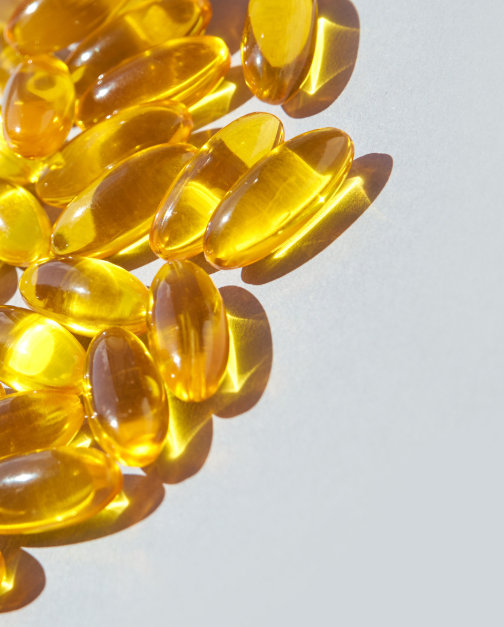
This is where the “marketing math” meets reality. If your doctor tells you to take 2,000 mg of Omega-3s, and you have a bottle of 1000mg fish oil per day, you might think you need two pills. You are likely wrong.
Capsule Math Explained
As we established earlier, the weight of the pill is not the dose. Let’s look at a typical “budget” fish oil bottle:
- Total Fish Oil: 1,000 mg
- EPA: 180 mg
- DHA: 120 mg
- Total Omega-3: 300 mg
If you need 2,000 mg of Omega-3s to lower your triglycerides, you would need to swallow seven of these pills. However, if you buy a “Triple Strength” or “High-Concentrate” bottle, a single 1,000 mg pill might contain 800 mg of Omega-3s. In that case, you only need three pills.
How Many Omega-3 Capsules Per Day?
To find your number, use this formula:
- Identify your target dose (e.g., 1,000 mg.
- Look at the “Supplement Facts” on your bottle.
- Add the EPA mg and DHA mg together.
- Divide your target dose by that sum.
Best Time to Take Fish Oil (Morning or Night?)
Is there a best time of day to take fish oil? The timing is less about your biological clock and more about what is in your stomach.
The “Fat with Fat” Rule
Omega-3s are fat-soluble. If you take fish oil on an empty stomach, your body may not produce the digestive enzymes (lipase) and bile necessary to break it down, meaning much of the oil will pass right through you.
- Always take fish oil with a meal that contains other fats (like eggs, avocado, or nuts). This can increase absorption by up to 300\%.
Morning vs. Night
- Morning: Many people take it in the morning for convenience.
- Night: If you suffer from “fishy burps” or acid reflux, taking it at night right before bed can help, as the oil is digested while you are horizontal and asleep.
- The Verdict: There is no significant difference in efficacy between taking fish oil in the morning or at night, provided it is taken with food.
Split Dosing
If you are taking a high dose (over 2,000 mg), it is often better to split the dose—half with breakfast and half with dinner. This prevents a “lipid-heavy” load on your gallbladder and reduces the risk of digestive upset.
What Should You Not Mix Omega-3 With?
While fish oil is a natural product, it can interact with certain medications. What should you not mix omega-3 with?
- Blood Thinners (Anticoagulants): Because fish oil has a mild antiplatelet effect, mixing it with drugs like Warfarin, Heparin, or Clopidogrel can theoretically increase bleeding risk.
- Blood Pressure Medication: Fish oil can naturally lower blood pressure. If you are already on antihypertensives, taking high doses of fish oil could cause your blood pressure to drop too low (hypotension).
- Contraceptive Drugs: Some research suggests that certain birth control pills might interfere with the triglyceride-lowering effects of fish oil.
Is 2000 mg of Fish Oil Too Much?
A common question in 2026 is: Is 2000 mg of fish oil too much? The answer is: No, for most people, 2,000 mg is a safe and highly effective therapeutic dose. It is the common threshold used for treating moderate inflammation and supporting heart health. However, it is “too much” if:
- You are about to undergo surgery.
- You are already a “heavy bleeder” or bruise very easily.
- You are using a low-quality oil that is rancid (at 2,000 mg, the oxidative stress from rancid oil becomes significant).
Best Fish Oil Supplement (What to Look For)
To get the most out of your calculated dose, the quality of the oil matters. When shopping for the best fish oil supplement, look for:
- Triglyceride Form (TG): This is the natural form of fat. It is absorbed 70\% better than the synthetic “Ethyl Ester” (EE) form found in many cheap brands.
- Third-Party Testing: Look for the IFOS (International Fish Oil Standards) 5-star rating. This ensures the oil is free from mercury, PCBs, and lead.
- Dark Packaging: Fish oil is sensitive to light. Never buy fish oil in a clear plastic bottle that has been sitting under store lights.
How Much Fish Oil Per Day According to Reddit?
On platforms like Reddit, the consensus often leans toward higher doses than the FDA. In subreddits like r/Supplements or r/Biohackers, you will find users advocating for 3,000–5,000 mg for “brain hacking” and “crushing inflammation.”
While these anecdotal reports are interesting, the science vs anecdotes debate suggests caution. Most “super-responders” on Reddit are also tracking their bloodwork (the Omega-3 Index).
Unless you are testing your blood levels, it is best to stick to the clinically validated ranges of 1,000–3,000 mg
How Much Fish Oil Should You Take Per Day?
Determining how much fish oil per day you need is a journey of personalization.
- For the average adult: 1,000 mg of combined EPA/DHA is the “sweet spot” for longevity and heart health.
- For the athlete: 2,000–3,000 mg will help keep you in the gym and out of pain.
- For the senior: 1,500 mg provides a vital shield for the aging brain.
Remember: The dose is in the EPA and DHA, not the size of the pill. Always take your oil with a fat-containing meal, and if you are on medical prescriptions, a quick conversation with your doctor is the final step in ensuring your Omega-3 journey is both safe and effective.
Frequently Asked Questions
How much fish oil should I take per day?
For general health, 250 — 500 mg of combined EPA and DHA is the minimum. For specific health goals like heart health or inflammation, 1,000 — 2,000 mg is generally recommended.
How many 1000mg fish oil pills should I take a day?
It depends on the concentration. If your 1,000 mg pill only contains 300 mg of Omega-3s, you would need three to reach a 1,000m mg dose. Always check the EPA and DHA totals on the label.
Is 2000mg of fish oil too much?
No, 2,000 mg is considered a safe therapeutic dose for most adults. The FDA considers up to 3,000mg per day to be safe for the general population.
What is the best time to take fish oil?
The best time is with your largest, highest-fat meal of the day. This ensures maximum absorption and reduces the likelihood of “fishy burps” or digestive upset.
What should you not mix omega-3 with?
Avoid mixing high doses of Omega-3 with blood thinners (anticoagulants) and blood pressure medications without consulting a doctor, as fish oil can enhance the effects of these drugs.
Conclusion
Determining how much fish oil per day you need is less about following a universal rule and more about aligning your intake with your specific biological needs.
As we’ve explored, the “standard” 1000 mg capsule is often just a starting point; the real value lies in the concentration of EPA and DHA tailored to your age, activity level, and medical history.
For the average person looking for a “health insurance” policy for their heart and brain, a daily dose of 1,000 mg of combined Omega-3s is a gold standard supported by decades of research.
If you are an athlete pushing your physical limits, or a senior focused on cognitive longevity, shifting that dose toward the 2,000 mg to 3,000 mg range can provide the extra anti-inflammatory support your body requires.
Ultimately, the best dosage is the one you can maintain consistently. Use the “pill math” we’ve discussed to ensure you aren’t just swallowing fillers.
Take your supplement with a fat-containing meal for maximum absorption, and always listen to your body for signs of over-supplementation. By treating fish oil as a precision tool rather than a generic pill, you unlock the full spectrum of its life-extending benefits.
Authoritative References
1. National Institutes of Health (NIH) – Omega-3 Fatty Acids Fact Sheet for Professionals
2. European Food Safety Authority (EFSA) – Scientific Opinion on the Tolerable Upper Intake Level of EPA and DHA
3. American Heart Association (AHA) – Omega-3 Fatty Acids for Triglyceride Lowering
4. M5. World Health Organization (WHO) –Fats and Fatty Acids in Human Nutrition
5 . World Health Organization (WHO) – Fats and Fatty Acids in Human Nutrition