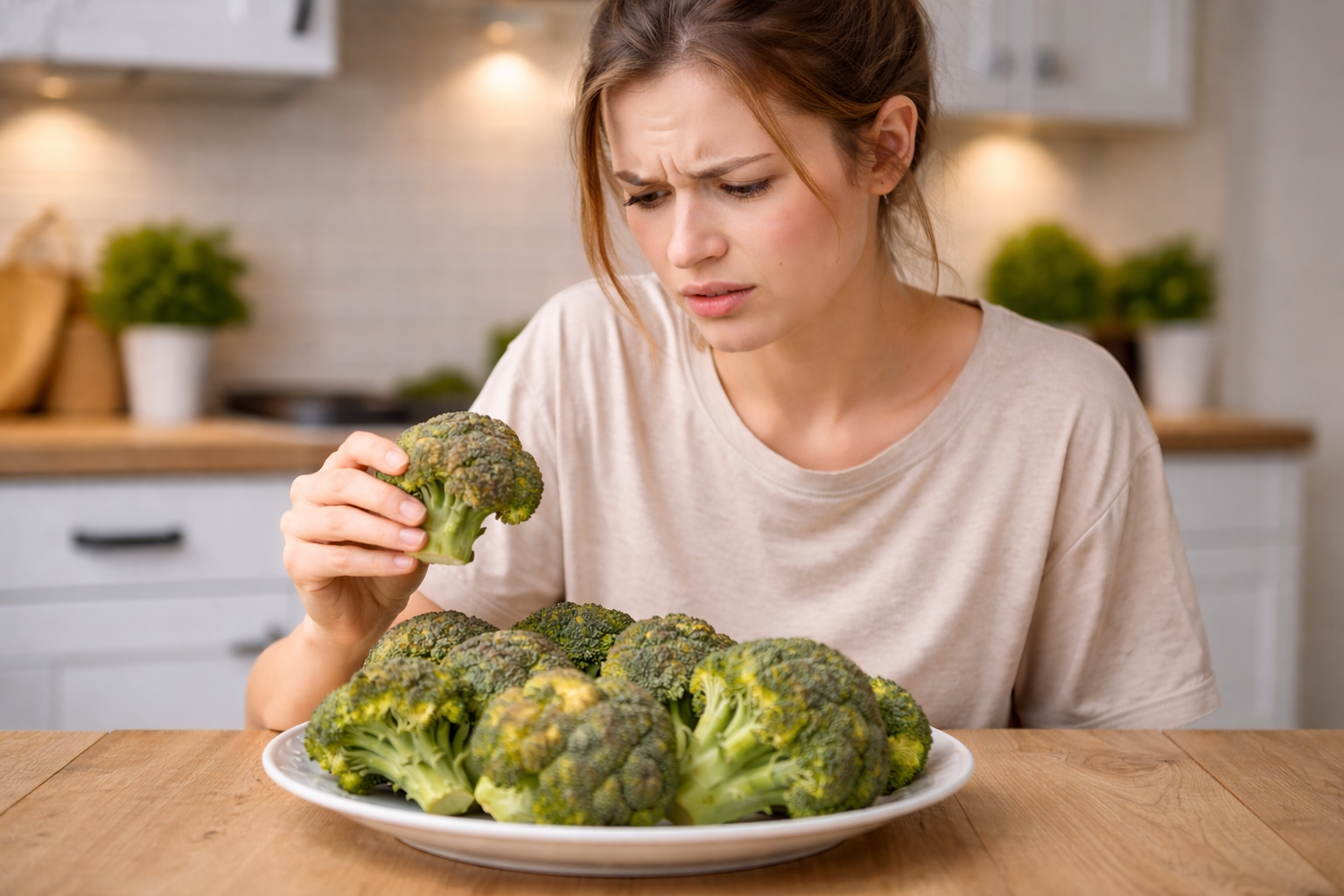
We’ve all been there: you open the crisper drawer with every intention of making a healthy stir-fry, only to find a head of broccoli that looks slightly… questionable.
Maybe the edges are looking a bit yellow, or perhaps there’s a stray dark spot on the stem. Because broccoli is a cruciferous vegetable with a complex structure of tightly packed florets, it isn’t always as obvious as a moldy tomato or a shriveled apple.
Learning how to tell if broccoli is bad is an essential skill for any home cook, meal prepper, or health-conscious individual.
Broccoli is a nutritional powerhouse, but like all fresh produce, it has a finite window of peak freshness. Once it starts to turn, it doesn’t just lose its crunch and vibrant flavor; it can also become a breeding ground for bacteria and mold that could lead to an unpleasant night in the bathroom.
In this guide, we are going to demystify the spoilage process. We will look at how to check broccoli is bad using your four senses: sight, touch, smell, and (as a last resort) taste.
We will also cover the nuances of discoloration, the “is it mold or just dirt?” debate, and the science of why your broccoli turns yellow.
By the end of this article, you’ll be an expert at identifying the signs broccoli has gone bad, ensuring that every floret you serve is both delicious and safe.
Fresh Broccoli vs Spoiled Broccoli: Key Differences at a Glance
Visual Comparison: Fresh vs Spoiled
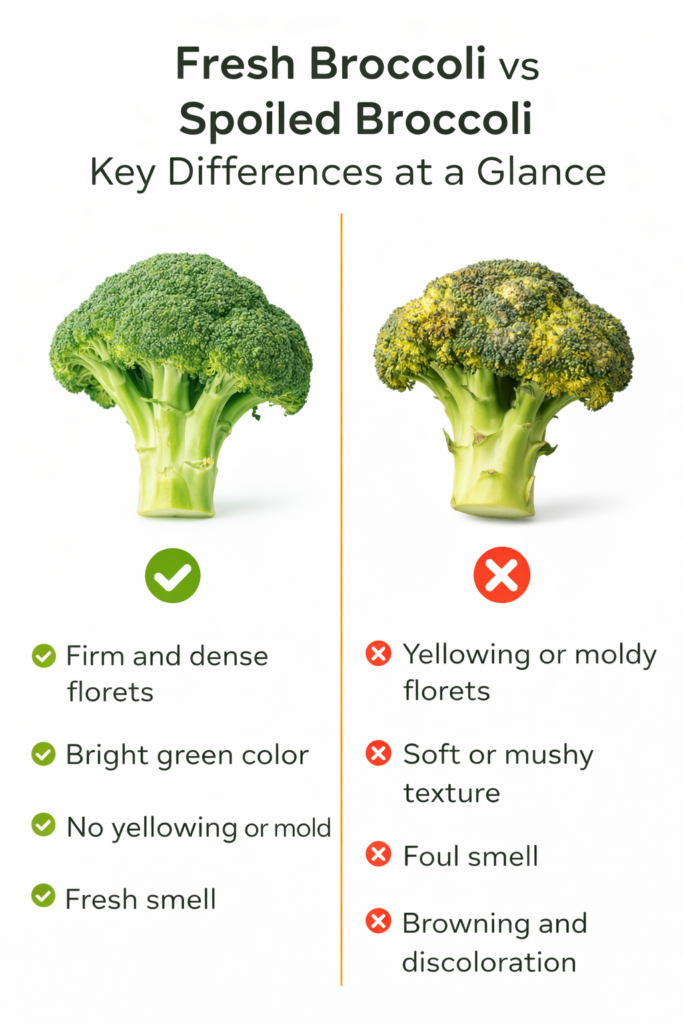
Actually, fresh broccoli should always display a vibrant, deep green color. The florets must be tightly packed together without any gaps. You should see a uniform appearance across the entire vegetable head.
This indicates the plant still retains most of its original moisture. Conversely, spoiled broccoli often looks dull, faded, or visibly yellowed. The broccoli gone bad appearance usually starts at the outer edges.
You might notice the florets beginning to separate or spread out. This loosening is a clear sign that the cellular structure is failing. Additionally, look for any dark spots or fuzzy patches on top.
Fresh heads never have black, brown, or white fuzzy growths. Discoloration is one of the primary signs of advancing vegetable age. Watch for broccoli discoloration and yellowing as a major red flag for spoilage.
Texture & Firmness Test
Moreover, you can learn a lot by simply squeezing the stem. Fresh broccoli stems are very firm and feel quite rigid. They should snap cleanly if you try to bend them. This crispness indicates the cells are full of hydrating water.
Meanwhile, ask yourself if broccoli is soft and if it is bad. The answer is usually yes because softness indicates deep moisture loss. If the stem feels limp or bendy, the quality is low. Rubbery stems mean the broccoli is old, but perhaps not toxic.
However, you must be careful if the broccoli is mushy. If the florets collapse under light pressure, they are rotting. Never consider broccoli mushy; it’s safe to eat for dinner. Mushiness often accompanies bacterial growth that causes severe stomach upset.
How to Tell If Broccoli Is Bad by Looking at It
Color Changes: Yellow, Brown, Black
Initially, look at the color of the tiny flowery buds. Yellowing how to tell if broccoli is bad is the most common query.
If the florets turn yellow, the chlorophyll is breaking down. This process happens as the vegetable nears the end of its life.
Generally, you might wonder if turning yellow is safe for consumption. Yellow broccoli is usually safe, but it tastes very bitter. The texture will be tough, and the nutrient count is lower. You should cook it immediately or choose to compost it.
Subsequently, you may notice brown spots forming on the crown. Broccoli brown spot:s safe questions depend on the size of the spot. Small brown flecks can often be trimmed away with a knife. If the browning is widespread, the entire head is likely spoiled.
Finally, check the stalk for any dark or black marks. Black spots on broccoli stems are safe to eat is a “no.” These dark patches usually indicate a fungal infection or deep rot. Black mold can spread through the vascular system of the plant.
White Spots & Fuzzy Growth
Furthermore, inspect the crevices for any white, fuzzy, or furry patches. These are clear indicators of mold colonies growing on the surface. Mold thrives in the humid environment of a sealed vegetable crisper drawer.
This is a definitive sign that the broccoli has gone bad. Specifically, do not confuse mold with a natural waxy bloom. Some broccoli has a light, dusty coating that looks slightly white.
This natural wax helps the plant retain its internal moisture levels. However, mold will look three-dimensional, hairy, and very localized. Consequently, white spots on broccoli usually point to white mold.
If you see fuzz, the spores have already deeply penetrated. You cannot simply wash mold off a porous vegetable like broccoli. The internal structure acts like a sponge for these fungal roots.
Therefore, is moldy broccoli safe to eat if you cut it? Experts strongly advise against keeping any part of a moldy head. The visible fuzz is just the tip of the iceberg. Microscopic toxins may exist throughout the rest of the green florets.
How to Tell If Broccoli Is Bad by Smell
Identifying the Scent of Freshness
Naturally, fresh broccoli has a very mild and earthy scent. It should smell like clean dirt or a fresh garden. You might barely notice any odor at all when it is cold. This neutral profile is exactly what you want to find.
Conversely, how to tell if broccoli is bad-smelling starts with intensity. As broccoli ages, it releases a very strong, pungent odor.
This happens because the vegetable contains high levels of natural sulfur. When cells break down, the sulfur gas escapes into the air.
Spotting the Rotten Odor
Specifically, a rotten smell is often compared to old eggs. It may also smell sour or like decaying organic compost. If the scent hits you when opening the fridge, toss it. This powerful odor is a biological warning to stay away.
Moreover, the smell is a reliable sign of how to tell if broccoli is bad. Even if it looks green, a bad smell means bacteria. Odor-producing microbes often colonize the vegetable before visual rot appears. Trust your nose over your eyes in these specific cases.
Ultimately, your sense of smell is a powerful tool for safety. Do not ignore a funky or “off” scent during prep. If the smell lingers after washing, the broccoli is definitely bad. Throw it away to keep your kitchen and family safe.
How to Tell If Broccoli Is Bad by Touch
Slimy Surfaces and Excess Moisture
Additionally, you should always feel the surface of the vegetable. Is broccoli slimy? Is it bad? is a question with one answer.
If the florets feel slippery or slimy, bacteria are present. This slime is a biofilm created by rapidly multiplying microorganisms.
Usually, this happens when moisture gets trapped in the packaging. You might see a thin, clear liquid on the stem. This moisture is a breeding ground for pathogens that cause illness. Never try to wash away the slime to save the vegetable.
Collapsing Stems and Softness
Furthermore, pay close attention to the structural integrity of the plant. A healthy broccoli head should feel heavy for its size. If it feels light or hollow, it has dried out. This is a common broccoli spoilage sign for older produce.
Specifically, check if the stem feels hollow or very woody. While not always “bad,” woody stems are very difficult to eat. If the stem collapses when you press it, rot is inside. Internal decay is often invisible from the outside of the stalk.
Finally, ensure the florets do not fall off too easily. If they crumble or shed like dust, the plant is dead. Fresh florets are firmly attached to the main thick stalk. Loss of structural tension is a clear sign of total spoilage.
How to Tell If Broccoli Is Bad by Taste
Safety First When Tasting
Occasionally, you might still be unsure after checking look and smelling. You can try a tiny piece of the raw floret. However, only do this if there are no signs of mold. Never taste broccoli that smells bad or looks visibly rotten.
Specifically, how to tell if broccoli is bad involves bitterness. While broccoli is naturally earthy, spoiled broccoli is intensely bitter. This sharp, unpleasant flavor is a sign of chemical breakdown. Your tongue will naturally want to reject the bad flavor.
Identifying Sour or Metallic Notes
Moreover, look out for any sour or metallic flavor profiles. Fresh broccoli should taste sweet, green, and slightly nutty when raw.
Sourness indicates that fermentation or bacterial activity has begun inside. This is a major warning sign that the food is unsafe.
Ultimately, if the taste seems “off” in any way, stop eating. Do not swallow the sample if it tastes like chemicals. It is better to waste a few cents than get sick. Broccoli’s bitter taste is a rule you should follow.
How Long Does Broccoli Last? Shelf Life Explained
Fresh Broccoli in the Fridge
Generally, the average lifespan of raw broccoli is quite short. You can expect it to stay fresh for five days. Some heads may last up to one full week. This depends heavily on how the store handled the produce.
Actually, several factors affect the total freshness of your vegetables. Temperature fluctuations in your kitchen can speed up the decay.
High humidity inside the vegetable drawer often leads to mold. Light exposure can also cause the green color to fade.
Furthermore, how long broccoli lasts depends on the harvest. Broccoli bought at a farmer’s market usually lasts much longer. Grocery store broccoli has already traveled many miles to reach you. This transit time reduces the remaining shelf life significantly.
Consequently, knowing how long fresh broccoli keeps in the fridge is vital. You should plan your meals around this five-day window.
Always inspect your produce immediately after you return from the store. This ensures you catch any early signs of potential spoilage.
Can Broccoli Last 2 Weeks in the Fridge?
Specifically, many people wonder if broccoli can last two weeks. This is possible only under very perfect storage conditions.
You must keep the temperature at a steady 34 degrees. The humidity must be high but without any standing water.
However, can broccoli last 2 weeks in the fridge realistically? Most home refrigerators are opened too often to maintain this. By the second week, the florets usually begin to yellow. The stem will likely become limp or lose its snap.
Ultimately, two weeks is the absolute limit for raw broccoli. Even if it looks okay, the flavor will be muted. The nutritional value also drops the longer the vegetable sits. It is much better to eat it within seven days.
Broccoli Expiration Date Meaning
Moreover, you must understand the broccoli expiration date meaning clearly. Most plastic-wrapped broccoli features a “best-by” or “sell-by” date.
This is not a strict safety deadline for the consumer. It is a guide for the retailer to manage stock.
Specifically, can you eat expired broccoli if it looks good? Yes, you can usually eat it a few days past. Use your senses to determine the actual safety of the food. If it looks, smells, and feels fresh, it is fine.
Therefore, do not throw away good food based on dates. The “best-by” date refers mostly to the peak flavor quality. If the date has passed, just perform a quick freshness check. Your eyes and nose are better than a printed label.
Broccoli Spoilage Timeline: Day-by-Day Breakdown
Day 1 to Day 3
Initially, during the first three days, the broccoli stays perfect. The color remains a vibrant green with very tight florets. The stem stays rigid and snaps easily when you bend it. This is the best time for raw eating or salads.
Furthermore, the smell should be completely neutral or slightly earthy. You will notice no moisture or slime on the surface. The nutrient levels are at their highest point during this stage. Most people find the flavor very sweet and quite crisp.
Day 4 to Day 7
Subsequently, the broccoli enters the secondary stage of its life. You might notice the green color becoming slightly more dull. The tips of the florets may show very tiny yellow spots. The stem might feel slightly less firm than before.
Specifically, this is the time when broccoli is too old to eat raw. However, it remains perfectly safe and delicious for cooked dishes. You can roast it, steam it, or add it to soups. The heat will mask any minor changes in the texture.
Beyond One Week
Finally, once you pass day eight, spoilage begins to accelerate. The yellowing will become much more obvious across the whole head.
You might start to notice a faint, sulfurous odor developing. This is the critical window for checking for mold.
Ultimately, by day fourteen, most broccoli is completely unfit for consumption. The structure will likely be limp, and the smell pungent.
You should definitely discard it if you see any slime. Safety risks increase significantly after the two-week mark passes.
How to Store Broccoli Properly to Keep It Fresh
Best Storage Methods
Actually, the best way to keep broccoli fresh is in the air. Do not seal it in a tight plastic bag. Broccoli needs to breathe to prevent the buildup of gases. These gases speed up the ripening and eventual rotting process.
Specifically, you should wrap the head loosely in damp towels. This mimics the misting systems used in professional grocery stores.
Place the wrapped broccoli in the vegetable crisper drawer immediately. This provides the perfect balance of moisture and cool air.
Furthermore, you can store broccoli like a bouquet. Place the stem in a jar with an inch of water. Cover the top loosely with a clean plastic bag. This method keeps the broccoli hydrated and crisp for days.
Common Storage Mistakes
However, many people wash their broccoli before putting it away. This is a major mistake that leads to fast rot. Moisture trapped in the tight florets encourages mold growth quickly. Only wash your vegetables right before you intend to cook.
Additionally, do not store broccoli near apples or bananas. These fruits release ethylene gas, which causes rapid yellowing in greens.
Keep your broccoli isolated from other ripening produce in the fridge. This simple step can double the life of your broccoli.
Consequently, how to store broccoli properly involves keeping it cold. Never leave fresh broccoli on the counter for long periods. Room temperature causes the cells to break down within hours. Constant refrigeration is the key to maintaining a long life.
Cooked Broccoli: How to Tell If It’s Gone Bad
Cooked Broccoli Shelf Life
Similarly, cooked broccoli has a much shorter lifespan than raw. Once heated, the cellular walls are already broken and vulnerable.
You must store cooked leftovers in an airtight container quickly. This prevents external bacteria from landing on the soft florets.
Specifically, the shelf life of cooked broccoli is about 3 days. Some sources say five days, but the quality drops fast. After three days, the broccoli often becomes very watery and mushy. The flavor starts to turn sour or very bland.
Moreover, how to tell if cooked broccoli is bad is easy. Look for a slimy coating on the pieces of vegetables. If the liquid in the container looks cloudy, toss it. Cloudy liquid is a sign of high bacterial activity and spoilage.
Leftover Broccoli Safety
Ultimately, leftover broccoli safe to eat rules require proper reheating. You should heat it until it is steaming hot throughout.
This helps kill any surface bacteria that grew during storage. However, reheating will not make truly spoiled food safe again.
Therefore, if it smells sour after reheating, do not eat it. The heat can sometimes make the rotten smell more intense. Trust your instincts if the dish looks or smells strange. It is never worth the risk of a stomach illness.
Is Old or Slightly Spoiled Broccoli Safe to Eat?
Can You Eat Slightly Spoiled Broccoli?
Actually, you might wonder if slightly spoiled broccoli is safe. The answer depends on the type of spoilage you see. Yellowing is the most common sign of an aging vegetable. This color change does not mean the food is toxic.
Specifically, yellow broccoli is mostly a sign of flavor loss. The florets have simply lost their chlorophyll over several days. You can eat yellowed broccoli if it remains very firm. The taste will be bitter, so consider heavy seasoning.
However, avoid any broccoli that feels slippery or very slimy. Slime is a clear indicator of active bacterial colonies growing.
You cannot simply wash this residue off to make it safe. Eating slimy vegetables often leads to very painful stomach cramps.
Ultimately, can you eat slightly spoiled broccoli if it is limp? If the stem is just bendy, it is usually fine. You should soak it in ice water to restore crispness. This trick works well for broccoli that is just dehydrated.
Broccoli That Is Soft, Yellow, or Mushy
Furthermore, you must distinguish between soft and truly mushy textures. Soft broccoli might just be old and losing its water. This is acceptable for use in a blended vegetable soup. The high heat of boiling will also kill most germs.
Conversely, is broccoli mushy safe to eat for your family? If the florets turn into a paste when touched, no. Mushiness indicates that the plant fibers have totally dissolved due to rot. This state usually accompanies a very foul or sour odor.
Consequently, you should always discard broccoli that has black spots. These spots are deep fungal infections within the plant tissue. They can produce mycotoxins that are heat-resistant and very dangerous. Do not try to cut around deep black rot.
Therefore, follow the simple rule of “when in doubt, toss.” It is better to lose a dollar than your health. Your body cannot always process the toxins found in rotting greens. Stick to broccoli that maintains its basic structural integrity.
Health Risks of Eating Bad Broccoli
What Happens If You Eat Bad Broccoli?
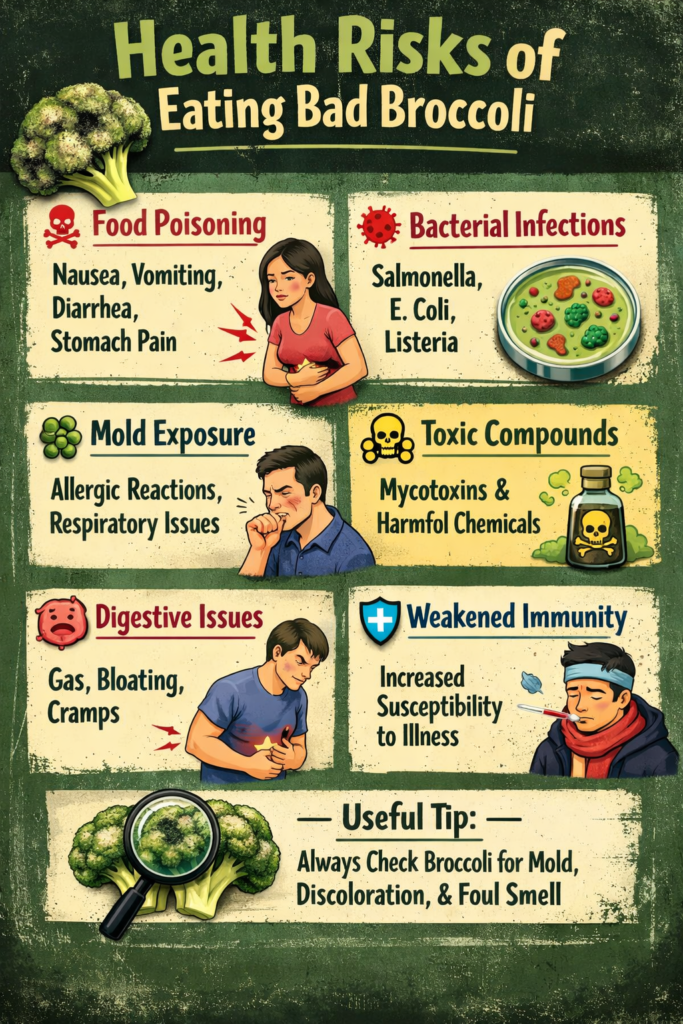
Specifically, eating spoiled vegetables can lead to various health issues. Your body reacts quickly to the presence of harmful pathogens. The most common result is a case of food poisoning. This occurs when bacteria like E. coli or Salmonella grow.
Furthermore, what happens if you eat bad broccoli involves digestive distress. You might experience sharp abdominal pains shortly after your meal.
Nausea and vomiting are common ways the body clears toxins. These symptoms can range from very mild to quite severe.
Additionally, spoiled broccoli health risks include exposure to mold spores. Some molds produce invisible poisons called mycotoxins that cause illness.
These toxins can affect your respiratory system if inhaled during prep. Always handle moldy produce with great care and avoid sniffing.
Ultimately, the severity of the reaction depends on your health. Children and older people are at a much higher risk. Their immune systems may struggle to fight off vegetable-borne bacteria. Always prioritize safety when serving meals to vulnerable family members.
Food Poisoning Symptoms
Moreover, you should know the specific broccoli food poisoning symptoms. Diarrhea is the most frequent sign of a bacterial infection. You may also develop a fever as your body reacts. Chills and body aches often accompany a serious digestive infection.
Specifically, eating rotten broccoli can cause side effects that appear within hours. Sometimes, the symptoms take a full day to manifest completely.
If you cannot keep fluids down, you must seek help. Dehydration is a major risk during a bout of poisoning.
Consequently, bad broccoli symptoms usually last for about two days. If your symptoms persist longer, contact a medical professional immediately.
Tell your doctor exactly what you ate and when it started. This helps them provide the most effective treatment for you.
Common Broccoli Spoilage Myths Debunked
Cutting Off Mold and Cooking Toxins
Actually, many people believe cutting off mold makes food safe. This is a very dangerous myth for porous vegetables like broccoli. Mold sends long, microscopic threads deep into the vegetable head. You cannot see how far the infection has actually spread.
Furthermore, another common myth is that cooking kills all toxins. While heat kills live bacteria, it does not destroy all poisons.
Some bacteria produce heat-stable toxins while they grow on food. These chemical byproducts remain dangerous even after boiling or roasting.
Does the Smell Always Matter?
Specifically, some think that smell is the only spoilage factor. They believe if it smells fine, it must be safe. This is incorrect because some pathogens have no scent at all. Listeria can grow on chilled broccoli without changing the odor.
Ultimately, you must use all your senses for a check. Do not rely on just one sign to confirm safety. A multi-step inspection is the only way to be sure. Follow the full checklist to keep your kitchen truly safe.
Reddit and Real-Life Questions About Bad Broccoli
How to Tell If Broccoli Is Bad: Reddit Explained
Moreover, many users search “how to tell if broccoli is bad Reddit.” Online communities often share photos of their questionable produce for advice. Most experienced cooks on these forums suggest the “snap test.” If the stem does not snap, it is likely old.
Specifically, Reddit users often ask about “tiny black bugs” found. These are usually aphids and do not mean the broccoli is bad. You can soak the head in salt water to remove them. This is a common occurrence with organic or garden broccoli.
Real-Life Asked Community Questions
Furthermore, people often ask why broccoli smells like sulfur when fresh. This is normal because broccoli is a cruciferous vegetable by nature. The smell becomes a problem only when it turns very sour. A light cabbage-like scent is perfectly normal for healthy heads.
Additionally, whether yellow broccoli is unsafe is a frequent community question. As discussed, it is safe but usually tastes quite bad.
Most users recommend using yellow broccoli only in cheesy casseroles. The strong cheese flavor helps mask the natural aging bitterness.
Quick Broccoli Freshness Test Checklist
The Look Test
Initially, perform a fast visual scan of the entire head. Ensure the color is a deep and vibrant green shade. Check for any yellowing on the tips of the florets. Look closely for any dark, brown, or black spots.
Furthermore, search for any white or gray fuzzy growth. Mold often hides in the shadows of the tight buds. If you see fuzz, the test is over immediately. Discard the head to prevent the spread of mold spores.
The Touch and Smell Test
Subsequently, press your finger firmly against the thick main stem. The broccoli should feel very hard and notably quite rigid. It should not feel bendy, rubbery, or especially soft. Firmness is the hallmark of a healthy and fresh vegetable.
Additionally, bring the broccoli close to your nose for air. A fresh head should have almost no detectable odor. If you smell old eggs, sulfur, or rot, toss it. Your nose is the most honest tool in your kitchen.
The Time and Taste Test
Finally, check the age of the produce in your fridge. If it has been there for over ten days, be cautious. Taste a tiny piece of a floret only if everything else is. Ensure there is no bitterness or sour flavor present.
FAQ
How can you tell if broccoli has gone off?
Actually, you can tell by looking for major color changes. If the broccoli has turned yellow or brown, it is off. A pungent, cabbage-like smell is another very strong sign of decay. Finally, feel for a slimy or slippery texture on the surface.
Specifically, these three signs together indicate the vegetable is totally spoiled.
Never ignore a combination of bad smell and bad color. Your health is worth much more than a single head of broccoli. Always prioritize fresh ingredients for your family’s daily meals.
How can you tell if broccoli is not good to eat?
Moreover, you can tell it is not good by checking firmness. If the stem is limp or the florets are mushy, discard it. Mushy broccoli is a sign that the cell walls have collapsed. This allows bacteria to enter and multiply within the plant tissue.
Usually, broccoli that is not good will also look dull. The vibrant green color fades into a light, sickly yellow-green. If the broccoli feels light or dry, the quality is poor. While perhaps not toxic, it will not provide a good flavor.
Is moldy broccoli ever safe?
Furthermore, moldy broccoli is never safe to eat under any condition. Mold develops deep roots that penetrate through the porous vegetable florets.
Even if you cut the fuzzy part off, toxins remain. These invisible toxins can cause allergic reactions or digestive illness.
Consequently, you must throw away the entire head of moldy broccoli. Do not try to save the stem if the top is moldy. The vascular system of the plant can carry spores throughout. Safety experts always recommend a “zero tolerance” policy for moldy greens.
Can cooked broccoli make you sick?
Specifically, yes, cooked broccoli can make you sick if stored incorrectly. If left at room temperature, bacteria grow very rapidly on it.
You should refrigerate cooked leftovers within two hours of your meal. This prevents the growth of dangerous pathogens like Bacillus cereus.
Additionally, cooked broccoli only lasts about three to four days. If it smells sour or looks slimy, do not eat it. Reheating does not always destroy the toxins left by bad bacteria. Always check your leftovers before you decide to heat them.
How to know when broccoli is done cooking?
Ultimately, knowing when broccoli is done is a matter of color. It should turn a very bright, almost neon green when cooked. Use a fork to test the tenderness of the stalk. It should be easy to pierce but still have some snap.
Therefore, do not overcook your broccoli until it becomes very mushy. Overcooking destroys the vitamins and makes the flavor very bland. Aim for a “crisp-tender” texture for the best nutritional results. This ensures you get the most out of your healthy greens.
Final Verdict: When to Eat, When to Toss
Simple Rules for Kitchen Safety
Generally, you should trust your natural senses over any labels. If the broccoli looks green and smells fresh, it is safe. If you see yellowing, use it quickly for a cooked dish. Yellowing is a warning that the end is very near.
However, you must toss any broccoli that shows signs of rot. This includes any slime, mold, or a very foul odor. Never risk your health for the sake of avoiding food waste. Composting is a great way to handle spoiled vegetable matter safely.
Safety-First Conclusion
Specifically, maintain a clean and organized refrigerator to track your food. Keep your broccoli in a breathable environment to maximize its life.
Check your produce every few days to catch spoilage very early. This proactive habit keeps your kitchen efficient and very safe.
Ultimately, signs that broccoli has gone bad are very easy to learn. Once you know them, you will never feel uncertain again.
You can now shop and cook with total confidence and peace. Enjoy your fresh, healthy broccoli with your loved ones tonight.
Authoritative References
- Centers for Disease Control and Prevention (CDC) — Food Poisoning Symptoms
- U.S. Food and Drug Administration (FDA) — Selecting and Serving Produce Safely
- U.S. Department of Agriculture (USDA) — Molds on Food: Are They Dangerous?
- U.S. Department of Agriculture (USDA) — Leftovers and Food Safety