
Once nearly eliminated, measles is spreading again across America in 2026. What was once a rare headline has become a frequent public health alert as cases climb in various states, catching many families off guard. This resurgence is a sobering reminder that viruses don’t disappear just because we stop talking about them; they simply wait for an opening.
The growing measles surge in the U.S. is particularly alarming because of how quickly the virus moves through communities. Recent outbreaks, notably in states like South Carolina and Florida, have strained local clinics and forced schools to implement emergency protocols. For a generation of parents and young adults who have never seen a “measles ward,” the reality of this highly infectious disease is hitting home.
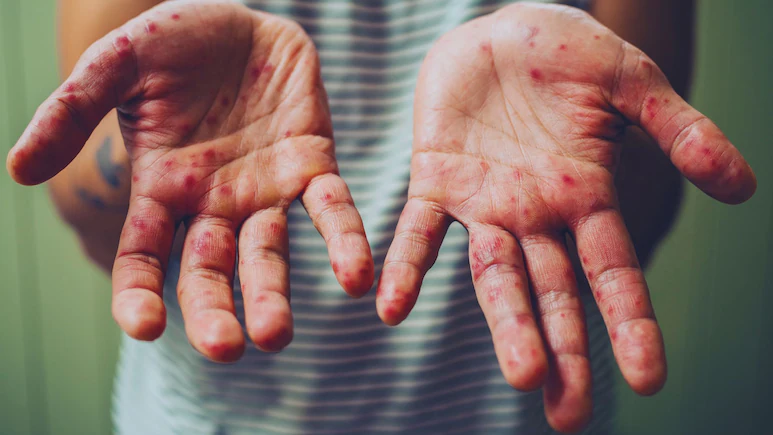
In this comprehensive guide, we will explore why measles is returning, how to recognize the symptoms early, and the definitive steps you can take to protect your family through the MMR vaccine and proven prevention strategies.
What Is Measles?
Measles, also known as rubeola, is a highly contagious viral infection caused by a member of the paramyxovirus family. While often dismissed by older generations as a standard “childhood rite of passage,” it is a serious systemic infection that affects the respiratory system and then spreads throughout the body.
The virus lives in the nose and throat mucus of an infected person. It spreads through the air when an infected person coughs, sneezes, or talks. Because it is an airborne pathogen, you don’t even need to be in the same room as an infected person at the same time to catch it; the virus can linger in the air long after the sick individual has left.
It is far more dangerous than many assume because it doesn’t just cause a rash; it temporarily “wipes” the immune system’s memory, making patients more susceptible to other bacterial and viral infections for months or even years following recovery.
Why Is There a Measles Surge in the U.S.?
The measles outbreak 2026 didn’t happen by accident. It is the result of several converging factors that have weakened our “population shield.”
Key Causes Behind the 2026 Outbreak
- A. Declining Vaccination Rates: The primary driver is a dip in routine childhood immunizations. Whether due to pandemic-era disruptions in healthcare or growing vaccine hesitancy, many kindergarten classes are now falling below the critical threshold required for safety.
- B. International Travel and Imported Cases: Measles remains common in many parts of the world. In our globalized society, a single traveler can unknowingly bring the virus back to an under-vaccinated pocket of the U.S., sparking a local wildfire of cases.
- C. Community Spread in Under-Vaccinated Areas: Once the virus enters a school, daycare, or close-knit community where vaccination rates are low, it spreads with mathematical certainty.
- D. Misinformation About the MMR Vaccine: The influence of social media has allowed debunked theories—particularly the long-disproven link between vaccines and autism—to resurface. This misinformation creates a “perception of risk” that is far removed from scientific reality, leading parents to delay or skip essential shots.
Current Measles Outbreak Situation in the U.S. (2026 Update)
As of early 2026, the CDC has reported a significant uptick in cases across more than 15 states. Public health monitoring has moved into high gear, with specialized task forces deployed to regions showing “cluster” patterns.
These outbreaks can grow with breathtaking speed. Because of the virus’s long incubation period, by the time a single case is confirmed, dozens of others may already be infected and spreading it. The CDC and WHO are currently working together to harmonize travel advisories and bolster local health departments’ ability to perform rapid “contact tracing.”
How Contagious Is Measles?
Measles is widely considered one of the most contagious diseases known to man. To put it in perspective: if one person has measles, up to 90% of the people close to that person who are not immune will also become infected.
The virus is uniquely “hardy.” It can remain active and contagious in the air or on surfaces for up to two hours after an infected person has left the area.
Contagious Timeline
- 4 Days Before: A person is contagious four days before the signature rash even appears.
- 4 Days After: They remains contagious for four days after the rash begins.
This 8-day window of transmission is why the virus is so difficult to contain without high vaccination rates.
Measles Symptoms: Early Signs to Watch For
Recognizing measles early is vital for preventing its spread. The illness typically progresses in distinct stages.
Stage 1: Early Flu-Like Symptoms (Days 1–3)
The initial symptoms are often mistaken for a severe cold or the flu:
- High fever (often climbing above 104°F)
- Hacking dry cough
- Persistent runny nose (coryza)
- Red, watery, and light-sensitive eyes (conjunctivitis)
Stage 2: Koplik Spots (Days 2–3)
A unique diagnostic sign of measles is the appearance of Koplik spots. These are tiny white spots (sometimes compared to grains of salt) that appear on the red lining inside the cheek.
Stage 3: The Measles Rash (Days 3–5)
The classic measles rash usually breaks out 3 to 5 days after symptoms begin. It typically starts as flat red spots on the face at the hairline and spreads downward to the neck, trunk, arms, legs, and feet. Small raised bumps may also appear on top of the flat red spots.
| Phase | Days | Primary Symptoms |
| Incubation | 7–14 | No symptoms |
| Prodromal | 11–15 | Fever, cough, red eyes, Koplik spots |
| Exanthematous | 13–18 | Classic red rash spreading downward |
| Recovery | 19+ | Fading rash, cough may linger |
Measles Complications: Why It Can Be Dangerous
A common misconception is that measles is “just a rash.” In reality, it can be a devastating illness.
Serious Risks Include:
- Pneumonia: The most common cause of death from measles in children.
- Encephalitis: Swelling of the brain that can lead to convulsions and can leave a child deaf or with intellectual disabilities.
- Severe Dehydration: Caused by secondary gastrointestinal issues.
- Blindness: Due to severe inflammation of the cornea.
High-Risk Groups
While anyone can get measles, these groups are at highest risk for complications:
- Infants: Too young to be vaccinated (usually under 12 months).
- Pregnant Women: Can lead to low birth weight or preterm labor.
- Immunocompromised: People with cancer or HIV whose bodies cannot fight the virus.
- Unvaccinated Adults: Who often suffer more severely than children.
Measles in Adults vs. Children
While we often associate measles with pediatric care, measles in adults is frequently more severe. Adults are more likely to experience complications like liver inflammation (hepatitis) and pneumonia.
Furthermore, workplace transmission is a major concern in 2026. An outbreak in an office setting can lead to weeks of lost productivity and secondary infections among the families of employees. If you were born after 1957 and are unsure of your vaccination status, you may be at risk.
How the Measles Vaccine Protects You (MMR Vaccine)
The MMR vaccine is the gold standard for measles prevention. It is a “live-attenuated” vaccine, meaning it uses a weakened form of the virus to teach your immune system how to fight.
Effectiveness
- 1 Dose: Roughly 93% effective against measles.
- 2 Doses: Roughly 97% effective.
Herd Immunity Threshold
To prevent a measles surge in the U.S., we need a “herd immunity” level of approximately 95%. When 95 out of 100 people are vaccinated, the virus cannot find enough hosts to travel through a community, which protects the 5% who cannot be vaccinated for medical reasons.
Is Immunity Lifelong?
For the vast majority of people, two doses of the MMR vaccine provide lifelong protection. You do not typically need “boosters” as an adult unless you are in a high-risk environment and your antibody levels have dropped.
Who Should Get Vaccinated or Boosters?
- Children: The first dose at 12–15 months, the second at 4–6 years.
- College Students: Evidence of two doses is usually required.
- International Travelers: Ensure you are fully protected before leaving the U.S.
- Healthcare Workers: Essential for preventing hospital-based outbreaks.
What If You Don’t Know Your Status?
If you lost your records, you can ask your doctor for a titer test (a simple blood test) to check for immunity. Alternatively, it is perfectly safe to get another MMR shot even if you were previously vaccinated.
How to Prevent Measles During an Outbreak
If an outbreak is active in your area:
- Verify Records: Ensure every family member has had two doses of MMR.
- Avoid Crowds: If you have an infant or are immunocompromised, avoid high-traffic public areas in outbreak zones.
- Practice Hygiene: While measles is airborne, handwashing helps prevent secondary infections.
- Masking: High-quality masks (like N95s) can offer a layer of protection against airborne droplets in medical settings.
- Stay Informed: Follow your local health department’s social media or website for real-time “exposure site” alerts.
What To Do If You’ve Been Exposed
If you believe you have been exposed to measles, do not go directly to a doctor’s office or ER without calling first. You risk infecting everyone in the waiting room.
- Call Ahead: Tell the clinic you suspect measles exposure so they can meet you at a side entrance or use isolation protocols.
- Post-Exposure Vaccination: If given within 72 hours of exposure, the MMR vaccine may prevent the disease or lead to milder symptoms.
- Immune Globulin: For vulnerable people, a shot of antibodies can be given within six days of exposure to provide immediate protection.
Common Myths About Measles and the Vaccine
- Myth: “Measles is harmless.” * Fact: Measles killed thousands of children annually before the vaccine. It remains a leading cause of preventable death globally.
- Myth: “Vaccines cause autism.” * Fact: This was based on a single, fraudulent study that has been retracted. Dozens of global studies involving millions of children have shown no link.
- Myth: “Natural immunity is better.” * Fact: The “price” of natural immunity is the risk of pneumonia, brain damage, or death. The vaccine provides immunity without the danger.
Public Health Response and Future Outlook
The 2026 surge has prompted many states to revisit school entry vaccine policies and launch aggressive “catch-up” campaigns. The future of public health in the U.S. depends on rebuilding trust in science and ensuring that “pockets” of low vaccination do not become permanent features of our landscape. Through education and accessibility, these outbreaks are entirely preventable.
FAQs About the Measles Surge
Is measles deadly?
Yes, it can be, especially for children under five and adults with compromised immune systems.
Can vaccinated people get measles?
It is rare (about 3 in 100 people), but if they do, the illness is typically much milder and less likely to be spread to others.
How long does measles last?
The full course of the illness, from initial fever to the fading of the rash, usually lasts 10 to 14 days.
Is measles airborne?
Yes. It is one of the most efficient airborne viruses, staying suspended in the air for up to two hours.
How do I know if I need another MMR shot?
Consult your doctor for a titer test or a review of your immunization records, especially if you plan to travel or work in healthcare.
Conclusion: Staying Safe as Measles Cases Rise
The measles surge in the U.S. is a clear signal that we cannot take our collective health for granted. While the headlines may be concerning, the solution is already in our hands. Vaccination remains the strongest, safest, and most effective defense against this virus.
By staying informed, checking your family’s records, and acting quickly if symptoms appear, you are not just protecting yourself—you are protecting the most vulnerable members of your community.
References
- Centers for Disease Control and Prevention (CDC): Measles Cases and Outbreaks: The primary source for national case counts, outbreak locations, and vaccination efficacy data.
- South Carolina Department of Public Health (DPH): 2025–2026 Measles Outbreak Updates: Real-time updates on the largest active outbreak in the U.S., including exposure sites and local statistics.
- World Health Organization (WHO): Measles Fact Sheet: Global perspective on measles transmission, symptoms, and the importance of the 95% herd immunity threshold.
- Johns Hopkins University (IVAC): U.S. Measles Tracker: Interactive maps and demographic breakdowns (age, vaccination status) of current U.S. cases.
- CIDRAP (Center for Infectious Disease Research and Policy): States Report First Measles Cases of the Year: In-depth reporting on the spread of the virus to states like Florida, Idaho, and Nebraska in early 2026.
- The BMJ (British Medical Journal): US Measles Cases at Highest Number in 30 Years: Analysis of the 2025–2026 surge and the risk of the U.S. losing its “measles-eliminated” status.
- American Academy of Pediatrics (AAP): Measles: What Parents Need to Know: Clinical guidance on the MMR vaccine schedule and managing symptoms in children.

