Raw chicken stays safe in the fridge for 1 to 2 days. Cooked chicken lasts 3 to 4 days when stored at or below 40°F (4°C). These windows apply regardless of how the chicken looks or smells — some of the most dangerous foodborne pathogens leave no visible or odor-based clues at all.
Most people assume a quick sniff is enough to decide how long chicken is good in the fridge. As Christina Ross, a physician specializing in public health, I can tell you that assumption lands more patients in urgent care than almost any other kitchen habit. Chicken is one of the most nutrient-dense, versatile proteins in the American diet — and also one of the most microbiologically active. The moment it hits your refrigerator shelf, a biological clock starts ticking. The question is whether you know how much time you actually have.
Variables like fridge placement, container type, marinade, and even how long the chicken sat in a warm car on the way home all quietly shift that timeline. A single number cannot capture every scenario. That is exactly why I put this guide together — to walk you through every real-world situation, from a fresh pack of raw breasts to three-day-old rotisserie chicken sitting in a takeout bag.
By the end, you will have a clinically grounded, practical framework for making confident food safety decisions every time you open that refrigerator door. Let us start with what the science actually says.
Chicken Fridge Life: Quick Reference Chart
Before diving into the details, here is a clinical reference table based on USDA Food Safety and Inspection Service guidelines. Use it as your starting point — then read on to understand why these numbers exist and when the exceptions apply.
| Chicken Type | Fridge Life (at or below 40°F) |
|---|---|
| Raw Chicken (Whole, Parts, Ground) | 1–2 Days |
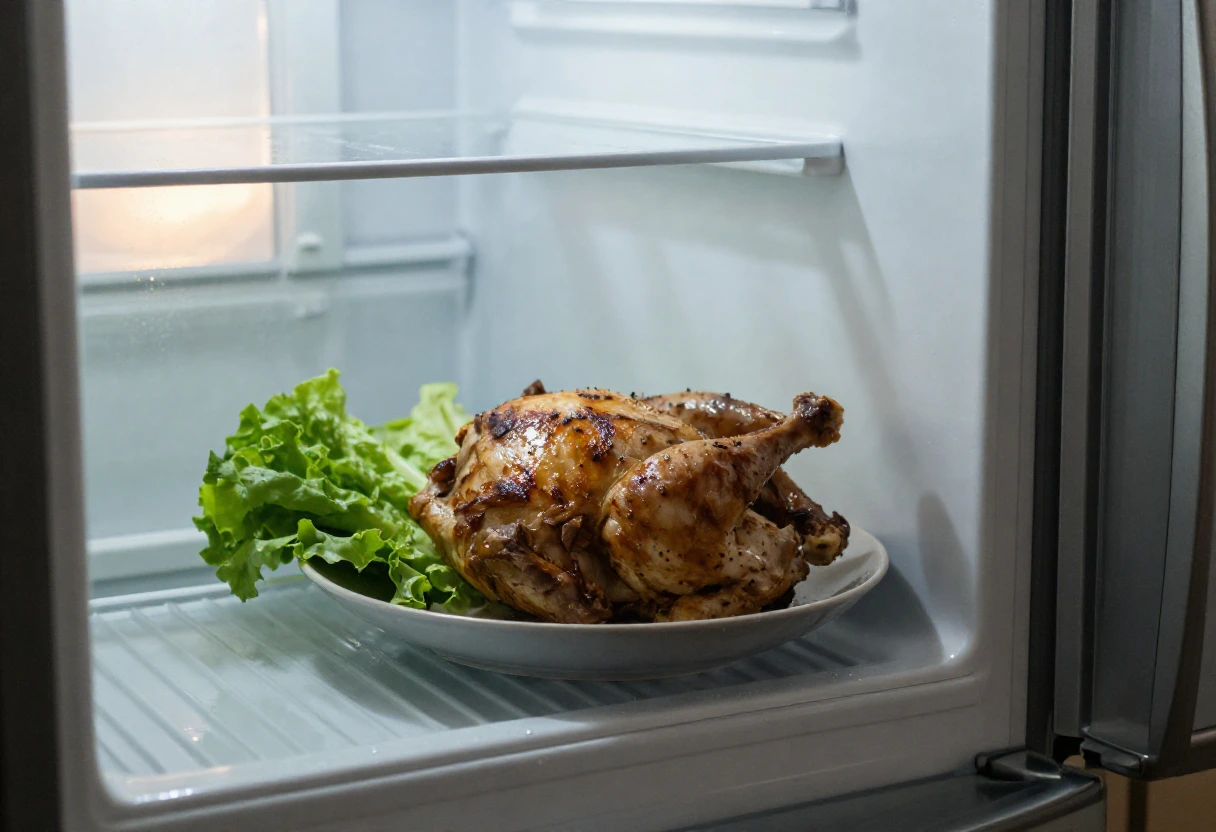
| Cooked Chicken (Roasted, Grilled, Fried) | 3–4 Days |
| Rotisserie Chicken | 3–4 Days |
| Chicken Soup, Broth, or Stock | 3–4 Days |
| Chicken Salad (Mayonnaise-Based) | 3–5 Days |
| Shredded Chicken (Plain) | 3–4 Days |
| Vacuum-Sealed Raw Chicken | 1–2 Days After Opening |
| Marinated Raw Chicken | 1–2 Days |
| Ground Chicken or Giblets | 1 Day Maximum |
How Long Is Raw Chicken Good in the Fridge?
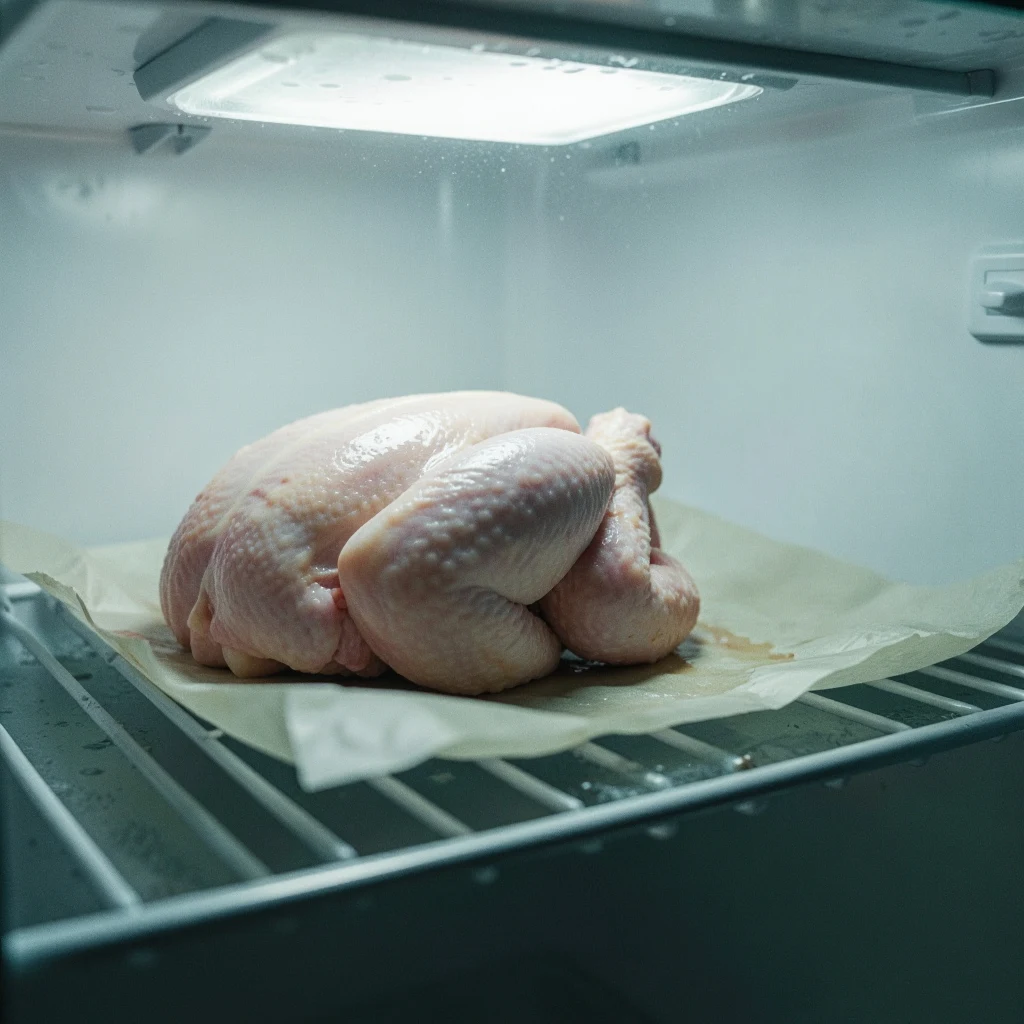
Raw chicken is among the most microbiologically active proteins found in any home kitchen. Unlike beef or pork, poultry has a neutral pH and a highly porous tissue structure. That combination creates an environment where pathogens like Salmonella, Campylobacter, and Listeria monocytogenes can establish and multiply far more rapidly than on other proteins.
The clinical standard, confirmed by the USDA Food Safety and Inspection Service, is to cook or freeze raw chicken within 48 hours of purchase. That is not an overly cautious suggestion — it is a boundary grounded in bacterial growth modeling at standard home refrigerator temperatures.
The Truth About Sell-By Dates on Raw Chicken
One of the most persistent misconceptions I encounter in my practice involves sell-by dates. A patient will point to a package dated four or five days out and assume the chicken is safe for that entire period at home. That date is a retail display guideline — it tells the grocery store how long to keep the product on the shelf, not how long it stays safe in a home environment.
Home refrigerators fluctuate in temperature every time the door opens. They are rarely as consistently cold as commercial storage units. The sell-by date was calculated under ideal commercial conditions — conditions your kitchen cannot replicate. Always treat the 48-hour window as your personal safety benchmark, regardless of what the package says.
Is Raw Chicken Safe After 3, 4, or 7 Days?
This is one of the most frequent questions I receive, and it deserves a direct clinical answer at each interval.
3 Days: You are in a genuine gray zone. If your refrigerator maintained a precise and consistent 34°F throughout, the chicken may still be on the outer edge of marginally safe. However, the bacterial load is meaningfully higher than at day two, and in my clinical opinion, that risk is simply not worth taking.
4–5 Days: This is beyond the safe window. Even if the chicken has no perceptible odor, invisible colonies of Salmonella or Campylobacter can be present at concentrations sufficient to cause illness. Do not attempt to cook it and hope heat solves the problem — I will explain exactly why that reasoning is flawed in an upcoming section.
7 Days: Discard it immediately — without tasting, smelling, or deliberating. At seven days, even under favorable home refrigeration conditions, serious foodborne illness is not a theoretical risk. It is near-certain.
Signs Raw Chicken Has Gone Bad
Your senses are a useful first screen — but they are not a complete safety system. Some of the most dangerous pathogens on raw poultry produce no detectable odor and cause no visible changes to the meat. With that caveat clearly in mind, here is what to check.
Smell: Fresh raw chicken has a faint, almost neutral scent. If you detect anything sour, ammonia-like, or distinctly “off,” spoilage bacteria have already been breaking down the proteins for some time. That smell is an unambiguous discard signal.
Color: Healthy raw chicken ranges from pale pink to a deeper rose depending on the cut. Gray, dull, or yellowing flesh indicates spoilage has begun. Green or black discoloration is a definitive sign of bacterial or mold activity.
Texture: This is often the most telling indicator. Raw chicken should be moist but never sticky or slimy. If a thick, mucus-like film has developed on the surface, the chicken is spoiled. Rinsing it off does not make it safe — and rinsing raw chicken in your sink actively spreads bacteria to surrounding surfaces, which the CDC explicitly warns against.
How Long Is Cooked Chicken Good in the Fridge?
Cooking chicken to a safe internal temperature of 165°F eliminates the initial bacterial load on the meat. However, the moment cooked chicken begins to cool, it becomes a clean substrate for environmental bacteria to colonize. The clock starts immediately.
The standard safe window for cooked chicken is 3 to 4 days, stored in an airtight container at or below 40°F. This applies to baked, grilled, pan-seared, fried, and poached preparations alike. Wondering about a specific preparation like how to make chicken salad from leftovers? The same 3–4 day cooked window governs the base chicken before you mix anything in.
Does Cooking Method Affect How Long Cooked Chicken Lasts?
The safety window stays consistent across methods, but quality and texture vary in ways that matter practically. Here is how the most common preparations compare.
Baked or Grilled: Drier cooking methods produce the most stable cooked chicken. Lower residual moisture slows quality degradation. Baked and grilled chicken typically maintain both safety and palatability through the full four-day window.
Fried Chicken: The safety window is the same — 3 to 4 days — but quality deteriorates faster. The breading absorbs moisture from the chicken during refrigeration, creating a damp microenvironment where mold can develop more readily than on a dry grilled breast. For the best balance of safety and taste, consume fried chicken within 48 hours of cooking.
Boiled or Poached: Higher residual moisture means slightly faster quality loss, though safety holds through day four. When stored in the cooking liquid — as in a soup or stew — the timeline is unchanged. Drained poached chicken may begin to dry out noticeably by day three.
Storage Best Practices for Cooked Chicken
Getting the full four-day window requires doing a few things correctly the moment the chicken comes off the heat. These steps are straightforward and make a measurable clinical difference.
Use airtight, shallow containers — glass or BPA-free plastic with snap-locking lids. Shallow containers allow the chicken to cool to 40°F within the critical two-hour window. A deep pile of chicken in a large bowl holds residual heat at its center far longer than is safe, keeping the interior in the Danger Zone for hours.
Never let cooked chicken sit at room temperature for more than two hours. If your kitchen temperature exceeds 90°F — after a long cooking session or during summer — that window shrinks to one hour. Label every container with the date cooked and the discard date. A piece of masking tape and a permanent marker take ten seconds and eliminate all guesswork.
How Long Is Chicken Good in the Fridge After Thawing?
Thawing introduces a variable many home cooks overlook. The freezer does not reset the clock on chicken — it pauses it. If raw chicken sat in your refrigerator for 24 hours before you froze it, that time remains on the ledger once it thaws. The biological degradation that began before freezing resumes exactly where it left off.
Once chicken is fully defrosted in the refrigerator, the 1–2 day raw chicken guideline applies from the point of complete thawing. If it thawed on the counter or in a microwave, it must be cooked immediately. Those methods introduce uneven warming that accelerates bacterial activity, making additional refrigerated storage of raw meat unsafe. For a full breakdown of timing, see our guide on how long to boil chicken safely from various starting states.
Can You Refreeze Thawed Chicken?
Yes — but only under one specific condition. If the chicken was defrosted entirely in the refrigerator and has not exceeded its safe storage window, it can be refrozen raw. However, each freeze-thaw cycle degrades the cellular structure of the meat, affecting moisture retention and final texture.
From a quality and food safety standpoint, the better approach is to cook the chicken first and then freeze the cooked result. Thawed cooked chicken follows the standard 3–4 day refrigerated guideline before it needs to be consumed or returned to the freezer.
Rotisserie Chicken: What the Grocery Store Doesn’t Tell You
Store-bought rotisserie chicken is one of the most convenient proteins available — and one of the most commonly mishandled at home. A rotisserie bird is safe in the refrigerator for 3 to 4 days, but that clock depends entirely on how it was handled before you bought it. If you have ever wondered are rotisserie chickens healthy, the answer involves not just the ingredients but the storage conditions from store to table.
Grocery store warming cabinets are required to hold chicken at or above 140°F (60°C) to prevent bacterial growth during display. When those cabinets are not calibrated correctly — which happens more often than most consumers realize — bacteria can begin multiplying before you even leave the parking lot. This is why I always recommend carving the meat off the bone as soon as you arrive home. The carcass retains heat and slows the overall cooling process once the chicken is in your fridge. Removing the bones allows the meat to reach 40°F significantly faster.
If you will not finish the bird within four days, shred the remaining meat and transfer it to labeled freezer bags. Shredded cooked chicken maintains good quality in the freezer for up to four months — making it one of the most efficient proteins for weekly meal planning.
Vacuum-Sealed and Marinated Chicken
Packaging changes the perceived shelf life of chicken in ways that can be genuinely misleading. Here is what the microbiology actually says about two of the most common packaging scenarios.
Vacuum-Sealed Raw Chicken
Vacuum sealing removes oxygen, which meaningfully slows the growth of aerobic bacteria — the type primarily responsible for the off-smells and visible spoilage that typically alert you to a problem. This is why vacuum-sealed chicken can look and smell perfectly fine well past the point when standard packaged chicken would have shown obvious signs of spoilage.
The complication is that vacuum sealing does not inhibit anaerobic bacteria. Clostridium botulinum thrives in low-oxygen environments and produces toxins that are both odorless and colorless. The rule is simple: follow the “Use By” date on the original vacuum-sealed package. Once that seal is broken at home, the standard 1–2 day raw chicken window applies immediately, regardless of how pristine the meat appears.
Marinated Raw Chicken
Acidic marinades — lemon juice, vinegar, yogurt-based blends — do modestly slow surface bacterial activity. They do not sterilize the meat, and they do not extend the safe refrigerated storage window. Marinated raw chicken follows the same 1–2 day limit as unmarinated raw chicken.
There is also a quality dimension worth knowing. Beyond 24 hours in an acidic marinade, the acid begins chemically denaturing the proteins on the surface of the meat — a process that produces a mushy, mealy texture that no cooking technique will correct. For both food safety and culinary results, I recommend limiting marinade time to no more than 24 hours.
Chicken-Based Dishes: Soup, Salad, and More
When chicken is combined with other ingredients, the shelf life of the dish is governed by the most perishable component — not the chicken alone. This is a principle that is frequently overlooked and frequently responsible for illness.
Chicken Soup, Broth, and Stock
Homemade chicken soup is safe in the refrigerator for 3 to 4 days. The challenge with large batches is the cooling process. A full pot of soup transferred directly to the refrigerator retains heat at its center for hours — keeping the liquid in the Danger Zone long enough to allow significant bacterial growth before it ever reaches a safe temperature.
Divide large batches into small, shallow containers before refrigerating. This allows even cooling throughout and brings the entire volume to 40°F within the two-hour safety window. For detailed cold storage guidance, FoodSafety.gov’s cold food storage charts are an excellent reference to bookmark.
Chicken Salad
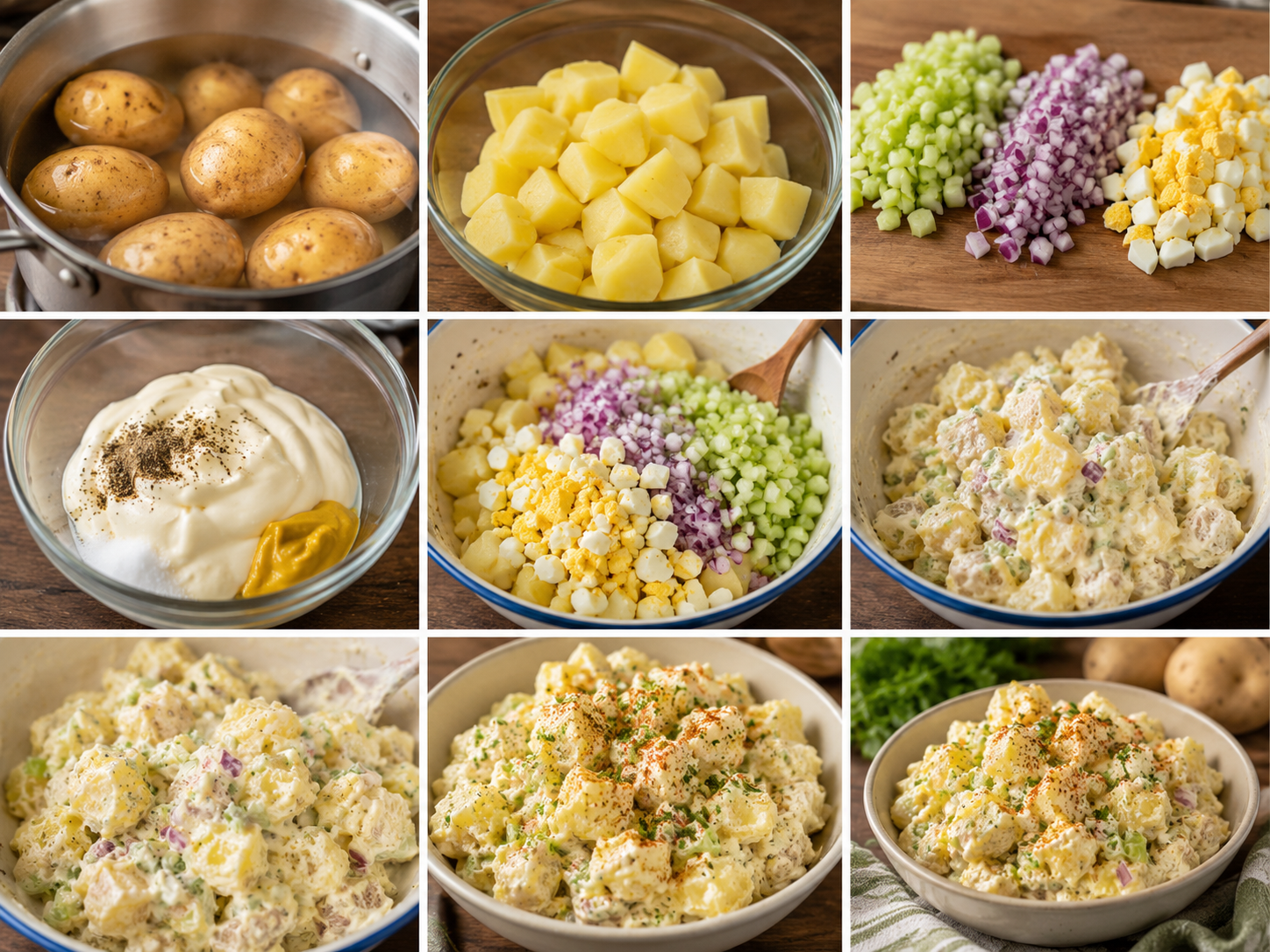
Chicken salad made with mayonnaise, celery, onion, or other fresh vegetables is highly perishable. The standard refrigerated window is 3 to 5 days — but that assumes the chicken used was freshly cooked on the day the salad was prepared. If the chicken was already two days old when it went into the salad, you have two days remaining, not three to five. No ingredient added afterward resets that timeline.
For everything you need to know about building and storing this dish safely, our full guide on is chicken salad healthy covers both the nutritional and food safety dimensions in detail. You may also find our best chicken salad sandwich recipe useful for putting those safely stored leftovers to work.
Shredded Chicken and Cream-Based Dishes
Plain shredded chicken follows the standard 3–4 day cooked window. Because shredding increases surface area, moisture is lost more rapidly during refrigeration. Store shredded chicken with a small splash of broth in an airtight container to maintain texture and prevent the surface from drying out and oxidizing.
Cream-based dishes — chicken in a white sauce, chicken alfredo, chicken pot pie filling — have a shorter quality window. Dairy components separate and sour more quickly than the chicken itself. Consume cream-based chicken dishes within two days for the best combination of safety and palatability. On a related note, if you are comparing how long pasta lasts in the fridge, a pasta-and-chicken cream dish follows the shorter of the two timelines — which is almost always the dairy component.
Ground Chicken and Organ Meats
Ground chicken is the most perishable form of poultry, yet it is often stored with the same casualness applied to whole cuts. That is a meaningful clinical error. During grinding, the surface area of the meat expands dramatically, exposing far more tissue to oxygen and potential contamination from processing contact points. The result is a product that reaches unsafe bacterial concentrations far faster than intact cuts.
The recommendation is clear: cook ground chicken on the day of purchase. If same-day cooking is not feasible, freeze it immediately. One day is the maximum safe refrigerated window — and only if it was stored correctly from the moment you arrived home.
Chicken giblets — heart, liver, gizzard — are similarly perishable. High moisture content and nutrient density make these organs spoil faster than muscle meat. Refrigerate them for no longer than 24 hours. Freeze them if you are not cooking them the same day they were purchased.
The Danger Zone and Why the Two-Hour Rule Is Non-Negotiable
In clinical microbiology, the temperature range between 40°F and 140°F (4°C and 60°C) has a specific name: the Danger Zone. Within this range, bacteria such as Salmonella and E. coli can roughly double their population every 20 minutes under favorable conditions. That is not a slow creep — it is exponential growth that reaches dangerous concentrations well within a few hours.
I want to share a scenario from my practice that illustrates this more concretely than any chart. A patient — I will call her Renata — came in with severe abdominal cramping and vomiting that began approximately six hours after dinner. She had made a chicken stir-fry and left the pan on the stove while she watched a film. By the time she refrigerated the leftovers, just over three hours had elapsed. The chicken looked completely normal the following day when she reheated it. It smelled fine. It was not safe. That two-hour window is the line between a good meal and an emergency room visit.
If your kitchen temperature exceeds 90°F — common during summer or after extended cooking — the safe window at room temperature shrinks to one hour. Plan accordingly.
Can Cooking Spoiled Chicken Make It Safe?
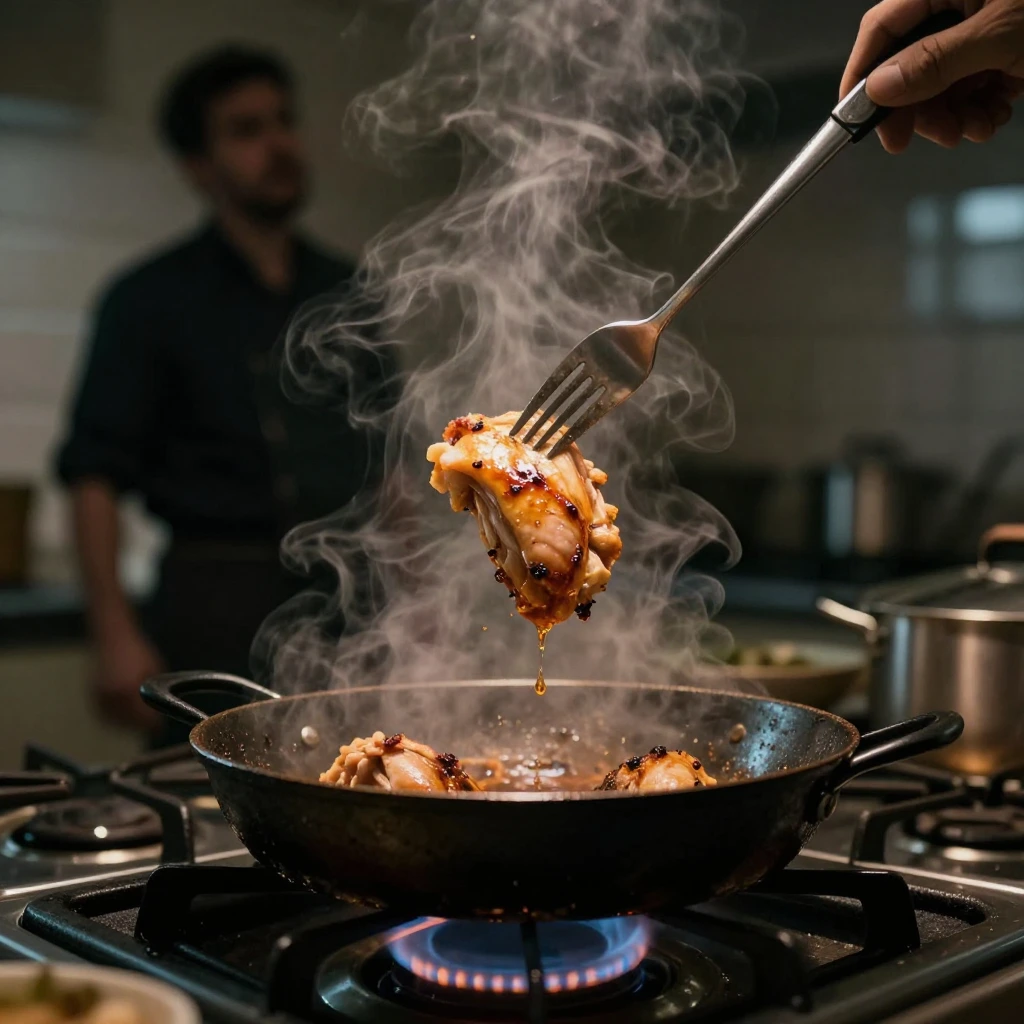
This is one of the most common misconceptions I address in food safety conversations, and the answer is a firm no. High cooking temperatures kill bacteria — but they do not neutralize all of the toxins that bacteria produce while the meat sits in storage. Staphylococcus aureus, for example, produces enterotoxins that are heat-stable. These toxins survive cooking temperatures that would eliminate the bacteria itself, and they will still cause acute foodborne illness in whoever eats the chicken.
The notion of cooking chicken “extra” to compensate for extended storage is not a workaround — it is a false sense of security. If the chicken has been in the fridge beyond its safe window, the only appropriate response is to discard it.
Fridge vs. Freezer: When to Make the Switch
If you reach day two with raw chicken and realize it will not be cooked in time, move it to the freezer immediately. Do not wait until day three hoping you will find a moment to cook it. The freezer is the most effective tool for preventing food waste without compromising safety.
In a properly functioning home freezer, chicken stays microbiologically safe indefinitely — bacteria cannot grow at frozen temperatures. The timelines below reflect quality rather than safety. Beyond these windows, the chicken remains technically safe but may have developed freezer burn, off-flavors, or textural changes from ice crystal formation.
| Chicken Type | Recommended Freezer Window (Quality) |
|---|---|
| Raw Breasts, Thighs, Wings | Up to 9 Months |
| Whole Raw Chicken | Up to 1 Year |
| Cooked Chicken (Plain) | 2–6 Months |
| Cooked Chicken in Sauce or Broth | Up to 3 Months |
How to Store Chicken in the Fridge to Maximize Shelf Life
Maximizing the safe window for any type of chicken begins the moment you walk into the grocery store. These physician-approved steps are practical, quick, and clinically meaningful.
Pick Up Chicken Last
Add chicken to your cart at the very end of your shopping trip. Every minute it spends outside refrigeration is time in the Danger Zone. Use the produce bags often available in the meat aisle to contain any raw juices and prevent cross-contamination with other groceries in your cart.
Store on the Bottom Shelf, Back of the Fridge
Raw chicken always goes on the lowest shelf — in a sealed container or on a tray — to prevent drips from contaminating produce or cooked foods stored below. This is one of the most common pathways for Salmonella cross-contamination in home kitchens, according to CDC food safety guidelines.
The door is the warmest section of any refrigerator and fluctuates with every opening. The back of the bottom shelf is the coldest, most temperature-stable zone — which is precisely where raw poultry belongs.
Use Airtight Glass Containers for Cooked Chicken
Glass containers with snap-locking lids outperform plastic wrap and aluminum foil for cooked chicken storage. Foil is porous and does not create a true airtight seal, allowing the meat to oxidize, dry out, and absorb odors from surrounding foods. Airtight glass is the most protective option available in any standard kitchen.
Label Everything
Never rely on memory for food storage dates. Write the date stored and the discard date on every container with masking tape and a permanent marker. This one habit prevents more foodborne illness than almost any other single practice in home food safety.
Reheating Chicken Safely
Reheating is not simply about warming food — it is a critical kill step for any bacteria that colonized the surface during refrigerated storage. The standard, confirmed by FoodSafety.gov’s safe minimum internal temperature guidelines, is 165°F (74°C) throughout — with no exceptions and no estimation.
Microwaves are the most problematic reheating method from a food safety standpoint. They heat unevenly, creating cold spots where bacteria can survive even when surrounding areas are fully cooked. If you use a microwave, stir soups midway through, rotate solid pieces of chicken, and always verify the final temperature with a food thermometer at the thickest point.
Additionally, every reheating cycle moves food through the Danger Zone twice — once heating up, once cooling back down. For this reason, reheat only the portion you plan to eat immediately. Never heat the entire batch and refrigerate the remainder. Take out individual servings and leave the rest undisturbed in the fridge.
Special Considerations for High-Risk Individuals
The timelines in this article reflect guidelines for generally healthy adults. For individuals with compromised immune function — older adults, pregnant women, young children, and those managing chronic illness or undergoing immunosuppressive treatment — I recommend tightening each window by one full day. Cook or freeze raw chicken within 24 hours of purchase. Limit refrigerated cooked chicken to three days rather than four.
The CDC’s guidance for people at increased risk for food poisoning details the elevated dangers of foodborne illness in vulnerable populations. For these individuals, an extra margin of caution is not excessive — it is clinically warranted. A case of foodborne illness that resolves in 24 hours for a healthy adult can result in hospitalization and serious complications for someone whose immune system is not fully functional.
When to Throw Chicken Away: A Final Checklist
If you find yourself standing at the refrigerator second-guessing a container of chicken, run through this checklist. If any single item applies, discard it. Your health is worth considerably more than the cost of the meal.
Visual Signals: Dull gray coloring instead of pink (raw) or white-brown (cooked). Visible fuzzy white, green, or black spots. An iridescent or unusually glossy surface sheen on raw chicken.
Texture Signals: Sticky or tacky feel when touched. A mucus-like or slimy coating that transfers to your fingers.
Smell Signals: A sour, ammonia-like, or “bleachy” odor. Any fermented or yeasty smell not present immediately after cooking.
Logic Signals: It sat at room temperature for more than two hours. It has been refrigerated for more than four days cooked, or more than two days raw. You are genuinely uncertain how long it has been stored. When in doubt — and I tell every patient this — throw it out.
Frequently Asked Questions
How long is raw chicken good in the fridge after the sell-by date?
Sell-by dates are retail display guidelines, not home safety benchmarks. Raw chicken should be cooked or frozen within 1 to 2 days of purchase regardless of the printed date. Home refrigerators fluctuate more than commercial units, accelerating bacterial growth beyond what the sell-by date anticipates. Always use the 48-hour rule as your personal safety standard at home.
Can you cook spoiled chicken to make it safe to eat?
No. Cooking kills bacteria but does not neutralize heat-stable toxins that some bacteria produce during storage. Staphylococcus aureus releases enterotoxins that survive standard cooking temperatures. Consuming chicken that has been stored beyond its safe window remains dangerous regardless of how thoroughly it is cooked. The only safe choice is to discard it.
How long is cooked chicken good in the fridge stored in broth?
Cooked chicken stored submerged in broth follows the same 3 to 4 day refrigerated window as dry cooked chicken. The liquid does not extend the safe period. Store the chicken and broth together in a shallow, airtight container, cool quickly in small portions, and refrigerate within two hours of cooking to stay within safe limits.
Is chicken still safe on day 4 in the fridge?
Cooked chicken stored at or below 40°F is at the outer edge of the USDA-recommended window on day four and is generally considered safe for healthy adults. Raw chicken at four days is not safe under any circumstances. For pregnant women, older adults, and immunocompromised individuals, limiting cooked chicken to three days provides an important additional safety margin.
What happens if you eat chicken that has been in the fridge too long?
Consuming spoiled chicken can cause foodborne illness ranging from mild gastrointestinal discomfort to severe acute gastroenteritis requiring hospitalization. Symptoms typically include nausea, vomiting, diarrhea, and cramping, appearing within six to forty-eight hours. Listeria infections from spoiled poultry carry serious risks for pregnant women, newborns, and immunocompromised individuals specifically.
Conclusion
So, how long is chicken good in the fridge? The answer comes down to a few consistent, evidence-based principles that are straightforward once you understand the biology behind them. Raw chicken gives you a 1–2 day window. Cooked chicken gives you 3–4 days. The freezer safely extends both, with quality as the only limiting factor over time. And any chicken that spends more than two hours above 40°F needs to be discarded, regardless of how it looks or smells.
These are not arbitrary rules designed for excessive caution. They reflect the actual behavior of the pathogens that live on poultry and the conditions under which they become dangerous. Following them consistently is one of the most effective things you can do to protect your household from a category of illness that the CDC estimates affects 48 million Americans every year — sending 128,000 to hospital and killing 3,000.
As I often remind patients — including those who have found this information through related questions like can chicken salad be frozen or how long is egg salad good for — the principles of food safety are consistent across proteins. Understand the Danger Zone, respect the timeline, and label your containers. Those three habits alone will keep your kitchen a place of nourishment rather than risk. If you have specific questions about food safety for your individual health circumstances, your healthcare provider is always the right person to consult.
References
- USDA Food Safety and Inspection Service — Chicken from Farm to Table https://www.fsis.usda.gov/food-safety/safe-food-handling-and-preparation/poultry/chicken-farm-table
- USDA Food Safety and Inspection Service — Danger Zone 40°F–140°F https://www.fsis.usda.gov/food-safety/safe-food-handling-and-preparation/food-safety-basics/danger-zone-40f-140f
- Centers for Disease Control and Prevention — Chicken and Food Poisoning https://www.cdc.gov/food-safety/foods/chicken.html
- Centers for Disease Control and Prevention — Food Safety https://www.cdc.gov/food-safety/
- FoodSafety.gov — Cold Food Storage Charts https://www.foodsafety.gov/food-safety-charts/cold-food-storage-charts
- FoodSafety.gov — Safe Minimum Internal Temperatures https://www.foodsafety.gov/food-safety-charts/safe-minimum-internal-temperatures
- National Institute of Diabetes and Digestive and Kidney Diseases — Digestive Diseases https://www.niddk.nih.gov/health-information/digestive-diseases/
- Mayo Clinic — Food Poisoning: How Long Can You Safely Keep Leftovers? https://www.mayoclinic.org/healthy-lifestyle/nutrition-and-healthy-eating/expert-answers/food-safety/faq-20058500
- Harvard T.H. Chan School of Public Health — Food Safety https://www.hsph.harvard.edu/nutritionsource/food-safety/
- Cleveland Clinic — How Long Are Leftovers Safe to Eat? https://health.clevelandclinic.org/how-long-are-leftovers-good-for
- Academy of Nutrition and Dietetics — How Long Can You Safely Keep Leftovers? https://www.eatright.org/food/home-food-safety