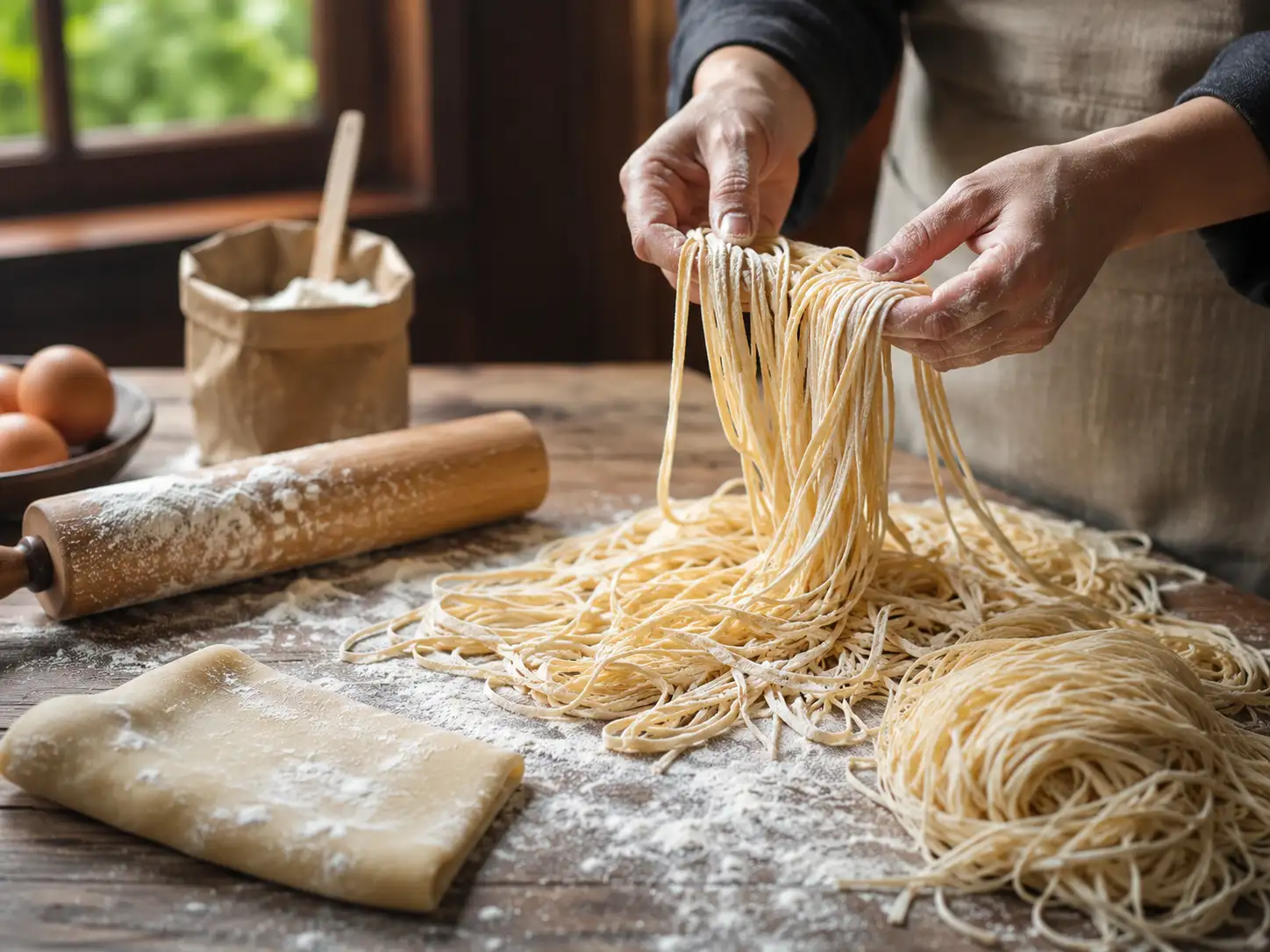
Learning how to make homemade noodles takes about 15 minutes of hands-on work and four basic ingredients: flour, eggs, salt, and a splash of water. The result is tender, springy noodles with a richer flavor than most boxed pasta, and you control exactly what goes into them.
This guide walks you through a tested egg noodle recipe step by step, with or without a pasta machine. You’ll learn which flour to use, how thin to roll the dough, how long to cook fresh noodles, and how to store them safely. We’ll also cover the nutrition side: how homemade noodles compare with store-bought, how to add whole grains, and who should adjust the recipe.
Key Takeaways
- Classic homemade egg noodles need only flour, eggs, salt, and water.
- You don’t need a pasta machine. A rolling pin and a sharp knife work fine.
- Resting the dough for 30 minutes makes it much easier to roll.
- Fresh noodles cook fast, usually in 2–4 minutes.
- Swapping part of the flour for whole wheat adds fiber and whole grains.
- Never taste raw noodle dough. Raw flour and raw eggs can carry harmful bacteria.
What Are Homemade Noodles?
Homemade noodles are fresh, unextruded noodles made by kneading flour with eggs or water, rolling the dough into a sheet, and cutting it into strips. The most common style in American kitchens is the egg noodle: thick, chewy, and slightly golden from the yolks. It’s the noodle behind classic chicken noodle soup, beef stroganoff, and buttered noodles.
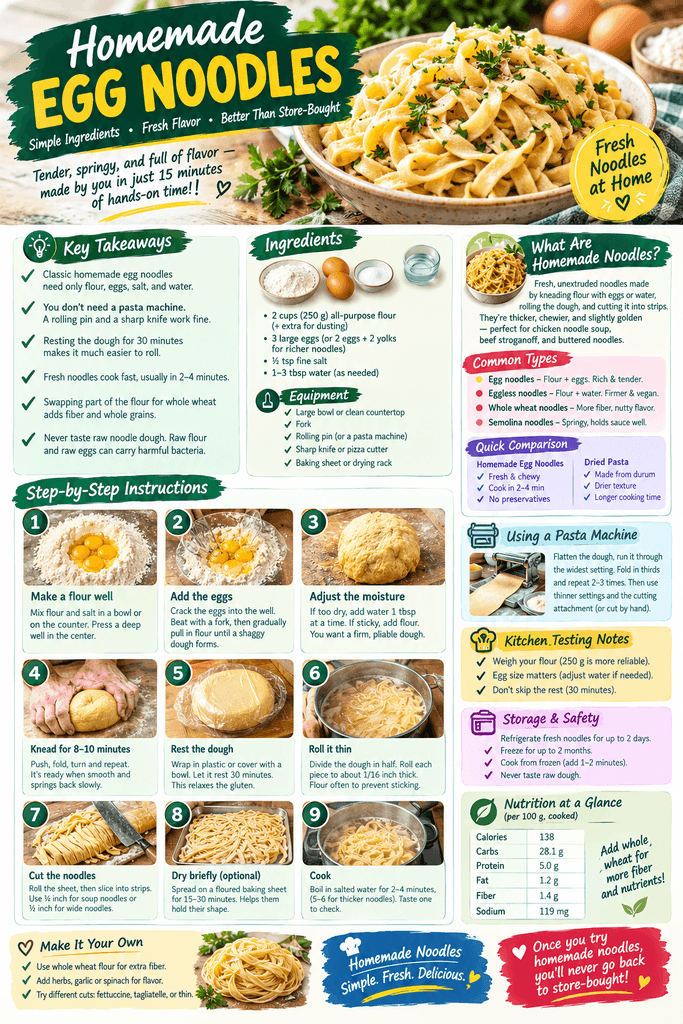
Homemade egg noodles differ from dried Italian pasta in a few ways. Dried pasta is usually made from durum semolina and water, pushed through a die, and dried hard. Fresh egg noodles use softer flour, more egg, and a hand-rolled texture. Our comparison of egg noodles vs. pasta breaks down the differences in more detail.
Common Types of Homemade Noodles
- Egg noodles: Flour plus whole eggs or yolks. Rich and tender.
- Eggless (water) noodles: Flour and water, sometimes with semolina. Firmer and vegan.
- Whole wheat noodles: Part or all whole wheat flour. Nuttier, more fiber.
- Semolina noodles: Coarser durum flour. Springy, holds sauce well.
How to Make Homemade Noodles: The Recipe
This recipe makes about 1 pound of fresh egg noodles, enough for 4 servings or a large pot of soup.
Serves: 4
Prep time: 15 minutes
Rest time: 30 minutes
Cook time: 2–4 minutes
Ingredients
- 2 cups (250 g) all-purpose flour, plus extra for dusting
- 3 large eggs (or 2 eggs plus 2 yolks for richer noodles)
- ½ teaspoon fine salt
- 1–3 tablespoons water, as needed
Equipment
- Large bowl or clean countertop
- Fork
- Rolling pin (or a pasta machine)
- Sharp knife or pizza cutter
- Baking sheet or drying rack
Step-by-Step Instructions
- Make a flour well. Mix the flour and salt in a bowl or mound it on the counter. Press a deep well in the center.
- Add the eggs. Crack the eggs into the well. Beat them with a fork, then gradually pull in flour from the edges until a shaggy dough forms.
- Adjust the moisture. If the dough is dry and crumbly, add water 1 tablespoon at a time. If it’s sticky, add flour 1 tablespoon at a time. You want it firm but pliable, like modeling clay.
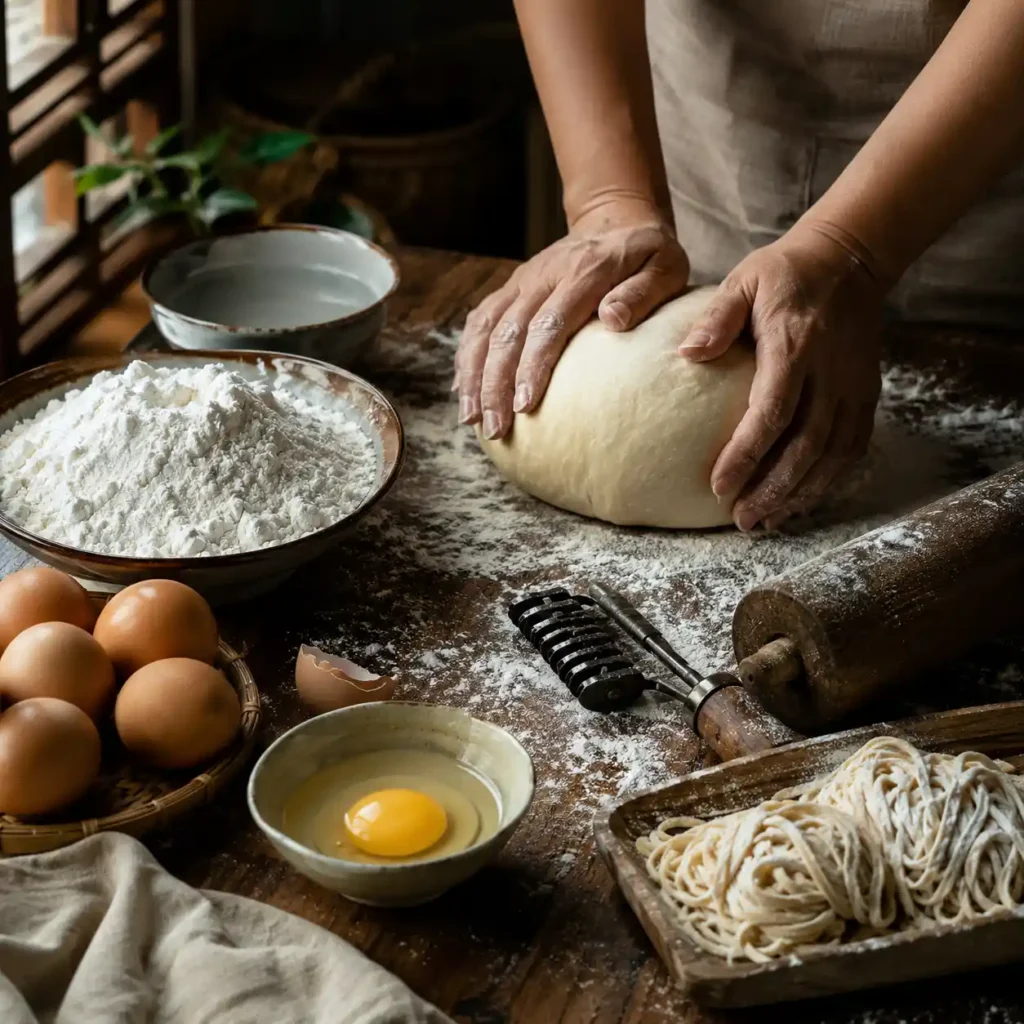
- Knead for 8–10 minutes. Push the dough away with the heel of your hand, fold it back, turn it, and repeat. It’s ready when it feels smooth and springs back slowly when pressed.
- Rest the dough. Wrap it in plastic or cover it with an upturned bowl. Let it rest 30 minutes at room temperature. This relaxes the gluten so it rolls out without shrinking back.
- Roll it thin. Divide the dough in half. On a floured surface, roll each piece into a rectangle about 1/16 inch thick, roughly the thickness of a coin. Flip and dust with flour often to prevent sticking.
- Cut the noodles. Lightly flour the sheet, loosely roll it up like a jelly roll, and slice it crosswise into strips. Use ¼ inch for soup noodles and ½ inch for wide noodles. Unroll the strips and toss them with a little flour.
- Dry briefly (optional). Spread the noodles on a floured baking sheet or drying rack for 15–30 minutes. This helps them hold their shape in the pot.
- Cook. Boil in a large pot of salted water for 2–4 minutes, until tender but still slightly chewy. Thicker noodles may need 5–6 minutes. Taste one to check.
Using a Pasta Machine
If you have a pasta machine, flatten each dough piece slightly, then run it through the widest setting. Fold it in thirds and repeat 2–3 times. Then pass it through progressively thinner settings until you reach the second- or third-thinnest setting. Use the cutting attachment or cut by hand.
Kitchen Testing Notes
- Weigh your flour if you can. Cups vary a lot depending on how you scoop. 250 g is more reliable.
- Egg size matters. Extra-large eggs may need less water. Small eggs may need more.
- Don’t skip the rest. Unrested dough fights back and makes rolling frustrating.
- Thick noodles are fine. Rustic, slightly uneven noodles are part of the charm in soup.
Homemade Noodle Nutrition
Fresh egg noodles are mainly a source of carbohydrates, with a modest amount of protein from both the wheat and the eggs. The values below are approximate figures for cooked, enriched egg noodles from USDA FoodData Central. Homemade versions will vary depending on your flour and egg ratio.
| Nutrient (per 100 g cooked) | Approximate amount |
| Calories | ~138 kcal |
| Carbohydrates | ~25 g |
| Fiber | ~1.2 g |
| Protein | ~4.5 g |
| Fat | ~2 g |
| Cholesterol | ~29 mg |
If you want to understand where noodles fit overall, our guide to whether noodles are healthy compares common noodle types side by side.
Health Benefits of Making Your Own Noodles
You Control the Ingredients
Store-bought fresh pasta and instant noodles can include preservatives, added oils, or high amounts of sodium in seasoning packets. When you make homemade noodles, the ingredient list is short and familiar. You also control the salt.
That matters because most adults eat more sodium than recommended. The FDA advises limiting sodium to less than 2,300 mg per day, and notes that much of it comes from packaged and restaurant foods rather than the salt shaker. Instant ramen is a common example, as our look at whether ramen is healthy explains.
Eggs Add Protein and Choline
Eggs bring high-quality protein to the noodles, plus nutrients like choline. Choline supports cell membranes, nerve signaling, and fat transport, and many people don’t get enough, according to the NIH Office of Dietary Supplements. Egg yolks are among the richest common food sources.
For most healthy people, eggs fit well into a balanced diet. Harvard’s Nutrition Source notes that research generally doesn’t show a link between moderate egg intake and heart disease in healthy people, though people with diabetes may want to be more cautious.
A Simple Way to Add Whole Grains
Swapping some all-purpose flour for whole wheat flour turns homemade noodles into a whole-grain food. Whole grains keep the bran and germ, which contain fiber, B vitamins, and minerals that refining removes.
A large 2016 meta-analysis in The BMJ found that higher whole grain intake was associated with lower risk of heart disease, cancer, and death from all causes. Harvard’s Nutrition Source recommends choosing whole grains over refined grains whenever possible.
Fiber Supports Fullness and Digestion
Fiber slows digestion, which helps you feel full and may help steady blood sugar after a meal. Harvard’s guide to fiber notes that most adults fall well short of recommended amounts. Whole wheat noodles, plus vegetables in the soup or sauce, help close that gap.
Enriched Flour Provides Folate
If you use standard enriched all-purpose flour, your noodles contain added folic acid. U.S. enriched grain products have been fortified with folic acid since 1998, which helps prevent neural tube defects in pregnancy, according to the NIH folate fact sheet. Whole wheat flour is usually not fortified, so a 50/50 blend gives you some of both benefits.
Who Benefits Most From Homemade Noodles
Homemade noodles are a good fit for:
- Home cooks avoiding additives. You know every ingredient.
- Families. Kids often enjoy helping roll and cut the dough.
- Soup lovers. Fresh noodles make chicken noodle soup taste noticeably better. Our guide on how long to boil chicken covers the broth base.
- People cutting back on sodium. Homemade noodles and broth let you control salt.
- Budget cooks. Flour and eggs cost far less than premium fresh pasta.
Risks and Who Should Be Cautious
Celiac Disease and Gluten Sensitivity
Wheat-based homemade noodles contain gluten, the protein that gives them their stretch. People with celiac disease must avoid gluten completely, because it damages the small intestine, according to the NIDDK.
Semolina is also wheat, so it’s not a safe swap. Our article on whether semolina is gluten-free explains why. Store-bought egg noodles are also usually wheat-based, as covered in are egg noodles gluten-free. Gluten-free noodle recipes using rice flour, tapioca, and xanthan gum exist, but they behave differently and need a dedicated recipe.
Egg and Wheat Allergies
Eggs and wheat are both major food allergens recognized by the FDA. If you’re cooking for someone with an egg allergy, use the eggless variation below. Wheat-allergic guests need a wheat-free noodle.
Raw Dough Safety
It’s tempting to taste the dough, but don’t. Flour is a raw agricultural product that hasn’t been treated to kill germs like E. coli, and raw eggs can carry Salmonella. The FDA warns against eating raw dough for both reasons.
Wash your hands, counters, and tools after handling raw dough. The USDA’s egg safety guidance also recommends refrigerating eggs and discarding any that are cracked or dirty. Boiling the noodles fully makes them safe to eat.
Refined Carbs and Blood Sugar
Noodles made only with white flour are a refined carbohydrate. Large portions of refined carbs can raise blood sugar quickly, as Harvard’s guide to carbohydrates and blood sugar explains.
That doesn’t mean noodles are off limits. Research on pasta specifically suggests that, eaten as part of a low-glycemic diet, it wasn’t linked to weight gain in a 2018 meta-analysis in BMJ Open. Note that this research looked at conventional pasta, not fresh egg noodles. If you have diabetes, keep portions moderate, add whole wheat flour, and pair noodles with protein and vegetables.
Healthy Portions and How to Serve Homemade Noodles
A standard serving of cooked noodles is about 1 cup, or roughly 2 ounces dry weight. This recipe makes 4 servings. In soup, a serving might be closer to ½ cup of noodles alongside broth, chicken, and vegetables.
To build a balanced plate:
- Fill half with vegetables. Carrots, celery, spinach, mushrooms, broccoli, or peas.
- Add lean protein. Chicken, turkey, tofu, beans, or fish.
- Keep sauces light. Broth, olive oil and garlic, or tomato-based sauces instead of heavy cream sauces.
- Watch the butter. Buttered noodles are comforting, but a tablespoon per serving adds up fast.
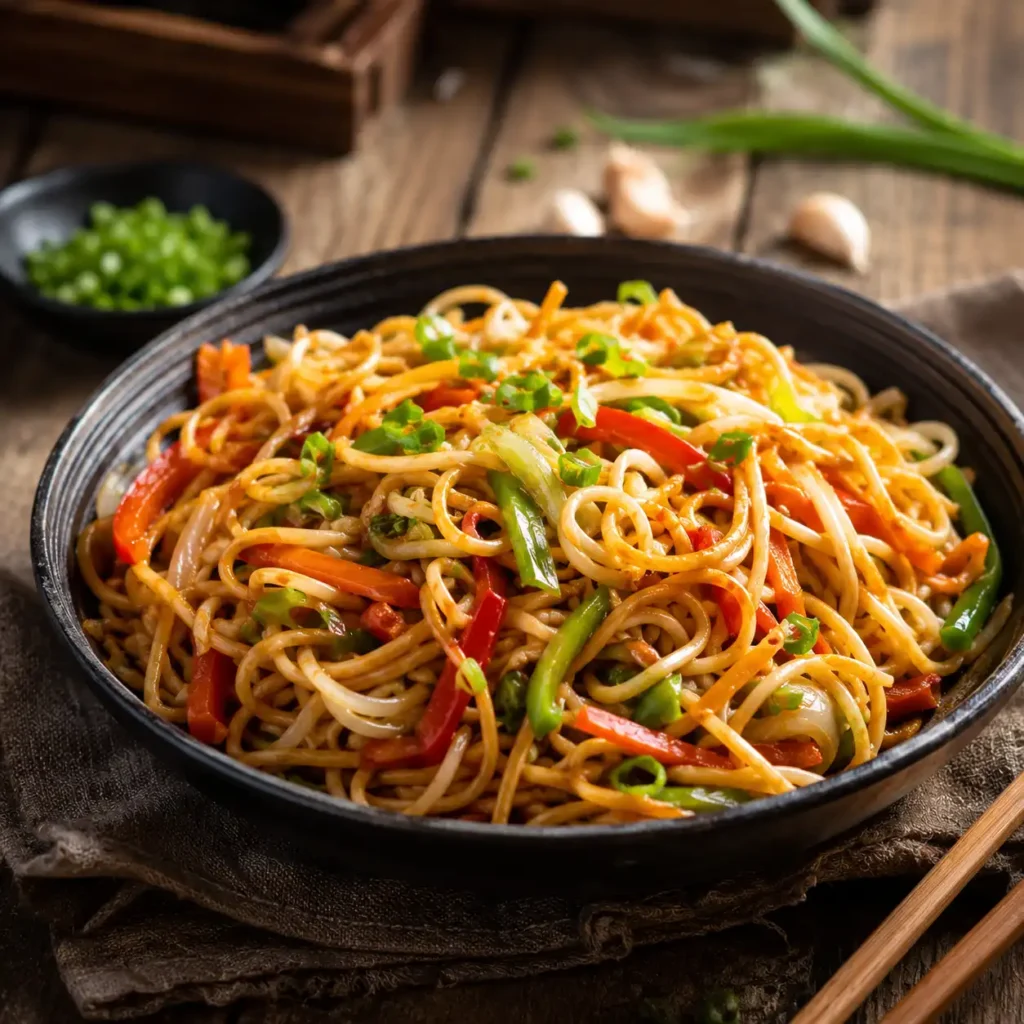
If you’re craving richer noodle dishes, our Noodles & Company mac and cheese copycat is a good occasional treat. For quick weeknight meals, see our tips for making healthier stir-fried noodles.
Variations: Whole Wheat, Eggless, and More
Whole Wheat Homemade Noodles
Replace half the all-purpose flour (125 g) with whole wheat flour. Whole wheat absorbs more liquid, so add an extra tablespoon of water and let the dough rest 45 minutes instead of 30. The noodles will be slightly darker, nuttier, and a little less stretchy. Going 100% whole wheat works, but the noodles break more easily, so cut them wider.
Eggless Homemade Noodles
Mix 2 cups flour (or 1 cup flour plus 1 cup semolina) with ½ teaspoon salt and about ¾ cup warm water. Knead 10 minutes, rest 30 minutes, then roll and cut as above. These noodles are firmer and lighter in color, and they’re egg-free and vegan.
Extra-Rich Yolk Noodles
Use 6 egg yolks plus 1 whole egg for 2 cups flour. These golden noodles are excellent with simple butter-and-herb sauces. They are also higher in cholesterol, so save them for special meals.
Vegetable-Tinted Noodles
Blend ¼ cup cooked spinach (squeezed dry) or 2 tablespoons tomato paste into the eggs before mixing. You’ll need extra flour. The nutritional boost is small, but the color is fun, especially for kids.
Beyond Wheat
For a different noodle entirely, try our potato noodles recipe, or compare textures in our guide to rice noodles vs. egg noodles.
How to Store and Freeze Homemade Noodles
Uncooked Fresh Noodles
- Refrigerator: Toss with flour, place in an airtight container or zip-top bag, and refrigerate. Most cooks use fresh egg noodles within 1–2 days for best quality.
- Freezer: Spread the noodles on a floured sheet and freeze until firm, about 30 minutes. Then transfer them to a freezer bag. Cook straight from frozen, adding 1–2 minutes to the cooking time. Use within about 2 months for best quality.
- Fully dried: Hang or spread the noodles until they snap cleanly, which can take 12–24 hours depending on humidity. Because they contain egg, many cooks still prefer freezing for longer storage.
Cooked Noodles
Refrigerate cooked noodles within 2 hours. The USDA advises using cooked leftovers within 3 to 4 days. Our guide on how long pasta lasts in the fridge covers the signs of spoilage. Store noodles separately from soup broth if possible, or they’ll absorb liquid and turn soft.
Practical Tips for Better Homemade Noodles
- Use a large pot. Crowded noodles stick. Use at least 4 quarts of water per pound.
- Salt the water. It seasons the noodles from the inside. About 1 tablespoon per 4 quarts is plenty.
- Shake off excess flour. Too much dusting flour makes the cooking water gummy.
- Stir right away. Give the noodles a gentle stir in the first 30 seconds to prevent clumping.
- Cook in the soup carefully. Adding raw noodles directly to soup thickens the broth with starch. That’s traditional for some recipes, but for clear broth, cook them separately.
- Save some cooking water. A splash helps sauces cling to the noodles.
Troubleshooting
| Problem | Likely cause | Fix |
| Dough cracks while rolling | Too dry or not rested | Add water, rest longer |
| Dough sticks to everything | Too wet | Dust with flour as you roll |
| Noodles are tough | Rolled too thick or overkneaded | Roll thinner; knead 8–10 minutes only |
| Noodles fall apart | Too thin, too much whole wheat, or overcooked | Cut wider; reduce cook time |
| Noodles stick together | Not enough flour after cutting | Toss with flour and dry 15 minutes |
Myths vs. Facts
| Myth | Fact |
| “You need a pasta machine.” | A rolling pin and knife work well for rustic egg noodles. |
| “Homemade noodles are always healthier.” | They’re simpler and lower in sodium, but nutrition depends on your flour, portion, and sauce. |
| “Noodles cause weight gain.” | No single food does. Portion size and overall diet matter most, and research on pasta in low-glycemic diets hasn’t shown weight gain. |
| “A little raw dough is harmless.” | Raw flour and raw eggs can both carry harmful bacteria. Cook noodles fully. |
| “Semolina noodles are gluten-free.” | Semolina comes from durum wheat and contains gluten. |
How Homemade Noodles Fit a Healthy Lifestyle
Homemade noodles are a whole-food alternative to processed noodle products. They won’t turn a meal into health food on their own, but they make it easier to build one. A bowl of homemade chicken noodle soup packed with vegetables, or whole wheat noodles tossed with olive oil, garlic, greens, and beans, is a satisfying, balanced dinner.
Cooking from scratch also tends to slow people down. Kneading and rolling dough is a calm, hands-on routine, and meals made together often get eaten together. Make a double batch, freeze half, and you’ll have fresh noodles ready on a busy night.
Frequently Asked Questions
How long do homemade noodles take to cook?
Fresh homemade noodles cook quickly, usually in 2–4 minutes in boiling salted water. Thicker or partially dried noodles may need 5–6 minutes, and frozen noodles need 1–2 minutes longer. Taste one to check. They should be tender with a slight chew.
Do you have to dry homemade noodles before cooking?
No, but a short 15–30 minute drying time helps. Slightly dried noodles hold their shape better and are less likely to stick together. You can cook them immediately after cutting if you toss them well with flour first.
Can you make noodles without eggs?
Yes. Mix flour (or flour and semolina) with salt and warm water, then knead, rest, roll, and cut as usual. Eggless noodles are firmer and paler than egg noodles, and they work well for people with egg allergies or a vegan diet.
How long do fresh noodles last in the fridge?
Uncooked fresh egg noodles are best used within 1–2 days when stored airtight in the refrigerator. Cooked noodles keep 3 to 4 days. For longer storage, freeze uncooked noodles on a sheet pan, then bag them for up to about 2 months.
Are homemade noodles healthier than store-bought?
Often, yes. Homemade noodles have a short ingredient list with no preservatives and much less sodium than instant noodles. Using part whole wheat flour adds fiber. Portion size and sauce still matter more than whether the noodles are homemade.
Why are my homemade noodles tough?
Tough noodles are usually rolled too thick, kneaded too long, or made with too much flour. Roll the dough to about 1/16 inch, knead for 8–10 minutes, and let it rest 30 minutes so the gluten relaxes before rolling.
Final Thoughts
Now you know how to make homemade noodles from start to finish: mix, knead, rest, roll, cut, and cook. With flour, eggs, salt, and about 15 minutes of hands-on time, you get fresh noodles that taste better than boxed versions and contain nothing you can’t pronounce.
For the healthiest bowl, use part whole wheat flour, keep portions to about a cup, and pair your noodles with plenty of vegetables and lean protein. Store leftovers promptly, freeze extra batches, and enjoy the process. Some of the best meals start with a mound of flour and a couple of eggs.
Medical disclaimer: This article is for general educational purposes and is not medical advice. If you have celiac disease, a food allergy, diabetes, or another health condition, talk with your doctor or a registered dietitian before making changes to your diet.
(3) References
- U.S. Department of Agriculture. FoodData Central. https://fdc.nal.usda.gov/
- Aune D, Keum N, Giovannucci E, et al. Whole grain consumption and risk of cardiovascular disease, cancer, and all cause and cause specific mortality: systematic review and dose-response meta-analysis of prospective studies. The BMJ. 2016;353:i2716. https://doi.org/10.1136/bmj.i2716
- Chiavaroli L, Kendall CWC, Braunstein CR, et al. Effect of pasta in the context of low-glycaemic index dietary patterns on body weight and markers of adiposity: a systematic review and meta-analysis of randomised controlled trials in adults. BMJ Open. 2018;8:e019438. https://doi.org/10.1136/bmjopen-2017-019438
- Harvard T.H. Chan School of Public Health. Whole Grains. The Nutrition Source. https://www.hsph.harvard.edu/nutritionsource/whole-grains/
- Harvard T.H. Chan School of Public Health. Fiber. The Nutrition Source. https://www.hsph.harvard.edu/nutritionsource/carbohydrates/fiber/
- Harvard T.H. Chan School of Public Health. Carbohydrates and Blood Sugar. The Nutrition Source. https://www.hsph.harvard.edu/nutritionsource/carbohydrates/carbohydrates-and-blood-sugar/
- Harvard T.H. Chan School of Public Health. Eggs. The Nutrition Source. https://www.hsph.harvard.edu/nutritionsource/food-features/eggs/
- NIH Office of Dietary Supplements. Choline: Fact Sheet for Health Professionals. https://ods.od.nih.gov/factsheets/Choline-HealthProfessional/
- NIH Office of Dietary Supplements. Folate: Fact Sheet for Health Professionals. https://ods.od.nih.gov/factsheets/Folate-HealthProfessional/
- National Institute of Diabetes and Digestive and Kidney Diseases. Eating, Diet, & Nutrition for Celiac Disease. https://www.niddk.nih.gov/health-information/digestive-diseases/celiac-disease/eating-diet-nutrition
- U.S. Food and Drug Administration. Food Allergies. https://www.fda.gov/food/nutrition-food-labeling-and-critical-foods/food-allergies
- U.S. Food and Drug Administration. Say No to Raw Dough! https://www.fda.gov/consumers/consumer-updates/say-no-raw-dough
- U.S. Food and Drug Administration. Sodium in Your Diet. https://www.fda.gov/food/nutrition-education-resources-materials/sodium-your-diet
- USDA Food Safety and Inspection Service. Shell Eggs from Farm to Table. https://www.fsis.usda.gov/food-safety/safe-food-handling-and-preparation/eggs/shell-eggs-farm-table
- USDA Food Safety and Inspection Service. Leftovers and Food Safety. https://www.fsis.usda.gov/food-safety/safe-food-handling-and-preparation/food-safety-basics/leftovers-and-food-safety