If you have diabetes, snack choices matter. Many quick snacks, like crackers, chips, granola bars, and cookies, push blood sugar up fast and leave you hungry an hour later. Nuts are different. They’re low in digestible carbs and rich in fat, protein, and fiber. But not all nuts are equal, and portion size still matters. So, which nuts are best for diabetics?
According to the CDC, about 40.1 million Americans have diabetes and an estimated 115.2 million adults have prediabetes. For all of them, nuts can be a smart everyday food. This guide reviews what clinical trials and large studies show about nuts and blood sugar, ranks the best nuts for diabetes, and explains which to limit. It also covers how many to eat and how to fit them into your meal plan.
Key Takeaways
- Nuts are one of the best snack foods for diabetes. They’re low in net carbs and have a minimal effect on blood sugar.
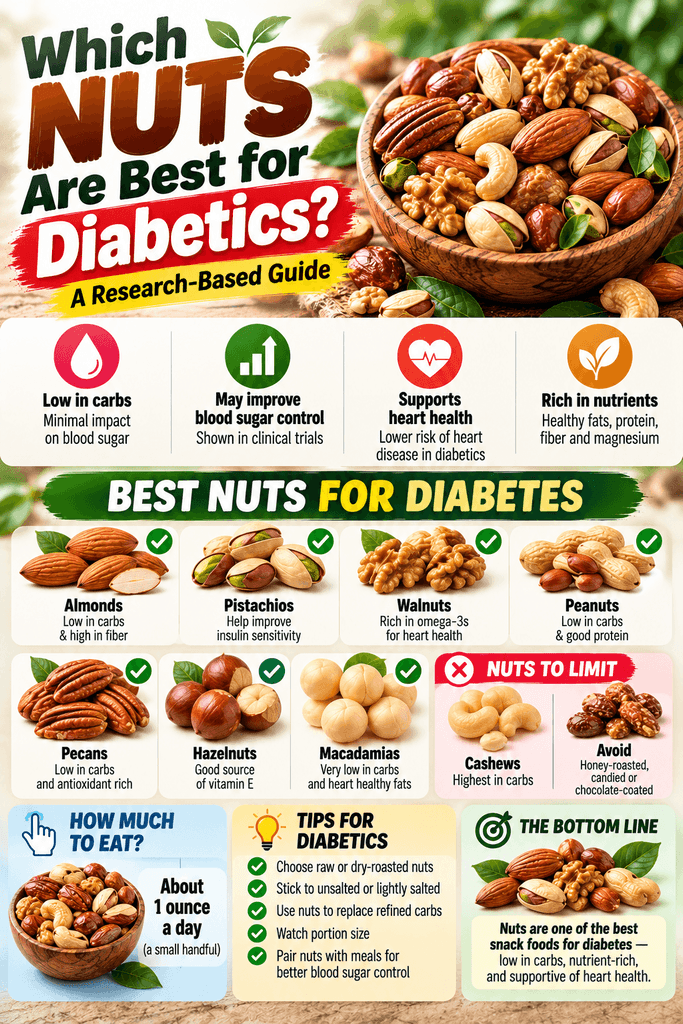
- Top picks: almonds, pistachios, walnuts, and peanuts, followed by pecans, hazelnuts, and macadamias.
- Trials show modest blood sugar benefits. Tree nuts lowered HbA1c (by 0.07%) and fasting glucose in a meta-analysis of 12 trials. Replacing carbs with nuts lowered HbA1c by about 0.2% in a three-month trial.
- Nuts may protect the heart in diabetes. People with diabetes who ate nuts 5 or more times a week had 34% lower cardiovascular death risk.
- Limit cashews (highest in carbs), and avoid honey-roasted, candied, or chocolate-coated nuts.
- Aim for about 1 ounce a day, ideally as a swap for refined carbs.
Are Nuts Good for Diabetics? The Short Answer
Yes. Nuts are among the best-studied foods for people with diabetes. They’re low in digestible carbohydrates, so they cause only a small rise in blood sugar. Their fat, protein, and fiber also slow digestion, which can blunt the blood sugar spike from other foods eaten at the same time.
Diabetes care focuses on more than blood sugar. Heart disease is a leading cause of death in people with diabetes, and nuts also have strong heart-health evidence. The Mayo Clinic’s diabetes diet guidance lists nuts among the “good” fats to include in small amounts. For the broader heart evidence, see our guide on whether nuts are good for your heart.
What the Research Shows About Nuts and Diabetes
Blood sugar control: modest but consistent
- Meta-analysis. A PLoS ONE meta-analysis of 12 randomized trials in 450 people with type 2 diabetes looked at tree nut diets (median of about 56 g a day). Compared with similar-calorie diets without nuts, they significantly lowered:
- HbA1c by 0.07 percentage points
- Fasting glucose by 0.15 mmol/L (about 2.7 mg/dL)
- The authors noted that most trials were short and of modest quality.
- Nuts in place of carbs. In a three-month randomized trial in Diabetologia, 117 adults with type 2 diabetes ate either 75 g a day of mixed nuts or whole-wheat muffins with matching calories. The nut diet lowered HbA1c by about 0.19% compared with the muffin diet. It also reduced apolipoprotein B and small LDL particles.
These effects are modest, smaller than diabetes medicines. Still, they’re meaningful for a simple food swap that also brings other benefits.
Lower blood sugar spikes after meals
Adding nuts to a carb-rich meal can lower the blood sugar spike that follows. In a study in the European Journal of Clinical Nutrition, 20 adults with metabolic syndrome ate white bread alone or with pistachios. Adding pistachios significantly reduced the post-meal glucose response.
Prediabetes and insulin resistance
In a four-month crossover trial in Diabetes Care, 54 adults with prediabetes ate 57 g of pistachios a day. Compared with the control diet, the pistachio diet significantly lowered:
- Fasting glucose
- Fasting insulin
- Insulin resistance, measured as HOMA-IR
Heart protection for people with diabetes
A Harvard study in Circulation Research followed 16,217 men and women with diabetes. Compared with those who ate nuts less than once a month, people who ate nuts five or more times a week had:
- 17% lower risk of cardiovascular disease
- 20% lower risk of coronary heart disease
- 34% lower risk of cardiovascular death
- 31% lower risk of death from any cause
Tree nuts showed stronger associations than peanuts. Even people who increased their nut intake after being diagnosed had lower risks. This is an observational study, so it shows an association rather than proof that nuts caused the benefit.
Why Nuts Help With Diabetes
- They’re low in digestible carbs. Most nuts have 1–3 g of net carbs per ounce, far less than crackers, chips, or pretzels.
- Fat, protein, and fiber slow digestion. This flattens blood sugar spikes, especially when you eat nuts with carb-containing foods.
- They supply magnesium. The NIH Office of Dietary Supplements notes that diets higher in magnesium are associated with a significantly lower risk of type 2 diabetes. Low magnesium might also worsen insulin resistance. One ounce of almonds provides 19% of the Daily Value, and cashews provide 18%.
- They replace refined carbs. The Diabetologia trial showed benefits when nuts replaced muffins, not when they were added on top.
- They support heart health. Unsaturated fats, fiber, and plant sterols help lower LDL cholesterol, which matters because diabetes raises heart risk.
- They’re filling. Nuts help control hunger, and they don’t cause weight gain in normal portions, as our article on whether nuts are fattening explains.
Which Nuts Are Best for Diabetics? The Ranking
The carb values below are per 1 ounce (28 g), from USDA FoodData Central records. The rankings weigh carbs, fiber, protein, and the strength of the diabetes research.
| Rank | Nut (1 oz) | Net carbs | Fiber | Protein | Diabetes research |
| 1 | Almonds | 2.6 g | 3.5 g | 6.0 g | Strong. High in magnesium and fiber. |
| 2 | Pistachios | 4.7 g | 3.0 g | 5.7 g | Strong. Prediabetes trial and post-meal glucose study. |
| 3 | Walnuts | 2.0 g | 1.9 g | 4.3 g | Good. Top tree nut for heart health. |
| 4 | Peanuts | 2.2 g | 2.4 g | 7.3 g | Good. Most protein, budget-friendly. |
| 5 | Pecans | 1.2 g | 2.7 g | 2.6 g | Good. Lowest in carbs. |
| 6 | Hazelnuts | 2.0 g | 2.8 g | 4.2 g | Good. Low carb, high in vitamin E. |
| 7 | Macadamias | 1.5 g | 2.4 g | 2.2 g | Fair. Very low carb, highest in calories. |
| 8 | Cashews | 7.6 g | 0.9 g | 5.2 g | Mixed. Highest carbs, but a positive diabetes trial. |
1. Almonds: the all-round winner
Almonds combine low net carbs, the most fiber of the common nuts, solid protein, and plenty of magnesium. They’re also widely studied for blood sugar and cholesterol. One ounce is about 23 almonds. See whether almonds are healthy.
2. Pistachios: strongest blood sugar research
Pistachios have a bit more carbohydrate than most nuts, about 4.7 g net per ounce. They have the most direct diabetes evidence, though: improved insulin resistance in prediabetes, and lower glucose spikes when eaten with bread. You also get about 49 nuts per ounce, which makes them satisfying. See whether pistachios are healthy.
3. Walnuts: best for the heart
Walnuts are low in net carbs (about 2 g per ounce) and rich in plant omega-3 fat (ALA). Heart disease is a major risk in diabetes, so walnuts are a strong choice. See whether walnuts are healthy.
4. Peanuts: high protein, low cost
Peanuts are technically legumes, but they’re low in carbs and the highest in protein, at about 7 g per ounce. In the Harvard diabetes study, peanuts were linked to lower all-cause mortality, though tree nuts showed stronger heart benefits. Choose unsalted or lightly salted peanuts. See whether peanuts are healthy.
5–7. Pecans, hazelnuts, and macadamias: the lowest-carb options
These nuts have the fewest net carbs, about 1–2 g per ounce, so they barely touch blood sugar. They’re also higher in calories, especially macadamias and pecans at about 200 per ounce, and lower in protein. They’re good choices, but measure portions carefully if weight loss is a goal.
Nuts to Limit or Avoid With Diabetes
Cashews: enjoy in smaller portions
Cashews have the most carbohydrate of the common nuts: about 8.6 g total and 7.6 g net per ounce, with little fiber. They still have a positive track record. In a 12-week trial in the Journal of Nutrition, 300 adults with type 2 diabetes ate 30 g of cashews daily. Their blood sugar and HbA1c didn’t worsen, their systolic blood pressure dropped, and their HDL cholesterol rose slightly. Count cashew carbs and keep portions modest. See whether cashews are healthy.
Chestnuts
Chestnuts are starchy, with about 13.6 g net carbs per ounce roasted. Count them as a carbohydrate food, like a starchy side dish, not a low-carb nut.
Honey-roasted, candied, and chocolate-covered nuts
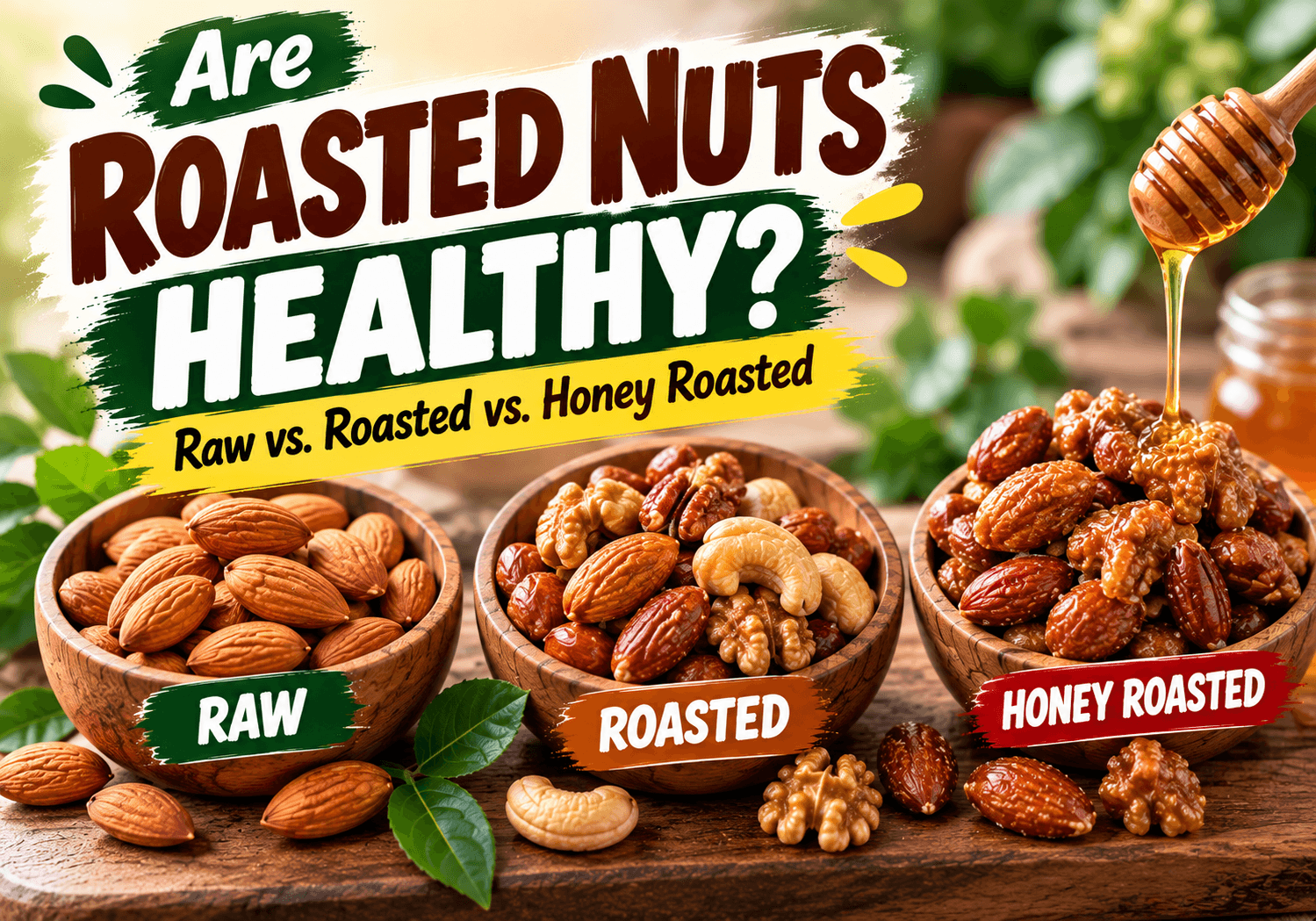
These coatings add sugar, often several grams per ounce, and usually salt. They can turn a blood-sugar-friendly food into a sugary snack. Our guide on whether roasted nuts are healthy compares the options.
Heavily salted nuts
Diabetes often comes with high blood pressure. The FDA notes that most Americans eat too much sodium. Choose unsalted or lightly salted nuts.
Trail mixes
Store-bought trail mixes often include candy, chocolate, sweetened dried fruit, and yogurt-covered pieces. Build your own with plain nuts and seeds.
How Many Nuts Should a Diabetic Eat?
Research supports roughly these amounts:
| Amount | What it looks like | Evidence |
| 1 oz (28 g) a day | ~23 almonds, ~49 pistachios, ~14 walnut halves | Practical daily target |
| 30 g a day | 1 oz cashews | Cashew trial in type 2 diabetes |
| ~56–57 g a day | 2 oz | Pistachio prediabetes trial; median in the tree nut meta-analysis |
| 5+ servings a week | Most days | Linked to 34% lower cardiovascular death in diabetes |
For most people with diabetes, 1 ounce a day is a safe, effective starting point. Larger amounts (2 ounces) showed blood sugar benefits in trials, but only when nuts replaced other foods so total calories stayed the same. If you eat more, cut back on something else, ideally refined carbs.
How to Use Nuts in a Diabetes Meal Plan
- Swap, don’t add. Replace crackers, chips, cookies, or a slice of bread with a handful of nuts.
- Pair nuts with carbs. Add almonds to oatmeal, pistachios to a fruit snack, or walnuts to a salad with whole grains. Nuts can help blunt the glucose rise.
- Count the carbs. Most nuts add only 1–3 g of net carbs per ounce, but cashews and pistachios add more. Include them in your carb count.
- Pre-portion. Keep 1-ounce bags ready so you don’t eat from a large container.
- Choose plain. Raw or dry-roasted, unsalted or lightly salted, with no sugar coatings.
- Use the plate method. Mayo Clinic’s plate method fills half the plate with nonstarchy vegetables and includes “good” fats such as nuts in small amounts.
- Try nut butters carefully. Choose ones with only nuts (and maybe salt). Two tablespoons is a serving. See whether peanut butter is healthy.
- Snack between meals. A small handful mid-afternoon can curb hunger before dinner and help prevent overeating.
Easy diabetes-friendly nut snacks
- 1 oz almonds with a small apple
- Pistachios with a cheese stick
- Walnuts sprinkled over Greek yogurt and berries
- Celery or apple slices with 1 tablespoon of natural peanut butter
- Roasted vegetables topped with toasted pecans
For more blood-sugar-friendly ideas, see our guide on whether black beans are good for diabetics, another fiber-rich staple that pairs well with nuts.
Who Should Be Careful
Nut allergies
Peanuts and tree nuts are major allergens that the FDA requires on labels. If you’re allergic, seeds such as pumpkin, sunflower, chia, and flax offer similar benefits. Ask your allergist first.
Kidney disease
Diabetes is a leading cause of chronic kidney disease. People with advanced kidney disease may need to limit phosphorus and potassium, which nuts contain. Follow your kidney care team’s advice on portions.
Weight-loss goals
Nuts are calorie-dense, at about 160–200 calories per ounce. Measure portions so they help, rather than hurt, weight goals.
Medication and blood sugar monitoring
Nuts help modestly, but they don’t replace diabetes medication. If you make big diet changes, check your blood sugar more often and talk with your doctor, especially if you take insulin or medicines that can cause low blood sugar.
Brazil nuts
Brazil nuts are so high in selenium (68–91 mcg per nut, according to ODS) that one or two a day is enough. The adult upper limit is 400 mcg a day.
Myths vs. Facts
| Myth | Fact |
| Diabetics should avoid nuts because they’re high in fat. | Nut fats are mostly unsaturated, and trials show nuts improve blood sugar and heart risk factors. |
| Nuts raise blood sugar like other snacks. | Most nuts have just 1–3 g net carbs per ounce and a minimal effect on blood sugar. |
| All nuts are equally good for diabetes. | Cashews and chestnuts are much higher in carbs than almonds, walnuts, or pecans. |
| Nuts can replace diabetes medication. | Effects are modest. Nuts support, but don’t replace, medical treatment. |
| Peanuts aren’t good for diabetics. | Peanuts are low in carbs and high in protein, and they’re linked to lower mortality in people with diabetes. |
| Honey-roasted nuts are still a healthy choice. | Sugar coatings add carbs that can raise blood sugar. Choose plain nuts. |
How Nuts Fit a Healthy Diabetes Lifestyle
Nuts work best within an overall pattern that supports blood sugar control:
- Plenty of nonstarchy vegetables
- Fiber-rich whole grains, legumes, and fruit in measured portions
- Lean proteins
- Healthy fats from nuts, seeds, olive oil, and avocado
- Few sugary drinks and refined carbs
Add regular physical activity, good sleep, and the medicines and monitoring your care team recommends. A daily handful of plain nuts is a small, enjoyable habit that supports both blood sugar and heart health. For a broader look at each nut’s nutrition, see our complete guide to nuts.
Frequently Asked Questions
Do nuts raise blood sugar?
Most nuts raise blood sugar very little. They contain only 1–3 grams of net carbs per ounce, plus fat, protein, and fiber that slow digestion. Cashews and chestnuts contain more carbs, so count them carefully. Avoid honey-roasted or candied nuts, which add sugar that can raise blood sugar.
Are almonds good for diabetics?
Yes. Almonds are one of the best nuts for diabetes. They’re low in net carbs (about 2.6 grams per ounce), high in fiber, and rich in magnesium, which is linked to better insulin sensitivity. A one-ounce serving, about 23 almonds, makes a filling snack that helps keep blood sugar steady.
Are pistachios good for diabetics?
Yes. Pistachios have some of the strongest diabetes research among nuts. In a trial of adults with prediabetes, about two ounces daily lowered fasting glucose, insulin, and insulin resistance. Eating pistachios with bread also reduced the post-meal blood sugar rise. Count their carbs, about 4.7 grams net per ounce.
Are cashews good for diabetics?
Cashews can fit a diabetes diet in moderation. They’re the highest-carb common nut, at about 7.6 grams net per ounce. Even so, a trial in adults with type 2 diabetes found 30 grams a day didn’t worsen blood sugar and modestly lowered blood pressure. Keep portions small and count the carbs.
Can eating nuts lower A1c?
Nuts can modestly lower HbA1c, especially when they replace refined carbohydrates. A meta-analysis found tree nuts lowered HbA1c by about 0.07%, and a trial replacing muffins with nuts showed about a 0.19% drop. These effects are small, so nuts support but don’t replace diabetes treatment.
What is the best time for a diabetic to eat nuts?
Nuts work well as a between-meal snack to curb hunger, or with meals to help blunt blood sugar spikes from carbohydrates. Adding almonds to oatmeal or pistachios to a fruit snack are good examples. The most important thing is choosing plain nuts in measured portions, not the exact timing.
Conclusion
So, which nuts are best for diabetics? Almonds, pistachios, walnuts, and peanuts lead the list, followed by pecans, hazelnuts, and macadamias. All are low in net carbs and backed by research for blood sugar or heart health. Cashews can fit in smaller portions. Chestnuts and sugar-coated nuts are best limited.
Aim for about 1 ounce of plain, unsalted or lightly salted nuts a day, ideally in place of refined carbs. Combined with an overall healthy eating pattern and your prescribed care, that daily handful can help steady blood sugar and protect your heart.
Medical disclaimer: This article is for general information only and isn’t a substitute for professional medical advice. If you have diabetes, prediabetes, kidney disease, or a nut allergy, talk with your doctor or a registered dietitian before changing your diet. Don’t change diabetes medications without medical guidance.
3. References
- Centers for Disease Control and Prevention. National Diabetes Statistics Report: At a Glance. https://www.cdc.gov/diabetes/php/data-research/index.html
- Mayo Clinic Staff. Diabetes diet: Create your healthy-eating plan. Mayo Clinic; 2026. https://www.mayoclinic.org/diabetes-diet/art-20044295
- Viguiliouk E, Kendall CWC, Blanco Mejia S, et al. Effect of tree nuts on glycemic control in diabetes: a systematic review and meta-analysis of randomized controlled dietary trials. PLoS ONE. 2014;9(7):e103376. https://doi.org/10.1371/journal.pone.0103376
- Jenkins DJA, Kendall CWC, Lamarche B, et al. Nuts as a replacement for carbohydrates in the diabetic diet: a reanalysis of a randomised controlled trial. Diabetologia. 2018;61(8):1734–1747. https://doi.org/10.1007/s00125-018-4628-9
- Kendall CWC, West SG, Augustin LS, et al. Acute effects of pistachio consumption on glucose and insulin, satiety hormones and endothelial function in the metabolic syndrome. European Journal of Clinical Nutrition. 2014;68(3):370–375. https://doi.org/10.1038/ejcn.2013.275
- Hernández-Alonso P, Salas-Salvadó J, Baldrich-Mora M, Juanola-Falgarona M, Bulló M. Beneficial effect of pistachio consumption on glucose metabolism, insulin resistance, inflammation, and related metabolic risk markers: a randomized clinical trial. Diabetes Care. 2014;37(11):3098–3105. https://pubmed.ncbi.nlm.nih.gov/25125505/
- Liu G, Guasch-Ferré M, Hu Y, et al. Nut consumption in relation to cardiovascular disease incidence and mortality among patients with diabetes mellitus. Circulation Research. 2019;124(6):920–929. https://doi.org/10.1161/CIRCRESAHA.118.314316
- NIH Office of Dietary Supplements. Magnesium: Fact Sheet for Health Professionals. https://ods.od.nih.gov/factsheets/Magnesium-HealthProfessional/
- Mohan V, Gayathri R, Jaacks LM, et al. Cashew nut consumption increases HDL cholesterol and reduces systolic blood pressure in Asian Indians with type 2 diabetes: a 12-week randomized controlled trial. Journal of Nutrition. 2018;148(1):63–69. https://pubmed.ncbi.nlm.nih.gov/29378038/
- USDA FoodData Central. SR Legacy records: almonds (170567), pistachios (170184), walnuts (170187), peanuts (172430), pecans (170182), hazelnuts (170581), macadamias (170178), cashews (170162), roasted chestnuts (170190). https://fdc.nal.usda.gov/
- NIH Office of Dietary Supplements. Selenium: Fact Sheet for Health Professionals. https://ods.od.nih.gov/factsheets/Selenium-HealthProfessional/
- U.S. Food and Drug Administration. Sodium in Your Diet. https://www.fda.gov/food/nutrition-education-resources-materials/sodium-your-diet
- U.S. Food and Drug Administration. Food Allergies. https://www.fda.gov/food/food-labeling-nutrition/food-allergies