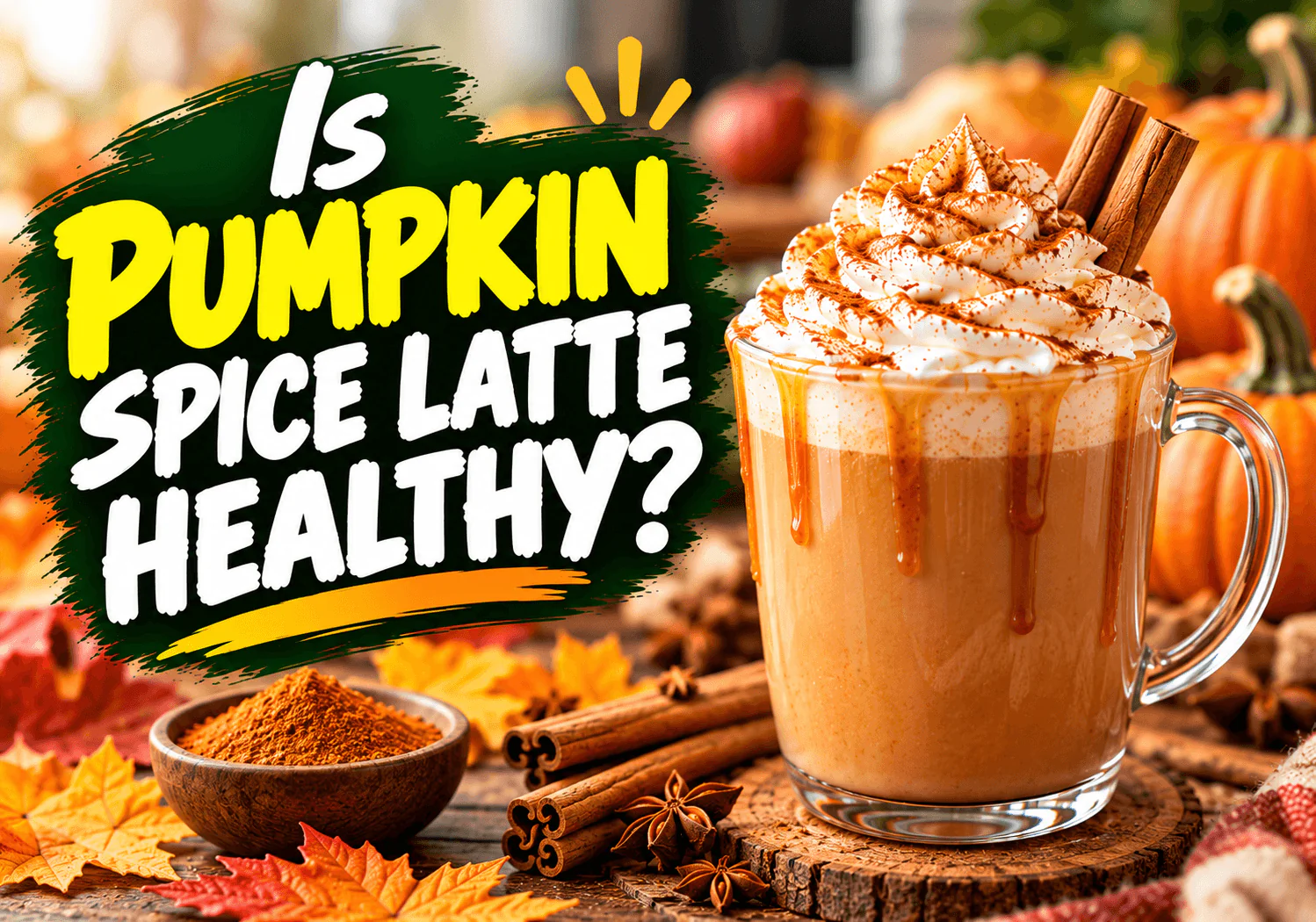
Nothing announces fall quite like the first pumpkin spice latte of the season. It’s warm, sweet, cozy, and for many people an annual ritual. But is a pumpkin spice latte healthy? Not as a typical coffee-shop order. Most café versions are better described as dessert in a cup, with large amounts of added sugar, especially in bigger sizes with whipped cream. The good news is that a few simple changes, or a homemade version, can turn it into a reasonable fall treat.
This guide explains where the sugar and calories in a pumpkin spice latte come from, how it measures up to the newest U.S. Dietary Guidelines, how much caffeine it contains, and exactly how to order or make a lighter version.
Key Takeaways
- Specialty lattes can contain 200–500 calories and “an extremely large amount of sugar,” according to Harvard nutrition experts.
- The 2025–2030 Dietary Guidelines recommend no more than 10 g of added sugar per meal. Most sweetened café lattes go well beyond that.
- The sugar in a latte comes from two sources: natural milk sugar (about 12 g per cup of dairy milk) and added syrup, which is the part to cut.
- Lighter orders: choose a smaller size, ask for fewer syrup pumps, skip the whipped cream, and pick skim or unsweetened plant milk.
- A homemade version with real pumpkin puree can come in around 140 calories and 9 g of added sugar per serving.
- Most adults can safely have up to 400 mg of caffeine a day. Pregnant people should aim lower.
What’s in a Pumpkin Spice Latte?
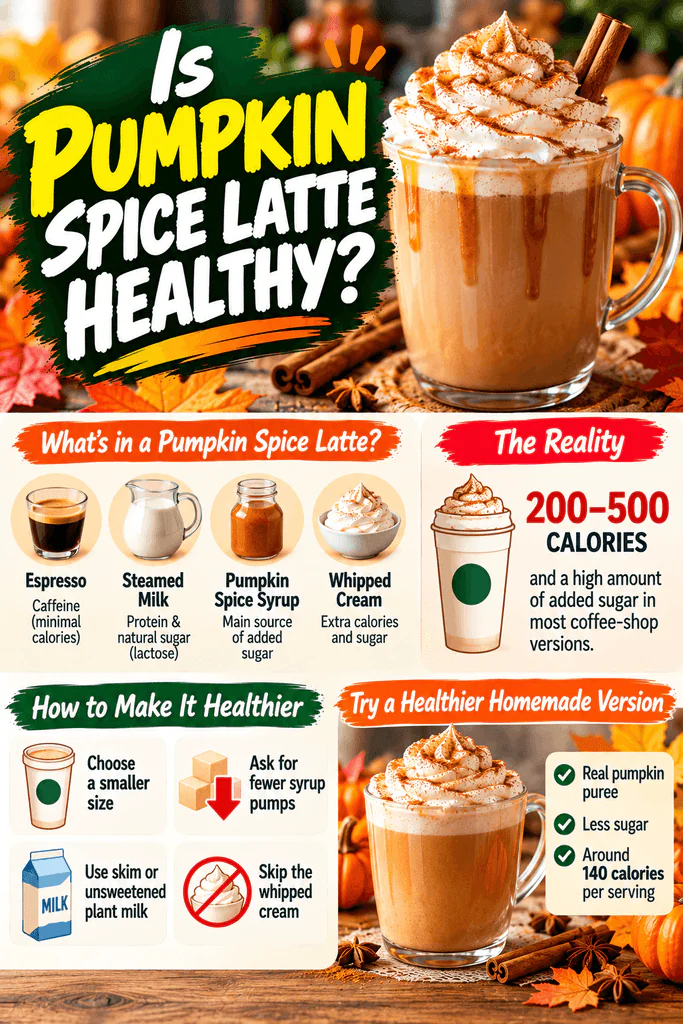
A pumpkin spice latte is built from four basic parts:
- Espresso, which adds caffeine and almost no calories.
- Steamed milk, which provides most of the volume, protein and natural sugar (lactose).
- Pumpkin spice syrup or sauce, the main source of added sugar and flavor. Recipes vary by café; some contain a small amount of pumpkin, others mostly sugar and spices.
- Toppings, usually whipped cream and a sprinkle of pumpkin pie spice.
“Pumpkin spice” itself is just a blend of cinnamon, nutmeg, ginger and cloves. The spices add flavor with essentially no calories. The sugar and fat come from the syrup, milk and whipped cream.
If you’re curious about pumpkin’s own nutrition, see is pumpkin healthy. The pumpkin in a latte, if any, is a small amount and isn’t why people drink it.
Is a Pumpkin Spice Latte Healthy? The Short Answer
As a typical café order, no. It’s best treated as an occasional treat, not a daily coffee habit.
The Harvard T.H. Chan School of Public Health notes that specialty drinks like mochas, lattes and blended coffee drinks “can contain anywhere from 200–500 calories, as well as an extremely large amount of sugar,” and recommends treating them as occasional treats.
That’s very different from plain coffee. Harvard’s research summary links moderate black coffee intake with lower risk of type 2 diabetes, heart disease and early death. Those benefits come from the coffee itself, not from the syrup, sugar and whipped cream piled on top. For more on that contrast, see black coffee vs. milk coffee.
Pumpkin Spice Latte Sugar: Natural vs. Added
When you look up a latte’s nutrition, the “total sugars” number can look alarming. It helps to split it into two parts.
Natural Sugar From Milk
Dairy milk naturally contains lactose. According to USDA FoodData Central, one cup of 2% milk has about 12 g of sugar, and one cup of skim milk has about 12.5 g, all of it naturally occurring. A medium latte contains well over a cup of milk, so a meaningful share of its sugar is lactose, which isn’t counted as “added sugar.”
Added Sugar From Syrup and Toppings
The rest comes from the pumpkin spice syrup or sauce, plus any whipped cream, drizzles or sweetened plant milks. This is the part nutrition guidelines want you to limit.
How to Estimate Added Sugar Yourself
Most coffee chains publish nutrition information for each drink size. Here’s a quick way to estimate added sugar when only total sugar is listed:
- Find the total sugars for your size and milk choice.
- Subtract about 12 g for each cup of dairy milk in the drink.
- What’s left is roughly the added sugar from syrup and toppings.
Some menus now list “added sugars” directly, which makes this easier. The FDA’s Nutrition Facts label shows added sugars separately for packaged foods, and the Daily Value for added sugars is 50 g.
How a Pumpkin Spice Latte Measures Up to Sugar Guidelines
U.S. guidance on added sugar has become stricter.
- According to Harvard’s summary of the 2025–2030 Dietary Guidelines for Americans, the new guidelines state that “no amount of added sugars or non-nutritive sweeteners is recommended or considered part of a healthy or nutritious diet.” They suggest that no single meal should exceed 10 grams of added sugar, and they recommend avoiding added sugars for children until age 10.
- The CDC reports that Americans already eat far more added sugar than recommended, about 17 teaspoons a day on average, and that sugar-sweetened beverages are a leading source. Excess added sugar contributes to obesity, type 2 diabetes and cardiovascular disease.
What that means for your latte: A sweetened café pumpkin spice latte, especially a medium or large with whipped cream, will typically exceed the 10-gram-per-meal guideline on its own. That doesn’t make it forbidden, but it does make it a treat rather than a routine.
Pumpkin Spice Latte Calories: Where They Come From
Calories in a pumpkin spice latte come from three places:
| Source | What drives calories |
| Milk | Type and amount; whole and 2% milk add more fat and calories than skim |
| Syrup or sauce | Sugar, and sometimes condensed milk |
| Toppings | Whipped cream adds fat and sugar |
Milk choice makes a real difference. Per cup, according to USDA FoodData Central:
| Milk (1 cup) | Calories | Sugar | Fat | Protein |
| 2% milk | ~122 | ~12 g (natural) | ~4.8 g | ~8 g |
| Skim milk | ~83 | ~12.5 g (natural) | ~0.2 g | ~8 g |
| Unsweetened almond milk | ~40 | ~2 g | ~2.5 g | ~1 g |
Switching from 2% to skim saves about 40 calories per cup of milk. Unsweetened almond milk saves even more, though it also provides much less protein. Sweetened plant milks can add sugar back in, so check the label. See is oat milk healthy and is coconut milk healthy for how other options compare.
How Much Caffeine Is in a Pumpkin Spice Latte?
A pumpkin spice latte contains espresso, typically one or two shots depending on size, so it has a moderate amount of caffeine. Exact amounts vary by café and size, and chains usually list caffeine in their nutrition information.
According to the FDA, up to 400 mg of caffeine a day is generally not associated with negative effects in healthy adults. That’s about two to three 12-ounce cups of brewed coffee. Too much caffeine can cause a fast heart rate, anxiety, insomnia and digestive upset.
- Pregnancy: Harvard notes that pregnant people should aim for less than 200 mg of caffeine a day. The FDA advises pregnant or breastfeeding people to talk with their healthcare provider.
- Children and teens: Caffeinated coffee drinks aren’t recommended for young children.
- Caffeine-sensitive? Order your latte decaf or with a single shot.
Who Should Be Most Careful
- People with diabetes or prediabetes: Sweetened lattes can raise blood sugar quickly. If you have one, choose the smallest size with reduced syrup, and count it in your carb plan. Plain coffee is a better daily choice. See is black coffee good for diabetes.
- People watching weight: Liquid calories are easy to overlook. A daily specialty latte can add a substantial number of calories over a season.
- Pregnant people: Watch both caffeine and added sugar.
- Children: The 2025–2030 Dietary Guidelines recommend avoiding added sugars until age 10, and caffeinated drinks aren’t suitable for young kids. A warm, spiced steamed milk without syrup is a better “kid PSL.”
- People sensitive to caffeine or with high blood pressure: Harvard advises moderating caffeine intake if you have trouble controlling blood pressure.
How to Order a Lighter Pumpkin Spice Latte
You don’t have to give it up. These changes make the biggest difference, in rough order of impact:
- Go smaller. Size is the single biggest lever. A small has less syrup and less milk than a large.
- Ask for fewer pumps of syrup. One or two pumps still taste like pumpkin spice and cut added sugar significantly.
- Skip the whipped cream. You’ll save fat and added sugar. Ask for extra cinnamon or pumpkin pie spice on top instead.
- Choose your milk wisely. Skim milk cuts fat and calories while keeping protein. Unsweetened almond milk is lowest in calories.
- Try a pumpkin-spiced brewed coffee or Americano. Ask for a single pump of syrup and a splash of milk.
- Make it a treat, not a habit. Enjoy it once or twice a week rather than daily.
How to Make a Healthier Pumpkin Spice Latte at Home
Making it at home gives you full control of the sugar, and you can use real pumpkin.
A homemade pumpkin spice latte recipe from University of Maine Cooperative Extension shows a nutrition label of 140 calories and 9 g of added sugar per serving, under the new 10-gram-per-meal guideline and far less than a typical café version.
Simple Homemade Method
- Warm 1 cup of milk (skim, low-fat or unsweetened plant milk) on the stove or in the microwave.
- Whisk in 2 tablespoons of canned pumpkin puree, ¼–½ teaspoon pumpkin pie spice and ¼ teaspoon vanilla.
- Sweeten lightly with 1–2 teaspoons of maple syrup or sugar. Start low and taste. See is maple syrup healthy.
- Add 1–2 shots of espresso or ½ cup of strong brewed coffee.
- Froth with a whisk or frother, and dust with cinnamon.
Why Add Real Pumpkin?
Two tablespoons of plain canned pumpkin (about 31 g) adds roughly 10 calories, nearly 1 g of fiber and about a quarter of the Daily Value for vitamin A, based on USDA data for canned pumpkin. It also gives the drink body, so you need less sugar. Use plain 100% pumpkin, not pie mix. Learn why in is canned pumpkin healthy, and see the full breakdown in our pumpkin nutrition facts.
More Ideas
- Iced version: Our iced pumpkin spice latte recipe is a starting point. Reduce the sweetener to taste.
- Low-carb version: Use unsweetened almond milk, a tablespoon of pumpkin and a non-nutritive sweetener, and see is pumpkin keto. Note that the 2025–2030 guidelines also don’t encourage non-nutritive sweeteners, so use them sparingly.
- Get the flavor elsewhere: Pumpkin spice oats give you the seasonal taste with fiber and no coffee-shop syrup. Try these overnight pumpkin spice oats.
Pumpkin Spice Latte Myths vs. Facts
Myth: A pumpkin spice latte counts as a vegetable serving.
Fact: Any pumpkin in a café latte is a small amount. It doesn’t meaningfully count toward your vegetable intake.
Myth: Pumpkin spice is what makes the drink unhealthy.
Fact: The spice blend is nearly calorie-free. The sugar comes from syrup, sweetened milk and toppings.
Myth: All the sugar in a latte is added sugar.
Fact: Dairy milk contributes about 12 g of natural sugar per cup. The syrup is the added sugar.
Myth: Choosing a plant milk always makes it healthier.
Fact: Unsweetened plant milks can cut calories, but sweetened versions add sugar and many have less protein than dairy milk.
Myth: Coffee drinks have the same benefits as plain coffee.
Fact: Research linking coffee to health benefits is mostly about plain coffee, not sugary specialty drinks. See black coffee benefits and side effects.
How a Pumpkin Spice Latte Fits a Healthy Lifestyle
A pumpkin spice latte can absolutely be part of a healthy lifestyle as an occasional, mindful treat. Save it for when you’ll really enjoy it, order the smallest size with less syrup and no whipped cream, or make your own at home with real pumpkin and a light hand on the sweetener. On other days, plain coffee or tea with a sprinkle of cinnamon gives you the cozy ritual without the added sugar.
Frequently Asked Questions
How much sugar is in a pumpkin spice latte?
It depends on the café, size, milk and toppings. Check the chain’s nutrition information for your exact order. Harvard notes that specialty lattes can contain an extremely large amount of sugar. About 12 grams per cup of dairy milk is natural lactose. The rest is added sugar from syrup and toppings.
Is a pumpkin spice latte bad for you?
One occasionally isn’t harmful for most healthy adults, but a typical café version is high in added sugar. The 2025–2030 Dietary Guidelines suggest keeping added sugar under 10 grams per meal. Enjoy it as a treat, choose a smaller size, and ask for less syrup.
How do I order a healthier pumpkin spice latte?
Order the smallest size, ask for one or two pumps of syrup instead of the standard amount, skip the whipped cream, and choose skim or unsweetened plant milk. Add extra cinnamon or pumpkin spice on top for flavor without extra sugar.
Does a pumpkin spice latte have real pumpkin?
Some café versions include a small amount of pumpkin in their sauce, while others rely mainly on sugar and spices. Either way, the amount is too small to matter nutritionally. Making your own with two tablespoons of canned pumpkin adds fiber and vitamin A.
How much caffeine is in a pumpkin spice latte?
It depends on the number of espresso shots, usually one or two. Check the café’s nutrition information. The FDA says up to 400 milligrams of caffeine a day is generally safe for healthy adults. Pregnant people should aim for less than 200 milligrams.
Can I have a pumpkin spice latte if I have diabetes?
You can occasionally, with planning. Choose the smallest size, ask for minimal syrup, skip whipped cream, and count the carbohydrates in your meal plan. A homemade version with lightly sweetened milk, real pumpkin and spices is a better option. Check with your diabetes care team.
Conclusion
So, is a pumpkin spice latte healthy? A typical coffee-shop version isn’t. It’s a sweet treat that can easily exceed the new Dietary Guidelines’ 10-gram added-sugar limit for a whole meal, and Harvard notes specialty lattes can run 200–500 calories. You can still enjoy one. Order a smaller size with fewer syrup pumps, no whipped cream and skim or unsweetened plant milk, or make your own at home with real pumpkin puree, spices and a little maple syrup for around 140 calories and 9 grams of added sugar. Keep caffeine under 400 mg a day (or under 200 mg if pregnant).
Medical disclaimer: This article is for general educational purposes only and is not a substitute for professional medical advice, diagnosis or treatment. If you have diabetes, are pregnant, or have a health condition affected by sugar or caffeine, talk with your doctor or a registered dietitian about what’s right for you.
(3) References
- Harvard T.H. Chan School of Public Health. “Coffee.” The Nutrition Source. https://nutritionsource.hsph.harvard.edu/food-features/coffee/
- Harvard T.H. Chan School of Public Health. “Dietary Guidelines for Americans 2025–2030: Progress on added sugar, protein hype, saturated fat contradictions.” The Nutrition Source. 2026. https://nutritionsource.hsph.harvard.edu/2026/01/09/dietary-guidelines-for-americans-2025-2030-progress-on-added-sugar-protein-hype-saturated-fat-contradictions/
- Centers for Disease Control and Prevention. “Added Sugars.” https://www.cdc.gov/nutrition/php/data-research/added-sugars.html
- U.S. Food and Drug Administration. “Spilling the Beans: How Much Caffeine Is Too Much?” https://www.fda.gov/consumers/consumer-updates/spilling-beans-how-much-caffeine-too-much
- U.S. Food and Drug Administration. “Daily Value on the Nutrition and Supplement Facts Labels.” https://www.fda.gov/food/nutrition-facts-label/daily-value-nutrition-and-supplement-facts-labels
- U.S. Department of Agriculture. “Milk, reduced fat, fluid, 2% milkfat, with added vitamin A and vitamin D” (FDC ID 171267). FoodData Central. https://fdc.nal.usda.gov/fdc-app.html#/food-details/171267/nutrients
- U.S. Department of Agriculture. “Milk, nonfat, fluid, with added vitamin A and vitamin D (fat free or skim)” (FDC ID 171269). FoodData Central. https://fdc.nal.usda.gov/fdc-app.html#/food-details/171269/nutrients
- U.S. Department of Agriculture. “Beverages, almond milk, unsweetened, shelf stable” (FDC ID 174832). FoodData Central. https://fdc.nal.usda.gov/fdc-app.html#/food-details/174832/nutrients
- U.S. Department of Agriculture. “Pumpkin, canned, without salt” (FDC ID 168450). FoodData Central. https://fdc.nal.usda.gov/fdc-app.html#/food-details/168450/nutrients
- University of Maine Cooperative Extension. “Pumpkin Spice Latte” (recipe nutrition label). Food & Health. https://extension.umaine.edu/food-health/?p=14588