



Finding a side dish that perfectly balances sweetness, creaminess, and a satisfying crunch can completely transform your dinner table. If you are ever feeling bored with traditional, heavy American side dishes, trying a vibrant, authentic Korean potato salad is the perfect way to revitalize your family meals.
Learn more about our curried sweet potato salad for another flavorful potato-based side dish.
This delightful dish, commonly known as Gamja Salad, is a beloved creamy Korean side dish served in almost every household. It brilliantly combines fluffy mashed potatoes with crisp vegetables, sweet fruit, hard-boiled eggs, and a rich mayonnaise dressing. As an added bonus, the Mayo Clinic emphasizes the nutritional benefits of varied vegetable consumption.
If you have ever dined at a local Korean BBQ restaurant, you have likely enjoyed this as a complimentary banchan. Unlike standard Western potato salads, the authentic Korean versions are notably sweeter, incredibly fluffier, and uniquely textured. Discover our honey gold potato recipe for another versatile potato preparation option.
Adding fresh, crisp apples, crunchy cucumbers, and sweet corn creates that signature sweet-crunchy texture contrast everyone loves.
Let us explore the wonderful, delicious world of this iconic Korean side dish together! For more culinary context, the Culinary Institute of America provides professional guidance on traditional international cooking techniques.
What Is Korean Potato Salad?
To truly appreciate this wonderful dish, we must deeply understand its rich cultural background and culinary significance. So, what is Korean potato salad, and why is it so universally loved across different generations?
In traditional Korean dining, meals are accompanied by various small side dishes collectively known as banchan. The USDA FoodData Central provides detailed nutritional information on potato varieties.
This specific dish is a highly popular Korean potato salad banchan, offering a cool, creamy contrast to spicy meats. The Korean potato salad name actually comes from the word “gamja,” which translates directly to potato in the Korean language.
Therefore, you will frequently see it labeled simply as gamja salad on traditional restaurant menus. Harvard Health Publishing discusses the benefits of colorful, nutrient-dense produce.
This creamy mashed potato side dish provides an exceptional balance of savory richness and light, refreshing sweetness. It is incredibly common in bustling Korean restaurants, particularly served alongside sizzling, savory BBQ meals.
Furthermore, you will often find it stuffed into soft milk bread for popular Korean sandwiches and lunch boxes. Explore colorful cumin quinoa salad for another nutritious side dish option.
Korean Potato Salad vs Japanese and American Potato Salad
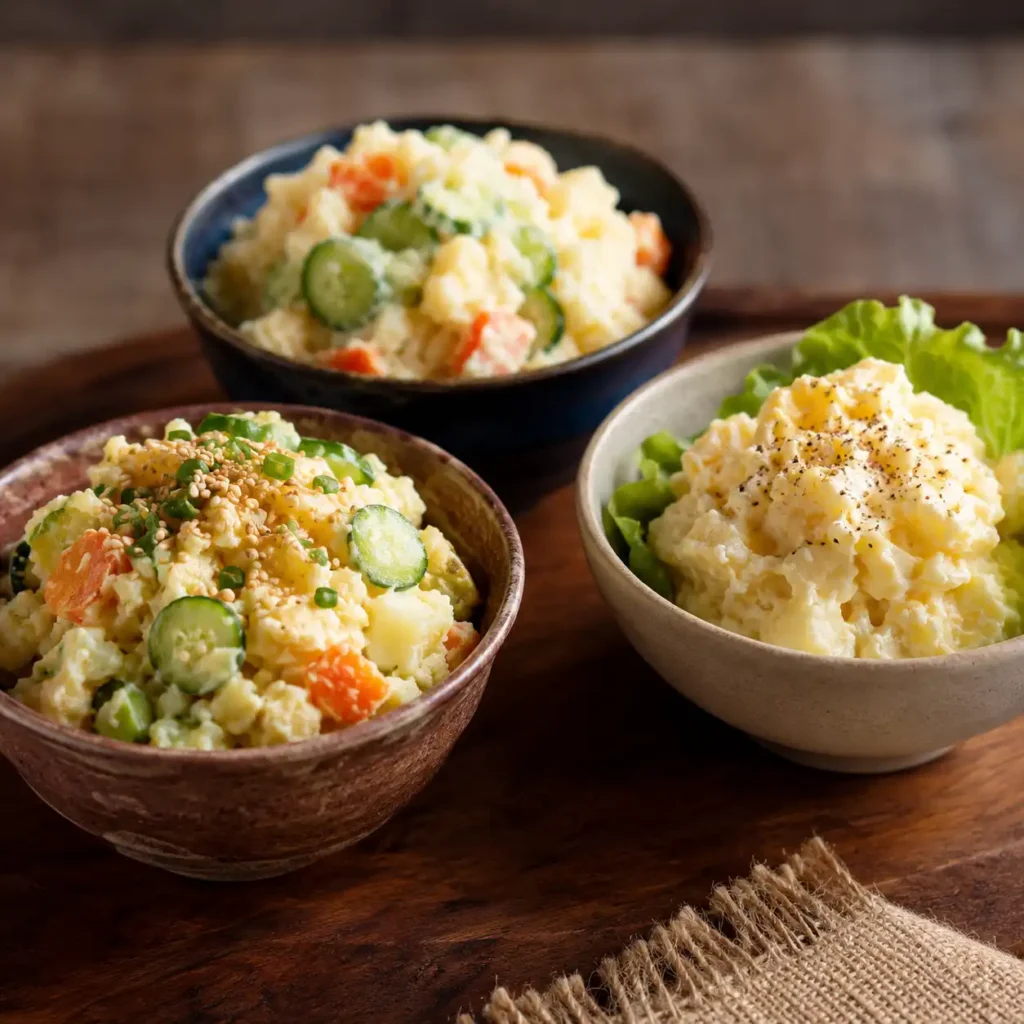
When exploring diverse global cuisines, comparing regional variations reveals fascinating culinary differences and flavor preferences. Let us carefully examine how this unique dish compares to a traditional Japanese potato salad or standard American styles.
The texture, flavor profiles, and core ingredient choices vary drastically between these three iconic preparations. The Cleveland Clinic discusses healthy fat consumption guidelines.
First, standard American potato salad is famously tangy, utilizing a heavy base of mayonnaise, mustard, celery, and pickles. Alternatively, the beloved Japanese potato salad relies heavily on umami flavors, using rich Kewpie mayo, rice vinegar, and slightly chunky potatoes.
In stark contrast, the Korean potato salad gamja emphasizes a sweeter, much fluffier mashed texture. Learn about raw corn salad with cumin-lime dressing for another acid-balanced recipe.
Furthermore, Korean cooks frequently incorporate unexpected, sweet elements like fresh apples, raisins, or sweet corn kernels. You can easily see the main differences outlined in the helpful comparison table provided below.
Understanding these distinctions is a popular topic on the Korean potato salad Reddit communities! Serious Eats provides expert-tested potato salad techniques.
| Feature | Korean Potato Salad | Japanese Potato Salad | American Potato Salad |
|---|---|---|---|
| Flavor Profile | Sweet and creamy | Umami-rich and savory | Tangy and creamy |
| Common Additions | Apple, corn, cucumber | Cucumber, carrots, ham | Celery, onions, pickles |
| Potato Texture | Very fluffy, mostly mashed | Creamy with small chunks | Firm, cubed chunks |
| Serving Style | Banchan side dish | Bento box or izakaya side | BBQ or picnic side |
Bon Appétit offers comprehensive guides to potato varieties and preparation methods.
Korean Potato Salad Ingredients
Gathering the correct, high-quality Korean potato salad ingredients is absolutely vital for achieving that authentic restaurant flavor. You must carefully balance the creamy, savory base with the bright, crisp, and sweet additions.
This beautiful harmony of diverse ingredients is what makes the banchan Korean potato salad so uniquely addictive. WebMD offers practical cooking tips for home chefs.
The core ingredients naturally start with high-quality Yukon Gold potatoes, which offer a naturally buttery, smooth texture. You will also need authentic Kewpie mayonnaise or a slightly sweeter Korean mayonnaise brand.
Furthermore, hard-boiled eggs, crisp cucumber, fresh apple, sweet carrots, and canned corn form the bulk of the salad. Understanding that mashed potatoes are healthy helps contextualize starch content differences.
To achieve the proper seasoning, you must utilize white sugar, a splash of vinegar, and salt and pepper. Many households also love to include optional additions like diced savory ham, plump raisins, or sweet crab sticks. Some even add a finely minced white onion for a sharp, savory bite. Healthline discusses the nutritional profile of potatoes. The The
Importance of Apple in the Salad
Using a Korean potato salad with apple is considered the absolute gold standard in traditional home cooking. The crisp apple adds a necessary, refreshing sweetness that beautifully cuts through the heavy, rich mayonnaise dressing.
It provides a phenomenal, juicy crunch that perfectly balances the incredibly soft, creamy mashed potatoes. Discover apple cranberry wheat berry salad for another fruit-enhanced salad option.
Popularity of Corn Additions
Have you ever wondered why a Korean potato salad corn variation is so incredibly popular in modern restaurants? Plump, juicy corn kernels add an immediate burst of gentle sweetness and a wonderful, popping texture contrast.
Corn is an immensely popular ingredient in many modern Korean comfort foods, elevating the overall eating experience. Learn about canned corn recipes for versatile corn preparation ideas.
Authentic Korean Potato Salad Recipe
Are you completely ready to create this spectacular, comforting side dish in your very own kitchen? This meticulously tested, best Korean potato salad recipe will perfectly replicate your favorite authentic restaurant experience. It is wonderfully simple to prepare and easily customizable to your family’s specific tastes. FoodSafety.gov provides essential food handling guidelines.
Required Recipe Ingredients
Please carefully gather these precise ingredients before you begin the cooking process:
- 3 large Yukon Gold potatoes (peeled and quartered)
- 3 large hard-boiled eggs (peeled)
- 1/2 fresh Fuji apple (peeled, cored, and finely diced)
- 1/2 cup canned sweet corn (drained well)
- 1/2 small cucumber (thinly sliced)
- 1/4 cup carrot (finely diced)
- 1/2 cup Kewpie or Korean mayonnaise
- 1 tablespoon white sugar
- 1 teaspoon white vinegar (or apple cider vinegar)
- 1/2 teaspoon fine sea salt (plus extra for cucumber)
- 1/4 teaspoon white pepper
Texture and Mixing Tips
For the best results, you must absolutely avoid aggressively overmixing the delicate ingredients together. Gently fold the components to retain the wonderful, distinct crunch of the fresh apples and cucumbers.
Furthermore, chilling the completed dish is strictly mandatory, as the flavors meld and improve significantly when cold. The CDC emphasizes proper food handling practices.
Learn about basic chicken salad for another classic picnic recipe that benefits from gentle mixing techniques.
Popular Korean Potato Salad Variations
One of the greatest joys of Korean home cooking is the immense flexibility and creativity allowed in recipes. Every single family and restaurant proudly serves their own unique interpretation of this classic side dish.
Let us deeply explore some of the most highly sought-after and beloved variations you can easily make. Medical News Today provides evidence-based nutrition information.
Traditional Apple Variation
The classic Korean potato salad apple version is undeniably the most traditional, home-style preparation you will find. It relies heavily on the brilliant sweet-savory balance created by crisp Fuji or Honeycrisp apples.
This specific variation provides the greatest crunch and feels incredibly refreshing on a hot summer day. Discover massaged kale salad with mango avocado for another fruit-enhanced salad option.
Sweet Corn Variation
A dedicated Korean potato salad with corn is arguably the most common variation served in bustling BBQ restaurants. It features a noticeably sweeter flavor profile that pairs impeccably well with spicy, marinated pork or beef.
Furthermore, this specific iteration is highly requested by children, making it a perfect, kid-friendly banchan option. Learn about corn, okra, and tomato recipes for another corn-forward dish.
Bakery-Style Sandwich Filling
Have you ever visited a traditional Korean bakery and seen thick, creamy sandwiches wrapped in plastic? The famous Korean potato salad sandwich is a wildly popular street-food-inspired snack and breakfast item.
Cooks generously stuff the chilled, creamy potato salad directly between two thick slices of incredibly soft, fluffy milk bread. The Britannica provides historical context on regional food traditions.
Hawaiian Fusion Style
Due to historic cultural blending, you will frequently encounter a unique Korean potato salad recipe, Hawaii style. This magnificent Korean-Hawaiian fusion heavily influences local island plate lunches and vibrant deli counters.
It is a brilliant crossover between traditional Gamja salad and classic, mayo-heavy Hawaiian macaroni salad, often featuring extra sweetness. The World Health Organization emphasizes balanced dietary patterns.
Korean Potato Salad Dressing Explained
The absolute heart and soul of this incredible dish lies entirely within its unique, creamy dressing. A proper Korean potato salad dressing is notably different and much sweeter than standard Western mayonnaise bases.
It relies on a delicate, precise balance of rich fats, mild acidity, and gentle sweetness. The NIH provides research on dietary fats and nutrition.
First, you must start with a high-quality, rich mayonnaise, preferably a brand formulated with extra egg yolks. Second, adding a generous spoonful of white sugar is completely non-negotiable for achieving that authentic Korean flavor profile.
Finally, a small splash of mild white or apple cider vinegar cuts through the heavy fat beautifully. Discover beef, potato, and root vegetable stew for another hearty potato-based recipe.
A dash of fine salt and a pinch of earthy white pepper perfectly round out the savory notes. Expert Tip: Do not skip the sugar! A slightly sweet dressing is one of the absolute defining characteristics of an authentic, restaurant-quality Korean potato salad.
The Academy of Nutrition and Dietetics offers evidence-based recipe guidance.
What to Serve With Korean Potato Salad
Pairing your side dishes thoughtfully can drastically elevate your entire dining experience at home. So, exactly what is the best way to utilize a Korean potato salad side dish? Because it is incredibly creamy, sweet, and cooling, it is meant to balance highly seasoned, spicy, or heavy mains. Nutrition.gov provides balanced eating guidelines.
It pairs absolutely flawlessly with a massive feast of sizzling Korean BBQ, especially marinated spicy pork or savory beef bulgogi. Furthermore, it beautifully complements crispy, double-fried Korean fried chicken or tender, grilled Galbi short ribs.
You can also confidently serve it alongside fresh Kimbap rolls or as a satisfying filler for bento-style lunches. Learn about whether chicken salad is healthy in another popular picnic dish analysis.
Remember the traditional banchan context when planning your family’s dinner menu. It is commonly served in small, chilled portions right alongside steaming bowls of white rice and assorted fermented kimchi.
It creates a beautifully balanced, harmonious, and highly textured meal. Discover roasted garlic smashed potatoes, a new treat. Condition for another delicious potato preparation.
Korean Potato Salad Calories and Nutrition
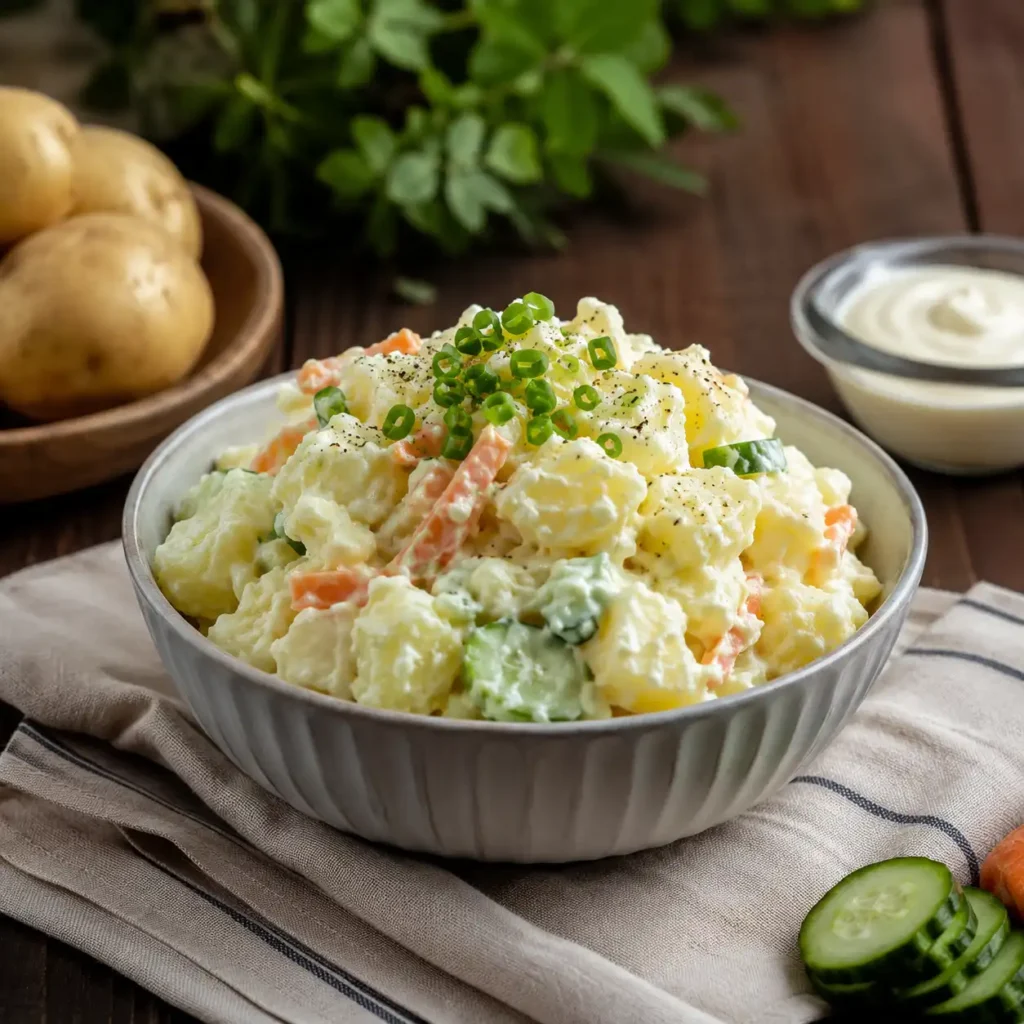
As a medical doctor, my patients constantly ask me about the nutritional value of their favorite comfort foods.
Understanding the Korean potato salad calories helps you incorporate this delicious dish into a balanced, healthy lifestyle. Primarily, the calorie density comes from the starchy potatoes and the generous amount of rich mayonnaise. The FDA provides essential food safety guidelines for home cooks.
However, this dish also provides excellent nutritional benefits if prepared mindfully with fresh ingredients. The hard-boiled eggs deliver a fantastic, highly bioavailable source of healthy lean protein and essential amino acids.
Furthermore, the massive inclusion of fresh apples, cucumbers, carrots, and corn provides valuable dietary fiber and important vitamins. The American Heart Association supports heart-healthy dietary patterns.
If you are strictly monitoring your daily caloric intake, you can easily make simple, healthier modifications. I often recommend my patients blend half of the mayonnaise with plain, non-fat Greek yogurt to increase protein and lower fat.
You can also slightly reduce the added sugar and aggressively pack the salad with even more fresh vegetables! The American Diabetes Association provides carbohydrate management guidance.
Common Korean Potato Salad Mistakes
Even highly experienced home chefs can accidentally ruin this delicate side dish if they skip crucial steps. Let us quickly review the absolute most common culinary mistakes so you can easily avoid them.
First, adding completely watery, unsalted cucumbers will disastrously dilute your rich dressing, making the entire salad soggy. Healthline discusses proper vegetable preparation techniques.
Second, violently over-mashing the potatoes until they become a sticky paste completely destroys the wonderful, fluffy texture. Furthermore, aggressively adding entirely too much mayonnaise makes the dish unpleasantly heavy, totally masking the delicate vegetables.
Also, lazily skipping the vital sugar and vinegar balance results in a terribly bland, confusing flavor profile. Learn about how to make broccoli salad with proper salad mixing techniques.
Finally, never forcefully stir your crisp apples and delicate eggs into boiling hot potatoes. Experience-Based Tip: Always allow the potatoes to cool slightly before mixing, and remember that Gamja salad tastes vastly better after chilling for at least 1 full hour. Discover potato pesto pizza for another creative potato-based recipe.
Frequently Asked Questions
What is Korean potato salad?
It is a highly popular, creamy Korean side dish made from fluffy mashed potatoes, crisp vegetables, fresh fruit, boiled eggs, and a sweet mayonnaise dressing.
What does “Gamja Salad” mean?
The word “Gamja” translates directly to “potato” in the Korean language. Therefore, “Gamja Salad” simply means potato salad, and it is a staple banchan in Korean dining.
Why does Korean potato salad have apple?
Fresh apple is traditionally added to provide a necessary, refreshing sweetness and a highly satisfying, juicy crunch. It beautifully balances the heavy, savory richness of the mashed potatoes and mayonnaise.
Is Korean potato salad served cold?
Yes, it is almost exclusively served nicely chilled or comfortably cool directly from the refrigerator. Chilling the salad allows the complex sweet and savory flavors to meld together perfectly.
What’s the difference between Korean and Japanese potato salad?
While both utilize rich mayonnaise, the Korean version is noticeably sweeter, fluffier, and frequently includes sweet apples and corn. The Japanese version is typically more savory, slightly chunkier, and relies heavily on umami flavors.
Conclusion
In conclusion, beautifully mastering this vibrant cultural dish brings incredible joy and immense flavor to your home kitchen. A truly authentic Korean potato salad (Gamja Salad) perfectly delivers a sweet, creamy, fluffy, and crunchy bite every single time. It is a magnificent departure from heavy, tangy Western salads that easily revitalizes your dinner routine.
Always remember that crisp, fresh apples and sweet corn are the absolute signature ingredients that define this dish. Serving it in the traditional banchan style alongside spicy grilled meats creates a flawless, harmonious dining experience.
Furthermore, properly chilling the completed salad significantly improves both the deep flavor and the wonderful texture. Discover roasted Brussels sprouts with apples and bacon for another bacon-forward side dish.
As a health professional and passionate food lover, I strongly encourage you to customize this highly versatile recipe.
Try generously adding your own Korean-inspired add-ins or enthusiastically stuff it into soft milk bread for a bakery-style sandwich variation. Enjoy your delightful, comforting culinary journey, and please savor the incredible sweet and savory balance!
Authoritative References
- Healthy Eating As You Age: Know Your Food Groups. https://www.nia.nih.gov/health/healthy-eating-nutrition-and-diet/healthy-eating-you-age-know-your-food-groups
- Garlicky Gochujang Tomato Bucatini. https://www.seriouseats.com/gochujang-bucatini-recipe-11970733
- Mayo Clinic. (2024). Nutrition and healthy eating. https://www.mayoclinic.org/healthy-lifestyle/nutrition-and-healthy-eating
- Harvard T.H. Chan School of Public Health. (2024). The nutrition source: Vegetables and fruits. https://www.hsph.harvard.edu/nutritionsource/what-should-you-eat/vegetables-and-fruits/
- United States Department of Agriculture. (2024). Potatoes, raw. FoodData Central. https://fdc.nal.usda.gov/fdc-app.html#/food-details/170262/nutrients
- National Institutes of Health. (2024). Dietary supplements fact sheets. https://ods.od.nih.gov/
- Centers for Disease Control and Prevention. (2024). Food safety. https://www.cdc.gov/food-safety/index.html
- Nutrition.gov. (2024). Healthy eating. https://www.nutrition.gov/topics/basic-nutrition/healthy-eating
- American Heart Association. (2024). Healthy cooking tips. https://www.heart.org/en/healthy-living/healthy-eating
- World Health Organization. (2024). Healthy diet fact sheet. https://www.who.int/news-room/fact-sheets/detail/healthy-diet