



If you are looking for a new twist on a classic side dish, I strongly recommend trying this incredible, unique culinary delight. First of all, a traditional Japanese potato salad is significantly creamier and noticeably fluffier than standard American styles.
Furthermore, it famously uses rich Kewpie mayonnaise, colorful, lightly mashed vegetables, and perfectly boiled eggs. If you love exploring global flavors, learn more about our curried sweet potato salad for another flavorful potato-based side dish.
The amazing balance of sweet, tangy, salty, and umami flavors makes this salad completely unique. Families commonly serve this beloved side dish in everyday lunch bento boxes or at traditional Japanese izakayas. (As an added bonus, the Mayo Clinic emphasizes the nutritional benefits of this kind of varied vegetable consumption.)
Let us dive deeply into this wonderful, easy Japanese potato salad recipe together! (You can also discover our honey gold potato recipe for another versatile potato preparation option.)
What Is Japanese Potato Salad?
So, what exactly is Japanese potato salad? It is an incredibly popular, everyday comfort food found in almost every single home in Japan. Unlike Western styles, this specific dish features a brilliant combination of fully mashed and slightly chunky potatoes.
Consequently, it offers an exceptionally smooth yet satisfyingly textured bite. Furthermore, traditional Japanese potato salad always uses special Japanese mayonnaise. This specific mayonnaise adds an unmistakable richness and deep savory flavor profile. The USDA FoodData Central provides detailed nutritional information on potato varieties.
Additionally, cooks always include highly crisp, crunchy vegetables like thin cucumbers and vibrant orange carrots. As a result, the dish tastes notably sweeter and much more savory than basic Western versions. Interestingly, we must briefly look at the unique Japanese potato salad origin.
This famous dish was originally introduced during Japan’s fascinating Western-influenced cooking era. This historic culinary period is widely known as Yōshoku cuisine. Historically, innovative Japanese chefs cleverly adapted heavy European and American potato salads to fit local palates. The Culinary Institute of America provides professional guidance on traditional international cooking techniques.
Thus, they created a magnificent, lighter, and deeply flavorful masterpiece. Explore colorful cumin quinoa salad for another nutritious side dish option.
Why Is Japanese Potato Salad So Good?
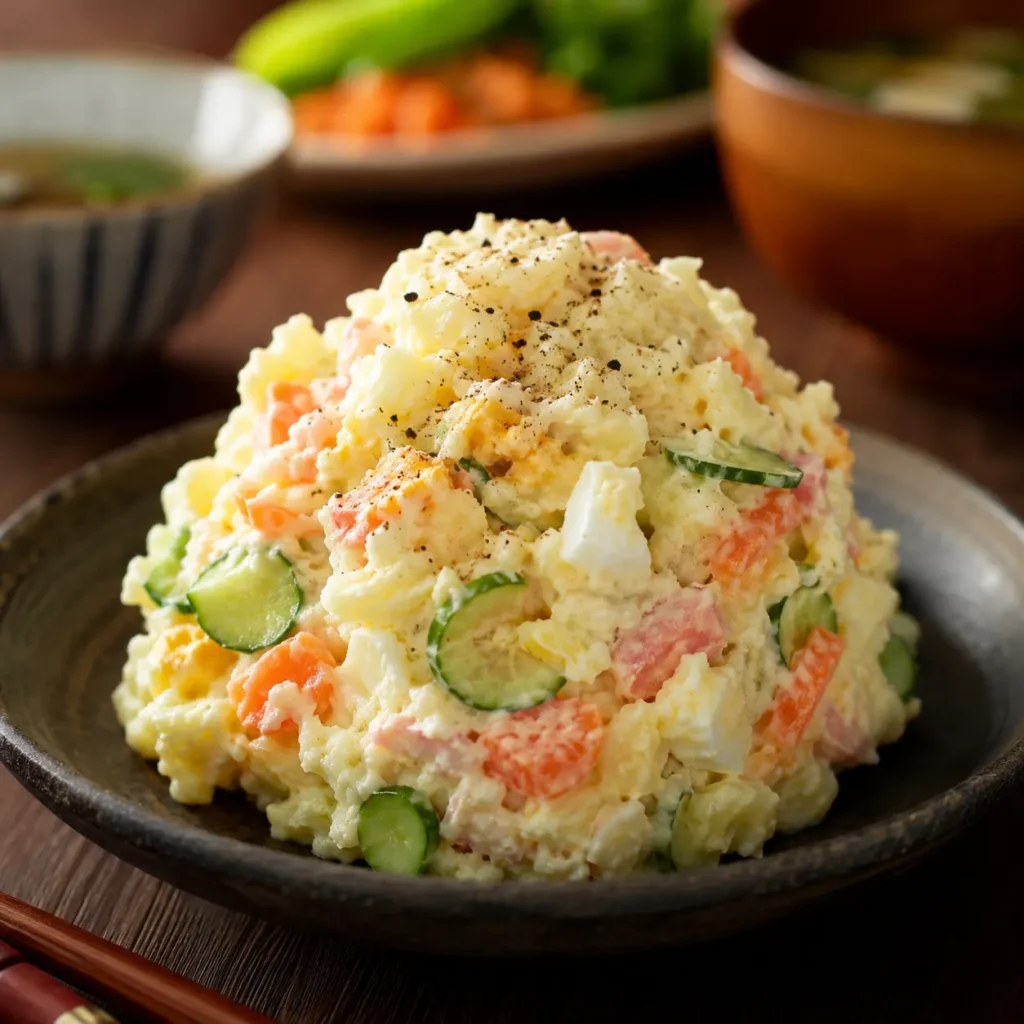
Why is Japanese potato salad so good? Many of my patients ask me this exact question after trying it just once. First of all, the absolute secret lies in the rich, luscious Kewpie mayo. Because it uses only egg yolks, it provides unparalleled creaminess and deep flavor.
Second, the addition of rice vinegar and specific umami seasonings creates a highly addictive, bright taste. Therefore, every single bite perfectly stimulates your taste buds. Harvard Health Publishing discusses the benefits of colorful, nutrient-dense produce.
Furthermore, the beautifully creamy mashed potatoes provide a soothing, comforting base. Meanwhile, the freshly salted, crunchy cucumbers and sweet carrots brilliantly interrupt that softness. Also, folding in soft-boiled eggs adds incredible luxuriousness and valuable protein. Learn about raw corn salad with cumin-lime dressing for another acid-balanced recipe.
The Magic of Texture Contrast
Japanese cooking heavily emphasizes complete texture harmony in every single meal. As a health expert, I absolutely love this mindful approach to eating. Texture contrast significantly increases your overall eating satisfaction and promotes slower chewing. The Cleveland Clinic discusses healthy fat consumption guidelines.
Chef Insight: Slightly mashing the hot potatoes while deliberately leaving some small chunks creates magic. This specific technique builds the signature fluffy yet creamy texture that Japanese potato salad is famous for globally. If you genuinely want the best Japanese potato salad, you must master this texture balance. Discover beef, potato, and root vegetable stew for another hearty potato-based recipe.
Japanese Potato Salad vs American Potato Salad
Understanding the stark differences between global cuisines is highly fascinating. Let us closely examine Japanese potato salad vs. American potato salad. What is the difference between Japanese and American potato salad? First of all, the flavor profiles are completely different.
American versions generally rely heavily on sharp tanginess from yellow mustard and white vinegar. In contrast, Japanese styles lean heavily into slight sweetness and deep umami notes. Furthermore, the physical textures are entirely opposite. American salads usually feature firm, large, unmashed potato cubes. Serious Eats provides expert-tested potato salad techniques.
Conversely, Japanese cooks intentionally mash a large portion of the warm potatoes. Here is a helpful, quick comparison table for easy reference.
| Feature | Japanese Potato Salad | American Potato Salad |
|---|---|---|
| Mayonnaise | Kewpie mayo (egg yolk base) | Regular mayo (whole egg base) |
| Texture | Creamier, partially mashed | Chunkier, cubed potatoes |
| Vegetables | Includes thin cucumber and carrots | Often includes celery and pickles |
| Flavor Profile | Slightly sweet and umami-rich | Highly tangy and savory |
Additionally, Japanese styles frequently add unique ingredients like sweet corn or savory ham. Consequently, they differ greatly from a standard Korean potato salad or Chinese potato salad. Bon Appétit offers comprehensive guides to potato varieties.
Essential Japanese Potato Salad Ingredients
Gathering the correct, authentic items is absolutely crucial for your culinary success. You cannot easily substitute these specific Japanese potato salad ingredients without changing the final dish. WebMD offers practical cooking tips for home chefs.
Core Ingredients
First of all, you absolutely need high-quality Yukon Gold potatoes. They offer the absolute best buttery texture. Second, you must secure authentic Kewpie mayonnaise for that signature rich taste. Next, grab a fresh Japanese cucumber and a firm, sweet carrot.
Furthermore, you will need fresh eggs, mild rice vinegar, and a small white onion. Finally, simple sea salt and freshly cracked black pepper will complete your seasoning base. Understanding whether mashed potatoes are healthy helps contextualize starch content differences.
Optional Additions
You can easily customize this highly versatile dish. Many families add diced savory ham or sweet, crunchy yellow corn. Also, some people love adding a Japanese potato salad with apple for extra crisp sweetness. You can even add spicy mentaiko or healthy edamame beans. Healthline discusses the nutritional profile of potatoes.
Why Kewpie Mayo Matters
Kewpie mayonnaise is drastically different from standard American grocery store brands. Because it utilizes egg yolks exclusively, it boasts incredible, unmatched richness. Furthermore, it contains unique seasonings that provide significantly more umami flavor. Finally, it carries a very slight, pleasant sweetness that perfectly balances the dish. FoodSafety.gov provides essential food handling guidelines.
Why Some Recipes Add Apple
Have you ever seen a recipe for Japanese potato salad featuring fresh fruit? Adding crisp Fuji apple chunks beautifully provides refreshing sweetness and a wonderful crunch. Discover basic chicken salad for another classic picnic recipe.
Authentic Japanese Potato Salad Recipe
Are you ready to cook this masterpiece? This is the ultimate, highly tested, authentic Japanese potato salad recipe. You will undoubtedly impress your entire family with these simple, effective steps. The CDC emphasizes proper food handling practices.
Ingredients List
Please carefully gather these precise ingredients before you begin cooking:
- 3 large Yukon Gold potatoes (peeled and cut into chunks)
- 1/2 cup authentic Kewpie mayo
- 1 small Japanese cucumber (thinly sliced)
- 1/2 medium carrot (peeled and thinly sliced)
- 2 large hard-boiled eggs (peeled and roughly chopped)
- 1 tablespoon mild rice vinegar
- 1 teaspoon white sugar
- Sea salt and black pepper to taste
How to Make Japanese Potato Salad
Please follow these numbered steps closely for the absolute best results. First of all, gently boil the potato chunks in deeply salted water until fork-tender. Carefully drain the hot potatoes and immediately return them to the warm pot.
Lightly mash the potatoes while they are still warm, intentionally leaving some chunky pieces. Stir the rice vinegar and sugar directly into the warm, mashed potatoes. Medical News Today provides evidence-based nutrition information.
Meanwhile, lightly salt the cucumber slices and let them sit to strictly remove excess moisture. Firmly squeeze the cucumbers dry, then add them and the carrots to the cooled potatoes. Gently mix the chopped eggs and crunchy vegetables into the bowl.
Finally, carefully fold in the Kewpie mayo, season with pepper, and chill before serving. Learn about massaged kale salad with mango avocado for another fiber-packed side dish option.
Expert Texture Tips
First, please do not fully mash the potatoes into a puree. Second, you must let the seasoned potatoes cool completely before adding the rich mayonnaise. If you add mayo to hot potatoes, it will separate and turn oily. Lastly, always let the salad chill in the refrigerator for at least 30 minutes. The Britannica provides historical context on regional food traditions.
Easy Japanese Potato Salad Variations
Every single family lovingly adapts this great dish to fit their own unique tastes. Therefore, you can easily create several delicious, fun variations at home. Let us explore a few highly popular, completely easy Japanese potato salad options. The World Health Organization emphasizes plant-forward dietary patterns.
Easy Japanese Potato Salad Recipe Shortcuts
Sometimes, busy parents simply do not have time for extensive prep work. Therefore, you can smartly use high-quality frozen mixed vegetables as a quick shortcut. Simply thaw them completely and squeeze out all excess water before mixing.
Furthermore, using small, tender baby potatoes entirely skips the tedious peeling process. Always keep a convenient bottle of store-bought Kewpie mayo in your fridge for emergencies! These quick tricks make a simple Japanese potato salad recipe totally achievable on weeknights. Discover potato pesto pizza for another creative potato-based recipe.
Japanese Potato Salad Vegetarian Version
Do you strongly prefer entirely plant-based or meat-free meals? Creating a wonderful Japanese potato salad, vegetarian style, is incredibly simple. First of all, just completely skip the traditional diced ham. Instead, generously add sweet corn kernels or vibrant, healthy edamame beans.
Furthermore, you can easily sprinkle toasted sesame seeds on top for an amazing, nutty crunch. It remains incredibly filling and deeply nutritious. The NIH provides research on regional dietary patterns.
Japanese Potato Salad With Mentaiko
If you genuinely love intense, bold, savory flavors, you must try this variation. A Japanese potato salad with mentaiko features incredibly creamy, spicy cod roe. You simply fold the fresh spicy roe directly into the Kewpie mayonnaise base.
Consequently, this specific upgrade is massively popular in energetic, late-night Japanese izakayas. Learn about whether chicken salad is healthy for another popular picnic dish analysis.
What to Eat With Japanese Potato Salad
Pairing your side dishes correctly elevates your entire dining experience drastically. So, what to eat with Japanese potato salad? Because it is creamy and cool, it perfectly balances highly savory, crispy, or fried main courses.
Therefore, it is traditionally served right alongside juicy Japanese fried chicken, known as “karaage.” It also wonderfully complements crispy, deep-fried pork cutlets, famously called “tonkatsu.” Furthermore, it easily pairs beautifully with sticky, sweet teriyaki chicken or smoky yakitori skewers. The Academy of Nutrition and Dietetics offers evidence-based recipe guidance.
You can also confidently serve it next to simple grilled salmon for a lighter dinner. Most importantly, it acts as the absolute perfect bento lunch filler. Consider bringing it as your star BBQ side dish this summer. It functions beautifully as a great izakaya appetizer or a refreshing summer side dish. Discover how to make broccoli salad for another refreshing summer side dish.
Is Japanese Potato Salad Healthy?

As a medical doctor, patients constantly ask me about the nutritional value of side dishes. Is this deeply comforting food actually healthy for you?
First of all, proper portion control is always the most important factor here. Because it contains rich mayonnaise, the Japanese potato salad’s calories can add up quickly. Nutrition.gov provides balanced eating guidelines.
However, it powerfully offers excellent dietary fiber from the fresh carrots and cucumbers. Furthermore, the hard-boiled eggs provide a fantastic, highly bioavailable source of lean protein.
You can easily make smart, lower-fat modifications if you strictly desire. Simply substitute half of the mayonnaise with plain, non-fat Greek yogurt. The FDA provides essential food safety guidelines for home cooks.
What salad can diabetics eat?
This is a very common, highly important clinical question. Vegetable-heavy potato salads with moderate mayo portions can certainly fit into balanced meal plans. Always aggressively add extra cucumbers, fibrous carrots, and lean eggs for more protein and fiber.
This smartly prevents rapid blood sugar spikes. Learn about roasted brussels sprouts with apples and bacon for another bacon-forward side dish.
Common Japanese Potato Salad Mistakes
Even experienced home chefs frequently make minor, totally preventable errors in the kitchen. Let us quickly review the most common Japanese potato salad mistakes. First of all, violently over-mashing the potatoes completely ruins the unique, fluffy texture. You absolutely must leave some distinct, recognizable potato chunks.
Second, adding watery cucumbers will disastrously dilute your rich, flavorful dressing. You must always aggressively squeeze the salted cucumbers completely dry. Furthermore, adding entirely too much mayo makes the dish unpleasantly heavy and cloying. Also, violently stirring cold potatoes immediately without resting them blocks proper flavor absorption.
Finally, carelessly skipping the vital seasoning layers results in a terribly bland dish. Experience-Based Tip: Lightly seasoning the potatoes with rice vinegar and sugar while they are still warm improves flavor dramatically. The hot starches effortlessly absorb the bright liquids, building a massive foundation of flavor.
Frequently Asked Questions
What is Japanese potato salad?
It is a highly creamy, immensely popular Japanese side dish. Cooks carefully make it with partially mashed potatoes, rich Kewpie mayo, crunchy vegetables, and soft eggs.
Why is Japanese potato salad so creamy?
It is so wonderfully creamy because the warm potatoes are partially mashed first. Then, they are generously mixed with the exceptionally rich, egg-yolk-based Kewpie mayonnaise.
Can you make Japanese potato salad ahead of time?
Yes, you absolutely can confidently make it ahead of time. In fact, it often tastes significantly better after chilling in the fridge for several hours.
Is Japanese potato salad served cold?
Usually, yes. Families traditionally serve it nicely chilled directly from the refrigerator. However, serving it at a moderate room temperature is also completely acceptable and very delicious.
What potatoes work best for Japanese potato salad?
Yukon Gold potatoes are absolutely the ideal choice available. Because of their lower starch content, they mash very easily while staying wonderfully creamy and smooth.
Conclusion
In conclusion, beautifully mastering a new cultural dish brings incredible joy to your kitchen. A truly authentic Japanese potato salad is perfectly creamier, fluffier, and significantly more umami-rich than traditional American potato salad.
Always remember that authentic Kewpie mayo is the absolute, non-negotiable signature ingredient. Furthermore, achieving that brilliant texture contrast between soft potatoes and crunchy vegetables is completely essential. Slightly mashing the warm potatoes directly creates that highly authentic, beloved Japanese-style consistency.
Ultimately, this wonderful dish perfectly works as both a deep comfort food and a highly versatile dinner side dish. As a health professional and food lover, I strongly encourage you to experiment fearlessly. Try beautifully adding crisp apples, spicy mentaiko, extra eggs, or wonderful vegetarian variations.
Enjoy your delightful, healthy culinary journey, and please savor every single delicious bite! Discover roasted garlic smashed potatoes, a new tradition for another delicious potato preparation.
Authoritative References
- World Health Organization. (2024). Healthy diet fact sheet. https://www.who.int/news-room/fact-sheets/detail/healthy-diet
- Healthy Eating As You Age: Know Your Food Groups. https://www.nia.nih.gov/health/healthy-eating-nutrition-and-diet/healthy-eating-you-age-know-your-food-groups
- Garlicky Gochujang Tomato Bucatini. https://www.seriouseats.com/gochujang-bucatini-recipe-11970733
- Mayo Clinic. (2024). Nutrition and healthy eating. https://www.mayoclinic.org/healthy-lifestyle/nutrition-and-healthy-eating
- Harvard T.H. Chan School of Public Health. (2024). The nutrition source: Vegetables and fruits. https://www.hsph.harvard.edu/nutritionsource/what-should-you-eat/vegetables-and-fruits/
- United States Department of Agriculture. (2024). Potatoes, raw. FoodData Central. https://fdc.nal.usda.gov/fdc-app.html#/food-details/170262/nutrients
- National Institutes of Health. (2024). Dietary supplements fact sheets. https://ods.od.nih.gov/
- Centers for Disease Control and Prevention. (2024). Food safety. https://www.cdc.gov/food-safety/index.html
- Nutrition.gov. (2024). Healthy eating. https://www.nutrition.gov/topics/basic-nutrition/healthy-eating
- American Heart Association. (2024). Healthy cooking tips. https://www.heart.org/en/healthy-living/healthy-eating