Every Thanksgiving, the dessert table forces a tough choice. Do you reach for a slice of silky, spiced pumpkin pie or rich, gooey pecan pie? If you’re also thinking about your health, the pumpkin pie vs pecan pie debate gets even more interesting.
This guide gives you a side-by-side nutrition comparison based on USDA data. You’ll learn which pie has more calories, sugar, and nutrients, what each one offers your body, and how to make either pie lighter. We’ll also cover food safety, diabetes tips, and how to enjoy dessert without guilt.
Key Takeaways
- Pumpkin pie is the lighter choice. Per 100 grams, pecan pie has about 67% more calories, 71% more carbs, and 33% more sugar.
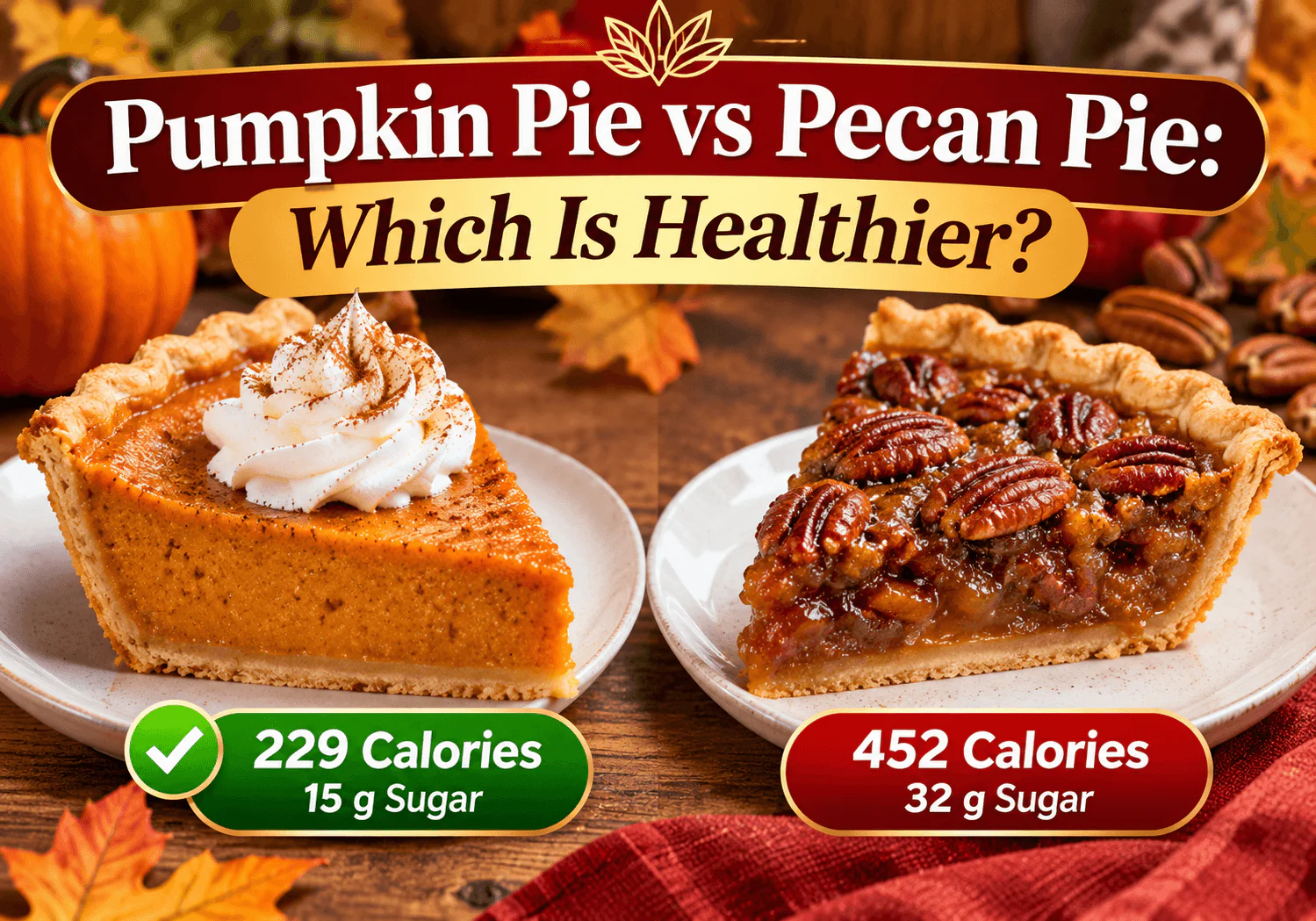
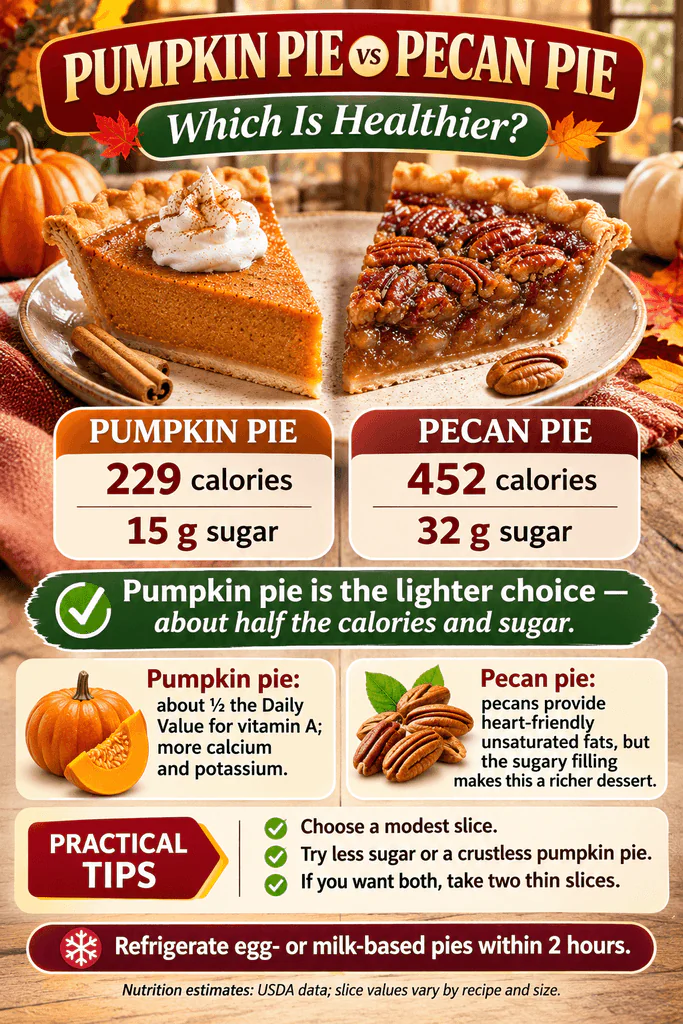
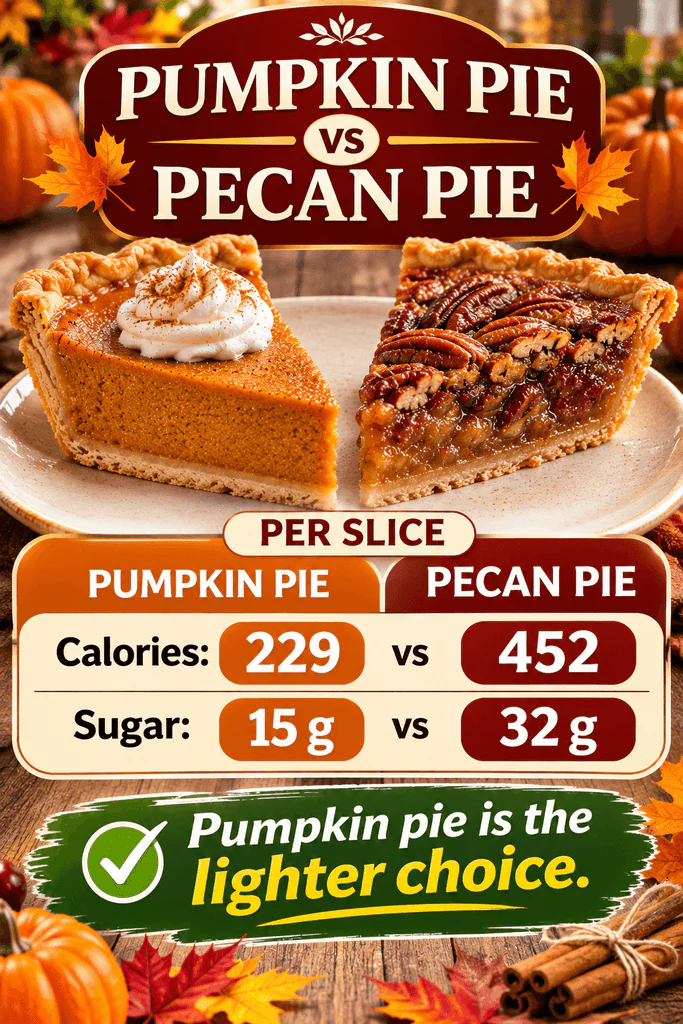
- Per slice, the gap is bigger. A slice of pecan pie has about 452 calories and 32 grams of sugar, versus about 229 calories and 15 grams for pumpkin pie.
- Pumpkin pie is rich in vitamin A. One slice provides about half the Daily Value.
- Pecan pie has some upsides. Pecans add healthy monounsaturated fat, and pecan research shows cholesterol benefits.
- Both are desserts. Each contains added sugar, so portion size matters most.
- Refrigerate both. Pies made with eggs or milk shouldn’t sit out longer than two hours.
Pumpkin Pie vs Pecan Pie: What’s the Difference?
Both pies are Thanksgiving classics, but they’re built very differently.
Pumpkin pie is a custard pie. The filling is made from pumpkin purée, eggs, milk or evaporated milk, sugar, and warm spices like cinnamon, nutmeg, and ginger. Most of the filling is pumpkin and dairy, which keeps it relatively light.
Pecan pie is a sugar pie. The filling is made from eggs, butter, sugar, and usually corn syrup, topped with a thick layer of pecans. That sweet, sticky base is what gives pecan pie its caramel-like flavor, and it’s also where most of its calories come from.
Both pies sit in a flaky pastry crust, which adds refined flour and fat. So the main difference in the pumpkin pie vs pecan pie matchup comes from the filling.
Pumpkin Pie vs Pecan Pie: Taste and Texture
Before the numbers, it helps to know why people feel so strongly about this choice. The pumpkin pie vs pecan pie debate is as much about flavor as it is about nutrition.
Pumpkin pie is smooth, creamy, and gently sweet, with an earthy pumpkin flavor and warm spices. Pecan pie is dense, sticky, and very sweet, with a caramel-like filling and a crunchy, toasty nut topping. Many families serve both, which is why the pumpkin pie vs pecan pie question comes up every November.
Taste is personal, and there’s no wrong answer. But if you’re choosing based on health, the nutrition facts below make the difference clear.
Pumpkin Pie vs Pecan Pie: Nutrition Facts Compared
Here’s how 100 grams of commercially prepared pumpkin pie compares with 100 grams of commercially prepared pecan pie, based on USDA FoodData Central data for pumpkin pie and pecan pie.
| Nutrient (per 100 g) | Pumpkin Pie | Pecan Pie | Lighter or Better |
| Calories | 243 | 407 | Pumpkin |
| Total fat | 9.8 g | 16.7 g | Pumpkin |
| Saturated fat | 2.0 g | 2.7 g | Pumpkin |
| Cholesterol | 26 mg | 42 mg | Pumpkin |
| Carbohydrates | 34.8 g | 59.6 g | Pumpkin |
| Sugars | 18.9 g | 25.2 g | Pumpkin |
| Fiber | 1.8 g | 2.1 g | About equal |
| Protein | 3.9 g | 4.5 g | About equal |
| Sodium | 239 mg | 275 mg | Pumpkin |
| Potassium | 167 mg | 99 mg | Pumpkin |
| Calcium | 64 mg | 22 mg | Pumpkin |
| Iron | 0.9 mg | 0.9 mg | Tie |
| Vitamin A | 448 mcg RAE (50% DV) | Very little | Pumpkin |
Values are for commercially prepared pies from USDA’s SR Legacy database and rounded. Homemade pies vary with the recipe.
What About a Typical Slice?
Most people don’t eat pie by the gram, so here’s a look at one slice (1/6 of an 8-inch pie). One slice of pumpkin pie has about 229 calories, 10 grams of fat, and 15 grams of sugar. One slice of pecan pie has about 452 calories, 21 grams of fat, and 32 grams of sugar.
| Per Slice (1/6 of 8-inch pie) | Pumpkin Pie | Pecan Pie |
| Calories | 229 | 452 |
| Fat | 10.4 g | 20.9 g |
| Saturated fat | 2.0 g | 4.0 g |
| Carbohydrates | 29.8 g | 64.6 g |
| Sugars | 15.1 g | 31.9 g |
| Fiber | 2.9 g | 4.0 g |
| Protein | 4.3 g | 4.5 g |
| Sodium | 307 mg | 479 mg |
In other words, a slice of pecan pie has roughly twice the calories, fat, carbs, and sugar of a slice of pumpkin pie. Slice sizes vary at home, so these numbers are a guide rather than an exact count.
Pumpkin Pie vs Pecan Pie: Calories
Calories are the biggest difference in the pumpkin pie vs pecan pie comparison, and they’re the first thing most people want to know. Per 100 grams, pecan pie has 407 calories, while pumpkin pie has 243 calories. That’s about 67% more for pecan pie.
The reason is simple. Pecan pie is packed with sugar, corn syrup, butter, and nuts, which are all calorie-dense. Pumpkin pie’s filling is mostly pumpkin and milk, which contain more water and fewer calories.
Holiday calories can add up. An NIH study found that adults gained about 0.8 pound between Thanksgiving and New Year’s, and most didn’t lose it afterward. Choosing the lighter pie is one easy way to keep holiday treats in check.
Pumpkin Pie vs Pecan Pie: Sugar and Carbs
Both pies are sweet, but pecan pie wins the sugar contest by a wide margin. A slice of pecan pie has about 32 grams of sugar, compared with about 15 grams in pumpkin pie, according to University Hospitals’ nutrition data.
The 2025–2030 Dietary Guidelines for Americans take a stricter line on added sugar. According to Harvard’s summary of the new guidelines, no single meal should contain more than 10 grams of added sugar. Neither pie fits that target, but pumpkin pie comes much closer.
In the pumpkin pie vs pecan pie matchup, carbs follow the same pattern. A slice of pecan pie has more than twice the carbohydrates of pumpkin pie, about 65 grams versus 30 grams. For people watching their blood sugar, that difference matters.
The Health Benefits of Pumpkin Pie
Pumpkin pie isn’t health food, but it does bring some real nutrition to the table. This is where the pumpkin pie vs pecan pie gap is widest.
Rich in Vitamin A
Pumpkin is loaded with beta-carotene, which the body turns into vitamin A. The NIH lists commercially prepared pumpkin pie among top food sources of vitamin A, with 488 mcg per piece, or 54% of the Daily Value. Vitamin A supports normal vision, the immune system, and cell growth.
Pecan pie, by contrast, provides very little vitamin A. Learn more about pumpkin and vitamin A.
More Calcium and Potassium
Thanks to the milk in its custard, pumpkin pie has about three times the calcium of pecan pie, at 64 mg versus 22 mg per 100 grams. It also has more potassium, based on USDA data.
Lower in Calories and Sugar
Because the filling is mostly pumpkin and milk, pumpkin pie gives you a satisfying dessert for about half the calories and sugar of pecan pie. To learn more about the main ingredient, see whether pumpkin is healthy and if canned pumpkin is healthy.
The Health Benefits of Pecan Pie
Pecan pie is the richer dessert, but it isn’t all empty calories. Here’s what it brings to the pumpkin pie vs pecan pie comparison.
Pecans Offer Healthy Fats
Pecans are rich in monounsaturated fat. USDA data show that pecans contain about 41 grams of monounsaturated fat per 100 grams, along with magnesium, manganese, copper, and zinc. Harvard’s Nutrition Source links eating nuts regularly with a lower risk of heart disease.
Pecan Research Shows Cholesterol Benefits
A 2021 randomized trial in the Journal of Nutrition tested pecans in 52 adults at higher risk of heart disease. Those who ate about 68 grams of pecans daily for eight weeks lowered their total cholesterol by about 5% and their LDL (“bad”) cholesterol by 6% to 9%, according to the University of Georgia.
Keep in mind that a slice of pecan pie contains far fewer pecans than that, along with a lot of sugar. Harvard notes that nuts covered in sugar are probably not as good as plain nuts. So the benefits of pecans don’t fully carry over to pecan pie.
A Little More Fiber Per Slice
A slice of pecan pie has slightly more fiber than pumpkin pie, about 4 grams versus 3 grams, mainly from the nuts. Pumpkin itself also contains fiber, though. See whether pumpkin has fiber. Learn more about whether pecans are healthy.
Pumpkin Pie vs Pecan Pie: Which Is Healthier?
When you put it all together, pumpkin pie is the healthier choice for most people. It has about half the calories, fat, carbs, and sugar of pecan pie per slice, and it provides a good dose of vitamin A and calcium.
Pecan pie does have healthy fats from the nuts, but the sugary filling outweighs those benefits for most people. If you love pecan pie, you don’t have to give it up. Just enjoy a smaller slice.
In the pumpkin pie vs pecan pie debate, the healthiest pie is the one you enjoy mindfully, in a reasonable portion. For more ideas, see our healthy Thanksgiving menu.
Who Should Choose Pumpkin Pie vs Pecan Pie?
When it comes to pumpkin pie vs pecan pie, your best choice depends on your health needs.
Pumpkin pie may be the better choice if you:
- Have diabetes or prediabetes and want fewer carbs and less sugar.
- Are watching your calories or weight.
- Want more vitamin A and calcium.
- Have a tree nut allergy (though always check ingredients).
Pecan pie may fit if you:
- Have no blood sugar concerns and want an occasional treat.
- Plan to eat a smaller slice to balance the calories.
- Want a dessert with some healthy fats from nuts.
Pumpkin Pie vs Pecan Pie for Diabetes
For people with diabetes, pumpkin pie is usually the safer pick because it has about half the carbs. The CDC suggests planning your carb choices in advance. If you want dessert, cut back on other carbs like rolls or potatoes during the meal.
The CDC also notes that you can still enjoy your favorite holiday treats in moderation. For lower-sugar ideas, see our pumpkin recipes for diabetics.
Risks and Who Should Be Cautious
Both pies are treats, and a few groups should take extra care whichever side of the pumpkin pie vs pecan pie question they land on.
Food allergies. Pecan pie contains tree nuts, and both pies usually contain eggs, wheat, and often milk. The FDA lists all four among the nine major food allergens. If you have celiac disease, check whether pumpkin pie is gluten-free before serving.
Sodium. Store-bought pies contain more sodium than you might expect, about 307 mg per slice for pumpkin pie and 479 mg for pecan pie. The FDA’s Daily Value for sodium is less than 2,300 mg per day.
Food safety. Pies made with eggs and milk can spoil if left out. University of Illinois Extension advises that pumpkin, custard, and cream pies should not be out of the refrigerator for more than two hours. Pumpkin pie can be kept up to four days in the fridge. Homemade pecan pie also contains eggs, so refrigerate it too.
How Much Pie Should You Eat?
Portion size matters more than the pumpkin pie vs pecan pie choice itself. There’s no set limit, but one standard slice (1/6 of an 8-inch pie) is a reasonable portion for most adults. If you want to try both pies, cut two thin slices instead of two full ones.
Here are a few simple portion tips:
- Cut smaller slices. Slicing pies into 8 or 10 pieces instead of 6 cuts calories per slice.
- Share a slice. Split a piece of pecan pie with someone.
- Wait before seconds. The CDC says it takes at least 20 minutes for your brain to realize you’re full.
- Take a slice home. Ask your host if you can save a treat for later instead of eating everything at once.
How to Make Pumpkin Pie and Pecan Pie Healthier
Whichever side you take in the pumpkin pie vs pecan pie debate, a few recipe tweaks can make a big difference.
Lighter Pumpkin Pie Tips
- Cut the sugar. Use a little less sugar than the recipe calls for. The spices carry plenty of flavor.
- Use low-fat evaporated milk. It keeps the custard creamy with less fat.
- Try a crustless pie. Baking the filling in ramekins skips the refined crust.
- Go light on whipped cream. A small dollop is plenty.
Lighter Pecan Pie Tips
- Reduce the corn syrup. Some recipes use maple syrup or less sweetener overall. Learn whether maple syrup is healthy or if brown sugar is healthy.
- Make mini pies. Baking in muffin tins builds in portion control.
- Use more pecans, less filling. A thinner filling with more nuts cuts sugar.
- Cut thinner slices. Pecan pie is very rich, so a smaller slice still satisfies.
For more seasonal baking ideas, browse our pumpkin recipe roundup.
Pumpkin Pie vs Pecan Pie: Myths vs Facts
| Myth | Fact |
| Pecan pie is healthy because it’s full of nuts. | Pecan pie has about twice the calories and sugar of pumpkin pie per slice. |
| Pumpkin pie has no nutritional value. | One piece provides about 54% of the Daily Value for vitamin A. |
| Store-bought pies don’t contain much salt. | A slice of pecan pie has about 479 mg of sodium. |
| People with diabetes can’t eat pie. | The CDC says you can enjoy holiday treats in moderation with planning. |
| Pumpkin pie is fine on the counter overnight. | Custard pies shouldn’t sit out more than two hours. |
How Pie Fits a Healthy Lifestyle
One slice of pie won’t make or break your health. What matters most is your overall eating pattern across the year. The pumpkin pie vs pecan pie choice is just one small part of that picture.
Enjoy dessert as part of a balanced holiday meal, with plenty of vegetables and lean protein. Take a walk after dinner, drink water, and get back to your usual routine the next day. If you want a nutritious snack while you bake, roasted pumpkin seeds are a good option. See whether pumpkin seeds are healthy.
Frequently Asked Questions
Which is healthier, pumpkin pie or pecan pie?
Pumpkin pie is usually healthier. A slice has about 229 calories and 15 grams of sugar, while pecan pie has about 452 calories and 32 grams of sugar. Pumpkin pie also provides vitamin A and calcium. Pecan pie has healthy fats from nuts, but its sugary filling outweighs that benefit for most people.
Why do some people prefer pecan pie over pumpkin pie?
Many people love pecan pie for its rich, caramel-like sweetness and crunchy nuts. Pumpkin pie has a softer, custard texture with warm spice flavors. Taste is personal, so neither pie is “better” in flavor. From a nutrition standpoint, though, pecan pie has about twice the calories and sugar per slice.
What is the unhealthiest pie?
Pies loaded with sugar, syrup, and butter tend to be the highest in calories. Between these two classics, pecan pie is the heavier choice, with about 407 calories per 100 grams compared with 243 for pumpkin pie, based on USDA data. Cream-topped and candy-filled pies can also be very high in calories.
Is pumpkin pie good for you?
Pumpkin pie is still a dessert, but it offers more nutrition than many sweets. One piece provides about half the Daily Value for vitamin A, plus some calcium and potassium. It also has fewer calories and less sugar than pecan pie. Enjoy one slice as part of a balanced meal.
Can people with diabetes eat pumpkin pie or pecan pie?
Yes, in moderation. Pumpkin pie is usually the better pick because it has about half the carbs of pecan pie. The CDC suggests planning carb choices ahead and cutting back on other carbs if you want dessert. A smaller slice and a short walk after eating can also help.
Do pumpkin pie and pecan pie need to be refrigerated?
Yes. Pies made with eggs or milk, like pumpkin pie and homemade pecan pie, shouldn’t sit out more than two hours, according to University of Illinois Extension. Store them in the refrigerator, where pumpkin pie keeps for up to four days. Some store-bought pecan pies are shelf-stable, so check the label.
Conclusion: Pumpkin Pie vs Pecan Pie, the Final Verdict
In the pumpkin pie vs pecan pie comparison, pumpkin pie is the healthier choice for most people. It has about half the calories, fat, carbs, and sugar of pecan pie per slice, and it delivers a good dose of vitamin A. Pecan pie offers healthy fats from nuts, but its sugary filling makes it a richer treat.
You don’t have to skip your favorite. Enjoy a modest slice, try lighter recipes, and focus on the people around the table. That’s the real secret to a healthy holiday dessert.
Medical disclaimer: This article is for general information only and is not a substitute for professional medical advice, diagnosis, or treatment. If you have diabetes, food allergies, heart disease, or another health condition, talk with your doctor or a registered dietitian about how holiday desserts fit your eating plan.
3. References
- USDA Agricultural Research Service. Pie, pumpkin, commercially prepared (FDC ID 172787). FoodData Central, SR Legacy. https://fdc.nal.usda.gov/fdc-app.html#/food-details/172787/nutrients
- USDA Agricultural Research Service. Pie, pecan, commercially prepared (FDC ID 175021). FoodData Central, SR Legacy. https://fdc.nal.usda.gov/fdc-app.html#/food-details/175021/nutrients
- USDA Agricultural Research Service. Nuts, pecans (FDC ID 170182). FoodData Central, SR Legacy. https://fdc.nal.usda.gov/fdc-app.html#/food-details/170182/nutrients
- University Hospitals Health & Wellness Library. Nutrition Facts: Pie, pumpkin, commercially prepared, 1 piece (1/6 of 8″ pie). https://www.uhhospitals.org/health-information/health-and-wellness-library/nutrition-facts/article/nutritionfacts-v1/pie-pumpkin-commercially-prepared-1-piece-16-of-8-pie [VERIFY]
- University Hospitals Health & Wellness Library. Nutrition Facts: Pie, pecan, commercially prepared, 1 piece (1/6 of 8″ pie). https://www.uhhospitals.org/health-information/health-and-wellness-library/article/nutritionfacts-v1/pie-pecan-commercially-prepared-1-piece-16-of-8-pie [VERIFY]
- NIH Office of Dietary Supplements. Vitamin A and Carotenoids: Fact Sheet for Health Professionals. https://ods.od.nih.gov/factsheets/VitaminA-HealthProfessional/
- Harvard T.H. Chan School of Public Health, The Nutrition Source. Dietary Guidelines for Americans 2025–2030 (summary). January 9, 2026. https://nutritionsource.hsph.harvard.edu/2026/01/09/dietary-guidelines-for-americans-2025-2030/
- Harvard T.H. Chan School of Public Health, The Nutrition Source. Nuts for the heart. https://nutritionsource.hsph.harvard.edu/food-features/nuts-for-the-heart/
- Guarneiri LL, Paton CM, Cooper JA. Pecan-enriched diets alter cholesterol profiles and triglycerides in adults at risk for cardiovascular disease in a randomized, controlled trial. Journal of Nutrition. 2021. Summarized by the University of Georgia, August 23, 2021: https://news.uga.edu/pecan-enriched-diet-reduces-cholesterol/ [VERIFY: add the DOI]
- National Institute of Child Health and Human Development (NIH). Holiday Weight Gain Slight, But May Last a Lifetime. March 22, 2000. https://www.nichd.nih.gov/newsroom/releases/holidayweightgain
- Centers for Disease Control and Prevention. Healthy Eating and the Holidays (Diabetes). 2024. https://www.cdc.gov/diabetes/healthy-eating/5-healthy-eating-tips-holidays.html
- U.S. Food and Drug Administration. Food Allergies. https://www.fda.gov/food/nutrition-food-labeling-and-critical-foods/food-allergies
- U.S. Food and Drug Administration. Sodium in Your Diet. 2024. https://www.fda.gov/food/nutrition-education-resources-materials/sodium-your-diet
- Peterson L. Do I need to refrigerate the pie? University of Illinois Extension. November 22, 2019. https://extension.illinois.edu/news-releases/do-i-need-refrigerate-pie