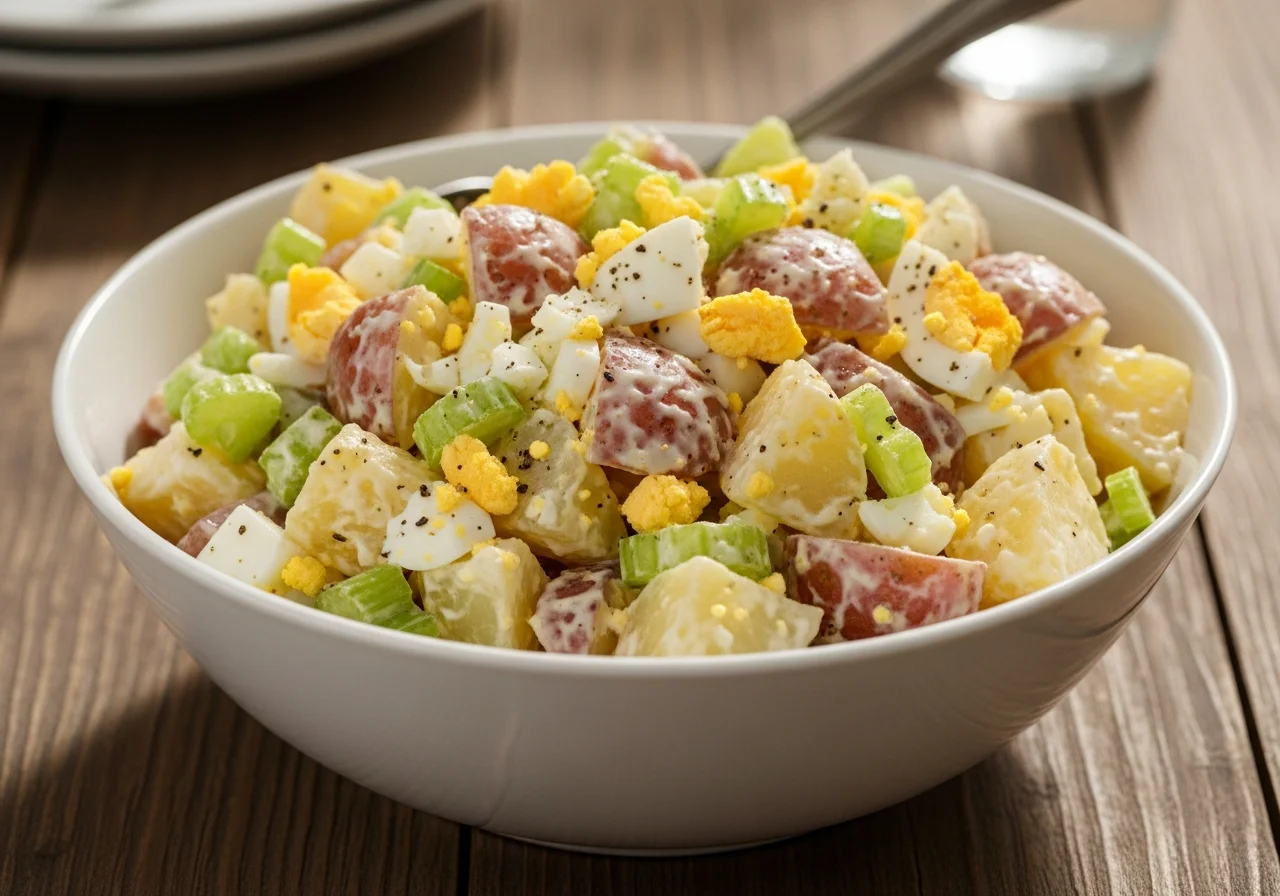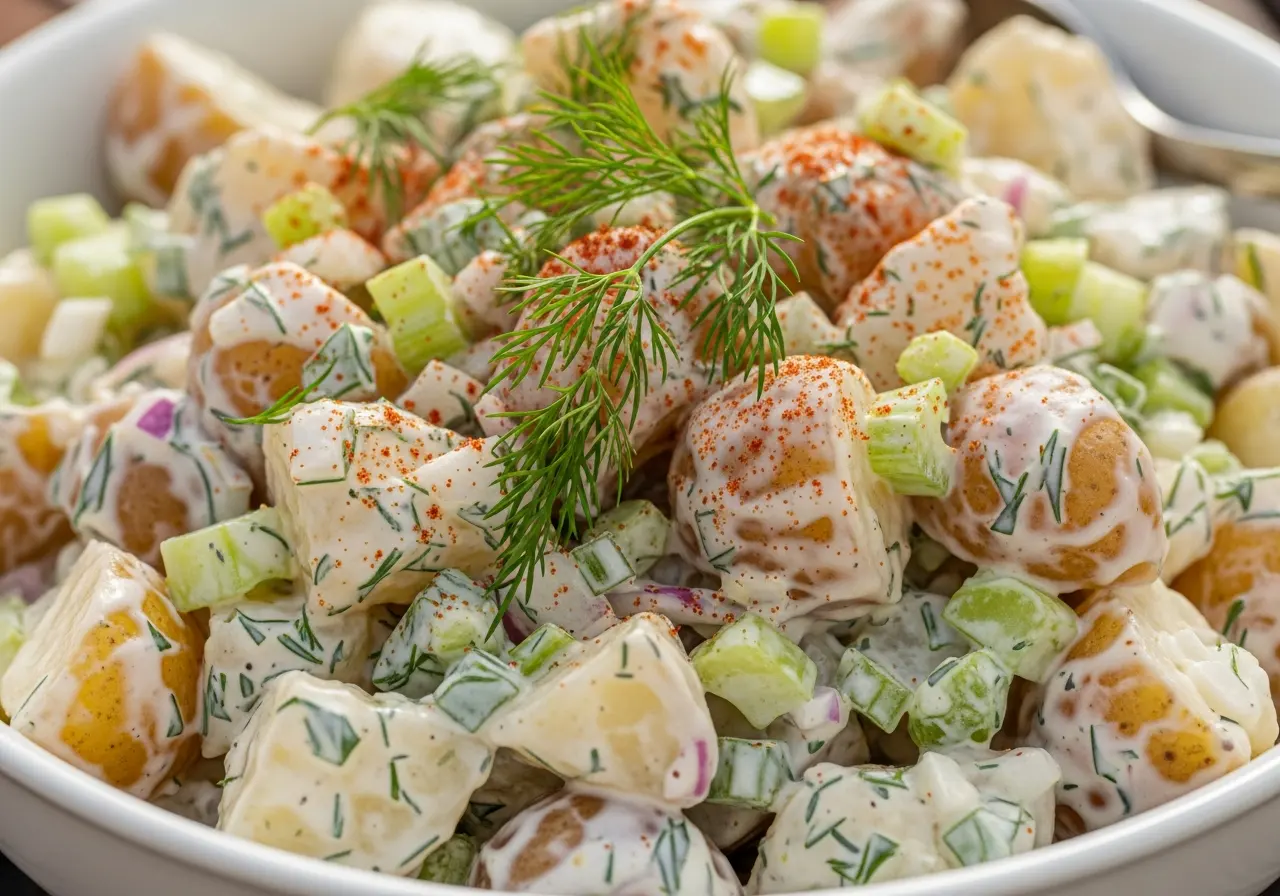
Knowing how to make potato salad well comes down to a few small decisions most recipes skip: which potato you choose, how you cook it, and when you add the dressing. Get those right and you’ll have creamy, well-seasoned potato salad with tender potatoes that hold their shape, not a bland, mushy bowl.
This guide walks you through the whole process, from picking potatoes to chilling and storing safely. You’ll get a classic master recipe, a simple dressing formula you can adapt, troubleshooting tips, lighter swaps, and links to regional styles like German, French, and Japanese potato salad.
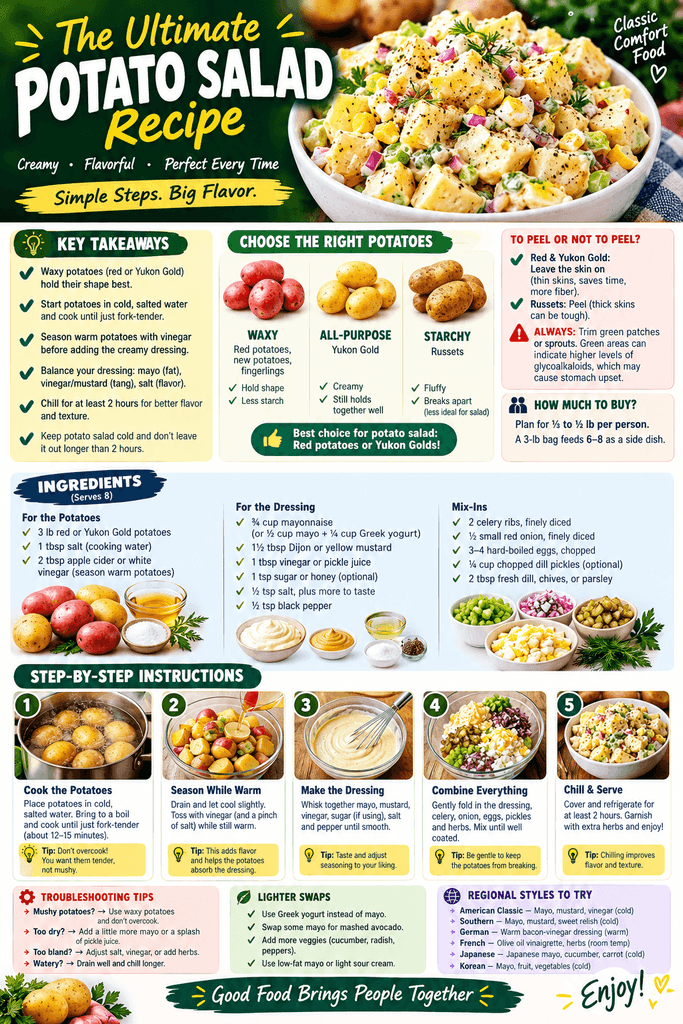
Key Takeaways
- Waxy potatoes like red or Yukon Gold hold their shape best.
- Start potatoes in cold, salted water and cook until just fork-tender.
- Season the warm potatoes with vinegar before adding the creamy dressing.
- A good dressing balances fat (mayo), tang (vinegar or mustard), and salt.
- Chilling for at least 2 hours improves flavor and texture.
- Keep potato salad cold and don’t leave it out longer than 2 hours.
What Is Potato Salad?
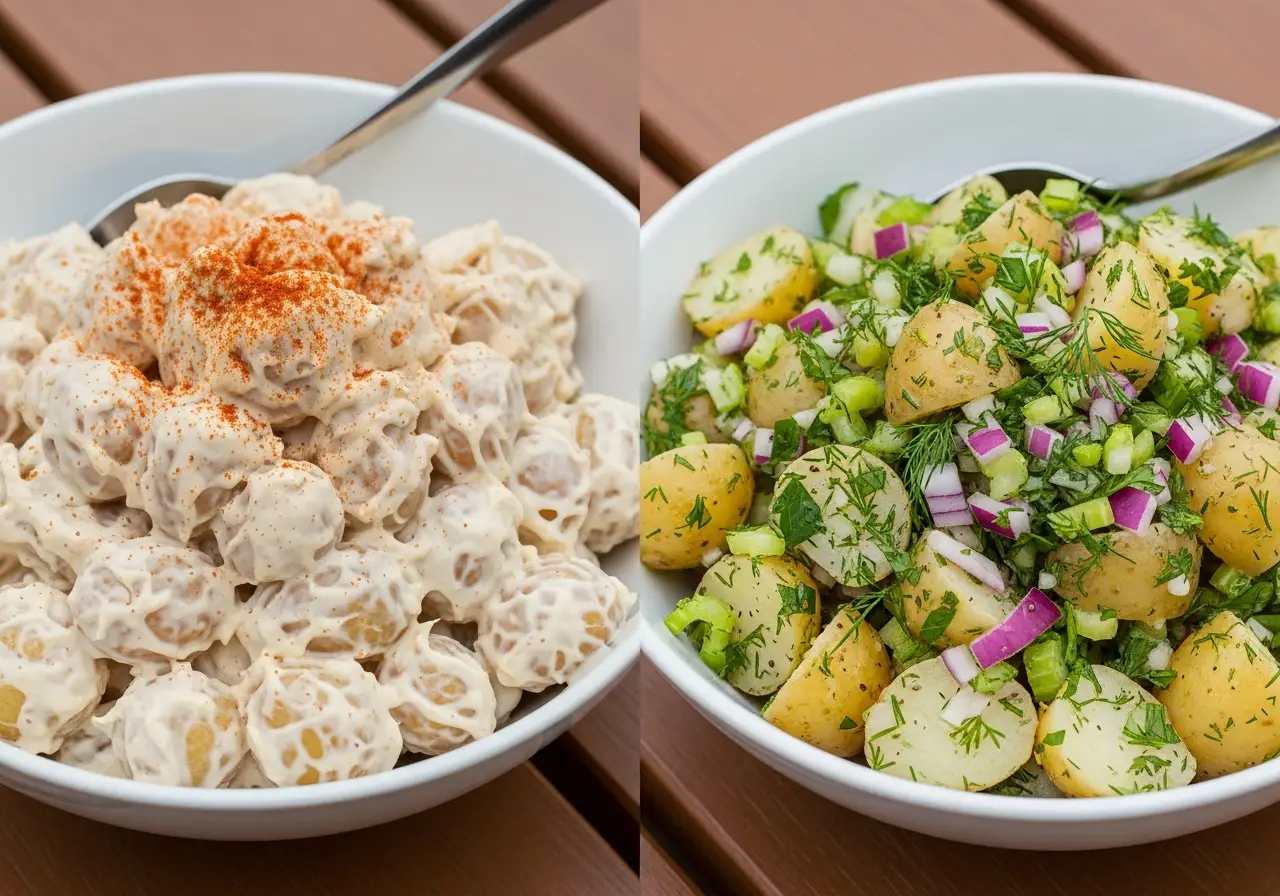
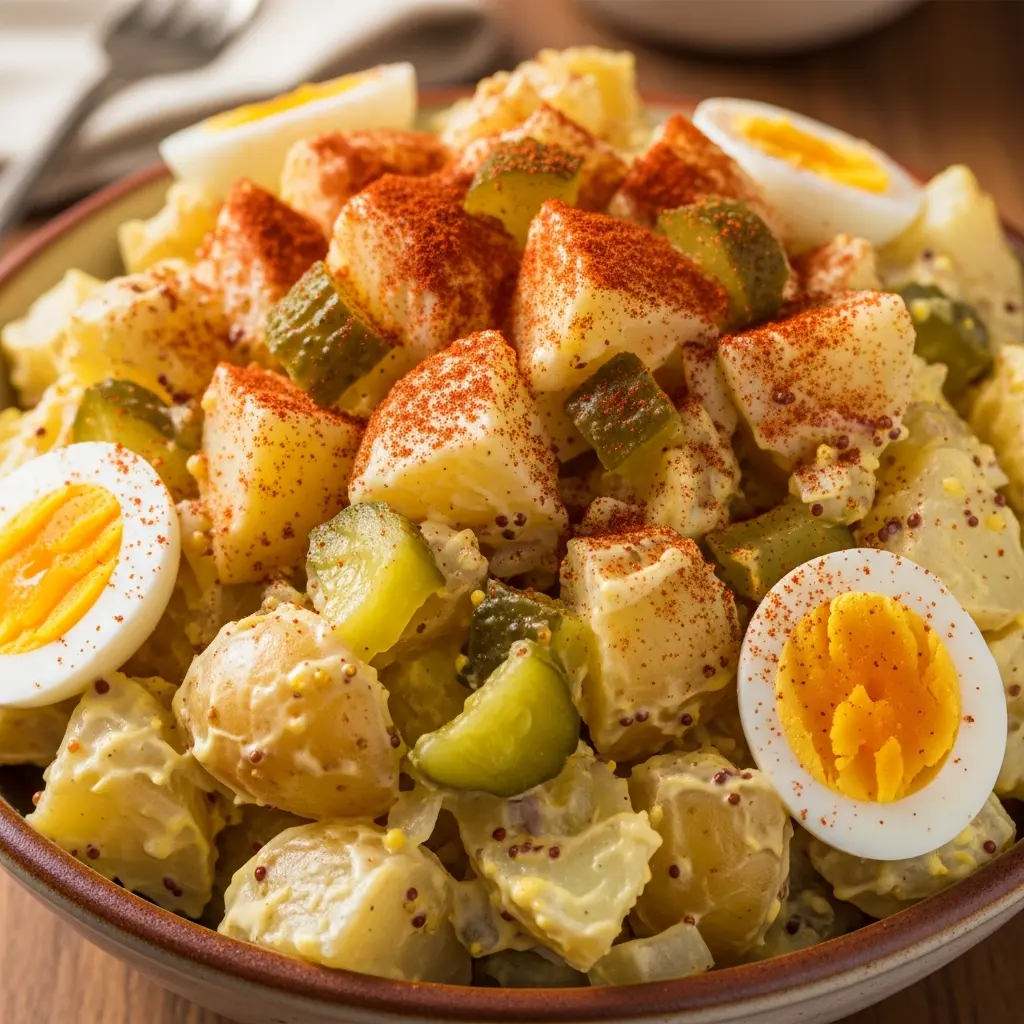
Potato salad is cooked potatoes tossed with a dressing and mix-ins, served cold or at room temperature. The American classic uses mayonnaise, mustard, celery, onion, and often hard-boiled eggs. Other styles skip the mayo entirely.
The Main Styles
| Style | Dressing | Served | Learn more |
| American classic | Mayo, mustard, vinegar | Cold | Classic potato salad recipe |
| Southern | Mayo, mustard, sweet relish | Cold | Southern potato salad |
| German | Warm bacon-vinegar dressing | Warm | German potato salad |
| French | Olive oil vinaigrette, herbs | Room temp | French potato salad |
| Japanese | Japanese mayo, cucumber, carrot | Cold | Japanese potato salad |
| Korean | Mayo, fruit, vegetables | Cold | Korean potato salad |
This guide focuses on the American-style technique, but the steps for choosing and cooking potatoes apply to all of them.
Step 1: Choose the Right Potatoes
The potato you pick decides your texture before you even turn on the stove.
Waxy vs. Starchy Potatoes
- Waxy potatoes (red potatoes, new potatoes, fingerlings) have less starch and more moisture. They stay firm and hold their shape when boiled and tossed.
- All-purpose potatoes (Yukon Gold) fall in the middle. They’re creamy but still hold together well.
- Starchy potatoes (russets) are fluffy and break apart easily. Great for mashing, less ideal for salad unless you want a softer, partly mashed texture.
For most people, red potatoes or Yukon Golds are the best choice. Our guide to the best potatoes for potato salad compares varieties in more detail.
To Peel or Not to Peel
Red and Yukon Gold potatoes have thin skins you can leave on. Skin-on potatoes save time and keep more fiber. Peel russets, since their thick skins get tough.
Trim away any green patches or sprouts. Green areas on potatoes can indicate higher levels of natural compounds called glycoalkaloids, which can cause stomach upset in large amounts.
How Much to Buy
Plan on about ⅓ to ½ pound of potatoes per person. A 3-pound bag feeds 6 to 8 as a side dish.
Step 2: Gather Your Ingredients
Here’s what you’ll need for a classic batch that serves 8.
For the Potatoes
- 3 lb red or Yukon Gold potatoes
- 1 tablespoon salt (for the cooking water)
- 2 tablespoons apple cider vinegar or white vinegar (for seasoning warm potatoes)
For the Dressing
- ¾ cup mayonnaise (or ½ cup mayo plus ¼ cup Greek yogurt)
- 1½ tablespoons Dijon or yellow mustard
- 1 tablespoon vinegar or pickle juice
- 1 teaspoon sugar or honey (optional)
- ½ teaspoon salt, plus more to taste
- ½ teaspoon black pepper
Mix-Ins
- 2 celery ribs, finely diced
- ½ small red onion, finely diced
- 3–4 hard-boiled eggs, chopped
- ¼ cup chopped dill pickles (optional)
- 2 tablespoons fresh dill, chives, or parsley
If you’re making the eggs yourself, our guide on how to make egg salad covers how to hard-boil eggs with tender whites and no gray ring. The USDA recommends cooking eggs until both yolk and white are firm and refrigerating them promptly.
Step 3: How to Cook Potatoes for Potato Salad
This is the step that makes or breaks the dish.
Cut Evenly
Cut potatoes into ¾-inch chunks. Small potatoes can be halved or quartered. Even pieces cook at the same rate, so you won’t end up with some mushy and some raw.
Some cooks prefer to boil potatoes whole and cut them after cooking. That keeps them firmer but takes longer and makes them harder to season. For most home cooks, cutting first works well.
Start in Cold Water
Put the potatoes in a large pot and cover with cold water by about an inch. Add 1 tablespoon salt. Starting in cold water lets the outside and center heat together. Dropping potatoes into boiling water cooks the outside before the middle is done, which leads to crumbly edges.
Simmer, Don’t Boil Hard
Bring the water to a boil, then reduce the heat to a steady simmer. A hard, rolling boil knocks the potatoes around and breaks them apart.
How Long to Boil Potatoes for Potato Salad
For ¾-inch chunks, simmer about 10–15 minutes after the water boils. Whole small potatoes take 15–20 minutes. Start testing at 10 minutes.
The potatoes are done when a fork or knife slides in with slight resistance. They should be cooked through but not falling apart. If a piece crumbles when you pierce it, it’s overcooked.
Drain and Spread Out
Drain well and spread the potatoes in a single layer on a sheet pan. This lets steam escape so they don’t get waterlogged, and it helps them cool faster.
Step 4: Season the Potatoes While Warm
Here’s the step most recipes skip, and it makes a big difference in flavor.
While the potatoes are still warm, sprinkle 2 tablespoons of vinegar over them and toss gently. Add a pinch of salt. Warm potatoes absorb seasoning much better than cold ones, so the flavor reaches the center instead of sitting on the surface.
This step also has a possible health bonus. In a small clinical study, boiled potatoes that were chilled and served with a vinaigrette produced a lower blood sugar response than freshly boiled potatoes, according to the European Journal of Clinical Nutrition. It’s one study in healthy adults, but it’s a good reason to keep vinegar in your recipe.
Let the potatoes cool for 15–20 minutes, until just warm or at room temperature, before adding the creamy dressing. If you add mayo to hot potatoes, it can turn oily and separate.
Step 5: Make the Potato Salad Dressing
The Dressing Formula
A great potato salad dressing balances four things:
- Fat: mayonnaise, Greek yogurt, sour cream, or olive oil
- Acid: vinegar, pickle juice, or lemon juice
- Sharpness: mustard
- Seasoning: salt, pepper, and a little sweetness if you like
A reliable ratio is about ¾ cup creamy base + 1½ tablespoons mustard + 1 tablespoon acid for 3 pounds of potatoes. Adjust from there.
Mix It
Whisk all dressing ingredients in a large bowl. Taste it on its own. It should taste slightly too strong, because the potatoes will mellow it.
Choosing Your Creamy Base
- All mayo: Classic, rich, and creamy.
- Half mayo, half Greek yogurt: Lighter and tangier, with more protein.
- All Greek yogurt: Lightest option. Add a bit more mustard and a pinch of sweetener for balance.
- Olive oil vinaigrette: No mayo at all, like French or German styles.
Wondering how mayo fits a healthy diet? Our article on whether mayonnaise is healthy compares regular, light, and avocado-oil versions.
Step 6: Combine and Chill
- Add the cooled potatoes, celery, onion, pickles, and herbs to the dressing.
- Fold gently with a rubber spatula. Stirring hard breaks the potatoes.
- Add the chopped eggs last and fold once or twice more.
- Taste and adjust salt, pepper, and vinegar.
- Cover and refrigerate for at least 2 hours, or overnight.
Chilling lets the flavors blend and the dressing soak in. It also changes the potatoes themselves. When cooked potatoes cool, some of their starch converts to resistant starch, which behaves more like fiber. A USDA-supported study found chilled potatoes had about 4.3 g of resistant starch per 100 g, compared with about 3.1 g in potatoes served hot (Raatz et al., Food Chemistry, 2016.
Before serving, taste again. Cold dulls flavor, so you may need a pinch more salt or a splash of vinegar.
What Potato Salad Offers Nutritionally
Potatoes are more nutritious than their reputation suggests. They’re a good source of potassium, which supports healthy fluid balance and muscle function. The NIH Office of Dietary Supplements notes that many Americans don’t get enough. Potatoes also provide vitamin C, according to the NIH vitamin C fact sheet.
The dressing is where most of potato salad’s calories and fat come from. Regular mayonnaise is calorie-dense, and Harvard’s Nutrition Source notes that while unsaturated fats like those in mayo’s vegetable oil are better than saturated fats, calories still add up.
Potatoes are also a starchy food. Harvard’s Nutrition Source on potatoes explains that they’re digested quickly and can raise blood sugar, which is why moderate portions matter. For a full breakdown, read our guide to whether potato salad is healthy.
How to Make Potato Salad Lighter
Want a lighter bowl without losing the creamy comfort? Try these swaps.
- Use half Greek yogurt. You keep the creaminess while cutting calories.
- Leave the skins on. More fiber and less prep.
- Add more vegetables. Celery, radishes, cucumber, bell pepper, peas, or spinach add crunch and volume.
- Use more vinegar and mustard. They add flavor without many calories.
- Go easy on salty add-ins. Bacon, pickles, and relish add sodium quickly. The FDA recommends adults limit sodium to less than 2,300 mg per day.
- Keep eggs. They add protein. For most healthy people, eggs fit a balanced diet, according to Harvard’s review of eggs.
For a version that puts all of these ideas together, try our lighter red potato salad recipe.
Who Should Take Extra Care
People With Celiac Disease or Gluten Sensitivity
Potatoes are naturally gluten-free, and so are most potato salad ingredients. But malt vinegar, some seasoning blends, and some processed meats can contain gluten. The Mayo Clinic lists malt vinegar among ingredients to avoid on a gluten-free diet. Our guide on whether potato salad is gluten-free covers what to check.
People Managing Blood Sugar
Keep portions to about ½ cup, use a vinegar-forward dressing, and pair potato salad with protein and non-starchy vegetables. Talk with your doctor or dietitian about how it fits your eating plan.
Anyone Serving a Crowd Outdoors
Potato salad is a classic food safety risk at picnics because it’s often left out. The USDA Food Safety and Inspection Service warns that bacteria grow fastest between 40°F and 140°F. Don’t leave potato salad out more than 2 hours, or 1 hour when it’s above 90°F. This matters most for pregnant women, young children, older adults, and anyone with a weakened immune system.
How to Store Potato Salad Safely
- Refrigerate quickly. Put leftovers in the fridge within 2 hours of serving.
- Use airtight containers. This keeps the salad fresh and prevents it from absorbing fridge odors.
- Keep the fridge cold. The FDA recommends 40°F or below.
- Eat within 3–4 days. The USDA advises using refrigerated leftovers within 3 to 4 days.
- Don’t freeze it. Potatoes turn watery and grainy, and the dressing separates.
- Toss if in doubt. A sour smell, slimy texture, or separated liquid means it’s time to throw it out.
At picnics, set the bowl inside a larger bowl of ice and serve with a dedicated spoon.
Troubleshooting: Fixing Common Potato Salad Problems
| Problem | Likely cause | Fix |
| Mushy potatoes | Overcooked, starchy potatoes, or hard stirring | Use waxy potatoes, test early, fold gently |
| Bland flavor | Under-salted water or no warm seasoning | Salt the water, add vinegar to warm potatoes, re-season cold |
| Watery salad | Potatoes not drained or cooled well | Spread on a sheet pan to steam dry |
| Oily dressing | Mayo added to hot potatoes | Let potatoes cool to warm before mixing |
| Dry salad the next day | Potatoes absorbed the dressing | Stir in a spoonful of mayo, yogurt, or pickle juice |
| Hard centers | Uneven pieces or started in boiling water | Cut evenly, start in cold water |
Variations to Try
Once you know how to make potato salad, you can take it in many directions.
- Loaded baked potato: Add crisp bacon, shredded cheddar, green onion, and a little sour cream.
- Dill pickle: Add extra chopped dill pickles and a splash of pickle brine to the dressing.
- Mediterranean: Swap mayo for olive oil vinaigrette and add olives, cucumber, feta, and parsley.
- Mustard-forward: Use whole-grain Dijon and skip the eggs for a sharper, lighter salad.
- Herb garden: Use a mix of dill, chives, parsley, and tarragon.
- Warm German-style: Toss warm potatoes with a bacon-vinegar dressing and serve immediately.
- Asian-inspired: Try the cucumber-and-carrot style of Japanese potato salad.
Myths vs. Facts
| Myth | Fact |
| “Any potato works for potato salad.” | Waxy and all-purpose potatoes hold their shape. Starchy russets fall apart more easily. |
| “You must peel potatoes.” | Thin-skinned potatoes like reds can keep their skins, which adds fiber and texture. |
| “Mayo is what makes potato salad spoil.” | Commercial mayo is acidic. Spoilage usually comes from bacteria growing when food sits too long at warm temperatures. |
| “Potato salad is best served right away.” | Chilling for at least 2 hours improves flavor and increases resistant starch. |
| “Potato salad can’t be healthy.” | Lighter dressings, skin-on potatoes, more vegetables, and moderate portions make it a reasonable side dish. |
How Potato Salad Fits a Healthy Lifestyle
Potato salad is a side dish, and it works best when you treat it like one. Serve about ½ cup next to grilled chicken, fish, or beans, plus a green salad or roasted vegetables. That gives you a balanced plate with protein, fiber, and healthy fats.
Making it at home gives you control over every ingredient, from the type of potato to the amount of mayo and salt. Make a batch on the weekend and you’ll have an easy side ready for weekday lunches.
Frequently Asked Questions
How long do you boil potatoes for potato salad?
For ¾-inch chunks, simmer about 10–15 minutes after the water comes to a boil. Whole small potatoes need 15–20 minutes. Start testing at 10 minutes. Potatoes are ready when a fork slides in with slight resistance but they don’t fall apart.
Should potatoes be warm or cold for potato salad?
Season the potatoes with vinegar and salt while they’re warm, because warm potatoes absorb flavor better. Then let them cool to just warm or room temperature before adding a mayo-based dressing. Hot potatoes can make mayonnaise oily and separated.
Do you peel potatoes for potato salad?
It depends on the potato. Thin-skinned red and Yukon Gold potatoes can keep their skins, which saves time and adds fiber. Peel russets, since their thicker skins can be tough. Always trim green spots and sprouts.
How do you keep potato salad from getting mushy?
Use waxy potatoes, cut them evenly, start them in cold water, and simmer gently instead of boiling hard. Test early, drain well, and spread them out to cool. Fold the dressing in gently rather than stirring vigorously.
Can you make potato salad the day before?
Yes. Potato salad often tastes better the next day because the dressing has time to soak in. Store it covered in the fridge. Before serving, stir it and taste. You may need a little extra mayo, yogurt, salt, or vinegar.
How long does potato salad last in the fridge?
Homemade potato salad keeps about 3–4 days in an airtight container in the refrigerator at 40°F or below. Discard it if it smells sour, looks slimy, or was left at room temperature longer than 2 hours. Don’t freeze it.
Final Thoughts on How to Make Potato Salad
Learning how to make potato salad is really about a handful of habits: choose waxy potatoes, start them in cold salted water, cook until just tender, season them with vinegar while warm, and fold in a balanced dressing once they’ve cooled. Then give it time to chill.
From there, you can keep it classic or make it your own with Greek yogurt, extra vegetables, fresh herbs, or a regional twist. Store it safely, keep portions sensible, and you’ll have a reliable side dish for every cookout and weeknight meal.
Medical disclaimer: This article is for general educational purposes and is not medical advice. If you have celiac disease, diabetes, or another health condition, talk with your doctor or a registered dietitian about how potato salad fits your diet.
(3) References
- Leeman M, Östman E, Björck I. Vinegar dressing and cold storage of potatoes lowers postprandial glycaemic and insulinaemic responses in healthy subjects. European Journal of Clinical Nutrition. 2005;59(11):1266–1271. https://www.nature.com/articles/1602238
- Raatz SK, et al. Resistant starch analysis of commonly consumed potatoes: content varies by cooking method and service temperature but not by variety. Food Chemistry. 2016. https://pubmed.ncbi.nlm.nih.gov/?term=Raatz+resistant+starch+potatoes+Food+Chemistry+2016
- NIH Office of Dietary Supplements. Potassium: Fact Sheet for Health Professionals. https://ods.od.nih.gov/factsheets/Potassium-HealthProfessional/
- NIH Office of Dietary Supplements. Vitamin C: Fact Sheet for Health Professionals. https://ods.od.nih.gov/factsheets/VitaminC-HealthProfessional/
- Harvard T.H. Chan School of Public Health. Potatoes. The Nutrition Source. https://www.hsph.harvard.edu/nutritionsource/food-features/potatoes/
- Harvard T.H. Chan School of Public Health. Fats and Cholesterol. The Nutrition Source. https://www.hsph.harvard.edu/nutritionsource/what-should-you-eat/fats-and-cholesterol/
- Harvard T.H. Chan School of Public Health. Eggs. The Nutrition Source. https://www.hsph.harvard.edu/nutritionsource/food-features/eggs/
- U.S. Food and Drug Administration. Sodium in Your Diet. https://www.fda.gov/food/nutrition-education-resources-materials/sodium-your-diet
- U.S. Food and Drug Administration. Are You Storing Food Safely? https://www.fda.gov/consumers/consumer-updates/are-you-storing-food-safely
- USDA Food Safety and Inspection Service. “Danger Zone” (40°F–140°F). https://www.fsis.usda.gov/food-safety/safe-food-handling-and-preparation/food-safety-basics/danger-zone-40f-140f
- USDA Food Safety and Inspection Service. Leftovers and Food Safety. https://www.fsis.usda.gov/food-safety/safe-food-handling-and-preparation/food-safety-basics/leftovers-and-food-safety
- USDA Food Safety and Inspection Service. Shell Eggs from Farm to Table. https://www.fsis.usda.gov/food-safety/safe-food-handling-and-preparation/eggs/shell-eggs-farm-table
- Mayo Clinic. Gluten-free diet. https://www.mayoclinic.org/healthy-lifestyle/nutrition-and-healthy-eating/in-depth/gluten-free-diet/art-20048530