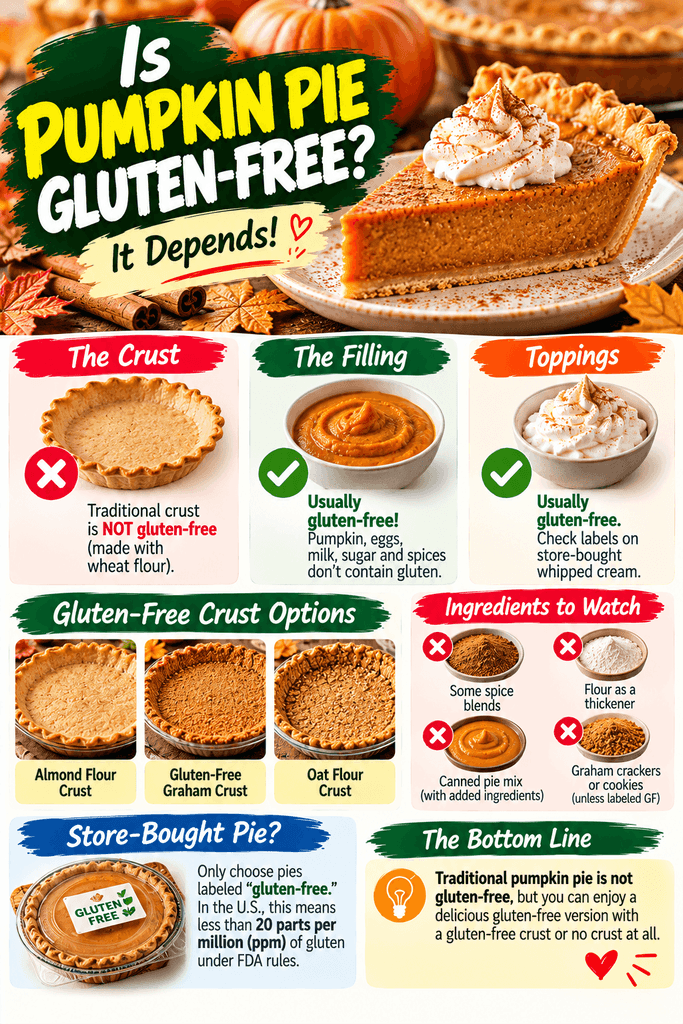
Pumpkin pie is a fixture at fall gatherings, and a source of anxiety for anyone avoiding gluten. The pumpkin itself is a vegetable, so is the pie safe? Is pumpkin pie gluten free? Usually not, but the problem is almost always the crust, not the filling. Traditional pumpkin pie filling is naturally gluten-free, while standard pie crust is made from wheat flour.
This guide breaks down every part of a pumpkin pie, from crust to filling to topping, explains how to read labels on store-bought pies, covers cross-contact risks, and shows how to make a pumpkin pie that’s safe for people with celiac disease.
Key Takeaways
- Traditional pumpkin pie is not gluten-free, because standard pie crust is made with wheat flour.
- The filling is usually naturally gluten-free. Pumpkin, eggs, milk, sugar and spices don’t contain gluten, but check labels on pie mixes and spice blends.
- Plain canned pumpkin is gluten-free. It’s simply cooked pumpkin.
- Store-bought pies are only reliably safe if labeled “gluten-free,” which under FDA rules means less than 20 parts per million of gluten.
- Cross-contact in bakeries and home kitchens is a real risk for people with celiac disease.
- Easy gluten-free options: use a crust made from gluten-free flour, almond flour or certified gluten-free oats, or skip the crust entirely.
What Is Gluten, and Who Needs to Avoid It?
Gluten is a protein found in certain grains. According to the National Institute of Diabetes and Digestive and Kidney Diseases (NIDDK), gluten occurs naturally in wheat and its varieties (including durum, emmer, semolina and spelt), as well as barley, rye and triticale.
People who need to avoid gluten include:
- People with celiac disease. NIDDK describes celiac disease as a chronic digestive and immune disorder, triggered by eating gluten, that damages the small intestine. It affects roughly 2 million Americans, many of them undiagnosed, and the treatment is a strict gluten-free diet.
- People with non-celiac gluten sensitivity, gluten ataxia or wheat allergy, according to Mayo Clinic.
For people with celiac disease, even small amounts of gluten matter, which is why the crust, the ingredients and the kitchen all count.
Is Pumpkin Pie Gluten-Free? A Part-by-Part Breakdown
A pumpkin pie has three parts: crust, filling and topping. Here’s where gluten typically hides.
| Component | Usually gluten-free? | Why |
| Traditional pie crust | ❌ No | Made with wheat flour |
| Graham cracker or gingersnap crust | ❌ No (unless labeled GF) | Cookies are made with wheat flour |
| Pumpkin puree | ✅ Yes | 100% pumpkin |
| Eggs, milk, evaporated milk, cream | ✅ Yes | Naturally gluten-free |
| Sugar, brown sugar, maple syrup | ✅ Yes | Naturally gluten-free |
| Pumpkin pie spice | ✅ Usually | Pure spices are gluten-free; check blends for additives |
| Pumpkin pie mix (canned) | ⚠️ Check label | Contains added ingredients |
| Flour as a filling thickener | ❌ If wheat | Some recipes add a tablespoon of flour |
| Whipped cream | ✅ Usually | Check additives in prepared toppings |
The rest of this article covers each component.
The Crust: Where the Gluten Is
Standard pie crust is made from all-purpose wheat flour, fat and water. That makes a traditional pumpkin pie off-limits on a gluten-free diet, even though the filling is safe.
Other popular crusts are also usually wheat-based:
- Graham cracker crust: Graham crackers are made with wheat flour.
- Gingersnap or cookie crusts: Typically made with wheat flour unless labeled gluten-free.
- Pre-made frozen or refrigerated crusts: Almost always wheat-based unless specifically labeled gluten-free.
Gluten-Free Crust Options
Mayo Clinic and NIDDK list many naturally gluten-free flours and starches, including rice, corn, potato, soy, nut, bean, quinoa, buckwheat and tapioca flours. For pie crust, the most popular choices are:
- Gluten-free all-purpose flour blends. These usually combine rice flour, starches and a binder. Learn more in is rice flour gluten free.
- Almond flour crust. Press-in crusts made with almond flour, butter and a little sweetener are simple and naturally gluten-free. See is almond flour healthy.
- Oat flour crust. Only use oats or oat flour labeled gluten-free. NIDDK notes that most people with celiac disease can tolerate oats, but cross-contact between oats and gluten-containing grains is common, so oats must be certified gluten-free. Ask your healthcare provider whether oats are right for you. Read more in is oat flour gluten free.
- Gluten-free cookie crust. Crush cookies or graham-style crackers that are labeled gluten-free.
- No crust. Crustless pumpkin pie is naturally gluten-free and quick to make (see below).
The Filling: Usually Naturally Gluten-Free
A classic pumpkin pie filling contains pumpkin, eggs, evaporated milk or cream, sugar, salt and spices. NIDDK notes that fruits and vegetables without additives are naturally gluten-free, and none of these ingredients come from wheat, barley or rye.
Canned Pumpkin
Plain canned pumpkin is just cooked, pureed pumpkin. According to USDA FoodData Central, canned pumpkin without salt is listed as a single-ingredient vegetable product. Check the ingredient list: it should say only “pumpkin.” Learn what else to look for in is canned pumpkin healthy, or make your own following our guide on how to make pumpkin puree.
Pumpkin Pie Mix
Canned pumpkin pie mix (sometimes called pie filling) is a different product. It’s pre-sweetened and pre-spiced, and it may contain other added ingredients. USDA data for canned pumpkin pie mix shows it’s a combined product with added sugar and sodium. Because ingredients vary by brand, always read the label and look for a gluten-free claim if you have celiac disease.
Pumpkin Pie Spice
Pumpkin pie spice is a blend of cinnamon, ginger, nutmeg and cloves, sometimes with allspice. Pure ground spices are naturally gluten-free. Some blends may include anti-caking agents or be processed in facilities that handle wheat, so people with celiac disease should look for blends labeled gluten-free or make their own from single spices.
Thickeners
Most pumpkin pies set with eggs alone. Some recipes add a tablespoon or two of all-purpose flour to firm up the filling, and that makes the filling not gluten-free. Swap in cornstarch instead, which is made from corn. See is cornstarch gluten free.
Sweeteners
White sugar, brown sugar, maple syrup and honey are naturally gluten-free. For a closer look at one common question, read does honey contain gluten.
Toppings and Extras
- Homemade whipped cream (cream, sugar, vanilla) is naturally gluten-free.
- Prepared whipped toppings and aerosol creams are usually gluten-free, but check labels for additives.
- Streusel toppings usually contain wheat flour. Use a gluten-free flour blend or chopped nuts instead.
- Candied pecans or praline toppings are typically gluten-free if made at home with nuts, sugar and butter.
Are Store-Bought Pumpkin Pies Gluten-Free?
Most bakery and grocery store pumpkin pies are not gluten-free, because they use a wheat-flour crust. Some stores and specialty bakeries sell pies labeled gluten-free.
What a “Gluten-Free” Label Means
In the U.S., the FDA sets strict rules for gluten-free claims. According to NIDDK, foods labeled “gluten-free,” “no gluten,” “free of gluten” or “without gluten” must contain less than 20 parts per million (ppm) of gluten. The FDA notes that “gluten-free” is a voluntary claim manufacturers can use only if they meet all the requirements of the regulation.
Tips for Buying a Store-Bought Pie
- Look for a clear “gluten-free” label, not just a crust that “looks different.”
- Read the full ingredient list for wheat, barley, rye, malt and regular oats.
- Check allergen statements. Wheat must be declared as a major allergen on packaged foods.
- Ask bakeries how they prevent cross-contact. A pie made with gluten-free ingredients in a shared kitchen may not be safe for people with celiac disease.
- When in doubt, make your own.
Cross-Contact: The Hidden Risk
Even a pie made with gluten-free ingredients can pick up gluten from shared equipment, surfaces or flour in the air. Mayo Clinic recommends using separate cutting boards, cooking equipment and utensils for gluten-free foods.
When baking a gluten-free pumpkin pie at home:
- Clean counters, bowls, rolling pins and pie dishes thoroughly before starting.
- Don’t use flour-dusted surfaces or towels.
- Use fresh, unopened ingredients when possible. Sugar and spices scooped with a utensil used in wheat flour can be contaminated.
- Bake gluten-free pies before wheat-based ones, or on a different day.
- At gatherings, serve the gluten-free pie with its own knife and server, and label it.
How to Make a Gluten-Free Pumpkin Pie
Option 1: Gluten-Free Crust
- Prepare a crust with a gluten-free all-purpose flour blend, or press an almond-flour crust into the pie dish.
- Whisk together 1 can (15 oz) of 100% pumpkin, 2–3 eggs, about ¾ cup evaporated milk or cream, ½–¾ cup sugar or maple syrup, ½ teaspoon salt and 1½–2 teaspoons of pumpkin pie spice.
- Pour into the crust and bake at 425°F for 15 minutes, then 350°F for 35–45 minutes, until the center is just set.
- Cool completely before slicing.
Option 2: Crustless Pumpkin Pie
Grease a pie dish, pour in the same filling (add 2 tablespoons of cornstarch for a firmer set if you like), and bake at 350°F until set, about 40–50 minutes. It’s naturally gluten-free, quicker and lighter. For a similar spoonable dessert, try this crustless pumpkin pie pudding.
Option 3: Mini or No-Bake Versions
Individual pumpkin pie cups, with a nut-based crust or none at all, are easy to keep separate and portion-controlled. These raw pumpkin pie cups are one idea. Check every ingredient label if you’re cooking for someone with celiac disease.
Is Gluten-Free Pumpkin Pie Healthier?
Not automatically. Removing gluten doesn’t make a dessert healthier. Mayo Clinic notes that some gluten-free foods have higher fat and sugar contents than the gluten-containing foods they replace, and that gluten-free replacements may lack some nutrients.
That said, the pumpkin in the pie brings real nutrition. Plain canned pumpkin is rich in vitamin A and fiber. To make your pie a little lighter:
- Reduce the sugar slightly. Pumpkin and spices add natural sweetness and flavor.
- Try a crustless version to cut calories and refined starch.
- Use evaporated low-fat milk instead of cream.
For pumpkin’s nutritional benefits, read is pumpkin healthy. If you’re also watching carbs, see is pumpkin keto.
Pumpkin Pie and Gluten: Myths vs. Facts
Myth: Pumpkin pie is gluten-free because pumpkin is a vegetable.
Fact: The filling usually is, but traditional crust is made from wheat flour.
Myth: Graham cracker crust is a gluten-free alternative.
Fact: Regular graham crackers contain wheat. Use crackers or cookies labeled gluten-free.
Myth: A little gluten from shared equipment doesn’t matter.
Fact: For people with celiac disease, cross-contact can be enough to cause harm. Separate tools and clean surfaces matter.
Myth: All oats are gluten-free.
Fact: Oats are often cross-contaminated with gluten-containing grains. Use only oats labeled gluten-free, and check with your provider.
Myth: Gluten-free desserts are healthier.
Fact: Gluten-free versions can be just as high, or higher, in sugar and fat.
Who Should Be Most Careful
- People with celiac disease need truly gluten-free ingredients and kitchens, not just “no wheat crust.”
- People with wheat allergy must avoid wheat but may be able to eat barley and rye. Ask your allergist.
- People with non-celiac gluten sensitivity may tolerate trace amounts, but symptoms vary.
- Hosts and bakers should label pies clearly and keep gluten-free desserts separate.
NIDDK advises talking with a doctor before starting a gluten-free diet if you suspect celiac disease, because cutting out gluten first can make testing less accurate.
Frequently Asked Questions
Is pumpkin pie filling gluten free?
Traditional homemade pumpkin pie filling is naturally gluten-free. It’s made from pumpkin, eggs, milk, sugar and spices. Canned pie mixes and some recipes may include added ingredients or flour, though, so read labels carefully and use cornstarch instead of wheat flour as a thickener.
Is canned pumpkin gluten free?
Plain canned pumpkin labeled “100% pumpkin” is naturally gluten-free because it contains only cooked pumpkin. Pumpkin pie mix is a different product with added sweeteners and spices. If you have celiac disease, check the ingredient list and look for a gluten-free label on mixes.
Can people with celiac disease eat pumpkin pie?
Yes, if the pie is made with a gluten-free crust, or no crust, gluten-free ingredients, and clean equipment to prevent cross-contact. Traditional pumpkin pie with a wheat-flour crust is not safe for people with celiac disease. Store-bought pies should carry a clear gluten-free label.
What crust is gluten free for pumpkin pie?
Good options include crusts made with a gluten-free flour blend, almond flour, certified gluten-free oats, or crushed gluten-free cookies. You can also skip the crust entirely. Always confirm that every crust ingredient is labeled gluten-free if you’re baking for someone with celiac disease.
Are store-bought pumpkin pies gluten free?
Most aren’t, because they use wheat-flour crusts. Some stores sell pies labeled gluten-free, which under FDA rules must contain less than 20 parts per million of gluten. Check the label, the ingredient list and the allergen statement, and ask bakeries about cross-contact.
Is pumpkin pie spice gluten free?
Pure ground spices, such as cinnamon, ginger, nutmeg and cloves, are naturally gluten-free. Some pre-mixed blends may contain additives or be processed in facilities that handle wheat. People with celiac disease should choose blends labeled gluten-free or mix their own from single spices.
Conclusion
So, is pumpkin pie gluten free? Traditional pumpkin pie isn’t, because its crust is made with wheat flour. The good news is that the classic filling of pumpkin, eggs, milk, sugar and spices is naturally gluten-free. For a celiac-safe pie, use plain canned pumpkin, a gluten-free crust or no crust, cornstarch instead of flour, and gluten-free-labeled spice blends, and prevent cross-contact in the kitchen. When buying, choose pies with a clear gluten-free label, which under FDA rules means less than 20 ppm of gluten.
Medical disclaimer: This article is for general educational purposes only and is not a substitute for professional medical advice, diagnosis or treatment. If you have or suspect celiac disease, a wheat allergy or gluten sensitivity, talk with your doctor or a registered dietitian before changing your diet.
(3) References
- National Institute of Diabetes and Digestive and Kidney Diseases. “Eating, Diet, & Nutrition for Celiac Disease.” https://www.niddk.nih.gov/health-information/digestive-diseases/celiac-disease/eating-diet-nutrition
- National Institute of Diabetes and Digestive and Kidney Diseases. “Definition & Facts for Celiac Disease.” https://www.niddk.nih.gov/health-information/digestive-diseases/celiac-disease/definition-facts
- Mayo Clinic Staff. “Gluten-free diet.” Mayo Clinic. https://www.mayoclinic.org/healthy-lifestyle/nutrition-and-healthy-eating/in-depth/gluten-free-diet/art-20048530
- U.S. Food and Drug Administration. “Gluten-Free Labeling of Foods.” https://www.fda.gov/food/nutrition-food-labeling-and-critical-foods/gluten-free-labeling-foods
- U.S. Department of Agriculture. “Pumpkin, canned, without salt” (FDC ID 168450). FoodData Central. https://fdc.nal.usda.gov/fdc-app.html#/food-details/168450/nutrients
- U.S. Department of Agriculture. “Pumpkin pie mix, canned” (FDC ID 169273). FoodData Central. https://fdc.nal.usda.gov/fdc-app.html#/food-details/169273/nutrients