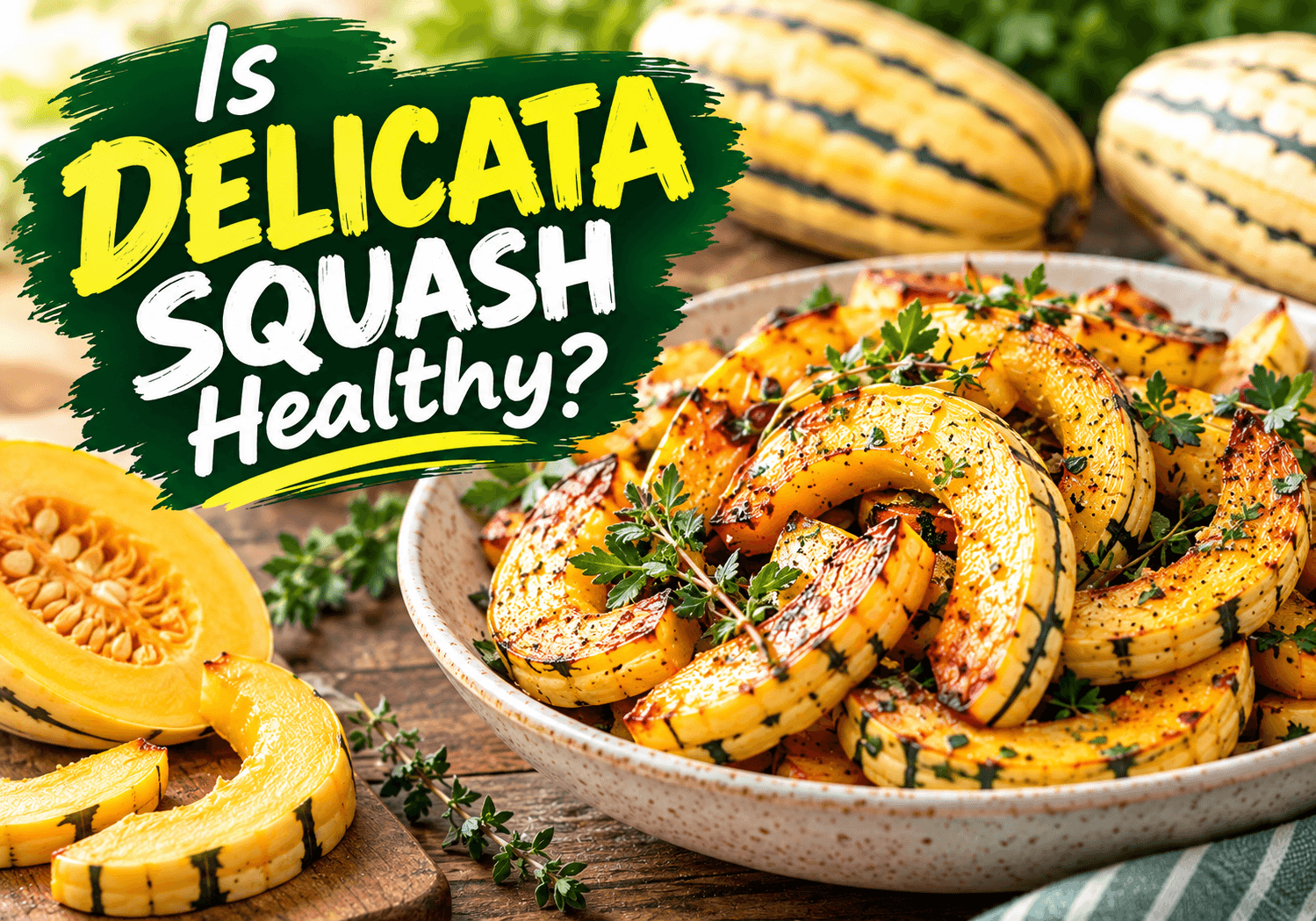
If peeling and hacking through winter squash puts you off, delicata is the squash for you. It’s small, cream-colored with green stripes, and has a skin so thin you can eat it. No peeler needed. That convenience is a big part of its appeal. But is delicata squash healthy, too? Yes. Like its close relatives, delicata is a fiber-rich, low-fat whole-food starch with useful minerals and vitamin C. Eating the skin may add even more fiber.
This guide explains what delicata squash is, what we know (and don’t know) about its nutrition, its benefits, who should watch portions, and the fastest ways to cook it.
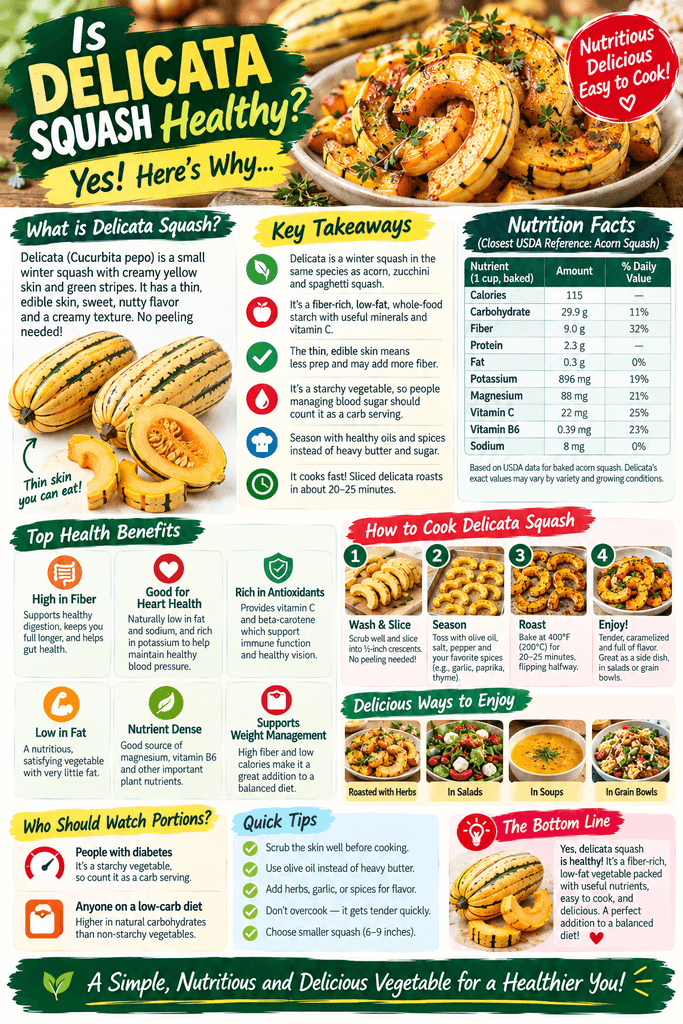
Key Takeaways
- Delicata is a winter squash in the same species as acorn squash, zucchini and spaghetti squash (Cucurbita pepo).
- USDA doesn’t publish delicata-specific data. Its closest USDA relative, acorn squash, has about 115 calories, 9 g fiber and 896 mg potassium per cooked cup.
- Delicata’s thin, edible skin means less prep and may mean more fiber, since peeled produce tends to lose some fiber.
- It’s a starchy vegetable, so people managing blood sugar should count it as a carb serving.
- Wash and scrub the skin before cooking, and season with oil and spices rather than heavy butter and sugar.
- It cooks fast: sliced delicata roasts in about 20–25 minutes.
What Is Delicata Squash?
Delicata (Cucurbita pepo) is an oblong winter squash, usually 6–9 inches long, with a cream or pale yellow skin striped in green or orange. It’s sometimes called “sweet potato squash” for its sweet, nutty flavor and creamy texture. Several popular varieties, like Sweet Dumpling and Carnival, are delicata types or delicata crosses.
Like all winter squash, delicata is harvested when mature, but its skin stays thin and tender rather than forming a hard rind. That’s what makes it so easy to cook, and also why it doesn’t store as long as thick-skinned squashes.
For a complete overview of squash types and how they compare, see our winter squash guide.
Delicata Squash Nutrition: What We Know
Here’s the honest answer: USDA FoodData Central, the main U.S. food composition database, does not list delicata squash as a separate food. Many websites publish delicata nutrition numbers, but they usually come from branded or user-submitted entries that haven’t been verified.
The closest reliable reference is acorn squash, which belongs to the same species (Cucurbita pepo) and has a similar pale-yellow, sweet flesh. According to USDA’s record for baked acorn squash, one cup of cubes (205 g) provides:
| Nutrient (1 cup, baked) | Acorn squash (closest USDA reference) | % Daily Value |
| Calories | 115 | — |
| Carbohydrate | 29.9 g | 11% |
| Fiber | 9.0 g | 32% |
| Protein | 2.3 g | — |
| Fat | 0.3 g | 0% |
| Potassium | 896 mg | 19% |
| Magnesium | 88 mg | 21% |
| Vitamin C | 22 mg | 25% |
| Vitamin B6 | 0.39 mg | 23% |
| Sodium | 8 mg | 0% |
% DV is based on FDA Daily Values. Delicata’s exact values may differ by variety and growing conditions. Treat these as estimates.
What about vitamin A? Squashes with deep orange flesh, like butternut and pumpkin, are rich in beta-carotene. Montana State University Extension notes that dark orange winter squash flesh is high in beta-carotene, which the body converts to vitamin A. Delicata’s flesh is usually paler, between acorn and butternut in color, so its vitamin A content is likely moderate. Without USDA data, we can’t give an exact number. If vitamin A is your goal, butternut squash and pumpkin are reliably rich sources. See our pumpkin nutrition facts for numbers.
Is Delicata Squash Healthy? Key Benefits
Based on its plant family and what’s known about winter squash, here’s what delicata likely brings to your plate.
1. A Fiber-Rich Starch
Winter squash is high in complex carbohydrates and fiber, according to Montana State University Extension. Acorn squash, delicata’s closest USDA relative, has about 9 grams of fiber per cup. The Harvard T.H. Chan School of Public Health notes that fiber supports digestion and helps regulate blood sugar, and that higher intake is linked with lower risk of heart disease and type 2 diabetes. According to Mayo Clinic, fiber also helps you feel full longer.
2. Eating the Skin May Add Fiber
Most squash peels end up in the trash. With delicata, you eat them. A review of fresh, frozen and canned produce by University of California, Davis researchers, published in the Journal of the Science of Food and Agriculture, found that “products with peels or outer layers removed… contained lower amounts of fiber than their unprocessed counterparts.” Keeping delicata’s skin on is a simple way to keep more of the whole vegetable.
3. Potassium for Blood Pressure Support
Winter squashes in the pepo family are good sources of potassium. The NIH Office of Dietary Supplements explains that potassium helps counter sodium’s effect on blood pressure, and that higher intakes are associated with lower blood pressure and stroke risk. Many adults fall short of the recommended 2,600–3,400 mg a day.
4. Magnesium and B Vitamins
Acorn squash provides about a fifth of the Daily Value for magnesium per cup. Magnesium supports muscle and nerve function, blood sugar control and blood pressure regulation, according to the Office of Dietary Supplements. Squash in this family also supplies vitamin B6, which the body uses for protein metabolism and immune function.
5. Vitamin C
With roughly a quarter of the Daily Value per cup in its closest relative, delicata likely contributes meaningful vitamin C. The Office of Dietary Supplements notes that vitamin C is needed for collagen formation and immune function, and that it helps the body absorb plant-based iron.
6. Low in Fat and Sodium
Plain delicata, like other winter squash, has almost no fat and very little sodium. That makes it a blank canvas: what you add during cooking determines most of the fat, salt and sugar.
7. Part of a Vegetable-Rich Diet
A large 2017 meta-analysis in the International Journal of Epidemiology found that higher fruit and vegetable intake was associated with lower risk of heart disease, cancer and early death, with benefits up to about 800 grams a day. Easy-to-cook vegetables like delicata make it more likely you’ll actually eat them. The USDA’s MyPlate counts winter squash among the red and orange vegetables.
Delicata vs. Acorn vs. Butternut Squash
How does delicata compare with the two squashes it’s most often swapped for?
| Feature | Delicata | Acorn | Butternut |
| Species | C. pepo | C. pepo | C. moschata |
| Skin | Thin, edible, no peeling | Edible when roasted, chewy | Edible but tough; usually peeled |
| Flesh | Creamy, sweet, pale yellow-orange | Mild, slightly fibrous, pale | Smooth, sweet, deep orange |
| Prep time | Fastest | Moderate (ridges) | Longer (peeling) |
| USDA data | Not listed | Yes | Yes |
| Standout nutrients | Likely similar to acorn | Fiber, potassium, magnesium | Vitamin A, fewer calories |
For full nutrition breakdowns, see is acorn squash healthy and our butternut guide linked above.
Who Benefits Most From Delicata Squash?
- Busy cooks. No peeling and fast roasting make delicata the most weeknight-friendly winter squash.
- People who want more fiber. Eating the skin keeps more of the vegetable.
- Picky eaters and kids. Its sweet, creamy flavor and fun half-moon shapes are easy to like.
- Anyone swapping out refined starches. Delicata can stand in for fries, white rice or potatoes.
- People cooking for one or two. A single delicata makes about two servings, with no leftovers to store.
Risks and Who Should Be Cautious
Blood Sugar
Delicata is a starchy vegetable. Its closest USDA relative has about 30 g of carbohydrate per cup. People with diabetes should count delicata as a carb serving, stick to about ½ to 1 cup, and pair it with protein and healthy fat. If you want a lower-carb squash, spaghetti squash has far fewer carbs. See is spaghetti squash healthy.
Kidney Disease
Winter squash is high in potassium. The National Institute of Diabetes and Digestive and Kidney Diseases advises that people with chronic kidney disease may need to limit high-potassium foods. Ask your renal dietitian about portions.
Eating the Skin Safely
Because you eat the skin, washing matters. The FDA recommends washing produce under running water before cutting, scrubbing firm produce with a clean produce brush, and drying it with a clean towel. Don’t use soap or detergent. Cut away any bruised or damaged spots.
Sweet Toppings
Brown sugar, butter and syrup glazes can add a lot of calories and added sugar. Use them sparingly. Our article on whether maple syrup is healthy explains how to use it in small amounts.
Bitter Squash
As with all squash, an unusually bitter taste can signal high levels of natural compounds called cucurbitacins, which can cause stomach upset. If delicata tastes bitter, don’t eat it.
How Much Delicata Squash Should You Eat?
A typical serving is ½ to 1 cup of cooked delicata, about half of a medium squash. One cup of cooked winter squash counts as one cup of vegetables toward MyPlate’s recommended 2–4 cups a day for most adults. Adjust portions if you have diabetes, kidney disease or follow a low-carb diet.
How to Cook Delicata Squash
Prep in 3 Minutes
- Wash and scrub the squash under running water, then dry it.
- Trim off both ends, then cut it in half lengthwise.
- Scoop out the seeds with a spoon.
- Slice each half crosswise into ½-inch half-moons. Leave the skin on.
Roasted Delicata Half-Moons
Toss the slices with 1–2 teaspoons of olive oil per squash, plus salt, pepper and your choice of spices: smoked paprika, cumin, cinnamon or chili flakes. Spread them in a single layer and roast at 425°F (220°C) for 20–25 minutes, flipping halfway, until golden and tender.
The oil does more than add flavor. Carotenoids are fat-soluble, and a study in the American Journal of Clinical Nutrition found that people absorbed more carotenoids from vegetables eaten with full-fat rather than fat-free dressing.
Delicata “Fries”
Cut the squash into thin wedges, toss with oil and spices, and roast until crisp at the edges. Our curried butternut squash fries seasoning works beautifully on delicata, with no peeling required.
Stuffed Delicata Boats
Halve the squash lengthwise, scoop out the seeds and roast the halves cut-side down at 400°F for 20–25 minutes. Fill with cooked quinoa, beans, sautéed greens or lean sausage, top with a little cheese, and bake 10 minutes more.
In Salads and Grain Bowls
Roasted delicata rings are a natural fit for fall salads. Swap them into this massaged kale salad with roasted butternut squash, or add them to this cherry arugula quinoa salad for a heartier bowl.
Don’t Toss the Seeds
Rinse the seeds, pat them dry, toss with a little oil and salt, and roast at 300–325°F until golden. Learn about their nutrition in are pumpkin seeds healthy.
Buying and Storing Delicata Squash
- Choose squash that feels firm and heavy for its size, with no soft spots, cracks or mold. Cream-to-yellow skin with deep green or orange stripes signals ripeness. Avoid greenish-white skin, which suggests the squash was picked too early.
- Store whole delicata in a cool, dry, well-ventilated place, not the refrigerator. Montana State University Extension notes that winter squash storage life ranges from about 30 to 180 days depending on variety. Thin-skinned delicata sits toward the shorter end, so plan to use it within a few weeks.
- Refrigerate cut squash, wrapped, and use it within a few days.
- Freeze cooked delicata in airtight containers for later use in soups and mashes.
Delicata Squash Myths vs. Facts
Myth: You have to peel all winter squash.
Fact: Delicata’s skin is thin and tender once cooked. Peeling is unnecessary.
Myth: Delicata is basically a summer squash.
Fact: It shares a species with zucchini, but it’s a winter squash: harvested mature, starchier, sweeter and storable.
Myth: Delicata nutrition is well documented.
Fact: USDA doesn’t list delicata separately. The closest reliable data comes from its relative, acorn squash.
Myth: Delicata is as rich in vitamin A as butternut.
Fact: Its paler flesh suggests less beta-carotene than deep-orange squashes like butternut and pumpkin.
Myth: Sweet potatoes are always the better starch.
Fact: Sweet potatoes beat paler squashes on vitamin A, but pepo squashes compete well on fiber and potassium. Compare them in are sweet potatoes healthy.
How Delicata Fits a Healthy Lifestyle
Delicata’s best health feature may be how easy it is. The vegetables you’ll actually cook on a Tuesday night do more for your diet than “superfoods” that sit uneaten. Use delicata as a whole-food starch in place of fries, rice or bread. Roast it with olive oil and spices, and build a plate with a lean protein and a leafy green. For vitamin A, rotate in deep-orange vegetables like butternut, pumpkin, carrots and sweet potatoes.
Frequently Asked Questions
Do you have to peel delicata squash?
No. Delicata squash has a thin, tender skin that softens when roasted, so you can eat it. Just wash and scrub the squash under running water before cutting. Keeping the skin on saves time and may preserve more fiber, since peeled produce tends to contain less fiber.
How many calories are in delicata squash?
USDA doesn’t publish delicata-specific data. Its closest relative, acorn squash, has about 115 calories per cup of baked cubes, and delicata is likely similar. Oil, butter and sweet glazes add calories, so measure toppings if you’re tracking intake.
Is delicata squash good for weight loss?
Delicata can support weight management as part of a balanced diet. Winter squash is high in fiber and water, which help you feel full, and it’s very low in fat. Use it in place of fries or refined starches, roast it with a small amount of oil, and pair it with lean protein.
Is delicata squash low carb?
No. Delicata is a starchy winter squash. Its closest USDA relative, acorn squash, has about 30 grams of carbohydrate per cup, including 9 grams of fiber. For a lower-carb option, spaghetti squash has far fewer carbs per serving.
Is delicata squash good for diabetics?
Delicata can fit a diabetes meal plan in measured portions. Its fiber helps slow how quickly carbohydrates raise blood sugar, but it still counts as a starch. Keep servings to about half to one cup, pair it with protein and healthy fat, and skip sugary glazes.
How long does delicata squash last?
Whole delicata stored in a cool, dry, well-ventilated place typically lasts a few weeks. That’s shorter than thick-skinned squash like butternut, because its thin skin holds moisture less well. Once cut, refrigerate it and use it within a few days, or freeze cooked squash.
Conclusion
So, is delicata squash healthy? Yes. Delicata is a fiber-rich, low-fat winter squash that likely provides potassium, magnesium, B vitamins and vitamin C, much like its close relative acorn squash. Its thin, edible skin makes it the easiest winter squash to cook, and keeping that skin on may preserve more fiber. Because USDA hasn’t published delicata-specific data, treat any precise nutrition numbers as estimates. Count it as a starch if you’re managing blood sugar, scrub the skin well, roast it with a little olive oil and spices, and enjoy one of fall’s easiest vegetables.
Medical disclaimer: This article is for general educational purposes only and is not a substitute for professional medical advice, diagnosis or treatment. If you have a health condition such as diabetes or kidney disease, talk with your doctor or a registered dietitian before making significant changes to your diet.
(3) References
- U.S. Department of Agriculture. “Squash, winter, acorn, cooked, baked, without salt” (FDC ID 169293). FoodData Central, SR Legacy. https://fdc.nal.usda.gov/fdc-app.html#/food-details/169293/nutrients
- U.S. Food and Drug Administration. “Daily Value on the Nutrition and Supplement Facts Labels.” https://www.fda.gov/food/nutrition-facts-label/daily-value-nutrition-and-supplement-facts-labels
- Montana State University Extension. “Winter Squash.” 2015. https://exponent.montana.edu/extension/nutrition/nutrition-cooking-culture/documents/WinterSquashFFS.pdf
- Rickman JC, Bruhn CM, Barrett DM. “Nutritional comparison of fresh, frozen, and canned fruits and vegetables II. Vitamin A and carotenoids, vitamin E, minerals and fiber.” Journal of the Science of Food and Agriculture. 2007. https://ucanr.edu/sites/default/files/2010-06/19188.pdf
- Harvard T.H. Chan School of Public Health. “Fiber.” The Nutrition Source. https://nutritionsource.hsph.harvard.edu/carbohydrates/fiber/
- Mayo Clinic Staff. “Dietary fiber: Essential for a healthy diet.” Mayo Clinic. https://www.mayoclinic.org/healthy-lifestyle/nutrition-and-healthy-eating/in-depth/fiber/art-20043983
- NIH Office of Dietary Supplements. “Potassium: Fact Sheet for Health Professionals.” https://ods.od.nih.gov/factsheets/Potassium-HealthProfessional/
- NIH Office of Dietary Supplements. “Magnesium: Fact Sheet for Health Professionals.” https://ods.od.nih.gov/factsheets/Magnesium-HealthProfessional/
- NIH Office of Dietary Supplements. “Vitamin C: Fact Sheet for Health Professionals.” https://ods.od.nih.gov/factsheets/VitaminC-HealthProfessional/
- Aune D, et al. “Fruit and vegetable intake and the risk of cardiovascular disease, total cancer and all-cause mortality—a systematic review and dose-response meta-analysis of prospective studies.” International Journal of Epidemiology. 2017. https://pubmed.ncbi.nlm.nih.gov/28338764/
- U.S. Department of Agriculture. “Vegetables.” MyPlate. https://www.myplate.gov/eat-healthy/vegetables
- National Institute of Diabetes and Digestive and Kidney Diseases. “Eating Right for Chronic Kidney Disease.” https://www.niddk.nih.gov/health-information/kidney-disease/chronic-kidney-disease-ckd/eating-nutrition
- U.S. Food and Drug Administration. “Selecting and Serving Produce Safely.” https://www.fda.gov/food/buy-store-serve-safe-food/selecting-and-serving-produce-safely
- Brown MJ, et al. “Carotenoid bioavailability is higher from salads ingested with full-fat than with fat-reduced salad dressings.” American Journal of Clinical Nutrition. 2004. https://pubmed.ncbi.nlm.nih.gov/15277161/