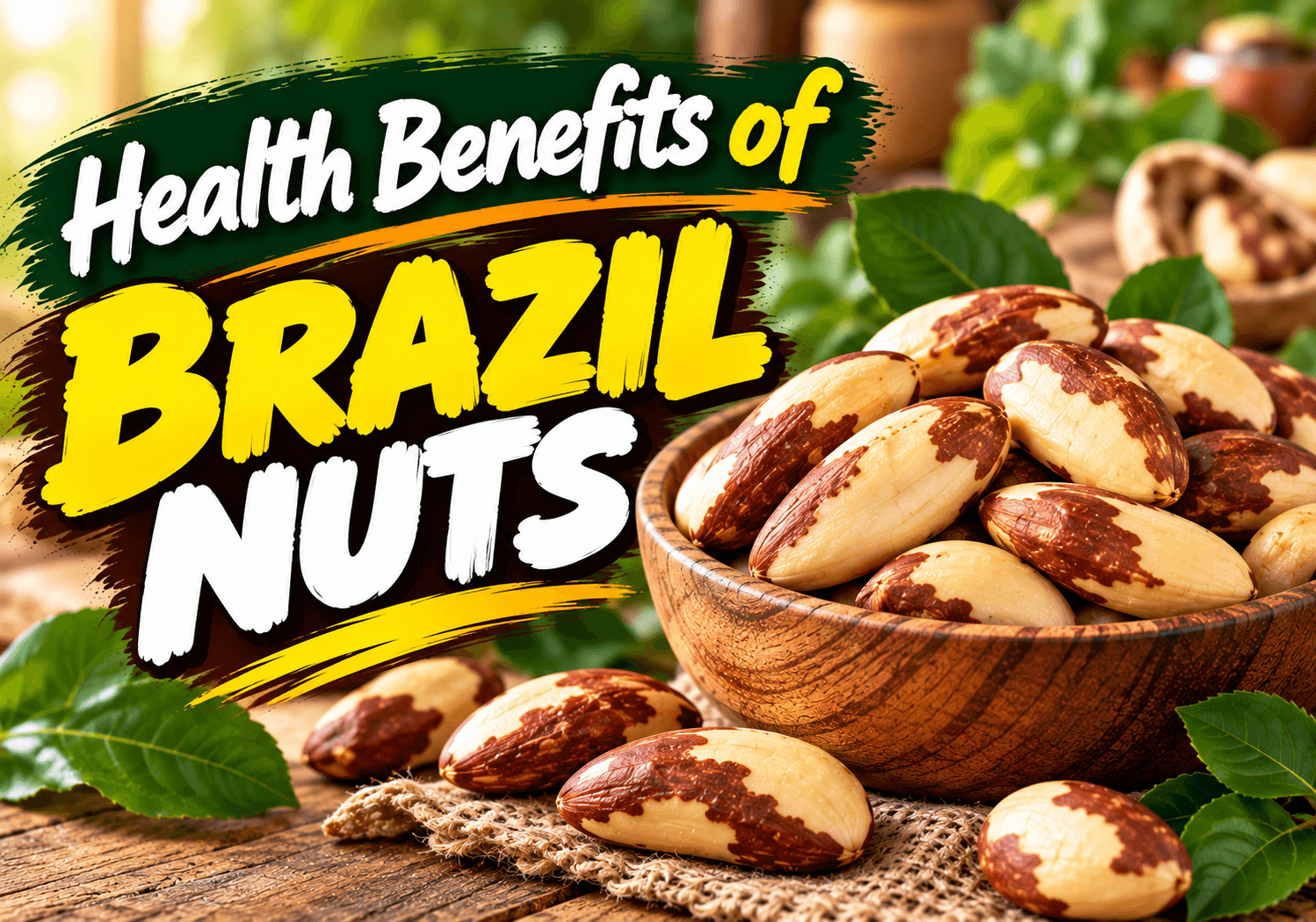
Brazil nuts are the giants of the nut bowl: big, creamy and rich. They’re also unique in one important way. Just one or two of them can supply more selenium than you need in an entire day. That makes them one of the most efficient foods on the planet for a key mineral, and also one of the few foods where eating “a healthy handful” can actually be too much. So, are Brazil nuts healthy? Yes, in the right amount. For most adults, that amount is about one to two nuts a day.
This guide explains what’s in a Brazil nut, what selenium does for your body, what the research says about Brazil nuts and cholesterol, thyroid health and inflammation, why the selenium content varies so much, and exactly how many you can safely eat.
Key Takeaways
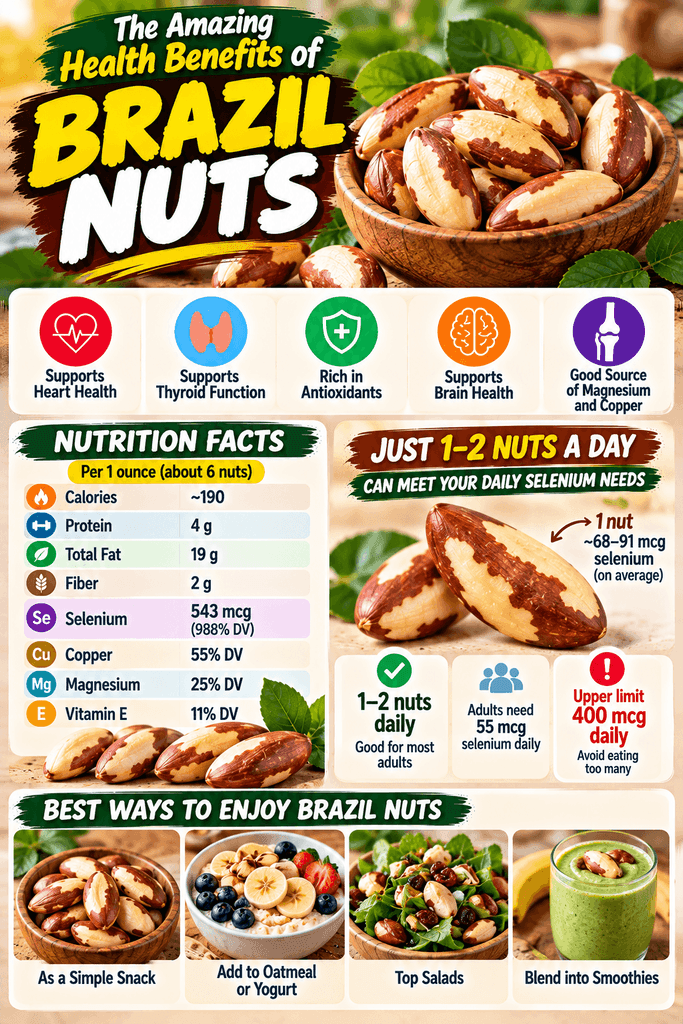
- One ounce of Brazil nuts (about 6 nuts) contains about 543 mcg of selenium, nearly 10 times the 55 mcg adult RDA.
- A single Brazil nut averages 68–91 mcg of selenium, but the actual amount can vary widely depending on where the nut was grown.
- The adult safe upper limit is 400 mcg of selenium a day. Eating Brazil nuts by the handful regularly can cause selenium toxicity.
- A clinical trial found that two Brazil nuts a day raised selenium levels as effectively as a 100 mcg supplement.
- Brazil nuts also provide healthy fats, copper and magnesium, and fit the broader evidence linking nuts to better heart health.
- The simple rule: enjoy 1–2 Brazil nuts a day, and count any selenium from supplements.
What Are Brazil Nuts?
Brazil nuts come from the Brazil nut tree (Bertholletia excelsa), which grows wild in the Amazon rainforest across Brazil, Bolivia and Peru. Despite the name, much of the world’s supply comes from Bolivia. The “nuts” grow inside large, hard, coconut-like pods, each holding a dozen or more seeds. Botanically they’re seeds, but in the kitchen and in nutrition research they’re treated as tree nuts.
Brazil nuts are among the largest nuts you can buy, at roughly 4–5 grams each, with a rich, buttery texture similar to macadamias. For how they compare with other nuts, see our complete guide to nuts.
Brazil Nut Nutrition Facts
According to USDA FoodData Central’s record for dried, unblanched Brazil nuts, one ounce (28 g, about 6 nuts) provides:
| Nutrient (1 oz, ~6 nuts) | Amount | % Daily Value |
| Calories | ~190 | — |
| Protein | 4 g | — |
| Total fat | 19 g | — |
| Fiber | 2 g | 7% |
| Selenium | 543 mcg | 988% |
| Copper | — | 55% |
| Magnesium | — | 25% |
| Vitamin E | — | 11% |
Values from USDA FoodData Central, FDC 170569. % DV is based on FDA Daily Values.
Per nut: Divide by six, and a single Brazil nut provides roughly 30–35 calories and, on average, around 90 mcg of selenium, though the real amount varies a lot (more below).
Most of the fat in Brazil nuts is unsaturated, the kind linked with heart health when it replaces saturated fat. Brazil nuts are also an excellent source of copper (which helps form red blood cells and supports iron metabolism) and a good source of magnesium.
Selenium: The Reason Brazil Nuts Are Special
What Selenium Does
Selenium is an essential trace mineral. According to the NIH Office of Dietary Supplements (ODS), it’s a building block of about 25 selenoproteins in the body, which play key roles in:
- Thyroid hormone metabolism, helping activate and regulate thyroid hormones
- Antioxidant defense, protecting cells from oxidative damage, especially through the enzyme glutathione peroxidase
- DNA synthesis
- Reproduction
- Immune function and protection from infection
How Much Selenium Do You Need?
The ODS sets these Recommended Dietary Allowances:
| Group | RDA (mcg/day) |
| Adults | 55 |
| Pregnancy | 60 |
| Breastfeeding | 70 |
Most people already get enough. Selenium is also found in seafood, meat, poultry, eggs, grains and dairy. According to the ODS, the groups most at risk of low selenium are people on kidney dialysis, people living with HIV, and people in regions with selenium-poor soil, such as parts of China and Europe.
Brazil Nuts vs. Other Selenium Foods
Brazil nuts are in a league of their own. At about 543 mcg per ounce, they contain several times more selenium than other top food sources per serving. Seafood is another good source; see whether oysters are healthy and whether shrimp is healthy.
Are Brazil Nuts Healthy? What the Research Shows
1. Two Nuts a Day Raise Selenium as Well as a Supplement
In a 12-week randomized trial from the University of Otago in New Zealand, published in the American Journal of Clinical Nutrition (2008), 59 adults ate either two Brazil nuts a day, took 100 mcg of selenium as selenomethionine, or took a placebo. Blood selenium rose by about 64% in the Brazil nut group, 61% in the supplement group and 8% in the placebo group, as reported in a summary of the study. Activity of the antioxidant enzyme glutathione peroxidase also improved.
The researchers concluded that two Brazil nuts a day are as effective as a 100 mcg selenium supplement for raising selenium status. For people who need more selenium, a whole food may be a reasonable alternative to a pill. Discuss it with your doctor first.
2. A Possible Effect on Cholesterol
In a small crossover study published in the Journal of Nutrition and Metabolism (2013), 10 healthy volunteers ate a single serving of 0, 5, 20 or 50 grams of Brazil nuts. Nine hours after eating 20 or 50 grams, their LDL (“bad”) cholesterol was significantly lower and their HDL (“good”) cholesterol was significantly higher, with no harm to liver or kidney markers.
This is an interesting early finding, but the study was tiny and short-term. It shouldn’t be read as proof that Brazil nuts treat high cholesterol. A larger body of evidence comes from nuts in general. A meta-analysis of 61 trials in the American Journal of Clinical Nutrition (2015) found that tree nuts lower LDL cholesterol, with effects similar across nut types. Because a 20–50 g serving of Brazil nuts far exceeds the selenium upper limit, you’ll get cholesterol benefits more safely by mixing Brazil nuts with other nuts. See whether walnuts are healthy and whether cashews are good for cholesterol.
3. Early Research on Inflammation
The same Brazilian research group reported that a single Brazil nut meal improved some inflammatory markers in healthy volunteers. Like the cholesterol study, it was small and short-term. Treat it as a promising lead, not a settled benefit.
4. Part of the Heart-Healthy Nut Pattern
Brazil nuts belong to a food group with strong evidence. Large studies link regular nut eating with lower rates of heart disease and early death. Our complete guide to nuts summarizes the major trials and meta-analyses. With Brazil nuts, the selenium limit means they work best as a small part of your daily nut intake, not the whole thing.
5. Antioxidant Support
Through selenoproteins like glutathione peroxidase, selenium helps protect cells from oxidative damage. The Otago trial showed that Brazil nuts increase the activity of this enzyme. Whether that translates into lower disease risk in well-nourished people hasn’t been proven.
Brazil Nuts and Thyroid Health
Because selenium is involved in thyroid hormone metabolism, Brazil nuts are often promoted online for thyroid health, especially for Hashimoto’s thyroiditis. The evidence is more cautious than social media suggests.
According to the ODS, a systematic review found that selenium supplements lowered thyroid peroxidase antibody (TPOAb) levels in some people with autoimmune thyroiditis, but concluded that the evidence does not support routine selenium supplementation for this condition. The ODS also notes that the American Thyroid Association recommends against selenium supplementation in pregnant women with thyroid autoimmunity.
What this means for you:
- Getting adequate selenium from food is important for normal thyroid function.
- Eating extra Brazil nuts is not a proven treatment for thyroid disease.
- If you have a thyroid condition, talk with your doctor or endocrinologist before adding Brazil nuts or selenium supplements, and don’t change your medication on your own.
The Selenium Surprise: Why “Per Nut” Numbers Vary So Much
Here’s something most articles miss: the selenium in a Brazil nut depends heavily on where it grew.
A 2017 study in Chemosphere analyzed Brazil nuts and soils across the Amazon. The median selenium content ranged from about 2 mg/kg in nuts from Mato Grosso to about 68 mg/kg in nuts from Amazonas, roughly a 30-fold difference. Selenium in the nuts tracked selenium in the soil, and was lower in more acidic soils. The researchers estimated that a single nut could supply anywhere from about 11% to 288% of daily selenium needs.
You can see the variation in practice. In the New Zealand trial, two nuts provided about 53 mcg of selenium, roughly 26 mcg each. That’s far less than the ODS’s 68–91 mcg average.
Why this matters:
- You usually can’t know how much selenium is in the Brazil nuts you buy.
- That’s exactly why a cautious limit of 1–2 nuts a day makes sense. Even high-selenium nuts stay within safe limits at that amount.
Risks and Side Effects of Brazil Nuts
Selenium Toxicity (Selenosis)
This is the main risk. According to the ODS:
- The tolerable upper intake level (UL) for adults is 400 mcg of selenium a day, from all sources combined.
- The European Food Safety Authority has proposed a lower limit of 255 mcg a day for adults.
- Chronic excess causes selenosis. Symptoms include hair loss, brittle or lost nails, garlic-smelling breath, a metallic taste, skin rashes, nausea and nervous system problems.
Just one ounce (about 6 nuts) averages 543 mcg, already above the 400 mcg limit. Eating that much every day, especially alongside a selenium supplement or multivitamin, could lead to toxicity over time.
Supplements Add Up
Many multivitamins and “thyroid support” supplements contain selenium. Check labels and count it with your Brazil nuts. The ODS notes that the large SELECT trial found 200 mcg a day of supplemental selenium did not prevent prostate cancer, and that men with higher starting selenium levels had an increased risk of high-grade prostate cancer. More selenium isn’t always better.
Tree Nut Allergy
Brazil nuts are tree nuts, which are among the nine major food allergens identified by the FDA. If you have a tree nut allergy, avoid Brazil nuts unless your allergist advises otherwise.
Calories
At roughly 30–35 calories per nut and about 190 per ounce, Brazil nuts are calorie-dense. At 1–2 nuts a day, though, calories are a non-issue.
Kidney Stones
For people who form calcium oxalate kidney stones, the National Institute of Diabetes and Digestive and Kidney Diseases lists nuts and nut products among high-oxalate foods to limit. Ask your doctor about portions.
How Many Brazil Nuts Should You Eat a Day?
The 1–2 nut rule: For most healthy adults, one to two Brazil nuts a day is a safe, effective amount.
Here’s why, using the ODS average of 68–91 mcg per nut:
| Brazil nuts per day | Approx. selenium | vs. RDA (55 mcg) | vs. UL (400 mcg) |
| 1 nut | 68–91 mcg | Meets it | Well below |
| 2 nuts | 136–182 mcg | 2–3× | Well below |
| 3 nuts | 204–273 mcg | 4–5× | Below, but near the EFSA 255 mcg limit |
| 6 nuts (1 oz) | ~543 mcg | ~10× | Above |
Practical tips:
- One to two nuts a day, or a few nuts a few times a week, comfortably covers selenium needs for most people.
- Count supplements. If your multivitamin has selenium, stick to one nut or skip the nuts on some days.
- Children: Selenium needs and upper limits are lower for kids. One nut occasionally is a reasonable treat for older children without allergies, but check with your pediatrician, and never give whole nuts to young children because of the choking risk.
- Pregnancy and breastfeeding: Needs are slightly higher (60–70 mcg), and one to two nuts generally fits, but discuss it with your healthcare provider.
Best Ways to Eat Brazil Nuts
- Eat them whole as a once-a-day “selenium snack.”
- Mix them in. Add one or two chopped Brazil nuts to a mixed-nut snack of almonds, walnuts and pistachios, which also keeps the rest of your nuts varied. See whether almonds are healthy and whether pistachios are healthy.
- Chop and sprinkle over oatmeal, yogurt or salads.
- Roast lightly with spices as part of a mixed batch, like our cinnamon-sugar roasted mixed nuts. Go light on the sugar and keep Brazil nuts a small share of the mix.
- Keto and low-carb diets: Brazil nuts are low in carbohydrate and high in fat, so they fit keto plans. Just keep the 1–2 nut limit in mind. See whether keto is a healthy diet.
Buying and Storing Brazil Nuts
Brazil nuts are high in unsaturated fat, so they can go rancid. Kansas State University Research and Extension recommends storing nuts in tightly sealed containers, ideally in the freezer, where they keep up to a year, though using them within six months is best. Refrigeration is also acceptable.
- Buy small amounts. At 1–2 nuts a day, a small bag lasts weeks.
- Choose plain, unsalted nuts. Skip chocolate-covered or candied versions.
- Smell before eating. Bitter or paint-like odors mean the nuts are rancid. Throw them out.
Brazil Nuts vs. Other Nuts
| Nut | Standout strength | Daily guidance |
| Brazil nuts | Selenium (by far) | 1–2 nuts |
| Almonds | Vitamin E, fiber | ~1 oz |
| Walnuts | Omega-3 ALA | ~1 oz |
| Cashews | Zinc, magnesium | ~1 oz |
| Pecans | Monounsaturated fat | ~1 oz |
| Pistachios | Protein per calorie, lutein | ~1 oz |
The best approach is variety: a daily handful of mixed nuts that includes one or two Brazil nuts. Compare more in whether cashews are healthy and whether pecans are healthy. If you prefer seeds, see whether pumpkin seeds are healthy.
Brazil Nut Myths vs. Facts
Myth: If Brazil nuts are healthy, more is better.
Fact: About six nuts exceed the 400 mcg selenium upper limit. One to two a day is the sweet spot.
Myth: Brazil nuts cure thyroid disease.
Fact: Selenium supports normal thyroid function, but evidence doesn’t support selenium as a treatment for autoimmune thyroiditis.
Myth: Every Brazil nut has the same amount of selenium.
Fact: Selenium content can vary about 30-fold depending on Amazon soil.
Myth: Selenium supplements are better than food.
Fact: A trial found two Brazil nuts a day raised selenium as well as a 100 mcg supplement. Large supplement trials haven’t shown cancer prevention.
Myth: Brazil nuts are fattening.
Fact: At one to two nuts a day, they add only about 30–70 calories.
How Brazil Nuts Fit a Healthy Lifestyle
Brazil nuts are best thought of as a natural “selenium supplement” in food form, with the bonus of healthy fats, copper and magnesium. Eat one or two a day as part of a varied diet with other nuts, seafood, whole grains, fruits and vegetables. Count selenium from supplements, and enjoy them as a small, nourishing habit rather than a snack to eat by the handful.
Frequently Asked Questions
How many Brazil nuts should you eat a day?
For most healthy adults, one to two Brazil nuts a day is a safe amount. That provides about 68 to 182 micrograms of selenium, well above the 55 mcg daily need and below the 400 mcg upper limit. Eating six or more daily can push you above that limit.
Can you eat too many Brazil nuts?
Yes. One ounce (about six nuts) contains about 543 micrograms of selenium, above the adult upper limit of 400 mcg. Eating that much regularly can cause selenium toxicity, with symptoms like hair loss, brittle nails, garlic-smelling breath and nausea. Stick to one or two a day.
Are Brazil nuts good for your thyroid?
Selenium supports normal thyroid function, and Brazil nuts are the richest food source. However, research doesn’t support selenium as a treatment for autoimmune thyroid disease. If you have a thyroid condition, talk with your doctor before adding Brazil nuts or selenium supplements.
How much selenium is in one Brazil nut?
According to the NIH Office of Dietary Supplements, one Brazil nut contains about 68 to 91 micrograms of selenium on average. Actual amounts vary widely with the soil where the nut grew: research found about a 30-fold difference between regions of the Amazon.
Are Brazil nuts better than selenium supplements?
A 12-week trial found that two Brazil nuts a day raised blood selenium as effectively as a 100-microgram selenium supplement. Brazil nuts also provide healthy fats and other minerals. Most people get enough selenium from food anyway, so ask your doctor before taking supplements.
What happens if you eat Brazil nuts every day?
Eating one or two Brazil nuts daily is safe for most adults and easily meets your selenium needs. Eating a handful every day could, over time, exceed the safe upper limit and lead to selenium toxicity. Count any selenium in supplements too.
Conclusion
So, are Brazil nuts healthy? Yes, as long as you keep the portion small. Brazil nuts are the richest food source of selenium, a mineral essential for thyroid function and antioxidant defense. A clinical trial showed that two nuts a day raise selenium as well as a supplement. They also provide healthy fats, copper and magnesium. But one ounce of about six nuts already exceeds the safe upper limit, and selenium content varies widely from nut to nut. Follow the 1–2 nut rule, count selenium from supplements, and enjoy Brazil nuts as part of a varied mix of nuts.
Medical disclaimer: This article is for general educational purposes only and is not a substitute for professional medical advice, diagnosis or treatment. If you have a thyroid condition, kidney disease, a tree nut allergy, or take supplements containing selenium, talk with your doctor or a registered dietitian before making changes to your diet.
(3) References
- NIH Office of Dietary Supplements. “Selenium: Fact Sheet for Health Professionals.” https://ods.od.nih.gov/factsheets/Selenium-HealthProfessional/
- U.S. Department of Agriculture. “Nuts, brazilnuts, dried, unblanched” (FDC ID 170569). FoodData Central. https://fdc.nal.usda.gov/fdc-app.html#/food-details/170569/nutrients
- U.S. Food and Drug Administration. “Daily Value on the Nutrition and Supplement Facts Labels.” https://www.fda.gov/food/nutrition-facts-label/daily-value-nutrition-and-supplement-facts-labels
- Thomson CD, Chisholm A, McLachlan SK, Campbell JM. “Brazil nuts: an effective way to improve selenium status.” American Journal of Clinical Nutrition. 2008. https://pubmed.ncbi.nlm.nih.gov/18258628/
- FoodNavigator. “Selenium bioavailability higher from Brazil nuts, says study” (summary of reference 4). 2008. https://www.foodnavigator.com/Article/2008/02/15/selenium-bioavailabilty-higher-from-brazil-nuts-says-study/ (Trade-press summary. Your RD may prefer to cite only the PubMed record.)
- Colpo E, et al. “A Single Consumption of High Amounts of the Brazil Nuts Improves Lipid Profile of Healthy Volunteers.” Journal of Nutrition and Metabolism. 2013. https://pmc.ncbi.nlm.nih.gov/articles/PMC3693158/
- Colpo E, et al. “Brazilian nut consumption by healthy volunteers improves inflammatory parameters.” Nutrition. 2014. https://pubmed.ncbi.nlm.nih.gov/24607303/
- Silva Junior EC, Wadt LHO, Silva KE, et al. “Natural variation of selenium in Brazil nuts and soils from the Amazon region.” Chemosphere. 2017;188:650–658. https://doi.org/10.1016/j.chemosphere.2017.08.158
- Del Gobbo LC, Falk MC, Feldman R, Lewis K, Mozaffarian D. “Effects of tree nuts on blood lipids, apolipoproteins, and blood pressure.” American Journal of Clinical Nutrition. 2015. https://pubmed.ncbi.nlm.nih.gov/26561616/
- U.S. Food and Drug Administration. “Food Allergies.” https://www.fda.gov/food/food-labeling-nutrition/food-allergies
- National Institute of Diabetes and Digestive and Kidney Diseases. “Eating, Diet, & Nutrition for Kidney Stones.” https://www.niddk.nih.gov/health-information/urologic-diseases/kidney-stones/eating-diet-nutrition
- Upham W. “Horticulture: Nut Storage.” Kansas State University Research and Extension. 2022. https://www.ksre.k-state.edu/news/stories/2022/12/horticulture-nut-storage.html