Chronic, low-grade inflammation is linked to heart disease, type 2 diabetes, and other long-term conditions, so many people are trying to eat an “anti-inflammatory diet.” Online, nuts get mixed reviews. Some lists call them anti-inflammatory superfoods. Others warn that their omega-6 fats, lectins, or phytates cause inflammation. So, are nuts inflammatory?
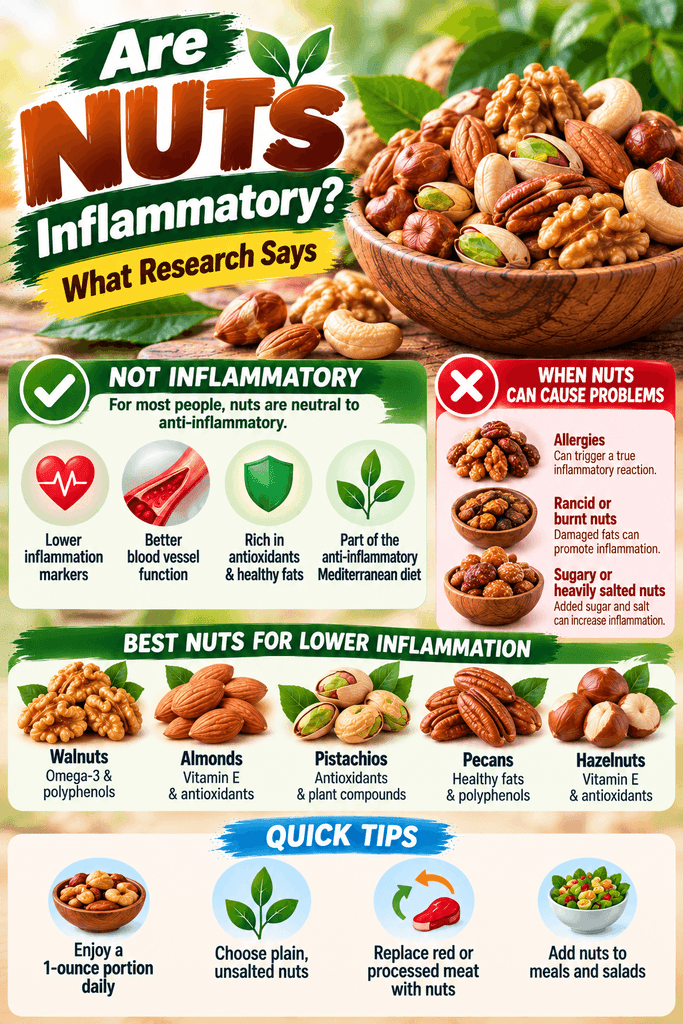
The research says no. For most people, nuts are neutral to anti-inflammatory. People who eat nuts regularly tend to have lower levels of inflammatory markers, and nuts are a core part of the Mediterranean diet, one of the best-studied anti-inflammatory eating patterns. This guide reviews what studies show and why the omega-6 worry doesn’t hold up. It also covers which nuts are best for inflammation and the few situations where nuts can cause problems.
Key Takeaways
- Nuts are not inflammatory for most people. Research links regular nut eating with lower inflammation markers.
- Large cohort study: people who ate nuts five or more times a week had lower CRP and IL-6, two key inflammatory markers, than people who rarely ate nuts.
- Clinical trials: a meta-analysis of 32 trials found nuts improved blood vessel function (flow-mediated dilation). Effects on CRP and IL-6 were neutral, not harmful.
- The omega-6 worry is overstated. An American Heart Association review found that omega-6 fats didn’t increase inflammation.
- Best picks: walnuts (omega-3 ALA, polyphenols), almonds, pistachios, pecans, and hazelnuts.
- When nuts can cause inflammation: allergies, rancid or burnt nuts, and sugary, heavily salted nut products.
Are Nuts Inflammatory? The Short Answer
No. For the vast majority of people, nuts don’t cause inflammation, and the evidence points toward a mild anti-inflammatory effect. Nuts contain:
- Unsaturated fats
- Fiber
- Magnesium
- Vitamin E
- Plant compounds called polyphenols
Each of these has been linked in research to healthier inflammatory profiles.
The main exceptions are nut allergies, where nuts trigger a true inflammatory immune reaction, and highly processed nut products with added sugar, salt, or damaged fats. For an overview of nut nutrition, see our complete guide to nuts.
What Is Inflammation, and How Is It Measured?
Inflammation is your immune system’s response to injury or infection. Short-term inflammation, like the swelling around a cut, is healthy. Chronic low-grade inflammation, which simmers for months or years, is associated with heart disease, diabetes, and other conditions.
Researchers measure it with blood markers such as:
- C-reactive protein (CRP): a widely used general marker of inflammation
- Interleukin-6 (IL-6): a signaling molecule that drives inflammation
- Adhesion molecules (ICAM-1, VCAM-1): markers of blood vessel inflammation
- Flow-mediated dilation (FMD): how well blood vessels relax, an indicator of endothelial health
What the Research Shows About Nuts and Inflammation
Nut eaters have lower inflammation markers
In a study in the American Journal of Clinical Nutrition, Harvard researchers analyzed more than 5,000 adults from the Nurses’ Health Study and the Health Professionals Follow-Up Study. They found:
- People who ate nuts five or more times a week had lower CRP and IL-6 than those who rarely or never ate nuts.
- Replacing three weekly servings of red meat, processed meat, eggs, or refined grains with nuts was linked to significantly lower CRP and IL-6.
This was a cross-sectional study, so it shows an association rather than proof that nuts lower inflammation. But it’s consistent with nuts’ heart benefits.
Clinical trials: neutral to beneficial
A meta-analysis of 32 randomized trials in BMJ Open looked at how nuts affect inflammation and blood vessel health:
- CRP and IL-6: no significant change
- Adhesion molecules: no significant change
- Flow-mediated dilation: significantly improved, by about 0.79 percentage points
In other words, nuts didn’t raise any inflammatory markers, and they improved blood vessel function. The authors noted that inflammation results varied between studies and called for more trials.
Nuts in an anti-inflammatory diet
In the PREDIMED trial in the New England Journal of Medicine, 7,447 adults at high heart risk followed a Mediterranean diet supplemented with 30 g of mixed nuts a day. They had about 28% fewer major cardiovascular events than people on a control diet. The Mediterranean diet is widely considered anti-inflammatory, and nuts were a central part of it. Our guide on whether nuts are good for your heart covers this research.
Why Nuts May Help Calm Inflammation
- Unsaturated fats. Harvard’s Nutrition Source explains that replacing saturated fat with unsaturated fats, like those in nuts, lowers heart disease risk. It also notes that trans fats, the worst fats, promote inflammation. Nuts contain no trans fat.
- Omega-3 ALA. Walnuts are the richest nut source of ALA, a plant omega-3. See which nuts are highest in omega-3.
- Polyphenols and vitamin E. These antioxidants help counter oxidative stress, which is closely tied to inflammation. Walnuts and pecans are especially rich in polyphenols, and almonds and hazelnuts in vitamin E.
- Fiber. Fiber feeds beneficial gut bacteria, which produce compounds that support a healthy gut lining.
- Magnesium. Many nuts are good sources of magnesium, a mineral involved in hundreds of enzyme reactions.
- Better blood vessel function. The improvement in flow-mediated dilation suggests nuts help blood vessels relax and function normally.
- Replacing inflammatory foods. When nuts replace processed meats, refined grains, and sugary snacks, overall diet quality improves.
The Omega-6 Question: Do Nuts Cause Inflammation?
A popular argument says nuts, especially walnuts, peanuts, pecans, and pine nuts, are inflammatory because they contain omega-6 linoleic acid. The theory is that linoleic acid turns into arachidonic acid, which the body uses to make inflammatory signaling molecules.
The research doesn’t support this. As Harvard Health reports, an American Heart Association science advisory found that eating more omega-6 fats didn’t increase inflammation. Instead, inflammatory markers either went down or stayed the same. The body converts only a small amount of linoleic acid into arachidonic acid, even when intake is high.
The AHA recommends getting 5–10% of daily calories from omega-6 fats, about 11 to 22 grams on a 2,000-calorie diet. Nuts are among the sources Harvard lists as healthy.
Some people focus on the omega-6 to omega-3 ratio. Walnuts help there too: they’re one of the few nuts with substantial omega-3 alongside their omega-6. The most useful approach is to eat more omega-3 foods, such as walnuts, flax, chia, and fatty fish, rather than avoiding healthy omega-6 sources.
Which Nuts Are Best for Inflammation?
All plain nuts fit an anti-inflammatory diet. Some stand out:
| Nut | Why it’s helpful |
| Walnuts | Richest nut source of omega-3 ALA, plus abundant polyphenols. See whether walnuts are healthy. |
| Almonds | High in vitamin E, fiber, and magnesium. |
| Pistachios | Rich in antioxidants and lower in calories than most nuts. |
| Pecans | High in polyphenols. |
| Hazelnuts | High in vitamin E and monounsaturated fat. |
| Macadamias | Rich in monounsaturated fat, like olive oil. |
| Peanuts | Affordable, with healthy fats and protein. Linked to lower risk of heart disease. |
Variety is a good strategy. PREDIMED used a mix of walnuts, almonds, and hazelnuts.
Are Peanuts Inflammatory?
Peanuts are legumes, and they’re sometimes singled out because of their omega-6 content and possible exposure to aflatoxin, a mold toxin. For most people, plain peanuts aren’t inflammatory. In large U.S. cohorts, people who ate peanuts regularly had a lower risk of heart disease. Choose fresh, unsalted peanuts and natural peanut butter, and throw out any that smell or taste stale.
When Nuts Can Cause Inflammation
Nut allergies
For people with peanut or tree nut allergies, nuts trigger a true immune reaction, the most extreme form of inflammation. Reactions range from hives and swelling to life-threatening anaphylaxis. Peanuts and tree nuts are major allergens that the FDA requires on food labels. If you’re allergic, avoid the nuts that affect you and follow your allergist’s plan.
Rancid or overheated nuts
Nut fats, especially the polyunsaturated fats in walnuts, can oxidize when nuts are old, poorly stored, or roasted at high heat. A Food Chemistry study found that a marker of fat oxidation rose about 17-fold in walnuts roasted at higher temperatures, and their antioxidant capacity dropped. Oxidized fats aren’t what you want in an anti-inflammatory diet. Choose raw or gently roasted nuts, store them in the fridge or freezer, and throw out any that smell like paint or old oil. See whether roasted nuts are healthy.
Sugary and heavily salted nut products
Honey-roasted, candied, chocolate-coated, and heavily salted nuts add sugar and sodium. Diets high in added sugar and refined foods are associated with poorer metabolic health. The FDA notes that most Americans already eat too much sodium. Choose plain nuts for an anti-inflammatory diet.
Excess calories
Nuts are calorie-dense. Excess body fat, especially around the waist, is itself a driver of chronic inflammation. Portions matter. Fortunately, research shows nuts don’t cause weight gain in normal amounts, as our guide on whether nuts are fattening explains.
Digestive sensitivity
Some people experience bloating or discomfort from large amounts of nuts, often because of their fiber and fat. This is usually a tolerance issue, not systemic inflammation. Start with small portions and increase gradually.
Myth: Nuts Cause Diverticulitis
For years, people with diverticulosis, small pouches in the colon wall, were told to avoid nuts, seeds, and popcorn to prevent diverticulitis, an inflammation of those pouches. Research overturned that advice.
In a study in JAMA of 47,228 men followed for 18 years, eating nuts and popcorn was not linked to diverticulitis or diverticular bleeding. There were even trends toward protection. The authors concluded that advice to avoid these foods should be reconsidered. If you have diverticular disease, talk with your doctor, but nuts don’t need to be automatically off the menu.
Nuts and Arthritis
People with inflammatory conditions like rheumatoid arthritis often look to diet for support. There’s limited direct research on nuts and arthritis. Still, nuts fit an overall Mediterranean-style, anti-inflammatory eating pattern, which is commonly recommended for long-term health. Nuts shouldn’t replace prescribed arthritis treatment. For other foods people use, see our article on whether turmeric is good for inflammation.
How to Use Nuts in an Anti-Inflammatory Diet
- Eat about 1 ounce a day. In the Harvard cohort, people who ate nuts five or more times a week had the lowest inflammatory markers.
- Swap, don’t add. Replace processed meats, refined grains, and sugary snacks with nuts. That swap was linked to lower CRP and IL-6.
- Prioritize walnuts. They bring the most omega-3. Mix them with almonds, pistachios, and hazelnuts for variety.
- Choose plain, fresh nuts. Raw or lightly roasted, unsalted or lightly salted.
- Store nuts cold. Refrigerate or freeze them to prevent rancidity.
- Pair them with other anti-inflammatory foods. Try walnuts on oatmeal with blueberries, almonds in a salad dressed with olive oil, or pistachios with fruit.
- Add fatty fish. For EPA and DHA omega-3s, eat fish like salmon or sardines twice a week, if you eat fish. See what fish oil is good for.
Myths vs. Facts
| Myth | Fact |
| Nuts are inflammatory because of omega-6. | An AHA review found omega-6 fats didn’t increase inflammation. Markers fell or stayed the same. |
| Nuts raise CRP. | Nut eaters have lower CRP, and trials show no increase. |
| Peanuts are especially inflammatory. | Plain peanuts are linked to lower heart disease risk in large studies. |
| People with diverticulosis must avoid nuts. | A large JAMA study found nuts weren’t linked to diverticulitis. |
| All nut products are anti-inflammatory. | Candied, salted, rancid, or burnt nuts aren’t ideal. Choose plain, fresh nuts. |
| Nuts can replace arthritis treatment. | Nuts support an overall healthy diet but don’t treat inflammatory diseases. |
How Nuts Fit an Anti-Inflammatory Lifestyle
No single food controls inflammation. The bigger picture matters:
- A Mediterranean-style diet rich in vegetables, fruits, whole grains, legumes, nuts, olive oil, and fish
- Limiting processed meats, refined grains, sugary drinks, and fried foods
- Regular physical activity
- Enough sleep
- Not smoking
- Maintaining a healthy weight
Within that pattern, a daily handful of plain nuts is one of the easiest anti-inflammatory habits to adopt. For more on the fats in nuts, see whether nuts are high in fat.
Frequently Asked Questions
Which nuts are most anti-inflammatory?
Walnuts are often considered the most anti-inflammatory nut because they’re rich in plant omega-3 (ALA) and polyphenols. Almonds, pistachios, pecans, and hazelnuts are also excellent choices thanks to their vitamin E, fiber, and healthy fats. Eating a variety of plain nuts is a smart approach.
Is the omega-6 in nuts inflammatory?
No, according to current evidence. An American Heart Association review found that eating more omega-6 fats didn’t increase inflammation. Markers either decreased or stayed the same. The AHA recommends getting 5–10% of calories from omega-6 fats, and nuts are a healthy source of them.
Are almonds inflammatory?
No. Almonds are rich in vitamin E, fiber, magnesium, and monounsaturated fat, all of which fit an anti-inflammatory diet. Large studies link regular nut consumption, including almonds, to lower inflammatory markers. Choose plain or lightly roasted almonds instead of candied or heavily salted versions.
Do peanuts cause inflammation?
For most people, plain peanuts don’t cause inflammation. Large U.S. studies link regular peanut consumption to lower heart disease risk. Choose fresh, unsalted peanuts or natural peanut butter, and discard any that smell stale. People with peanut allergies should avoid them completely.
Can nuts cause gut inflammation?
Nuts don’t typically cause gut inflammation, and a large study found they weren’t linked to diverticulitis. Some people feel bloated after large portions because of the fiber and fat. Start with small amounts. If you have inflammatory bowel disease, ask your doctor what’s right for you.
Are roasted nuts inflammatory?
Gently roasted nuts are fine. High-temperature roasting can oxidize some of the fats, especially in walnuts, and reduce antioxidants. For an anti-inflammatory diet, choose raw or lightly roasted nuts, avoid sugary coatings and heavy salt, and store nuts in the fridge or freezer to prevent rancidity.
Conclusion
So, are nuts inflammatory? For most people, no. People who eat nuts regularly have lower inflammatory markers, trials show nuts improve blood vessel function without raising inflammation, and the omega-6 concern isn’t supported by current evidence.
Choose plain, fresh nuts, especially walnuts, almonds, and pistachios. Eat about an ounce a day in place of processed and sugary foods. The exceptions are nut allergies and rancid, burnt, or heavily processed nut products.
Medical disclaimer: This article is for general information only and isn’t a substitute for professional medical advice. If you have a nut allergy, an inflammatory condition such as arthritis or inflammatory bowel disease, or other health concerns, talk with your doctor or a registered dietitian.
3. References
- Yu Z, Malik VS, Keum N, et al. Associations between nut consumption and inflammatory biomarkers. American Journal of Clinical Nutrition. 2016;104(3):722–728. https://doi.org/10.3945/ajcn.116.134205
- Neale EP, Tapsell LC, Guan V, Batterham MJ. The effect of nut consumption on markers of inflammation and endothelial function: a systematic review and meta-analysis of randomised controlled trials. BMJ Open. 2017;7(11):e016863. https://bmjopen.bmj.com/content/7/11/e016863
- Estruch R, Ros E, Salas-Salvadó J, et al. Primary prevention of cardiovascular disease with a Mediterranean diet supplemented with extra-virgin olive oil or nuts. New England Journal of Medicine. 2018;378(25):e34. https://pubmed.ncbi.nlm.nih.gov/29897866/
- Harvard T.H. Chan School of Public Health, The Nutrition Source. Types of Fat. Updated November 2025. https://nutritionsource.hsph.harvard.edu/what-should-you-eat/fats-and-cholesterol/types-of-fat/
- Harvard Health Publishing. No need to avoid healthy omega-6 fats. Updated August 2019. https://www.health.harvard.edu/staying-healthy/no-need-to-avoid-healthy-omega-6-fats
- Strate LL, Liu YL, Syngal S, Aldoori WH, Giovannucci EL. Nut, corn, and popcorn consumption and the incidence of diverticular disease. JAMA. 2008;300(8):907–914. https://pubmed.ncbi.nlm.nih.gov/18728264/
- Schlörmann W, Birringer M, Böhm V, et al. Influence of roasting conditions on health-related compounds in different nuts. Food Chemistry. 2015;180:77–85. https://doi.org/10.1016/j.foodchem.2015.02.017
- U.S. Food and Drug Administration. Food Allergies. https://www.fda.gov/food/food-labeling-nutrition/food-allergies
- U.S. Food and Drug Administration. Sodium in Your Diet. https://www.fda.gov/food/nutrition-education-resources-materials/sodium-your-diet