For decades, “low fat” was the gold standard for healthy eating, and nuts were treated with suspicion. Pick up a bag of almonds or macadamias and the Nutrition Facts label seems to confirm the worry: 14 to 21 grams of fat per handful. So, are nuts high in fat? And if they are, should you limit them?
Yes, nuts are high in fat. Most get 70% to 90% or more of their calories from it. But the type of fat matters far more than the amount. Most nut fat is unsaturated, the kind that lowers LDL cholesterol and protects the heart when it replaces saturated fat. This guide ranks every common nut by fat content, explains which fats each contains, and covers what the research says about nuts, cholesterol, and weight. It also shows how to enjoy nuts without overdoing the calories.
Key Takeaways
- Yes, nuts are high in fat. Most contain 12–21 g of fat per ounce, and fat supplies roughly 70–95% of their calories.
- Most of that fat is unsaturated. Monounsaturated and polyunsaturated fats make up about 80–95% of the fat in most nuts.
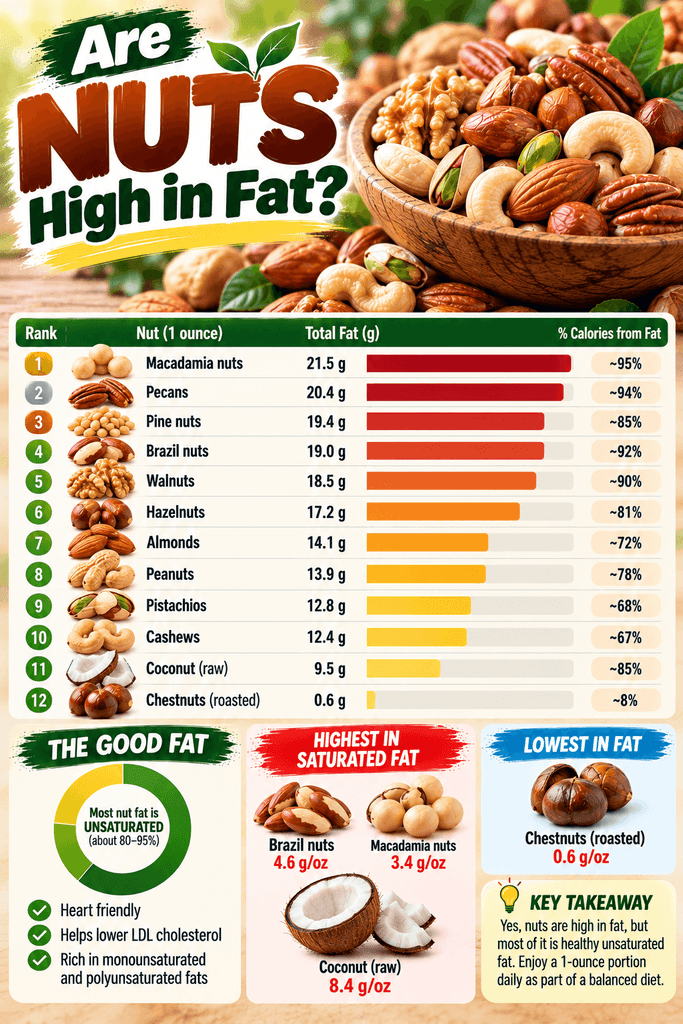
- Highest-fat nuts: macadamias (21.5 g/oz), pecans (20.4 g), and pine nuts (19.4 g). Lowest: chestnuts (0.6 g), cashews (12.4 g), and pistachios (12.8 g).
- Highest in saturated fat: Brazil nuts (4.6 g/oz) and macadamias (3.4 g). Coconut is in its own league (8.4 g).
- Nut fat is linked to heart benefits. Each daily ounce of tree nuts lowered LDL by about 4.8 mg/dL in a 61-trial meta-analysis.
- High fat doesn’t mean fattening. Trials show no weight gain from nuts in normal portions.
Are Nuts High in Fat? The Short Answer
Yes. By weight, nuts are about 45–75% fat, which makes them among the most fat-dense whole foods you can eat. One ounce (28 g) of almonds has about 14 g of fat. The same amount of macadamias has about 21 g.
“High in fat” isn’t the same as “unhealthy,” though. Harvard’s Nutrition Source explains that unsaturated fats, found mainly in plant foods such as vegetable oils, nuts, and seeds, are the healthiest kinds of fat. It also notes that replacing saturated fat with these “good fats” lowers heart disease risk, while replacing it with refined carbohydrates doesn’t.
That’s why health authorities encourage eating nuts despite their fat content. The FDA has even allowed a qualified health claim linking 1.5 ounces of most nuts a day to reduced heart disease risk. For an overview of every nut, see our complete guide to nuts.
Fat in Nuts: The Complete Ranking
All values are per 1 ounce (28 g), calculated from USDA FoodData Central SR Legacy records, and sorted from highest to lowest total fat.
| Nut (1 oz) | Total fat | Saturated | Monounsaturated | Polyunsaturated | % calories from fat* |
| Macadamia nuts | 21.5 g | 3.4 g | 16.7 g | 0.4 g | ~95% |
| Pecans | 20.4 g | 1.8 g | 11.6 g | 6.1 g | ~94% |
| Pine nuts | 19.4 g | 1.4 g | 5.3 g | 9.7 g | ~85% |
| Brazil nuts | 19.0 g | 4.6 g | 6.8 g | 6.9 g | ~92% |
| Walnuts | 18.5 g | 1.7 g | 2.5 g | 13.4 g | ~90% |
| Hazelnuts | 17.2 g | 1.3 g | 13.0 g | 2.2 g | ~81% |
| Almonds | 14.1 g | 1.1 g | 9.0 g | 3.5 g | ~72% |
| Peanuts | 13.9 g | 1.8 g | 6.9 g | 4.4 g | ~78% |
| Pistachios | 12.8 g | 1.7 g | 6.6 g | 4.1 g | ~68% |
| Cashews | 12.4 g | 2.2 g | 6.8 g | 2.2 g | ~67% |
| Coconut meat, raw | 9.5 g | 8.4 g | — | — | ~85% |
| Chestnuts, roasted | 0.6 g | — | — | — | ~8% |
*Approximate, calculated as fat grams × 9 ÷ total calories. The three fat types don’t always add up to the total, because USDA also counts small amounts of other fats.
What stands out:
- Macadamias, pecans, pine nuts, Brazil nuts, and walnuts are the “fattiest” nuts, at 18–22 g per ounce.
- Cashews and pistachios are the lowest-fat true nuts, at about 12–13 g per ounce.
- Chestnuts are the outlier. They’re starchy, with less than 1 g of fat per ounce, more like a grain than a nut.
- Coconut is the other outlier. It’s lower in total fat per ounce, but nearly all of that fat is saturated.
Which Nuts Have the Most Fat?
Macadamia nuts: the fattiest nut
Macadamias top the list with about 21.5 g of fat per ounce, and about 95% of their calories come from fat. Nearly 80% of that fat is monounsaturated, the same type found in olive oil. That profile earned macadamias their own FDA qualified health claim for heart disease in 2017. They also have more saturated fat than most nuts, about 3.4 g per ounce. See whether macadamia nuts are healthy.
Pecans: high fat, low carb
Pecans contain about 20 g of fat per ounce, mostly monounsaturated, with very few carbs. That makes them a favorite on low-carb and keto diets.
Walnuts: the polyunsaturated powerhouse
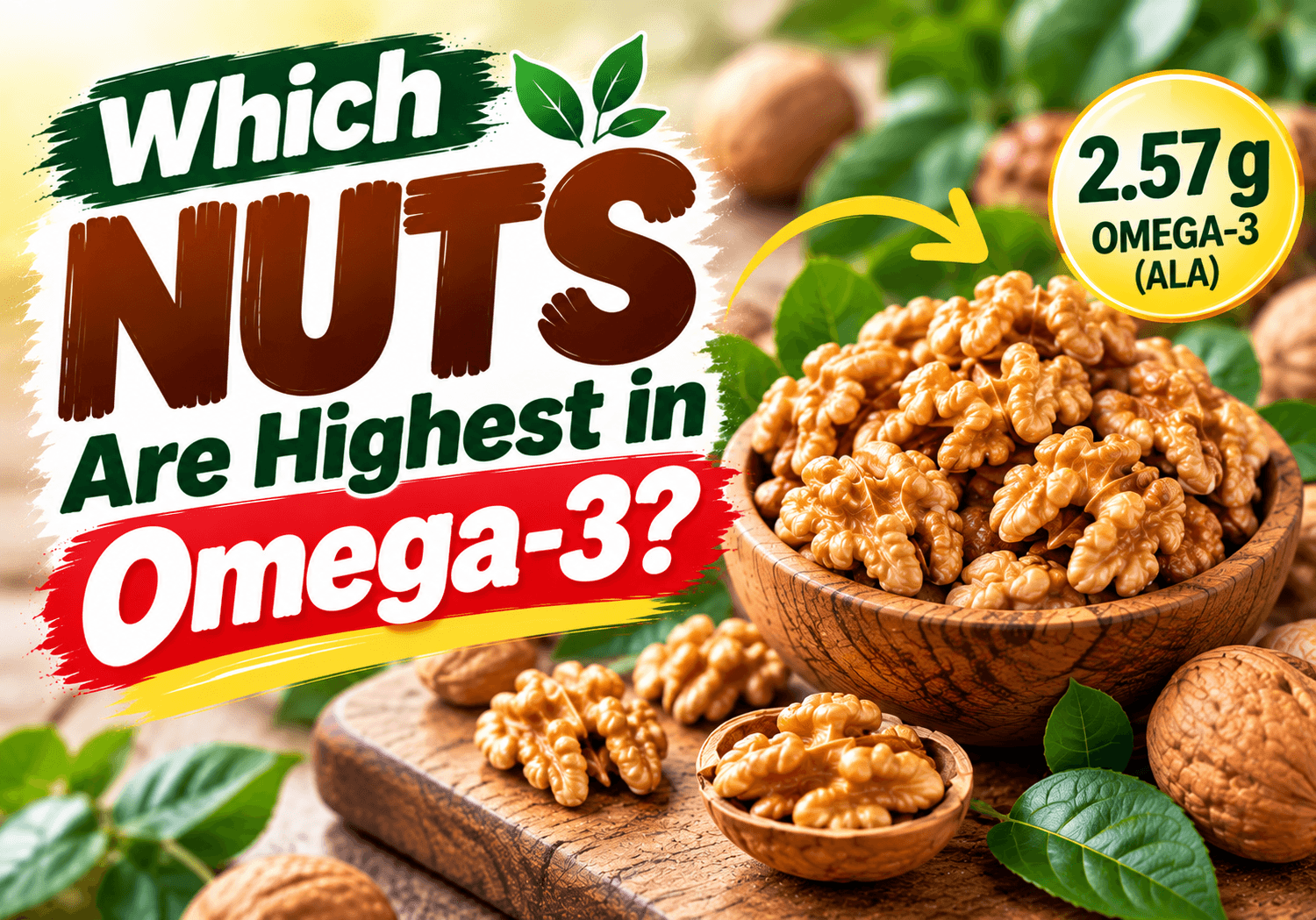
Walnuts have about 18.5 g of fat per ounce, and more than 70% of it is polyunsaturated. That includes about 2.6 g of plant omega-3 (ALA), the most of any nut. See which nuts are highest in omega-3.
Brazil nuts: highest in saturated fat
Brazil nuts have about 19 g of fat per ounce, including about 4.6 g of saturated fat. That’s the most of any common true nut, and about 23% of the FDA’s 20-gram Daily Value for saturated fat. Because of their very high selenium content, you only need one or two a day anyway.
Which Nuts Have the Least Fat?
If you want the benefits of nuts with somewhat less fat, choose:
- Chestnuts (0.6 g per ounce, roasted). They’re nearly fat-free but much higher in carbohydrates.
- Cashews (12.4 g). They’re the lowest-fat common tree nut, with a creamy texture.
- Pistachios (12.8 g). Low in fat for a nut, high in protein, and you get about 49 per ounce.
- Peanuts (13.9 g). Technically a legume, with the most protein of the group.
- Almonds (14.1 g). They also have the least saturated fat (1.1 g) and the most fiber.
The differences between these nuts are a few grams per ounce. Portion size matters much more than which nut you choose. Our article on whether nuts are high in protein shows which of these lower-fat nuts deliver the most protein per calorie.
Is the Fat in Nuts Good for You?
Mostly unsaturated
In almonds, hazelnuts, macadamias, pecans, pistachios, walnuts, and pine nuts, about 85–93% of the fat is unsaturated. Harvard notes that unsaturated fats, along with the polyunsaturated fats in walnuts and fish, are the healthiest fats in the diet.
What about saturated fat?
The Dietary Guidelines recommend keeping saturated fat below 10% of daily calories, as Harvard summarizes. Most nuts contain only 1–2 g of saturated fat per ounce, a small share of the 20-gram Daily Value. The exceptions:
- Brazil nuts: 4.6 g per ounce. Fine in the one-to-two-nut portion recommended for their selenium.
- Macadamias: 3.4 g per ounce. Still mostly monounsaturated.
- Coconut: 8.4 g per ounce, and nearly all its fat is saturated. Treat coconut differently from other nuts.
For comparison, butter is mostly saturated fat. Our guide on whether butter is bad for cholesterol explains why that matters.
No trans fat or cholesterol
Plain nuts contain no artificial trans fat and no cholesterol, since cholesterol is found only in animal foods. Harvard calls trans fats the worst type of fat for the heart. Avoid nut products made with partially hydrogenated oils, though these have largely disappeared from the U.S. food supply.
Health Benefits of Nut Fats
Lower LDL cholesterol
When nuts replace foods higher in saturated fat or refined carbohydrates, they lower LDL (“bad”) cholesterol. A meta-analysis of 61 trials in the American Journal of Clinical Nutrition found that each daily ounce of tree nuts lowered:
- Total cholesterol by about 4.7 mg/dL
- LDL by about 4.8 mg/dL
- Triglycerides by about 2.2 mg/dL
The effects were stronger at higher intakes. For cashews specifically, see whether cashews are good for cholesterol.
Fewer heart attacks and strokes
In the PREDIMED trial in the New England Journal of Medicine, adults at high heart risk followed a Mediterranean diet with 30 g of mixed nuts a day. They had about 28% fewer major cardiovascular events than people on a control diet that advised cutting dietary fat. In other words, the higher-fat nut diet beat the low-fat advice. Our article on whether nuts are good for your heart covers more of the evidence.
Better blood sugar control
Fat slows digestion, so pairing nuts with carbohydrates can blunt the spike in blood sugar after a meal. For details, see which nuts are best for diabetics.
Fat-soluble nutrients
Nut fat comes packaged with vitamin E, plant sterols, and polyphenols. It also helps your body absorb fat-soluble vitamins and carotenoids from other foods eaten at the same meal, such as a salad.
High Fat, But Not Fattening
Fat has 9 calories per gram, more than twice the 4 per gram in carbs or protein. That’s why nuts carry 160–200 calories per ounce. Yet research consistently shows nuts don’t cause weight gain in normal portions:
- Weight-loss research: A meta-analysis in Obesity Reviews of 86 randomized trials found no meaningful weight gain from adding nuts. Long-term cohorts linked nut eating to a 7% lower risk of overweight or obesity.
- Fat is partly trapped: The USDA Agricultural Research Service found that people absorb fewer calories from nuts than labels state, for example about 129 vs. 168–170 calories per ounce of almonds. Part of the fat stays locked inside the nuts’ cell walls and is never absorbed.
- Fat keeps you full: Fat, protein, and fiber together make nuts satisfying, so people tend to eat less of other foods.
Our guide on whether nuts are fattening explains the research in detail.
Who Should Watch Nut Fat Intake
- People on a strict calorie budget. Nuts are healthy but calorie-dense. Stick to about an ounce, roughly a small handful.
- People with pancreatitis or fat-malabsorption conditions. Some need a medically prescribed low-fat diet. Follow your doctor’s advice.
- People with gallbladder problems. High-fat meals can trigger symptoms in some people. Ask your doctor about portions.
- People with nut allergies. Peanuts and tree nuts are major allergens. The FDA requires them to be declared on labels.
- People watching saturated fat. Choose almonds, hazelnuts, pecans, and walnuts over Brazil nuts and coconut.
How Much Fat Is in a Handful of Nuts?
| Portion | Total fat | Calories (approx.) |
| 23 almonds (1 oz) | 14 g | 164 |
| 49 pistachios (1 oz) | 13 g | 159 |
| 18 cashews (1 oz) | 12 g | 157 |
| 14 walnut halves (1 oz) | 18.5 g | 185 |
| 19 pecan halves (1 oz) | 20 g | 196 |
| 10–12 macadamias (1 oz) | 21.5 g | 204 |
| 2 tbsp peanut butter | ~16 g | ~190 |
How to Enjoy Nut Fats the Healthy Way
- Stick to about 1 ounce a day. That’s enough for the benefits without excess calories.
- Use nuts to replace less healthy fats. Try walnuts instead of croutons, almond butter instead of butter on toast, or nuts instead of chips.
- Choose plain nuts. Raw or dry-roasted, unsalted or lightly salted. Oil-roasting adds a little fat, and candied coatings add sugar. See whether roasted nuts are healthy.
- Mix nut types. Walnuts bring omega-3s, almonds bring vitamin E and fiber, and macadamias bring monounsaturated fat.
- Pick natural nut butters. Choose ones with just nuts and maybe salt. Skip added sugars and hydrogenated oils. See whether peanut butter is healthy.
- Pair nuts with produce. Nuts on salads or with fruit help you absorb fat-soluble vitamins and carotenoids.
- Store nuts cold. Unsaturated fats can go rancid. Refrigerate or freeze nuts for longer storage.
Myths vs. Facts
| Myth | Fact |
| Nuts are unhealthy because they’re high in fat. | Most nut fat is unsaturated and linked to lower LDL and heart risk. |
| All fat in nuts is saturated. | Saturated fat is usually only 1–2 g per ounce. Coconut and Brazil nuts are the exceptions. |
| Low-fat snacks are better than nuts. | Replacing saturated fat with refined carbs doesn’t lower heart risk. Nuts do. |
| Eating fatty nuts makes you fat. | Trials show nuts don’t cause weight gain in normal portions, and some fat isn’t absorbed. |
| Nuts raise cholesterol. | Plant foods contain no cholesterol, and nuts lower LDL when they replace other foods. |
| Macadamias are too fatty to be healthy. | Their fat is mostly monounsaturated, and the FDA allows a qualified heart claim for them. |
How Nut Fats Fit a Healthy Diet
The healthiest eating patterns, such as the Mediterranean diet, aren’t low in fat. They’re high in good fats from nuts, olive oil, avocados, and fish, and low in saturated fat from processed meats and refined baked goods. Nuts fit right in alongside other plant fats like olive oil and avocados.
Build your plate around vegetables, fruits, whole grains, and legumes. Choose fish, poultry, and plant proteins more often than red and processed meats. Then add a daily handful of nuts as one of your main sources of healthy fat.
Frequently Asked Questions
Which nut has the least fat?
Chestnuts have by far the least fat, about 0.6 grams per ounce roasted, because they’re starchy rather than oily. Among typical nuts, cashews (about 12.4 g per ounce) and pistachios (about 12.8 g) are lowest. Macadamias are highest at about 21.5 grams per ounce.
Are nuts high in saturated fat?
Most nuts are low in saturated fat, about 1–2 grams per ounce, compared with the 20-gram Daily Value. Brazil nuts (4.6 g) and macadamias (3.4 g) contain more. Coconut is the major exception, with about 8.4 grams per ounce, nearly all of its fat. Most nut fat is unsaturated.
Is the fat in nuts good for you?
Yes, for most people. Nuts are rich in monounsaturated and polyunsaturated fats, which lower LDL cholesterol when they replace saturated fat or refined carbs. A meta-analysis of 61 trials found tree nuts lowered LDL, and the PREDIMED trial linked a nut-rich diet to fewer heart attacks and strokes.
Are peanuts high in fat?
Yes. Peanuts have about 14 grams of fat per ounce, and roughly 78% of their calories come from fat. Most of that fat is unsaturated, with about 1.8 grams of saturated fat. Peanuts also provide the most protein of any common nut, about 7 grams per ounce.
Do nuts raise cholesterol?
No. Nuts contain no cholesterol and tend to lower LDL cholesterol, especially when they replace foods high in saturated fat or refined carbohydrates. In controlled trials, each daily ounce of tree nuts lowered LDL by about 4.8 mg/dL. Choose plain nuts rather than chocolate-coated or candied versions.
Are cashews high in fat?
Cashews are moderately high in fat for a food, but low for a nut, at about 12.4 grams per ounce. About 67% of their calories come from fat, mostly monounsaturated. They contain about 2.2 grams of saturated fat per ounce, and they’re one of the lower-fat, lower-calorie tree nut choices.
Conclusion
So, are nuts high in fat? Yes. Most get 70–95% of their calories from fat, and macadamias, pecans, and Brazil nuts are the fattiest. But most of that fat is unsaturated and linked to lower LDL cholesterol, fewer heart attacks, and no weight gain in normal portions.
Enjoy about an ounce of plain nuts a day, choose lower-saturated-fat options like almonds, walnuts, and pistachios most often, and use nuts to replace less healthy snacks and fats. When it comes to nuts, the quality of the fat matters far more than the quantity.
Medical disclaimer: This article is for general information only and isn’t a substitute for professional medical or nutrition advice. If you have high cholesterol, pancreatitis, gallbladder disease, a nut allergy, or need a special diet, talk with your doctor or a registered dietitian.
3. References
- Harvard T.H. Chan School of Public Health, The Nutrition Source. Types of Fat. Updated November 2025. https://nutritionsource.hsph.harvard.edu/what-should-you-eat/fats-and-cholesterol/types-of-fat/
- U.S. Food and Drug Administration. Qualified Health Claims: Letters of Enforcement Discretion (Nuts, 2003; Walnuts, 2004; Macadamia Nuts, 2017). https://www.fda.gov/food/food-labeling-nutrition/qualified-health-claims-letters-enforcement-discretion
- U.S. Food and Drug Administration. FDA Completes Review of Qualified Health Claim Petition for Macadamia Nuts and the Risk of Coronary Heart Disease. July 24, 2017. https://www.fda.gov/Food/NewsEvents/ConstituentUpdates/ucm568052.htm
- U.S. Food and Drug Administration. Daily Value on the Nutrition and Supplement Facts Labels. https://www.fda.gov/food/nutrition-facts-label/daily-value-nutrition-and-supplement-facts-labels
- USDA FoodData Central. SR Legacy records: macadamia nuts (170178), pecans (170182), pine nuts (170591), Brazil nuts (170569), walnuts (170187), hazelnuts (170581), almonds (170567), peanuts (172430), pistachios (170184), cashews (170162), coconut meat (170169), roasted chestnuts (170190). https://fdc.nal.usda.gov/
- Del Gobbo LC, Falk MC, Feldman R, Lewis K, Mozaffarian D. Effects of tree nuts on blood lipids, apolipoproteins, and blood pressure: systematic review, meta-analysis, and dose-response of 61 controlled intervention trials. American Journal of Clinical Nutrition. 2015;102(6):1347–1356. https://pubmed.ncbi.nlm.nih.gov/26561616/
- Estruch R, Ros E, Salas-Salvadó J, et al. Primary prevention of cardiovascular disease with a Mediterranean diet supplemented with extra-virgin olive oil or nuts. New England Journal of Medicine. 2018;378(25):e34. https://pubmed.ncbi.nlm.nih.gov/29897866/
- Nishi SK, Viguiliouk E, Blanco Mejia S, et al. Are fatty nuts a weighty concern? A systematic review and meta-analysis and dose-response meta-regression of prospective cohorts and randomized controlled trials. Obesity Reviews. 2021;22(11):e13330. https://pmc.ncbi.nlm.nih.gov/articles/PMC9285885/
- U.S. Department of Agriculture, Agricultural Research Service. Calories in nuts (Baer DJ, Novotny JA). AgResearch Magazine, March 2018. https://agresearchmag.ars.usda.gov/2018/mar/calories
- U.S. Food and Drug Administration. Food Allergies. https://www.fda.gov/food/food-labeling-nutrition/food-allergies