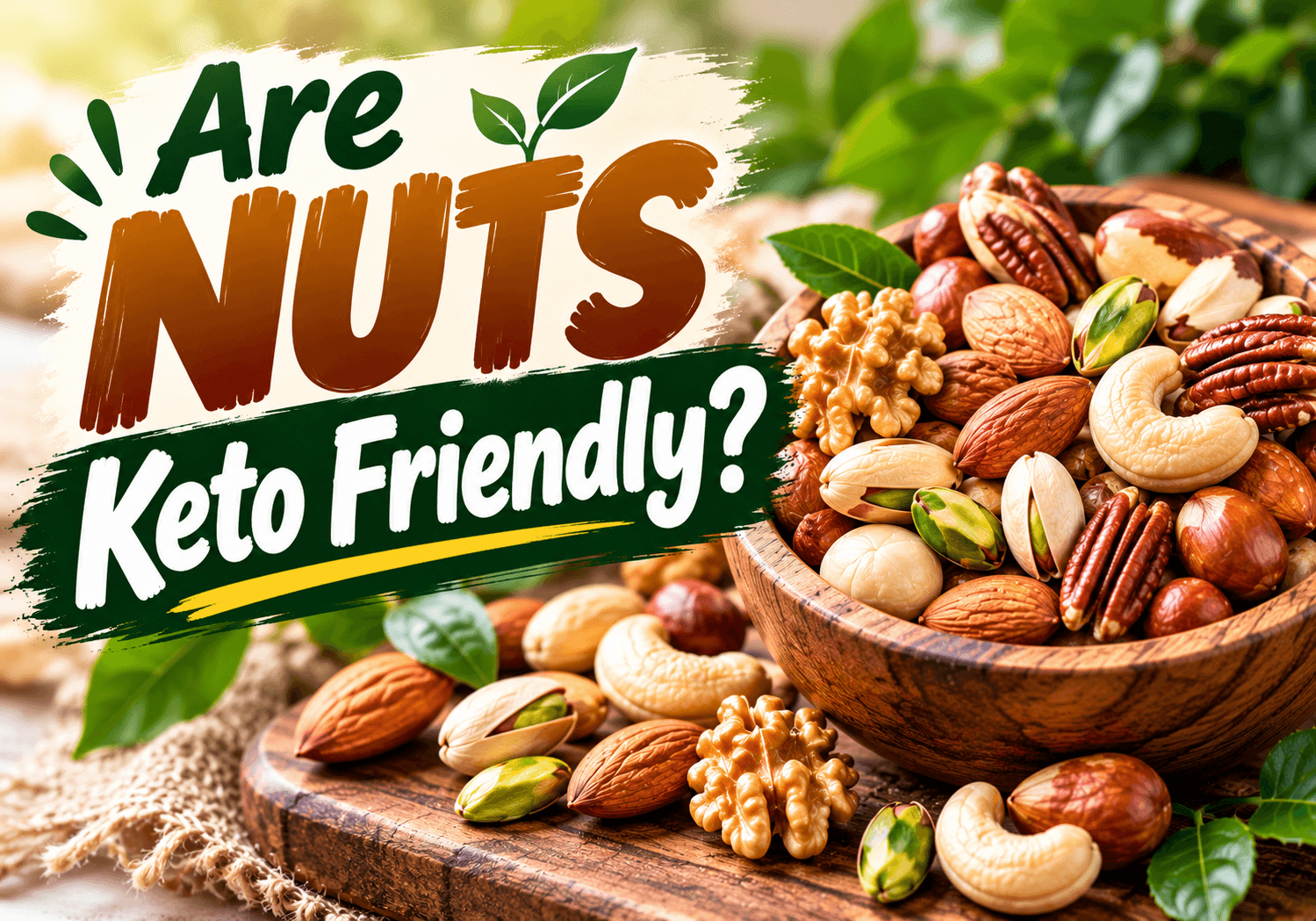
On a ketogenic diet, every gram of carbohydrate counts. Nuts look like the perfect keto snack: crunchy, rich in fat, and easy to carry. But some nuts have six times the carbs of others, and a few handfuls of the wrong kind can use up most of your daily allowance. So, are nuts keto friendly?
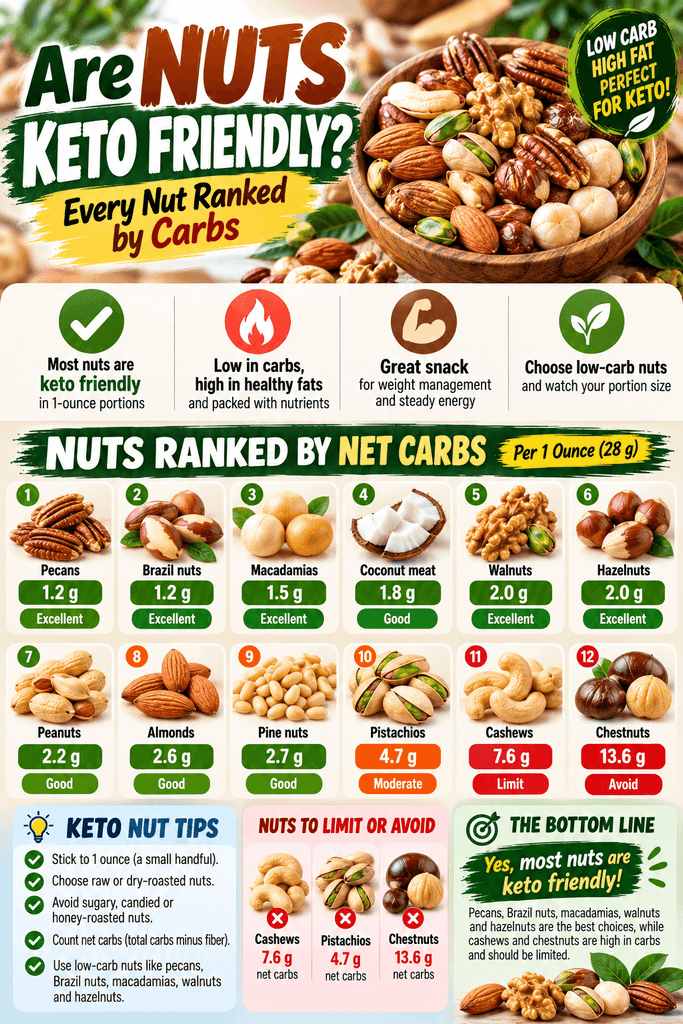
Most are, in sensible portions. Pecans, Brazil nuts, macadamias, walnuts, and hazelnuts are among the best foods you can eat on keto. Cashews, pistachios, and chestnuts take more careful planning. This guide ranks every common nut by net carbs and shows how many fit your daily limit. It also covers nut butters and flours, and the mistakes that most often stall keto progress.
Key Takeaways
- Most nuts are keto friendly in 1-ounce portions. They’re high in fat, moderate in protein, and low in net carbs.
- The lowest-carb nuts per ounce are pecans (1.2 g net carbs), Brazil nuts (1.2 g), macadamias (1.5 g), walnuts (2.0 g), and hazelnuts (2.0 g).
- Use more carefully: almonds (2.6 g), pine nuts (2.7 g), and pistachios (4.7 g).
- Least keto-friendly: cashews (7.6 g net carbs per ounce) and chestnuts (13.6 g).
- Keto diets typically limit carbs to under 50 g a day, sometimes as low as 20 g, so portions matter.
- Watch portions, flavored nuts, and nut butters with added sugar.
Are Nuts Keto Friendly? The Short Answer
Yes, most nuts fit a ketogenic diet well. According to Harvard’s Nutrition Source, a keto diet typically keeps carbohydrates under 50 grams a day, sometimes as low as 20 grams. A typical macro split is about:
- 70–80% of calories from fat
- 10–20% from protein
- 5–10% from carbohydrate
Harvard specifically lists nuts such as macadamias, walnuts, almonds, and pecans among keto-friendly foods.
Nuts fit because most of their calories come from fat, and much of their carbohydrate is fiber. The trouble is portion size and nut choice. One ounce of pecans uses about 6% of a 20-gram carb budget. One ounce of cashews uses nearly 40%.
Understanding Net Carbs in Nuts
Most keto dieters count net carbs: total carbohydrates minus fiber. As UCLA Health physicians explain, fiber doesn’t significantly affect blood sugar levels, which is why it’s often subtracted. They also note that the FDA doesn’t officially recognize the “net carbs” concept, so food labels list total carbohydrates. You’ll need to do the subtraction yourself.
Nuts are naturally high in fiber, so their net carbs are often much lower than their total carbs. Almonds, for example, have about 6.1 g of total carbs per ounce, but 3.5 g of that is fiber. That leaves about 2.6 g net carbs.
If you count total carbs instead of net carbs, pick from the lowest-total-carb nuts in the table below: Brazil nuts, pine nuts, walnuts, pecans, and macadamias.
Which Nuts Are Lowest in Carbs? The Complete Keto Ranking
All values are per 1 ounce (28 g), calculated from USDA FoodData Central SR Legacy records. They’re sorted from lowest to highest net carbs.
| Rank | Nut (1 oz) | Total carbs | Fiber | Net carbs | Fat | Keto rating |
| 1 | Pecans | 3.9 g | 2.7 g | 1.2 g | 20.4 g | Excellent |
| 2 | Brazil nuts | 3.3 g | 2.1 g | 1.2 g | 19.0 g | Excellent (limit to 1–2 nuts) |
| 3 | Macadamia nuts | 3.9 g | 2.4 g | 1.5 g | 21.5 g | Excellent |
| 4 | Coconut meat, raw | 4.3 g | 2.6 g | 1.8 g | 9.5 g | Good (high saturated fat) |
| 5 | Walnuts | 3.9 g | 1.9 g | 2.0 g | 18.5 g | Excellent |
| 6 | Hazelnuts | 4.7 g | 2.8 g | 2.0 g | 17.2 g | Excellent |
| 7 | Peanuts | 4.6 g | 2.4 g | 2.2 g | 13.9 g | Good |
| 8 | Almonds | 6.1 g | 3.5 g | 2.6 g | 14.1 g | Good |
| 9 | Pine nuts | 3.7 g | 1.0 g | 2.7 g | 19.4 g | Good |
| 10 | Pistachios | 7.7 g | 3.0 g | 4.7 g | 12.8 g | Moderate, portion carefully |
| 11 | Cashews | 8.6 g | 0.9 g | 7.6 g | 12.4 g | Limit |
| 12 | Chestnuts, roasted | 15.0 g | 1.4 g | 13.6 g | 0.6 g | Avoid on strict keto |
The Best Nuts for Keto
1. Pecans: the lowest-carb nut
With only about 1.2 g net carbs and 20 g of fat per ounce, pecans are close to the ideal keto food. They’re also rich in manganese and work well in keto baking and desserts. See whether pecans are healthy.
2. Macadamia nuts: the highest in fat
Macadamias have the most fat of any nut, about 21.5 g per ounce, and only about 1.5 g net carbs. Most of their fat is monounsaturated, the same type found in olive oil. Our guide on whether macadamia nuts are healthy covers their heart benefits.
3. Brazil nuts: low-carb, but limit the number
Brazil nuts are as low in net carbs as pecans. Their limit isn’t carbs, though; it’s selenium. A single Brazil nut can contain more selenium than you need in a day, and the NIH Office of Dietary Supplements sets an adult upper limit of 400 mcg a day. Stick to one or two. Our guide on how many Brazil nuts a day explains why.
4. Walnuts: keto-friendly omega-3s
Walnuts provide about 2 g net carbs per ounce and are the richest nut source of ALA, a plant omega-3 fat. That makes them a smart choice for heart health on a high-fat diet. See whether walnuts are healthy.
5. Hazelnuts: great for baking
With about 2 g net carbs per ounce, hazelnuts work well in keto baking, as hazelnut meal, and in homemade chocolate-hazelnut spreads sweetened without sugar.
Nuts to Eat Carefully on Keto
Almonds and peanuts
Almonds (2.6 g net carbs) and peanuts (2.2 g) fit keto easily in 1-ounce portions. Both are versatile. Almond flour is a keto baking staple, and natural peanut butter is a popular keto fat. Be careful with portions, though. Their carbs add up faster than those of pecans or macadamias. See whether peanut butter is keto and whether almond flour is healthy.
Pine nuts
Pine nuts are low in total carbs but have little fiber, so their net carbs (about 2.7 g) are similar to almonds. They’re usually eaten in small amounts, for example in pesto, so they fit well.
Pistachios
At about 4.7 g net carbs per ounce, pistachios can still fit keto. That’s roughly 49 pistachios, enough to use a quarter of a 20-gram carb budget. Measure portions, and buy in-shell pistachios to slow down. See whether pistachios are healthy.
Nuts to Limit or Avoid on Keto
Cashews
Cashews are the highest-carb common nut, at about 7.6 g net carbs per ounce, with very little fiber. That’s nearly 40% of a strict 20-gram carb budget in one small handful. Many keto plans limit cashews to small amounts used as an ingredient. Our guide on whether cashews are healthy covers their benefits outside of keto.
Chestnuts
Chestnuts aren’t a fatty nut at all. They’re starchy, with about 13.6 g net carbs and less than 1 g of fat per ounce. They don’t fit strict keto.
Coconut: a special case
Raw coconut meat is low in net carbs (about 1.8 g per ounce) and is a keto favorite. However, most of its fat is saturated: about 8.4 g per ounce. On a diet that’s already high in fat, balance coconut with unsaturated fats from nuts like walnuts and macadamias. See whether coconut is healthy.
Why Nuts Are Good for a Keto Diet
Beyond carb counts, nuts bring real benefits to a ketogenic diet:
- Healthier fats. Keto diets can be heavy in saturated fat. Harvard notes that this emphasis may raise LDL cholesterol. Nuts provide unsaturated fats instead. A meta-analysis of 61 trials in the American Journal of Clinical Nutrition found that each daily ounce of tree nuts lowered LDL by about 4.8 mg/dL. Our guide on whether nuts are good for your heart covers the full evidence.
- Fiber. Keto diets often lack fiber, and Harvard lists constipation as a common short-term side effect. Nuts like almonds, pecans, and hazelnuts add 2.5–3.5 g of fiber per ounce.
- Minerals. Harvard notes that keto diets can fall short in magnesium, zinc, and other minerals. Nuts supply magnesium, zinc, copper, manganese, and selenium.
- Convenience. Nuts are shelf-stable, portable, and need no preparation. That makes it easier to stick to keto away from home.
Who Should Be Careful With Keto and Nuts
Talk to your doctor before starting keto if you…
- Have type 1 diabetes, or take insulin or other diabetes medicines. Harvard notes that ketoacidosis mostly occurs in people with type 1 diabetes.
- Have kidney disease, liver disease, or a history of kidney stones. Harvard lists kidney stones as a possible long-term effect of keto.
- Are pregnant or breastfeeding, or are planning a keto diet for a child or teen.
Nut allergies
Peanuts and tree nuts are major allergens that the FDA requires on labels. If you’re allergic, keto-friendly seeds such as pumpkin, sunflower, and flax are alternatives, as long as your allergist approves.
Calories can stall weight loss
Nuts are low in carbs but high in calories, at 160–200 per ounce. Eating several handfuls a day can stall weight loss even while you stay in ketosis. See whether nuts are fattening for portion strategies.
Hidden carbs and sodium
Honey-roasted, candied, chocolate-coated, and trail-mix nuts can contain several times the carbs of plain nuts. Heavily salted nuts add sodium; the FDA notes that most Americans already eat too much.
How Many Nuts Can You Eat on Keto?
For most people, 1 ounce (28 g) of nuts a day is a safe starting point. Here’s how much of your carb budget different nuts use:
| Nut (1 oz) | Net carbs | % of a 20 g budget | % of a 50 g budget |
| Pecans (~19 halves) | 1.2 g | 6% | 2% |
| Macadamias (~10–12) | 1.5 g | 8% | 3% |
| Walnuts (~14 halves) | 2.0 g | 10% | 4% |
| Almonds (~23) | 2.6 g | 13% | 5% |
| Pistachios (~49) | 4.7 g | 24% | 9% |
| Cashews (~18) | 7.6 g | 38% | 15% |
The stricter your carb limit, the more you should lean toward the top of this list.
Practical Tips for Eating Nuts on Keto
- Weigh or pre-portion nuts. Divide large bags into 1-ounce servings.
- Choose plain nuts. Raw or dry-roasted, unsalted or lightly salted. No honey, sugar, or chocolate coatings.
- Read nut butter labels. Choose ones made only from nuts and maybe salt. Avoid added sugar and syrups.
- Build your own mixed nuts. Store-bought mixes are often heavy in cashews and peanuts. Mix pecans, macadamias, walnuts, and almonds instead.
- Use nut flours for baking. Almond and hazelnut flours replace wheat flour with a fraction of the carbs.
- Pair nuts with other keto foods. Try walnuts on a spinach salad, pecans with cheese, or macadamias with dark chocolate (85% or higher), in small amounts.
- Store nuts in the fridge or freezer. Their unsaturated fats can go rancid at room temperature.
Myths vs. Facts
| Myth | Fact |
| All nuts are equally keto-friendly. | Net carbs range from about 1.2 g (pecans) to 13.6 g (chestnuts) per ounce. |
| You can eat unlimited nuts on keto because they’re low-carb. | Carbs and calories still add up. Several handfuls can stall ketosis or weight loss. |
| Peanuts aren’t allowed because they’re legumes. | Peanuts are low in net carbs (about 2.2 g/oz) and fit most keto plans. |
| Cashews are a great keto snack. | Cashews are the highest-carb common nut and should be limited. |
| Food labels show net carbs. | U.S. labels list total carbs. You subtract fiber yourself. |
| Keto is safe for everyone. | Some people, including those with type 1 diabetes or kidney or liver disease, should get medical advice first. |
How Nuts Fit a Healthy Keto Lifestyle
Long-term research on keto is limited. Harvard notes that most studies are short, and that the diet’s weight-loss advantage over conventional diets fades after about a year. If you choose keto, building it around unsaturated fats, low-carb vegetables, and quality protein is healthier than relying on processed meats and butter. Nuts play a big role in that healthier version.
Use 1 ounce of low-carb nuts a day as your main snack fat, choose plain varieties, and mix different nuts for a range of nutrients. If you’re considering keto for weight loss or blood sugar, our article on whether keto is safe covers the pros and cons in more detail.
Frequently Asked Questions
What nuts can you eat on keto?
The best keto nuts are pecans, Brazil nuts, macadamias, walnuts, and hazelnuts, all at about 2 grams of net carbs or less per ounce. Almonds, peanuts, and pine nuts also fit well in measured portions. Pistachios work in smaller amounts. Cashews and chestnuts are the highest in carbs and are best limited.
Do nuts kick you out of ketosis?
Not in normal portions. One ounce of most nuts has just 1–3 grams of net carbs, which fits a keto budget of 20–50 grams a day. Problems start when you eat several handfuls, choose higher-carb nuts like cashews, or pick flavored nuts with added sugar. Measure portions to stay on track.
Are peanuts keto friendly?
Yes. Plain peanuts have about 2.2 grams of net carbs per ounce, along with protein and fat, so they fit most keto plans. Choose dry-roasted or raw peanuts and natural peanut butter without added sugar. Avoid honey-roasted peanuts and sweetened peanut butter, which add hidden carbs.
Are pistachios keto?
Pistachios can fit keto in small portions. One ounce, about 49 nuts, has about 4.7 grams of net carbs. That’s higher than most nuts, so stick to half an ounce to one ounce. Buying them in the shell helps slow you down and keeps portions in check.
Are cashews keto friendly?
Cashews are the least keto-friendly common nut. One ounce has about 7.6 grams of net carbs and very little fiber, nearly 40% of a strict 20-gram daily carb limit. If you love them, use small amounts as an ingredient rather than snacking on them by the handful.
How many nuts can I eat on keto?
About 1 ounce (28 grams) of nuts a day is a sensible target for most keto dieters. That’s roughly 19 pecan halves, 14 walnut halves, or 23 almonds. Choose lower-carb nuts if your limit is strict, and remember that nuts are calorie-dense even when they’re low in carbs.
Conclusion
So, are nuts keto friendly? Most are, as long as you choose wisely and measure portions. The lowest-carb nuts are pecans, Brazil nuts, macadamias, walnuts, and hazelnuts. Almonds, peanuts, and pine nuts also fit comfortably. Pistachios need care, and cashews and chestnuts are best limited.
Stick to about 1 ounce of plain nuts a day, count net carbs, and choose nuts rich in unsaturated fat to balance a keto diet. If you have a medical condition, talk with your doctor before starting keto.
Medical disclaimer: This article is for general information only and isn’t a substitute for professional medical or nutrition advice. Ketogenic diets aren’t appropriate for everyone. Talk with your doctor or a registered dietitian before starting, especially if you have diabetes, kidney or liver disease, or are pregnant or breastfeeding.
3. References
- Harvard T.H. Chan School of Public Health, The Nutrition Source. Diet Review: Ketogenic Diet for Weight Loss. Updated 2025. https://nutritionsource.hsph.harvard.edu/healthy-weight/diet-reviews/ketogenic-diet/
- Ko E, Glazier E. Net carbs are carbs minus fiber and sugar alcohols. UCLA Health; July 20, 2022. https://www.uclahealth.org/news/article/net-carbs-are-carbs-minus-fiber-and-sugar-alcohols
- USDA FoodData Central. Nuts, pecans (FDC 170182). https://fdc.nal.usda.gov/fdc-app.html#/food-details/170182/nutrients
- USDA FoodData Central. Nuts, brazilnuts, dried, unblanched (FDC 170569). https://fdc.nal.usda.gov/fdc-app.html#/food-details/170569/nutrients
- USDA FoodData Central. Nuts, macadamia nuts, raw (FDC 170178). https://fdc.nal.usda.gov/fdc-app.html#/food-details/170178/nutrients
- USDA FoodData Central. Nuts, coconut meat, raw (FDC 170169). https://fdc.nal.usda.gov/fdc-app.html#/food-details/170169/nutrients
- USDA FoodData Central. Nuts, walnuts, English (FDC 170187); Nuts, hazelnuts or filberts (FDC 170581); Nuts, pine nuts, dried (FDC 170591). https://fdc.nal.usda.gov/
- USDA FoodData Central. Peanuts, all types, raw (FDC 172430); Nuts, almonds (FDC 170567). https://fdc.nal.usda.gov/
- USDA FoodData Central. Nuts, pistachio nuts, raw (FDC 170184); Nuts, cashew nuts, raw (FDC 170162); Nuts, chestnuts, European, roasted (FDC 170190). https://fdc.nal.usda.gov/
- NIH Office of Dietary Supplements. Selenium: Fact Sheet for Health Professionals. https://ods.od.nih.gov/factsheets/Selenium-HealthProfessional/
- Del Gobbo LC, Falk MC, Feldman R, Lewis K, Mozaffarian D. Effects of tree nuts on blood lipids, apolipoproteins, and blood pressure: systematic review, meta-analysis, and dose-response of 61 controlled intervention trials. American Journal of Clinical Nutrition. 2015;102(6):1347–1356. https://pubmed.ncbi.nlm.nih.gov/26561616/
- U.S. Food and Drug Administration. Food Allergies. https://www.fda.gov/food/food-labeling-nutrition/food-allergies
- U.S. Food and Drug Administration. Sodium in Your Diet. https://www.fda.gov/food/nutrition-education-resources-materials/sodium-your-diet