Every fall, the produce aisle fills with oddly shaped squash: tan butternuts, ridged green acorns, blue-gray Hubbards and striped delicatas. They look intimidating, but most cook with little more than a sheet pan, a good knife and some oil. This winter squash guide walks you through the common types, what each one is best for, the nutrition behind its bright orange color, and simple ways to cook, store and eat every variety.
By the end, you’ll know which squash to pick for soup, which works for stuffing, which one you don’t need to peel, and who should go easy on it.
Key Takeaways
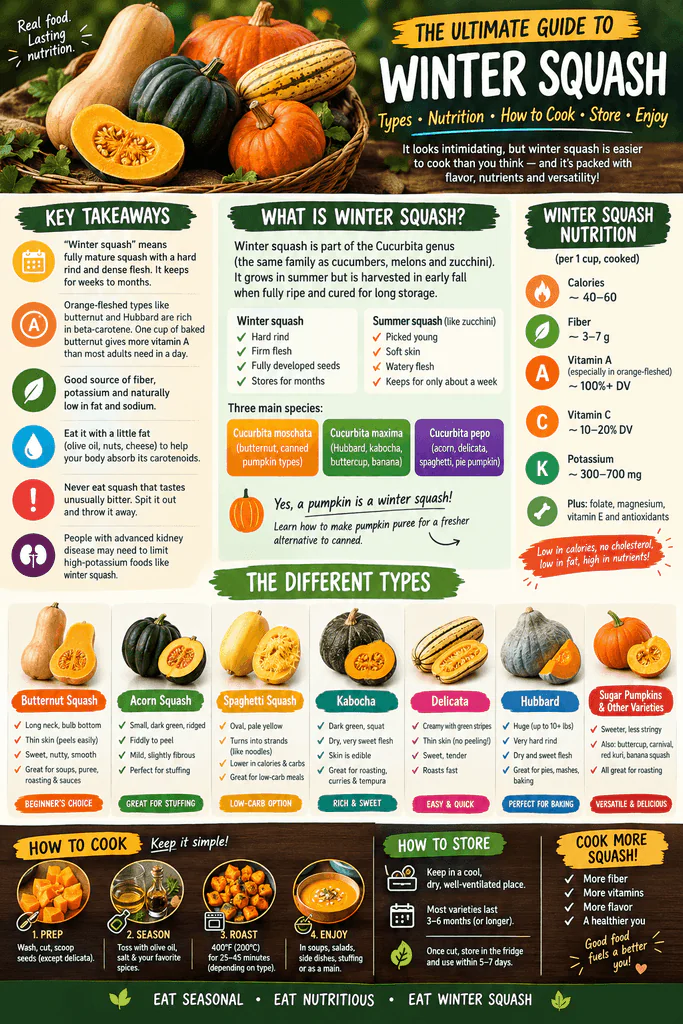
- “Winter squash” means squash harvested when fully mature, with a hard rind and dense flesh. It keeps for weeks to months, unlike zucchini and other summer squash.
- Orange-fleshed types like butternut and Hubbard are rich in beta-carotene. One cup of baked butternut supplies more vitamin A than most adults need in a day.
- Winter squash is a good source of fiber and potassium and is naturally low in fat and sodium.
- Eat it with a little fat (olive oil, nuts, cheese) to help your body absorb its carotenoids.
- Never eat squash that tastes unusually bitter. Spit it out and throw the squash away.
- People with advanced kidney disease may need to limit high-potassium foods like winter squash.
What Is Winter Squash?
Winter squash belongs to the Cucurbita genus, the same plant family as cucumbers, melons and zucchini. The name refers to when it’s eaten, not when it grows. These squashes grow through summer but are harvested in early fall once they’re fully ripe. Then they’re cured so they can be stored through winter.
That maturity is what sets them apart from summer squash. Summer squash like zucchini is picked young, with soft skin and watery flesh, and keeps for only about a week. Winter squash has a hard rind, firm flesh and fully developed seeds. Its texture ranges from silky (butternut) to dry and chestnut-like (kabocha) to stringy (spaghetti squash).
Most of what you see in stores comes from three species:
- Cucurbita moschata – butternut squash and many squashes used for canned pumpkin
- Cucurbita maxima – Hubbard, kabocha, buttercup and banana squash
- Cucurbita pepo – acorn, delicata, spaghetti squash and small sugar (pie) pumpkins
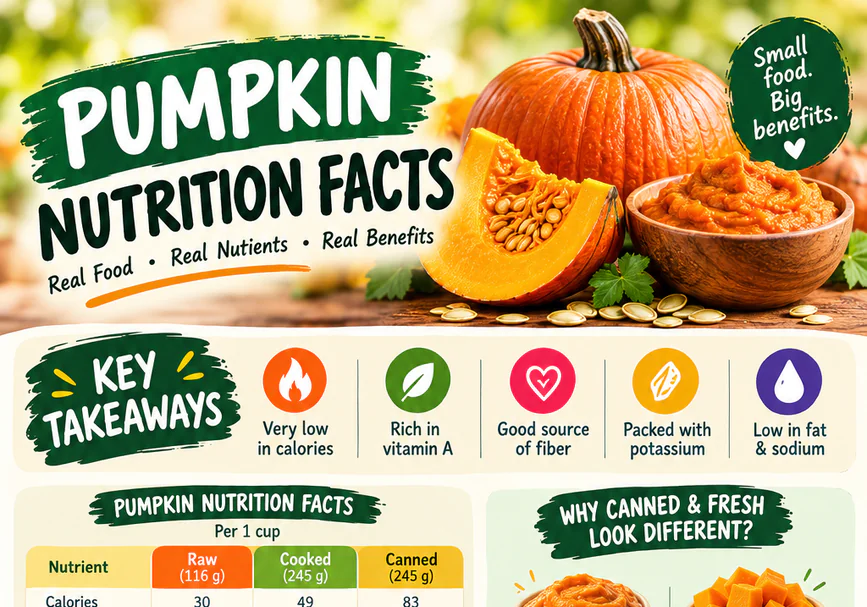
And yes, a pumpkin is a winter squash. Our guide on how to make pumpkin puree shows how to turn a sugar pumpkin into a fresher alternative to canned.
Types of Winter Squash: A Variety-by-Variety Winter Squash Guide
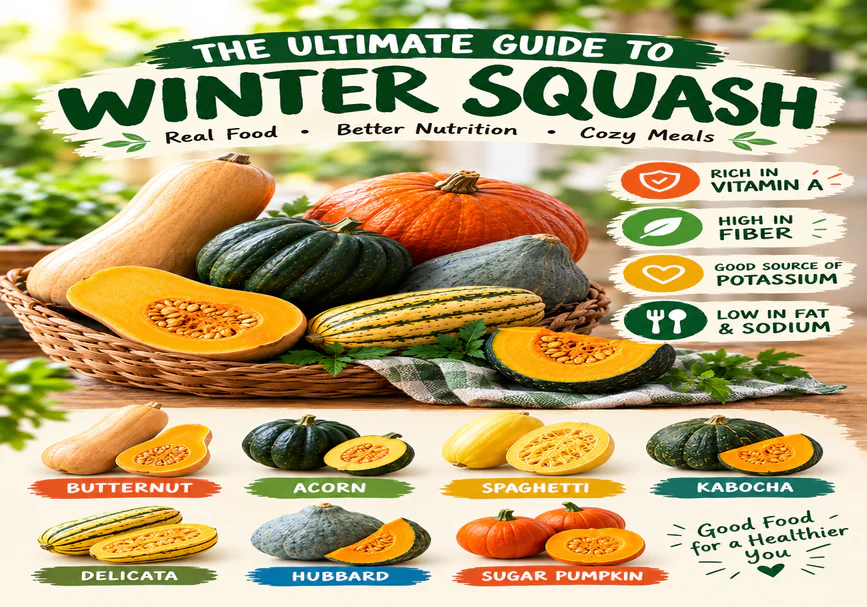
Each variety has its own flavor, texture and best use. Here are the ones you’re most likely to find.
Butternut Squash
Butternut is the beginner’s squash. It has a long neck, a bulb at the bottom and a thin tan skin that peels easily with a vegetable peeler. The flesh is sweet, nutty and smooth, which makes it ideal for soups, purees, roasted cubes and even pasta sauces. If you want a deeper look at this one variety, read is butternut squash healthy.
Acorn Squash
Acorn squash is small, dark green and deeply ridged. Peeling it is fiddly, so most cooks halve it, scoop out the seeds and roast it cut-side down. The pale yellow-orange flesh is mild and a little fibrous, and the halves make natural bowls for stuffing with grains, beans or sausage.
Spaghetti Squash
Spaghetti squash is oval and pale yellow. After cooking, its flesh pulls apart into long strands that look like noodles. It’s much lower in calories and carbohydrates than pasta, though also lower in most nutrients than orange-fleshed squash. Our article on whether spaghetti squash is healthy covers the trade-offs in detail.
Kabocha
Kabocha, sometimes called Japanese pumpkin, is squat and dark green, with dense, dry, very sweet flesh that tastes like a cross between sweet potato and chestnut. The skin softens when cooked and is edible. It’s excellent roasted, steamed, simmered in curries or fried as tempura.
Delicata
Delicata is a small, cream-colored squash with green stripes. Its biggest selling point is a thin skin you don’t need to peel. Slice it into half-moons, toss with oil and roast. It’s one of the fastest squashes to get on the table.
Hubbard
Hubbard squash can be huge, sometimes 10 pounds or more, with a very hard blue-gray or orange rind. The flesh is dry and sweet, which makes it good for pies, mashes and baking. Many stores sell it pre-cut into wedges.
Sugar Pumpkins and Other Varieties
Small sugar or pie pumpkins have sweeter, less stringy flesh than carving pumpkins, so they’re the ones to cook. You may also see buttercup (similar to kabocha), carnival (a colorful acorn-delicata cross), red kuri and banana squash. All can be roasted in much the same way.
Winter Squash Nutrition: What’s in a Serving?
Winter squash is low in calories and fat, contains no cholesterol and provides fiber, potassium, vitamin C and, in orange types, large amounts of provitamin A carotenoids.
According to USDA FoodData Central, one cup (about 205 g) of baked butternut squash cubes has roughly 82 calories, 22 grams of carbohydrate, 6.6 grams of fiber, 2 grams of protein, 31 milligrams of vitamin C and about 580 milligrams of potassium. It also has more than 1,100 micrograms of vitamin A as retinol activity equivalents (RAE).
Here’s how four common types compare per one-cup cooked serving:
| Variety (1 cup, cooked) | Calories | Carbs | Fiber | Standout nutrient |
| Butternut, baked | ~82 | ~22 g | ~6.6 g | Vitamin A (well over a day’s needs) |
| Acorn, baked | ~115 | ~30 g | ~9 g | Potassium (~900 mg) |
| Hubbard, baked | ~102 | ~22 g | ~10 g | Fiber, vitamin A |
| Spaghetti, cooked | ~42 | ~10 g | ~2 g | Lowest in calories |
Values are approximate and come from USDA FoodData Central records for acorn squash, Hubbard squash, and butternut and spaghetti squash.
Two patterns stand out. First, color matters: deep orange flesh signals more beta-carotene, so butternut and Hubbard far outrank acorn and spaghetti squash for vitamin A. Second, acorn and Hubbard are among the higher-fiber vegetables you can eat, at roughly a third of many adults’ daily fiber target in one cup.
Health Benefits of Winter Squash
The benefits below come from the nutrients winter squash contains and from research on vegetable-rich diets overall. No single food prevents disease, but winter squash is an easy way to add several important nutrients at once.
Supports Healthy Vision and Immune Function
Beta-carotene is a provitamin A carotenoid: your body converts some of it into vitamin A as needed. According to the NIH Office of Dietary Supplements, vitamin A is essential for normal vision, immune function, reproduction and the health of the heart, lungs and other organs. The recommended intake for adults is 900 micrograms RAE for men and 700 for women. One cup of baked butternut covers that.
Because your body converts beta-carotene only as it needs vitamin A, eating carotene-rich foods doesn’t cause the vitamin A toxicity that high-dose supplements can.
Provides Fiber for Digestion and Steadier Blood Sugar
Fiber adds bulk to stool, feeds beneficial gut bacteria and slows how quickly carbohydrates enter the bloodstream. The Harvard T.H. Chan School of Public Health notes that higher fiber intake is linked with lower risk of heart disease and type 2 diabetes, yet most people eat far less than recommended. Mayo Clinic adds that fiber helps keep bowel movements regular and can help lower cholesterol.
Swapping some refined starches for squash, such as squash cubes instead of white rice or spaghetti squash instead of pasta, is a simple way to add fiber.
Supplies Potassium for Blood Pressure Balance
Potassium helps balance the effects of sodium and is linked to healthier blood pressure. The NIH Office of Dietary Supplements potassium fact sheet lists adequate intakes of 3,400 mg for men and 2,600 mg for women, and notes that many Americans fall short. A cup of baked acorn squash provides about a third of a woman’s daily target.
Adds Vitamin C and Antioxidants
Winter squash also contributes vitamin C, which the body uses to make collagen, absorb non-heme iron from plant foods and support immune function, according to the Office of Dietary Supplements. Along with beta-carotene and vitamin E, vitamin C acts as an antioxidant in the body.
Fits a Vegetable-Rich Pattern Linked With Better Health
The strongest evidence is for vegetables as a group. A large 2017 meta-analysis in the International Journal of Epidemiology of prospective studies found that higher fruit and vegetable intake was associated with lower risk of cardiovascular disease, cancer and early death. The benefit kept growing up to about 800 grams a day. The USDA’s MyPlate specifically counts winter squash among the “red and orange vegetables” it encourages people to eat each week.
Who Benefits Most From Eating Winter Squash?
- People who eat few vegetables. Squash is mild, sweet and filling, which makes it an easy entry point for picky eaters and children.
- Anyone short on fiber. Acorn and Hubbard squash in particular add a lot of fiber per serving.
- Plant-based eaters. Orange squash is a convenient source of provitamin A for people who don’t eat liver, eggs or dairy.
- People watching calories or carbs. Spaghetti squash can stand in for pasta at a fraction of the calories.
- People managing blood sugar. Winter squash does contain carbohydrate, so portions still matter. For ideas that pair squash with protein and fat, see these pumpkin recipes for diabetics.
Risks, Side Effects, and Who Should Be Cautious
Winter squash is safe for most people, but a few situations call for care.
Bitter Squash: Spit It Out
Squash and its relatives can occasionally produce high levels of bitter compounds called cucurbitacins. This can happen through cross-pollination or plant stress, and it’s more likely in home-grown or ornamental gourds. Eating bitter squash has caused nausea, vomiting and diarrhea, and in published case reports even temporary hair loss. One such report was published in JAMA Dermatology in 2018 (PubMed search).
The rule is simple: if a squash tastes unusually bitter, spit it out and throw the whole squash away. Cooking doesn’t destroy these compounds. And never eat decorative gourds.
Kidney Disease and Potassium
Healthy kidneys remove extra potassium, but damaged kidneys may not. The National Institute of Diabetes and Digestive and Kidney Diseases advises that people with chronic kidney disease may need to limit high-potassium foods. If you have kidney disease or take medications that raise potassium, ask your doctor or dietitian how much squash fits your plan.
Carotenemia (Orange-Tinted Skin)
Eating large amounts of carotene-rich foods every day can give the skin a yellow-orange tint, especially on the palms and soles. According to an NCBI StatPearls review, this condition, called carotenemia, is harmless and fades once intake goes down. Its main risk is being mistaken for jaundice, which is different because jaundice also turns the whites of the eyes yellow.
Beta-Carotene Supplements Are Not the Same
Food sources of beta-carotene are considered safe. High-dose beta-carotene supplements are different: the Office of Dietary Supplements notes they have been linked to higher lung cancer risk in smokers and former smokers. Get your carotenoids from foods like squash rather than pills unless your doctor advises otherwise.
How to Cook Winter Squash: Methods for Every Variety
The hardest part of cooking winter squash is cutting it. After that, it’s mostly hands-off.
How to Cut Winter Squash Safely
- Wash and dry the squash, then slice a thin piece off one side so it sits flat and doesn’t roll.
- Use a large, heavy chef’s knife on a stable cutting board. Put a damp towel underneath so the board doesn’t slide.
- For very hard squash (Hubbard, kabocha), pierce the skin a few times and microwave it whole for 2–3 minutes to soften the rind before cutting.
- Scoop out the seeds with a sturdy spoon. Save them for roasting, since squash seeds are as edible as pumpkin seeds.
Roasting (Best All-Around Method)
Roasting caramelizes the natural sugars and gives the best flavor.
- Cubes (butternut, kabocha): Toss 1-inch cubes with oil and salt, then roast at 425°F (220°C) for 25–35 minutes, turning once.
- Halves (acorn, spaghetti, butternut): Brush the cut sides with oil and roast cut-side down at 400°F (200°C) for 35–60 minutes, until a fork slides in easily.
- Rings or half-moons (delicata): Slice ½ inch thick, leave the skin on and roast at 425°F for 20–25 minutes.
Roasted cubes are great on salads. Try them in this massaged kale salad with roasted butternut squash.
Steaming, Simmering, and Boiling
Steaming is fast and keeps the flesh moist, which works well for kabocha and for squash you plan to mash. Simmering cubes in broth is the first step for soups and stews like this red lentil and butternut squash curry stew. Boiling works too, but some water-soluble vitamins like vitamin C leach into the water. Our article on whether boiling vegetables is healthy explains how to keep more of them.
Microwaving
For a weeknight shortcut, halve the squash, place it cut-side down in a dish with a little water, cover and microwave on high for 8–15 minutes, depending on size. This works especially well for spaghetti squash. Rake the strands out with a fork and toss them with sauce, as in this spaghetti squash Alfredo.
Pureeing and Baking
Roasted or steamed squash blends into silky puree for soups, pies, muffins and pancakes. Butternut and sugar pumpkin make the smoothest purees, and Hubbard and kabocha give a thicker, drier one that’s good for baking.
Can You Eat the Skin?
Delicata, kabocha and acorn skins soften enough to eat after roasting. Butternut skin is edible but chewier, so most people peel it. Hubbard rind is too tough to eat.
Best Winter Squash for Every Dish
| If you’re making… | Best choice | Why |
| Smooth soup | Butternut, sugar pumpkin | Silky, sweet, few fibers |
| Roasted side dish | Delicata, butternut, kabocha | Caramelizes well; delicata needs no peeling |
| Stuffed squash | Acorn, carnival | Natural bowl shape |
| Pasta swap | Spaghetti squash | Noodle-like strands |
| Pies and baking | Sugar pumpkin, Hubbard, kabocha | Dense, sweet flesh |
| Curries and stews | Kabocha, butternut | Holds its shape when simmered |
| Risotto and grain bowls | Butternut | Cubes stay tender but intact |
For a hearty grain dish, try this winter squash wheat berry risotto.
Practical Tips: Buying, Storing, and Eating More Squash
How to Choose a Good Squash
Pick squash that feels heavy for its size, with a firm, dull (not glossy) rind and no soft spots, cracks or mold. A dry, intact stem helps it keep longer.
How to Store Winter Squash
Whole winter squash keeps best in a cool, dry, well-ventilated spot around 50–55°F (10–13°C). That means a pantry or cool basement, not the refrigerator. Under those conditions, many varieties last one to several months, according to University of Minnesota Extension. As a rough rule, acorn and delicata keep for the shortest time and butternut and Hubbard for the longest.
Once cut, wrap the pieces and refrigerate them for up to about 5 days. Cooked squash and puree also freeze well. If fresh squash isn’t in season, frozen cubed squash is a convenient backup. See our take on whether frozen vegetables are healthy.
Pair It With a Little Fat
Carotenoids are fat-soluble. In a study published in the American Journal of Clinical Nutrition, people absorbed significantly more carotenoids from vegetables eaten with full-fat dressing than with fat-free or reduced-fat dressing. Roasting squash in olive oil or topping it with nuts, seeds or a little cheese helps you get more from it.
Easy Ways to Eat More Winter Squash
- Stir squash puree into oatmeal, pancakes or smoothies.
- Swap half the potatoes in a mash for squash.
- Add roasted cubes to tacos, grain bowls and salads.
- Use squash in place of some of the cheese sauce in mac and cheese.
- Bake squash “fries” instead of potato fries.
Myths vs. Facts About Winter Squash
Myth: Winter squash is too high in carbs to be healthy.
Fact: Squash contains carbohydrate, but it also brings fiber, vitamins and minerals. Butternut has fewer carbs per cup than cooked rice or pasta, and spaghetti squash has far fewer.
Myth: Sweet-tasting squash must be full of sugar.
Fact: Winter squash tastes sweet because of its natural sugars and roasting caramelization, but a cup of baked butternut has only about 4 grams of sugar.
Myth: You have to peel every winter squash.
Fact: Delicata, kabocha and acorn skins are edible once cooked.
Myth: Canned pumpkin isn’t real squash.
Fact: Plain canned pumpkin puree is simply cooked winter squash. Just check the label so you don’t confuse it with sweetened, spiced “pumpkin pie filling.”
Myth: Winter squash and sweet potatoes are the same.
Fact: They’re from different plant families, but they’re nutritionally similar. Both are orange, rich in beta-carotene and good sources of fiber. Compare them in our guide on whether sweet potatoes are healthy.
How Winter Squash Fits a Healthy Lifestyle
Winter squash works best as one part of a varied, vegetable-forward diet. Treat it as either a vegetable or a starch depending on the meal. Spaghetti squash can fill half your plate like other vegetables. Denser types like acorn and Hubbard can take the place of potatoes, rice or bread.
Because it’s inexpensive, keeps for weeks and comes in so many forms, winter squash is one of the most practical ways to eat more vegetables through the colder months. Buy one or two varieties each week, roast a big tray on the weekend and use it in salads, soups and grain bowls through the week.
Frequently Asked Questions
What are the main types of winter squash?
The most common are butternut, acorn, spaghetti, kabocha, delicata, Hubbard and sugar pumpkins. They differ in flavor and texture: butternut is sweet and smooth, kabocha is dense and chestnut-like, and spaghetti squash turns into noodle-like strands. All are harvested mature with hard rinds, so they store for weeks or months.
Which winter squash is the healthiest?
Deep orange types like butternut, Hubbard and kabocha provide the most beta-carotene and vitamin A. Acorn and Hubbard offer the most fiber and potassium per cup. Spaghetti squash is lowest in calories. Rotating varieties gives you a broader range of nutrients than picking just one “healthiest” squash.
Can you eat winter squash raw?
Some varieties, like butternut, can be eaten raw when very thinly sliced or grated into salads. Most winter squash is hard and starchy, though, and cooking makes it easier to chew and digest. Cooking with a little fat may also help your body absorb more of its carotenoids.
Is winter squash good for people with diabetes?
Winter squash can fit a diabetes-friendly diet because it provides fiber, which slows carbohydrate absorption. It still contains carbs, so portion size matters. Pairing squash with protein and healthy fat helps steady blood sugar. Spaghetti squash is the lowest-carb option. Talk to your care team about your own targets.
Why does my squash taste bitter?
Unusual bitterness can signal high levels of cucurbitacins, natural compounds that can cause stomach upset and, rarely, more serious illness. Cooking doesn’t remove them. If squash tastes noticeably bitter, spit it out and throw the whole squash away. This is more common with home-grown squash and ornamental gourds.
How long does winter squash last?
Whole winter squash stored in a cool, dry place around 50–55°F typically keeps for one to several months, depending on the variety. Butternut and Hubbard last longest, while acorn and delicata keep for less time. Cut squash lasts about five days in the refrigerator, and cooked squash freezes well for months.
Conclusion
Winter squash is affordable, keeps for weeks and is easy to cook once you know your varieties. Use this winter squash guide as a quick reference: butternut for soups and roasting, acorn for stuffing, delicata for no-peel sides, kabocha for curries, Hubbard and sugar pumpkins for baking, and spaghetti squash as a pasta swap. Orange-fleshed squash in particular delivers beta-carotene, fiber, potassium and vitamin C with few calories. Eat it with a little healthy fat, skip any squash that tastes bitter, and check with your doctor about potassium if you have kidney disease.
Medical disclaimer: This article is for general educational purposes only and is not a substitute for professional medical advice, diagnosis or treatment. If you have a health condition, including diabetes or kidney disease, talk with your doctor or a registered dietitian before making significant changes to your diet.
(3) References
- U.S. Department of Agriculture. “Squash, winter, butternut, cooked, baked, without salt.” FoodData Central, SR Legacy. https://fdc.nal.usda.gov/food-search?query=squash%20winter%20butternut%20baked
- U.S. Department of Agriculture. “Squash, winter, acorn, cooked, baked, without salt” (FDC ID 169293). FoodData Central. https://fdc.nal.usda.gov/fdc-app.html#/food-details/169293/nutrients
- U.S. Department of Agriculture. “Squash, winter, hubbard, baked, without salt” (FDC ID 168476). FoodData Central. https://fdc.nal.usda.gov/fdc-app.html#/food-details/168476/nutrients
- NIH Office of Dietary Supplements. “Vitamin A and Carotenoids: Fact Sheet for Health Professionals.” https://ods.od.nih.gov/factsheets/VitaminA-HealthProfessional/
- NIH Office of Dietary Supplements. “Potassium: Fact Sheet for Health Professionals.” https://ods.od.nih.gov/factsheets/Potassium-HealthProfessional/
- NIH Office of Dietary Supplements. “Vitamin C: Fact Sheet for Health Professionals.” https://ods.od.nih.gov/factsheets/VitaminC-HealthProfessional/
- Harvard T.H. Chan School of Public Health. “Fiber.” The Nutrition Source. https://nutritionsource.hsph.harvard.edu/carbohydrates/fiber/
- Mayo Clinic Staff. “Dietary fiber: Essential for a healthy diet.” Mayo Clinic. https://www.mayoclinic.org/healthy-lifestyle/nutrition-and-healthy-eating/in-depth/fiber/art-20043983
- Aune D, et al. “Fruit and vegetable intake and the risk of cardiovascular disease, total cancer and all-cause mortality—a systematic review and dose-response meta-analysis of prospective studies.” International Journal of Epidemiology. 2017. https://pubmed.ncbi.nlm.nih.gov/28338764/
- U.S. Department of Agriculture. “Vegetables.” MyPlate. https://www.myplate.gov/eat-healthy/vegetables
- Brown MJ, et al. “Carotenoid bioavailability is higher from salads ingested with full-fat than with fat-reduced salad dressings.” American Journal of Clinical Nutrition. 2004. https://pubmed.ncbi.nlm.nih.gov/15277161/
- Al Nasser Y, Jamal Z, Albugeaey M. “Carotenemia.” StatPearls, NCBI Bookshelf. https://www.ncbi.nlm.nih.gov/books/NBK534878/
- National Institute of Diabetes and Digestive and Kidney Diseases. “Eating Right for Chronic Kidney Disease.” https://www.niddk.nih.gov/health-information/kidney-disease/chronic-kidney-disease-ckd/eating-nutrition
- Assouly P. “Hair Loss Associated With Cucurbit Poisoning.” JAMA Dermatology. 2018. https://pubmed.ncbi.nlm.nih.gov/?term=cucurbit+poisoning+hair+loss.
- University of Minnesota Extension. “Growing pumpkins and winter squash” (harvest, curing and storage). https://extension.umn.edu/vegetables/growing-pumpkins-and-winter-squash