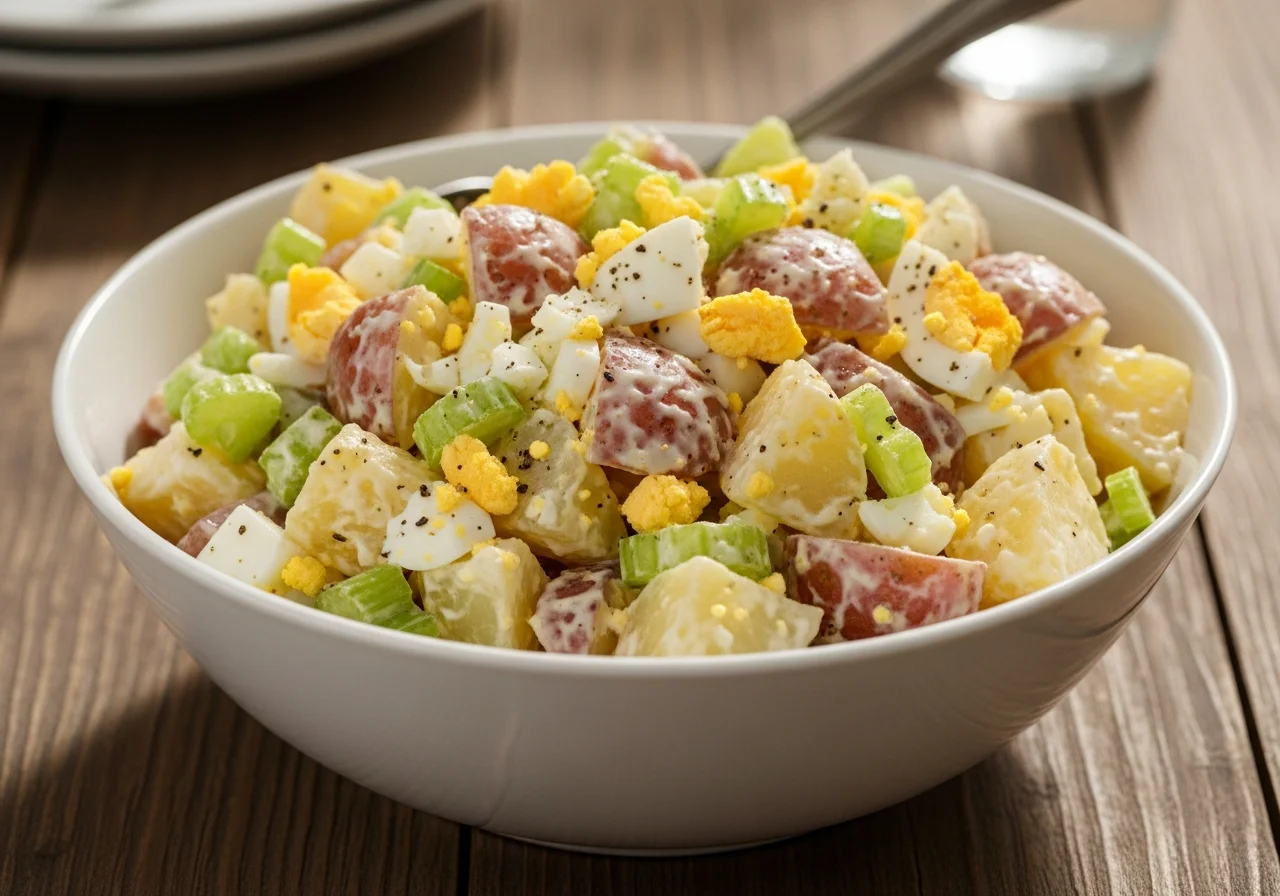
Is potato salad gluten free? Usually, yes. Potatoes are naturally gluten-free, and most classic dressings are too. But “usually” isn’t good enough if you have celiac disease. A splash of malt vinegar, a flour-thickened dressing, or a shared serving spoon at a deli counter can turn a safe side dish into a problem.
In this guide, you’ll learn which potato salad ingredients are naturally gluten-free, where hidden gluten tends to show up, how to judge store-bought and restaurant versions, and how to make a reliably gluten-free potato salad at home. We’ll also cover who needs to be strict and what the “gluten-free” label actually guarantees.
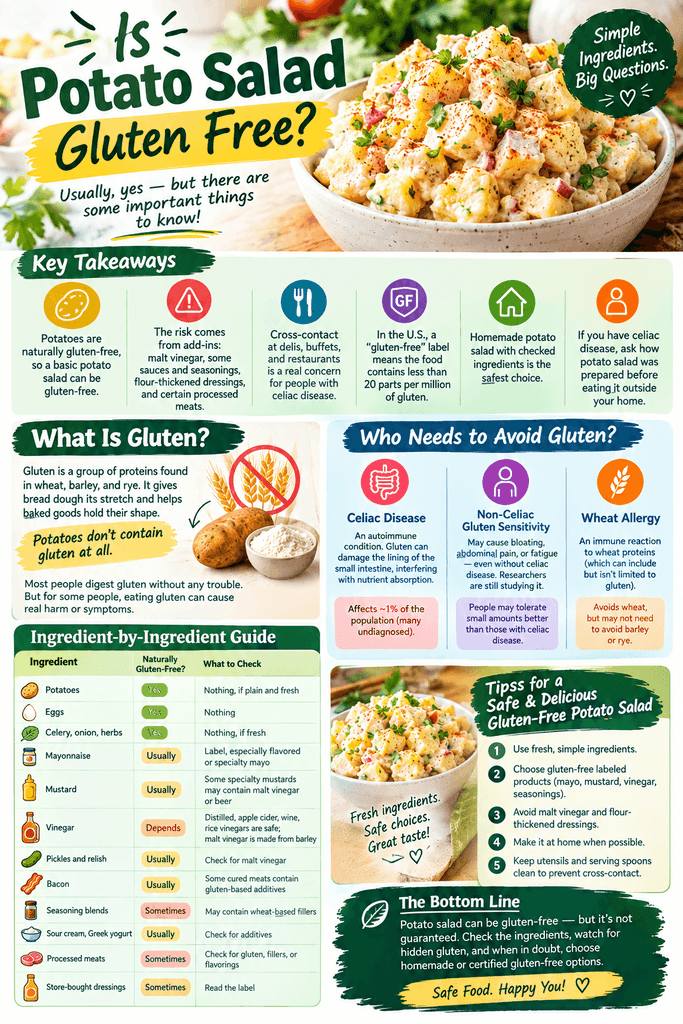
Key Takeaways
- Potatoes are naturally gluten-free, so a basic potato salad can be gluten-free.
- The risk comes from add-ins: malt vinegar, some sauces and seasonings, flour-thickened dressings, and certain processed meats.
- Cross-contact at delis, buffets, and restaurants is a real concern for people with celiac disease.
- In the U.S., a “gluten-free” label means the food contains less than 20 parts per million of gluten.
- Homemade potato salad with checked ingredients is the safest choice.
- If you have celiac disease, ask how potato salad was prepared before eating it outside your home.
What Is Gluten, and Who Needs to Avoid It?
Gluten is a group of proteins found in wheat, barley, and rye. It gives bread dough its stretch and helps baked goods hold their shape. Potatoes don’t contain gluten at all.
Most people digest gluten without any trouble. But for some people, eating gluten causes real harm or symptoms.
Celiac Disease
Celiac disease is an autoimmune condition. When people with celiac disease eat gluten, their immune system damages the lining of the small intestine, which can interfere with nutrient absorption, according to the National Institute of Diabetes and Digestive and Kidney Diseases (NIDDK). The only treatment is a strict, lifelong gluten-free diet.
Celiac disease is more common than many people think. A 2018 global meta-analysis estimated it affects roughly 1% of the population, though many cases go undiagnosed.
Non-Celiac Gluten Sensitivity
Some people have symptoms like bloating, abdominal pain, or fatigue after eating gluten but don’t have celiac disease. This is often called non-celiac gluten sensitivity. Researchers are still working to understand it, as a review in Nutrients describes. People in this group may tolerate small amounts better than people with celiac disease.
Wheat Allergy
A wheat allergy is an immune reaction to wheat proteins, which can include but isn’t limited to gluten. Wheat is one of the major food allergens recognized by the FDA. People with wheat allergy need to avoid wheat, but may not need to avoid barley or rye.
Is Potato Salad Gluten Free? The Ingredient-by-Ingredient Answer
The quickest way to answer whether potato salad is gluten-free is to look at each ingredient. Here’s how the common ones stack up.
| Ingredient | Naturally gluten-free? | What to check |
| Potatoes | Yes | Nothing, if plain and fresh |
| Eggs | Yes | Nothing |
| Celery, onion, herbs | Yes | Nothing, if fresh |
| Mayonnaise | Usually | Label, especially flavored or specialty mayo |
| Mustard | Usually | Some specialty mustards may contain malt vinegar or beer |
| Vinegar | Depends on type | Distilled, apple cider, wine, and rice vinegars are generally safe; malt vinegar is made from barley |
| Pickles and relish | Usually | Check for malt vinegar |
| Bacon | Usually | Some cured meats contain gluten-based additives |
| Seasoning blends | Sometimes | May contain wheat-based fillers |
| Sour cream, Greek yogurt | Usually | Plain is generally safe; check flavored products |
| Dressing thickeners | Depends | Flour adds gluten; cornstarch doesn’t |
Potatoes: Always Gluten-Free
Potatoes are a vegetable and contain no gluten. They also bring real nutrition. Potatoes are a good source of potassium, a mineral many Americans don’t get enough of, according to the NIH Office of Dietary Supplements. They also supply vitamin C and fiber, especially with the skin on.
For a closer look at potato nutrition, see our guide to whether potatoes are healthy.
Mayonnaise: Usually Gluten-Free
Standard mayonnaise is made from oil, eggs, and an acid like vinegar or lemon juice, none of which naturally contain gluten. Most mainstream brands are made without gluten ingredients, but recipes can change, so always check the label. Our article on whether Hellmann’s mayo is gluten-free walks through how to read mayo labels.
Vinegar: The Ingredient to Watch
This is where gluten most often sneaks into potato salad. Malt vinegar is made from barley, and the Mayo Clinic lists malt vinegar among the products people on a gluten-free diet should avoid. Distilled white vinegar, apple cider vinegar, wine vinegars, and plain rice vinegar are generally considered gluten-free.
Malt vinegar is more common in some regional and British-style recipes. If a recipe or label just says “vinegar,” that usually means a gluten-free type, but check if you’re not sure.
Mustard and Pickles
Plain yellow and Dijon mustards are typically gluten-free. Some specialty or beer mustards may contain malt vinegar or beer, so read the ingredient list. Pickles and relish are usually made with distilled vinegar, but check labels for malt vinegar.
Bacon and Processed Meats
Plain bacon is usually gluten-free, but the Mayo Clinic notes that processed lunch meats and some cured products can contain gluten-based ingredients. Choose bacon labeled gluten-free when possible.
Seasonings, Sauces, and Thickeners
Seasoning blends sometimes use wheat-based fillers. Soy sauce, which shows up in some Asian-inspired potato salads, is typically brewed with wheat, as our article on why soy sauce isn’t gluten-free explains. Ranch seasoning and bottled dressings vary by brand, so check before using them. Our guide on whether ranch has gluten covers what to look for.
Some cooked dressings are thickened with flour. If you need a thickener, cornstarch is a gluten-free alternative, as we explain in is cornstarch gluten-free.
Which Styles of Potato Salad Are Most Likely to Contain Gluten?
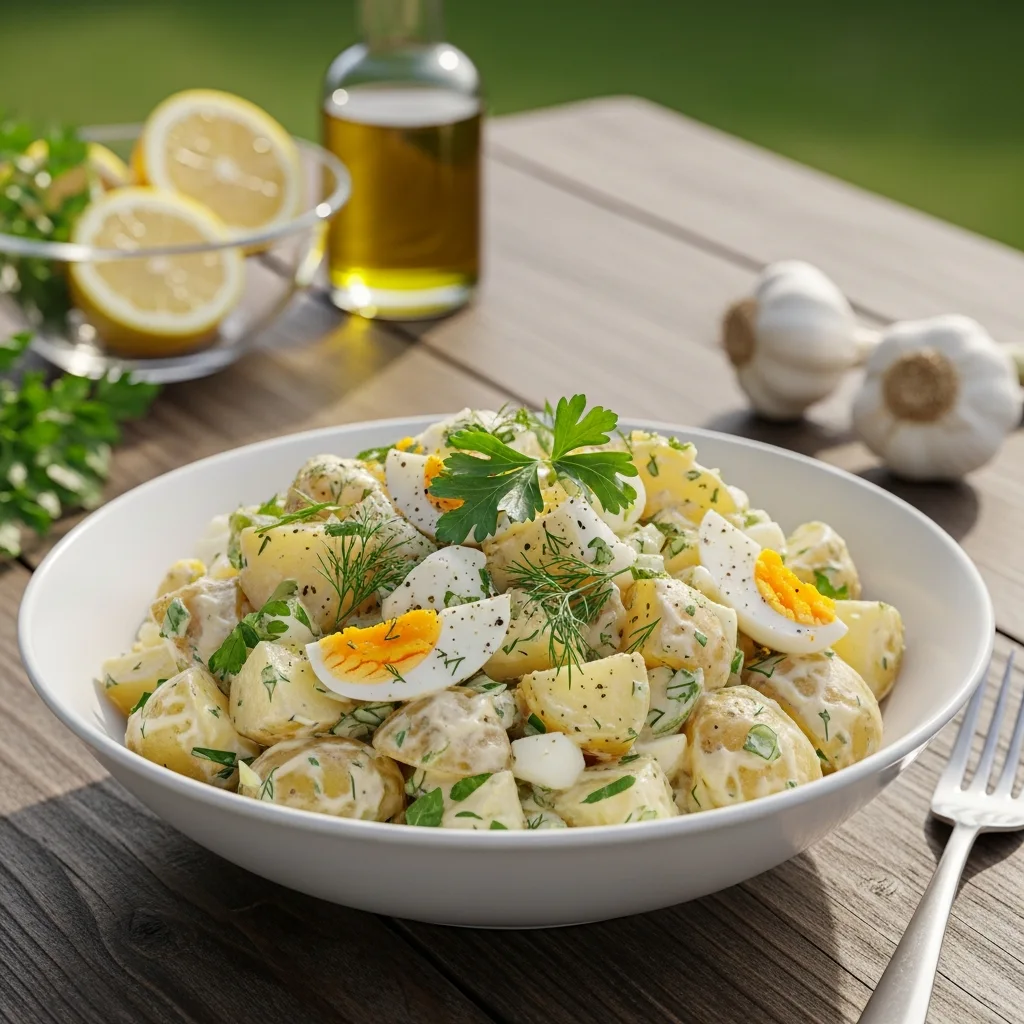
Not all potato salads carry the same risk.
American Mayo-Based Potato Salad
The classic American version, like our traditional potato salad recipe, is usually gluten-free when made with standard mayo, distilled vinegar, and plain mustard. The main risks are seasoning blends and cross-contact.
German Potato Salad
German potato salad is made with a warm vinegar and bacon dressing. Some traditional recipes thicken the dressing with a little flour, which adds gluten. Others don’t. Our German potato salad recipe shows the basic method, and you can swap flour for cornstarch if a version you’re making calls for it. Check the bacon too.
Japanese and Korean Potato Salad
These styles often use rice vinegar and Japanese-style mayonnaise, along with vegetables like cucumber and carrot. They’re often gluten-free, but some recipes add seasonings or sauces worth checking. See our Japanese potato salad for a typical ingredient list.
Potato Salad With Croutons or Crunchy Toppings
Some “loaded” potato salads include fried onions, croutons, or breaded toppings. These almost always contain wheat unless labeled gluten-free.
Is Store-Bought Potato Salad Gluten-Free?
Many packaged potato salads are made without gluten ingredients, but you can’t assume. Here’s how to check.
Look for a Gluten-Free Label
In the U.S., the FDA’s gluten-free labeling rule means a packaged food labeled “gluten-free,” “no gluten,” “free of gluten,” or “without gluten” must contain less than 20 parts per million (ppm) of gluten. That’s the threshold the FDA considers safe for most people with celiac disease. The label is voluntary, so some gluten-free products don’t carry it.
Read the Ingredient List
If there’s no gluten-free label, read the ingredients carefully. Watch for:
- Wheat, barley, rye, or malt
- Malt vinegar
- Modified food starch, which is usually corn-based in the U.S. but check if unsure
- Soy sauce
- Hydrolyzed wheat protein
- Brewer’s yeast
Wheat must be declared on U.S. food labels because it’s a major allergen, according to the FDA. Barley and rye don’t have the same labeling requirement, so they can be easier to miss.
Watch for “May Contain” Statements
Statements like “processed in a facility that also processes wheat” are voluntary and not regulated the same way. They suggest a possible cross-contact risk. People with celiac disease often avoid these products, especially if they’re very sensitive.
Is Deli and Restaurant Potato Salad Gluten-Free?
This is where things get trickier. Even if the recipe itself is gluten-free, preparation can introduce gluten.
The Cross-Contact Problem
Cross-contact happens when a gluten-free food touches gluten-containing food, surfaces, or utensils. The NIDDK advises people with celiac disease to take steps to avoid it, both at home and when eating out.
At a deli counter, the same spoon may serve potato salad and pasta salad. At a buffet or potluck, guests may use one spoon for multiple dishes. In restaurant kitchens, cutting boards, bowls, and gloves may be shared.
Questions to Ask
If you have celiac disease and want potato salad at a restaurant or deli, ask:
- What’s in the dressing, and what type of vinegar do you use?
- Does it contain any seasoning blends, sauces, or thickeners?
- Is it made in-house or brought in? Can I see the label?
- Is it served with a separate utensil from pasta salads or other dishes?
If staff can’t answer clearly, it’s safer to skip it.
Potlucks and Picnics
At family gatherings, potato salad is often homemade, which can be good or bad. Ask the cook about ingredients, and try to serve yourself first before other spoons have touched it. Better still, bring your own gluten-free potato salad.
Who Needs to Be Strict About Gluten in Potato Salad?
How careful you need to be depends on why you’re avoiding gluten.
- Celiac disease: Strict avoidance is necessary, including cross-contact. Even small amounts can cause intestinal damage, according to the NIDDK.
- Non-celiac gluten sensitivity: You may tolerate trace amounts. Work with your doctor or dietitian to find your limits.
- Wheat allergy: Avoid wheat and anything that could contain it. Barley-based malt vinegar may be fine, but ask your allergist.
- Choosing gluten-free by preference: You don’t need to worry much about cross-contact.
If you think you might have celiac disease, don’t cut out gluten before getting tested. The NIDDK notes that going gluten-free beforehand can make test results less accurate.
How to Make a Gluten-Free Potato Salad at Home
Making potato salad at home is the most reliable way to keep it gluten-free. Here’s a simple approach.
Ingredients
- 3 lb red or Yukon Gold potatoes, cut into chunks
- ½ cup mayonnaise (labeled gluten-free if you’re strict)
- ½ cup plain Greek yogurt
- 1½ tablespoons Dijon or yellow mustard (check label)
- 2–3 tablespoons apple cider or distilled white vinegar
- 2 celery ribs, diced
- ½ small red onion, diced
- 3 hard-boiled eggs, chopped
- Fresh dill, chives, or parsley
- Salt and pepper
Method
- Boil the potatoes in salted water until fork-tender, about 10–15 minutes.
- Drain and toss with half the vinegar while warm.
- Whisk the mayo, yogurt, mustard, remaining vinegar, salt, and pepper.
- Fold the cooled potatoes into the dressing with the celery, onion, eggs, and herbs.
- Chill at least 2 hours before serving.
Plain Greek yogurt is generally gluten-free, as covered in is Greek yogurt gluten-free. For a fully tested version with photos, try our red potato salad recipe, which is gluten-free when made with labeled ingredients.
Gluten-Free Kitchen Tips
- Use clean equipment. Wash bowls, spoons, and cutting boards that may have touched bread or pasta.
- Use a fresh mayo jar. A jar used for sandwiches may have breadcrumbs in it.
- Check every label, every time. Formulas change.
- Store it separately. Keep it covered and away from gluten-containing foods in the fridge.
Is Gluten-Free Potato Salad Healthier?
Removing gluten doesn’t automatically make potato salad healthier. A gluten-free potato salad loaded with mayo is still calorie-dense. The nutrition depends on the dressing, add-ins, and portion size. Our article on whether potato salad is healthy covers that side in detail.
For people who must avoid gluten, though, potato salad can be a helpful side dish. A gluten-free diet can be low in fiber and some B vitamins if it relies on refined gluten-free products, the Mayo Clinic notes. Naturally gluten-free whole foods like potatoes, vegetables, and eggs help fill those gaps.
Skin-on potatoes add fiber, and cooled potatoes contain more resistant starch, a carbohydrate that acts somewhat like fiber, according to USDA-supported research published in Food Chemistry.
Food Safety: Gluten Isn’t the Only Concern
Whether or not it’s gluten-free, potato salad needs careful handling. The USDA Food Safety and Inspection Service warns that bacteria grow fastest between 40°F and 140°F. Don’t leave potato salad out longer than 2 hours, or 1 hour when it’s above 90°F.
Refrigerate leftovers in an airtight container and use them within 3 to 4 days. The same guidelines apply to other creamy salads, as our guide on how long egg salad is good for explains.
Myths vs. Facts
| Myth | Fact |
| “Potatoes contain gluten.” | Potatoes are naturally gluten-free. |
| “All vinegar contains gluten.” | Most vinegars are gluten-free. Malt vinegar, made from barley, is the main exception. |
| “Mayo is never gluten-free.” | Standard mayonnaise is typically made without gluten ingredients. Check the label. |
| “If the recipe is gluten-free, the deli version is safe.” | Cross-contact from shared utensils can add gluten. |
| “Gluten-free potato salad is automatically healthy.” | Gluten-free and healthy aren’t the same. Dressing and portion size still matter. |
| “‘May contain wheat’ labels are required by law.” | These statements are voluntary in the U.S. |
How Gluten-Free Potato Salad Fits a Healthy Lifestyle
For people living gluten-free, potato salad is an easy, familiar side that fits summer cookouts, holiday meals, and weekday lunches. The key is control: make it yourself when you can, check labels, and don’t be shy about asking questions when someone else made it.
Build a balanced plate around it with grilled chicken or fish, a green salad, and fresh fruit. Keep portions moderate, about ½ cup, and enjoy it as part of a varied, naturally gluten-free diet built on whole foods.
Frequently Asked Questions
Does potato salad have gluten in it?
Most potato salads don’t contain gluten, because potatoes, eggs, standard mayonnaise, and most vinegars are gluten-free. Gluten can come from malt vinegar, some seasoning blends, flour-thickened dressings, certain processed meats, or cross-contact. Always check labels and ask how it was made.
Is deli potato salad gluten-free?
Sometimes, but it’s not guaranteed. The recipe may be gluten-free, but shared serving spoons, bowls, and prep areas can cause cross-contact. Ask to see the label or ingredient list, and ask whether separate utensils are used. People with celiac disease often avoid deli salads for this reason.
Is mayonnaise gluten-free?
Standard mayonnaise is made from oil, eggs, and vinegar or lemon juice, which are naturally gluten-free. Most major brands are made without gluten ingredients. Specialty or flavored mayonnaise may differ, and recipes can change, so check the label or look for a certified gluten-free product.
Can people with celiac disease eat potato salad?
Yes, if every ingredient is gluten-free and there’s no cross-contact. Homemade potato salad with checked labels is the safest option. At restaurants, delis, and potlucks, ask detailed questions about ingredients and preparation. If you can’t confirm it’s safe, skip it.
Is German potato salad gluten-free?
It depends on the recipe. German potato salad uses a warm vinegar and bacon dressing, and some versions thicken it with flour, which contains gluten. Others don’t. Check whether flour is used, confirm the bacon is gluten-free, and use cornstarch instead of flour when making it yourself.
Is malt vinegar gluten-free?
No. Malt vinegar is made from barley, which contains gluten, and it’s generally avoided on a gluten-free diet. Distilled white vinegar, apple cider vinegar, wine vinegars, and plain rice vinegar are typically considered gluten-free choices for potato salad.
The Bottom Line: Is Potato Salad Gluten Free?
So, is potato salad gluten free? Usually, but not always. Potatoes, eggs, standard mayo, and most vinegars are naturally gluten-free. The risks come from malt vinegar, some seasonings and sauces, flour-thickened dressings, certain processed meats, and cross-contact.
If you have celiac disease, make potato salad at home with labeled ingredients, and ask questions before eating it anywhere else. A “gluten-free” label on a packaged product means it meets the FDA’s under-20-ppm standard. With a little label reading, potato salad can stay on your plate.
Medical disclaimer: This article is for general educational purposes and is not medical advice. If you have celiac disease, a wheat allergy, or suspect a gluten-related condition, talk with your doctor or a registered dietitian before making changes to your diet.
(3) References
- National Institute of Diabetes and Digestive and Kidney Diseases. Definition & Facts for Celiac Disease. https://www.niddk.nih.gov/health-information/digestive-diseases/celiac-disease/definition-facts
- National Institute of Diabetes and Digestive and Kidney Diseases. Eating, Diet, & Nutrition for Celiac Disease. https://www.niddk.nih.gov/health-information/digestive-diseases/celiac-disease/eating-diet-nutrition
- Singh P, Arora A, Strand TA, et al. Global prevalence of celiac disease: systematic review and meta-analysis. Clinical Gastroenterology and Hepatology. 2018;16(6):823–836. https://doi.org/10.1016/j.cgh.2017.06.037
- Catassi C, Bai JC, Bonaz B, et al. Non-celiac gluten sensitivity: the new frontier of gluten related disorders. Nutrients. 2013;5(10):3839–3853. https://doi.org/10.3390/nu5103839
- U.S. Food and Drug Administration. Gluten-Free Labeling of Foods. https://www.fda.gov/food/nutrition-food-labeling-and-critical-foods/gluten-free-labeling-foods
- U.S. Food and Drug Administration. Food Allergies. https://www.fda.gov/food/nutrition-food-labeling-and-critical-foods/food-allergies
- Mayo Clinic. Gluten-free diet. https://www.mayoclinic.org/healthy-lifestyle/nutrition-and-healthy-eating/in-depth/gluten-free-diet/art-20048530
- NIH Office of Dietary Supplements. Potassium: Fact Sheet for Health Professionals. https://ods.od.nih.gov/factsheets/Potassium-HealthProfessional/
- Raatz SK, et al. Resistant starch analysis of commonly consumed potatoes: content varies by cooking method and service temperature but not by variety. Food Chemistry. 2016. https://pubmed.ncbi.nlm.nih.gov/?term=Raatz+resistant+starch+potatoes+Food+Chemistry+2016
- USDA Food Safety and Inspection Service. “Danger Zone” (40°F–140°F). https://www.fsis.usda.gov/food-safety/safe-food-handling-and-preparation/food-safety-basics/danger-zone-40f-140f
- U.S. Department of Agriculture. FoodData Central. https://fdc.nal.usda.gov/
- Harvard T.H. Chan School of Public Health. Potatoes. The Nutrition Source. https://www.hsph.harvard.edu/nutritionsource/food-features/potatoes/