Few Thanksgiving debates get as heated as this one. Is it stuffing or dressing? Some families swear by one name, and others won’t touch the dish unless it’s made “their way.” The stuffing vs dressing question comes down to cooking method, region, and family tradition, but it also affects food safety and nutrition.
In this guide, you’ll learn the real difference between stuffing and dressing, where each name comes from, and why food safety experts prefer one method. You’ll also see a nutrition comparison based on USDA data, plus easy ways to make either dish lighter and safer.
Key Takeaways
- The classic difference is where it’s cooked. Stuffing is cooked inside the bird. Dressing is baked in a separate dish.
- The name often depends on region and family. “Dressing” is most common in the South, but it’s used in pockets across the U.S.
- The USDA recommends cooking it separately. For best safety and even cooking, bake stuffing outside the bird.
- Either way, cook it to 165°F. Bacteria can survive in stuffing that hasn’t reached a safe temperature, even if the turkey has.
- Nutrition is similar. Bread and cornbread versions both have about 180 calories per 100 grams, but sodium is high.
- Small swaps help. Whole-grain bread, more vegetables, and low-sodium broth make either dish healthier.
Stuffing vs Dressing: What’s the Difference?
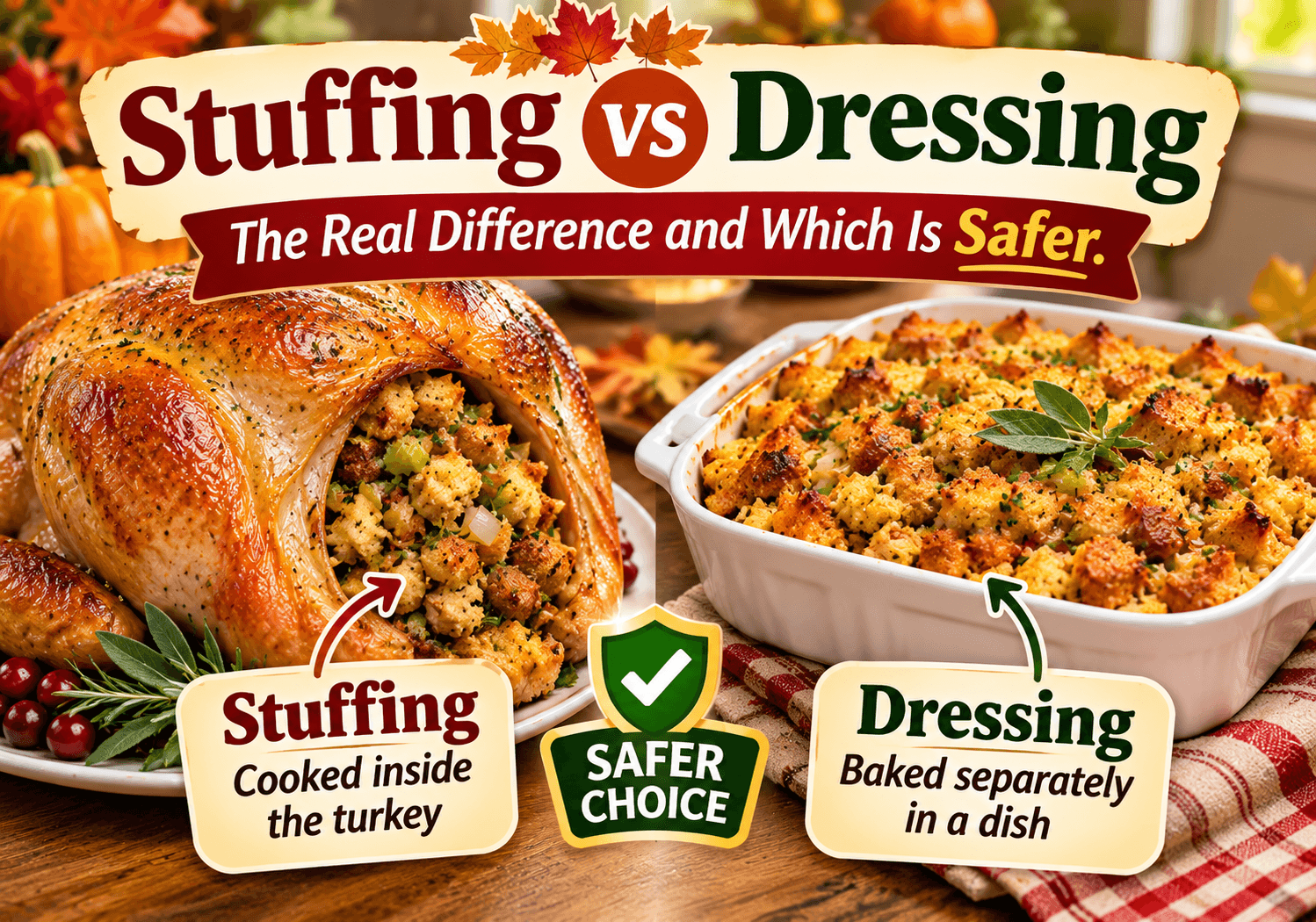
The traditional difference between stuffing and dressing is where the dish is cooked. Iowa State University Extension explains that stuffing refers to filling the cavity of a bird. Dressing is cooked separately and served alongside the meat, rather than inside it.
In other words, the ingredients can be exactly the same. If you spoon the mixture into the turkey, it’s stuffing. If you bake it in a casserole dish, many cooks call it dressing.
In real life, though, the line is blurry. Plenty of people bake “stuffing” in a pan and still call it stuffing. Iowa State notes that the name often depends on regional or family traditions as much as on how it’s cooked.
Is Stuffing the Same as Dressing?
Mostly, yes. In the stuffing vs dressing debate, both are savory mixtures of bread, broth, fat, vegetables, and herbs. The main differences are the cooking method and, often, the type of bread. Southern dressing is frequently made with cornbread, while many other recipes use white, sourdough, or whole-grain bread.
Stuffing vs Dressing Meaning: Where Do the Names Come From?
The two words have different histories, which helps explain the stuffing vs dressing divide.
The History of “Stuffing”
According to Dictionary.com, the word “stuffing” has been used in English to describe these fillings since at least the 1500s. The dish itself is even older. Cooks in ancient times roasted birds with bread and spices inside.
The Rise of “Dressing”
The word “dressing” became popular in parts of the United States in the 1800s. Dictionary.com notes that some people theorize this was partly due to a shift away from blunt food terms, though this explanation isn’t proven.
Do Southerners Say Dressing or Stuffing?
Many do say dressing. Dictionary.com reports that the term dressing is most commonly used in the South, but it’s also popular in pockets throughout the country. Not everyone in the South uses it, and the choice often follows family tradition.
So if you grew up saying “dressing” or “stuffing,” you’re in good company either way. In the stuffing vs dressing debate, neither name is wrong.
Stuffing vs Dressing Ingredients
The basic ingredients of stuffing vs dressing overlap almost completely. Here’s what most recipes include:
| Ingredient | Common in Stuffing | Common in Dressing |
| Bread base | White, sourdough, or whole-grain bread | Cornbread, or a mix of cornbread and white bread |
| Liquid | Broth or stock | Broth or stock |
| Binder | Eggs (optional) | Eggs (often) |
| Fat | Butter or oil | Butter or oil |
| Aromatics | Onion, celery, garlic | Onion, celery, bell pepper |
| Herbs | Sage, thyme, parsley | Sage, thyme |
| Add-ins | Sausage, mushrooms, apples, nuts, dried fruit | Sausage, oysters, giblets, pecans |
These are general patterns, not strict rules. Family recipes vary widely, and many cooks mix and match.
Popular Variations on Stuffing vs Dressing
Part of what makes the stuffing vs dressing debate so personal is the endless list of variations. Here are a few favorites you’ll see on holiday tables:
- Sausage stuffing: Browned sausage adds richness and protein. Cook the sausage fully before mixing it in.
- Cornbread dressing: A crumbly, golden base, often with sage, onion, and celery.
- Oyster dressing: A coastal tradition that adds briny flavor. Oysters should be cooked through.
- Wild rice stuffing: A bread-free option that adds a nutty flavor and more texture.
- Apple and herb stuffing: Sweet apples and fresh herbs balance the savory bread.
- Mushroom stuffing: A meatless option with deep, earthy flavor.
Whatever variation you choose, the same safety rules apply. Any meat, poultry, or seafood should be fully cooked before it goes into the mix, and the finished dish should reach 165°F.
Cornbread Dressing vs Bread Stuffing
Cornbread dressing is a Southern classic. It has a crumbly, slightly sweet texture and holds up well to baking.
Bread stuffing is softer and soaks up more broth. In the stuffing vs dressing kitchen, both bases work well, so pick the texture your family likes best. If you’re avoiding gluten, a cornbread base can help, but check every ingredient. Learn whether cornmeal is gluten-free.

Stuffing vs Dressing: Nutrition Compared
Does the stuffing vs dressing choice change the nutrition? Not much, if you use the same ingredients. Bread is the main ingredient either way, so the dish leans heavily on carbs.
That’s why the type of bread you choose matters. Whole-grain bread adds more fiber than white bread, and Mayo Clinic notes that high-fiber foods tend to be more filling than low-fiber foods. Learn more about whether bread is healthy. Here’s how USDA data compare prepared bread stuffing with prepared cornbread stuffing, both made from a dry mix.
| Nutrient (per 100 g, prepared from dry mix) | Bread Stuffing | Cornbread Stuffing/Dressing |
| Calories | 178 | 179 |
| Total fat | 8.6 g | 8.8 g |
| Saturated fat | 1.7 g | 1.8 g |
| Carbohydrates | 21.7 g | 21.9 g |
| Fiber | 2.9 g | 2.9 g |
| Sugars | 2.1 g | 3.9 g |
| Protein | 3.2 g | 2.9 g |
| Sodium | 543 mg | 455 mg |
Source: USDA SR Legacy data via University Hospitals nutrition facts for bread stuffing and cornbread stuffing. Values are per 100 grams, checked against the 1-ounce entry.
What the Numbers Show
Bread stuffing and cornbread dressing are almost identical in calories, fat, carbs, and fiber. The cornbread version has a little more sugar and a little less sodium.
The bigger concern is sodium. At about 455 to 543 mg per 100 grams, a generous scoop can supply a large share of the FDA’s sodium limit of less than 2,300 mg per day. Boxed mixes and salty broths are the main culprits. For more on salt, compare sea salt vs table salt.
Does Cooking Method Change Nutrition?
In the stuffing vs dressing nutrition matchup, cooking method plays a small role. Stuffing cooked inside the bird can soak up turkey drippings, which may add some fat. Dressing baked in a pan gives you more control over how much butter and broth go in. Either way, what you add matters more than where you cook it.
Stuffing vs Dressing: Which Is Safer?
This is where the stuffing vs dressing debate gets serious. Food safety experts clearly favor dressing, or at least baking your stuffing in a separate dish.
The USDA advises: “For optimal safety and uniform doneness, cook stuffing separately.” A 2023 USDA article also says to cook stuffing separately instead of stuffing a whole turkey, because stuffing the bird raises the risk of cross-contamination and lengthens cooking time.
Why Stuffing Inside the Bird Is Riskier
Stuffing is an excellent place for bacteria to grow. The USDA explains that bacteria can survive in stuffing that hasn’t reached 165°F, even if the turkey meat has. Because the stuffing sits in the center of the bird, it heats more slowly than the meat around it.
Iowa State Extension adds that the bird’s cavity and the eggs in stuffing can carry Salmonella and other bacteria. Cooking the stuffing to a safe temperature inside the bird can also overcook and dry out the turkey.
If You Choose to Stuff the Turkey
If stuffing the bird is a family tradition, follow these USDA safety steps from its Stuffing and Food Safety guide:
- Mix just before stuffing. Keep wet and dry ingredients separate until you’re ready to fill the bird.
- Stuff loosely. Use about 3/4 cup of stuffing per pound of turkey.
- Never stuff the night before. The USDA warns that bacteria can grow in stuffed poultry kept in the fridge, according to its 2023 stuffing guidance.
- Cook any meat first. Fully cook sausage, giblets, or seafood before adding them.
- Check the center. The center of the stuffing must reach 165°F.
- Let it rest. Let the bird stand 20 minutes before removing the stuffing.
Don’t stuff a turkey you plan to deep-fry or microwave. Iowa State notes that dressing is the only option for turkeys that are fried, smoked, grilled, or spatchcocked.
Stuffing vs Dressing Turkey Tips
Your stuffing vs dressing choice affects how you cook the turkey too.
If you make dressing: The turkey roasts faster and more evenly because the cavity is empty. You can add aromatics like onion, lemon, and herbs to the cavity for flavor instead.
If you make stuffing: Plan for a longer roasting time, and check both the meat and the center of the stuffing with a food thermometer.
If you buy a frozen pre-stuffed turkey: Choose one with the USDA or state mark of inspection. The USDA says do not thaw a commercially pre-stuffed frozen turkey before cooking. Cook it straight from frozen.
Not sure which turkey to buy? See our guide to fresh vs frozen turkey.
Who Should Choose Stuffing vs Dressing?
In the stuffing vs dressing decision, your best choice depends on your priorities.
Dressing (baked separately) may be better if you:
- Want the safest option, as recommended by the USDA.
- Like crispy, golden edges.
- Want more control over fat and sodium.
- Plan to fry, smoke, grill, or spatchcock your turkey.
- Are serving people at higher risk of foodborne illness, such as older adults, pregnant women, young children, or people with weakened immune systems.
Stuffing (cooked in the bird) may fit if you:
- Love the extra-moist texture and turkey flavor.
- Have a family tradition you want to keep.
- Are comfortable using a food thermometer to check the center.
Risks to Keep in Mind
Whichever side of the stuffing vs dressing debate you’re on, watch out for these issues.
Foodborne illness. Undercooked stuffing is a real risk. Always check that the center reaches 165°F.
High sodium. Boxed mixes, bouillon, and salty broth can make stuffing very salty. People with high blood pressure should choose low-sodium broth and limit added salt.
Gluten. Most stuffing and dressing contain wheat bread. People with celiac disease need gluten-free bread or cornbread made without wheat flour.
Food allergies. Stuffing often contains wheat, eggs, milk, and sometimes tree nuts or shellfish. The FDA lists all of these among the nine major food allergens. Label dishes clearly for guests.
Blood sugar. Stuffing is mostly refined carbs. If you have diabetes, keep portions modest and pair stuffing with vegetables and protein. Learn more about whether bread is bad for diabetes.
How Much Stuffing or Dressing Should You Eat?
Portion size matters more than the stuffing vs dressing label. There’s no set rule, but about 1/2 cup is a reasonable side portion for most adults. That leaves room on your plate for turkey, vegetables, and other favorites.
The CDC suggests filling at least half your plate with vegetables at holiday meals. Then use the rest for lean protein and starches like stuffing, potatoes, or rolls. If you love stuffing, take a full serving and skip a second starch.
How to Make Stuffing or Dressing Healthier
Whichever side of the stuffing vs dressing debate you’re on, a few simple swaps can make your dish lighter without losing flavor.
- Use whole-grain bread. It adds fiber. The new Dietary Guidelines favor whole, fiber-rich grains over refined ones. Learn why whole-grain bread is healthy.
- Double the vegetables. Add extra onion, celery, mushrooms, carrots, or kale. See whether mushrooms are healthy and if onions are healthy.
- Choose low-sodium broth. This one swap can cut sodium a lot.
- Cut back on butter. Use a little olive oil or less butter, and moisten with broth instead. See whether butter is healthy.
- Use lean sausage. Try turkey sausage instead of pork. Check whether turkey sausage is healthy.
- Add fruit and herbs. Apples, dried cranberries, sage, and thyme add flavor without much salt.
Make-Ahead Tips
In the stuffing vs dressing prep race, dressing wins because it’s easier to prep ahead.
You can chop vegetables and cube bread a day or two early. Keep wet and dry ingredients separate until you’re ready to bake. If you have extra celery, learn whether you can freeze celery.
Stuffing vs Dressing: Myths vs Facts
| Myth | Fact |
| Stuffing and dressing are completely different dishes. | They often use the same ingredients. The main difference is where the dish is cooked. |
| Only Southerners say “dressing.” | Dressing is most common in the South, but it’s popular in pockets throughout the U.S. |
| If the turkey is done, the stuffing is safe. | Bacteria can survive in stuffing that hasn’t reached 165°F, even when the meat has. |
| You can stuff the turkey the night before. | The USDA warns that bacteria can grow in stuffed poultry kept overnight. |
| Cornbread dressing is much lighter than bread stuffing. | Per 100 grams, they have nearly identical calories. |
Storing Leftover Stuffing and Dressing
Stuffing vs dressing leftovers need the same care as the turkey itself. The USDA advises refrigerating cooked poultry and stuffing within 2 hours, and using or freezing them within 3 to 4 days.
Always remove stuffing from the turkey before storing. Store it in a shallow container so it cools quickly. Reheat leftover stuffing to 165°F before serving, as University of Illinois Extension recommends.
Leftover dressing can be reheated in the oven with a splash of broth to keep it moist. For a complete holiday plan, see our healthy Thanksgiving menu.
Frequently Asked Questions
What is the difference between stuffing and dressing?
The traditional difference is where it’s cooked. Stuffing is cooked inside the turkey, while dressing is baked in a separate dish. The ingredients are often the same, including bread, broth, vegetables, and herbs. In many homes, though, the name depends more on region and family tradition than on the cooking method.
Is stuffing the same as dressing?
Mostly, yes. Both are savory bread-based side dishes made with broth, fat, vegetables, and herbs. Stuffing is cooked inside the bird, while dressing is baked separately. Southern dressing often uses cornbread, and many people use the two names interchangeably, so neither one is wrong.
Do Southerners say dressing or stuffing?
Many Southerners say dressing. Dictionary.com notes that dressing is most commonly used in the South but is also popular in other parts of the country. Not every Southerner uses it, and the choice often follows family tradition. Southern dressing is frequently made with cornbread and baked in a pan.
Why do people say “dressing” instead of “stuffing”?
The word “dressing” became popular in parts of the U.S. in the 1800s. Some people think it was partly due to a shift away from blunt food words, though that’s not proven. Today, people usually say dressing because of where they grew up or what their family has always called it.
Is it safer to make dressing than stuffing?
Yes. The USDA recommends cooking stuffing separately for the best safety and even cooking. Stuffing inside the bird heats more slowly, and bacteria can survive if the center doesn’t reach 165°F. If you do stuff the turkey, stuff it loosely just before roasting and check the center with a thermometer.
What is the point of stuffing?
Stuffing adds flavor, texture, and an easy side dish to a holiday meal. Cooking it inside the bird lets it soak up turkey juices, which many people love. It also stretches the meal by using bread and vegetables. Baking it separately as dressing keeps the flavor while making it safer and crispier.
Conclusion: Stuffing vs Dressing, Which Should You Make?
In the stuffing vs dressing debate, the main difference is where it’s cooked. Stuffing goes inside the bird, while dressing bakes in a separate dish. The name often depends on region and family tradition, and both can be delicious.
For safety, the USDA recommends baking it separately, which makes dressing the smarter choice for most cooks. Whatever you call it, use whole-grain bread, lots of vegetables, and low-sodium broth, and make sure it reaches 165°F.
Medical disclaimer: This article is for general information only and is not a substitute for professional medical advice, diagnosis, or treatment. If you have celiac disease, food allergies, high blood pressure, diabetes, or a weakened immune system, talk with your doctor or a registered dietitian about your holiday meal plan. For food safety questions, contact the USDA Meat and Poultry Hotline at 1-888-674-6854.
3. References
- USDA Food Safety and Inspection Service. Stuffing and Food Safety. https://www.fsis.usda.gov/es/node/3758 [VERIFY: swap in the English canonical URL]
- U.S. Department of Agriculture. How to Cook Turkey Stuffing Safely. November 15, 2023. https://www.usda.gov/node/55400
- Geiger M. Stuffing or Dressing? To Stuff or Not? Which is IT? Iowa State University Extension AnswerLine. November 15, 2022. https://blogs.extension.iastate.edu/answerline/tag/turkey
- University of Illinois Extension. Stuffing Safely. https://extension.illinois.edu/turkey/stuffing-safely
- Dictionary.com. Stuffing or Dressing? November 22, 2023. https://www.dictionary.com/e/stuffing-or-dressing/ [VERIFY: not on your allowed-source list; see note]
- University Hospitals Health & Wellness Library. Nutrition Facts: Bread stuffing, bread, dry mix, prepared (USDA SR Legacy). https://www.uhhospitals.org/health-information/health-and-wellness-library/nutrition-facts/article/nutritionfacts-v1/bread-stuffing-bread-dry-mix-prepared-1-cup
- University Hospitals Health & Wellness Library. Nutrition Facts: Bread stuffing, cornbread, dry mix, prepared (USDA SR Legacy). https://uhhospitals.org/health-information/health-and-wellness-library/article/nutritionfacts-v1/bread-stuffing-cornbread-dry-mix-prepared-1-cup
- U.S. Food and Drug Administration. Sodium in Your Diet. 2024. https://www.fda.gov/food/nutrition-education-resources-materials/sodium-your-diet
- U.S. Food and Drug Administration. Food Allergies. https://www.fda.gov/food/nutrition-food-labeling-and-critical-foods/food-allergies
- Centers for Disease Control and Prevention. Healthy Eating and the Holidays (Diabetes). 2024. https://www.cdc.gov/diabetes/healthy-eating/5-healthy-eating-tips-holidays.html
- Mayo Clinic. Dietary fiber: Essential for a healthy diet. https://www.mayoclinic.org/healthy-lifestyle/nutrition-and-healthy-eating/in-depth/fiber/art-20043983
- Harvard T.H. Chan School of Public Health, The Nutrition Source. Dietary Guidelines for Americans 2025–2030 (summary). January 9, 2026. https://nutritionsource.hsph.harvard.edu/2026/01/09/dietary-guidelines-for-americans-2025-2030/